


Cress Heads: Easy Growing Activity for Kids (UK)
Learning how to grow cress heads is a classic British childhood project: decorate eggshells, fill them with damp cotton wool, sprinkle on cress seeds, and snip the green "hair" into sandwiches in about a week.
To grow cress heads, have an adult crack eggs near the top and keep the deep half-shells, rinse and dry them, and let your child draw faces with felt tips. Tuck damp cotton wool into each shell, stand them in an egg box, scatter cress seeds over the top, and set them on a bright windowsill. Water a teaspoonful daily; snip and eat the cress in about a week.

The short version
- An adult cracks the eggs and keeps deep half-shells — fresh shell edges are sharp for little fingers.
- Damp cotton wool, not soaking: squeeze it out so it holds water without dripping.
- Scatter cress seeds thickly and evenly, stand the shells in an egg box, and set them on a bright windowsill.
- Check every morning: add a teaspoon of water if the cotton wool feels dry.
- Sprouts appear in 2–3 days; a full head of cress is ready to snip, rinse and eat in about a week.
- Age
- Ages 4–5
- Prep
- 15 min
- Mess
- Low
- Difficulty
- Easy
- Where
- Indoor
Why kids love this
Cress heads are part drawing lesson, part science experiment and part snack. Your child draws a face on a shell one Saturday morning, and by the following weekend that face has a head of bright green hair. The daily morning check becomes the best bit — the whole week becomes the activity, not just the making. And the ending is pure theatre: a haircut with scissors, then eating the hair in a sandwich.
What you'll need
- 3–6 eggs — you need the shells, and the eggs for breakfast
- A cardboard egg box to stand the shells in
- Cotton wool balls or pads (a few per shell)
- 1 packet of cress seeds (plain, for growing — not coated)
- Felt-tip pens for drawing faces
- A mug and a teaspoon for water
- A small bowl and tea towel
- Child-safe scissors for harvest day
Before you start
**Plan it around a weekend or half term.** Start on a Saturday and the fun spreads across a week of growing — harvest day then lands the following weekend, when everyone is home to admire it. **Buy cress seeds ahead of time.** Cress seeds are easy to find in the UK — garden centres and most supermarkets sell seed packets, and online seed merchants post them in a couple of days. One packet grows far more cress heads than any family needs. **Set up at the kitchen table.** Lay a tea towel down as your work surface, fill the mug with water, and keep the egg box handy. Everything else comes out as you go.
How to do it
-
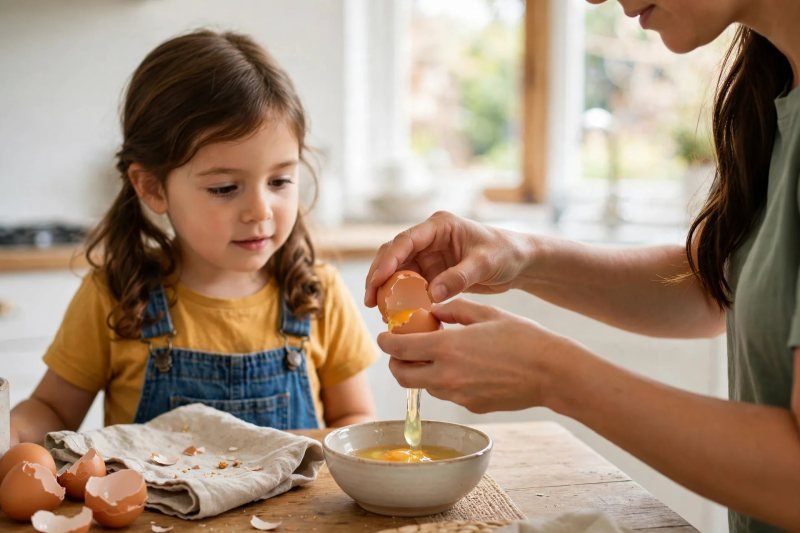
**Crack the eggs carefully and keep the shells.** This is the adult's job — cracked eggshell edges can be sharp. Crack each egg near its top so you keep a deep cup-shaped half, and use the eggs themselves for breakfast, lunch or baking.
-
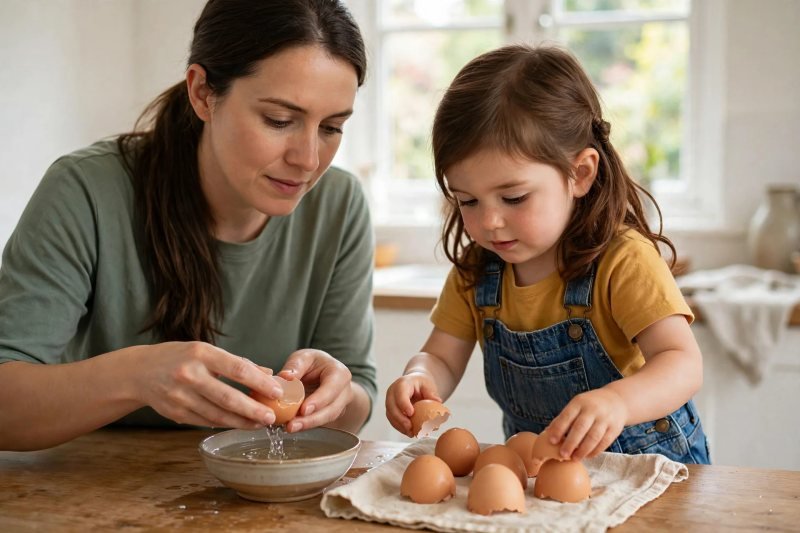
**Rinse the shells and let them dry.** Rinse each shell half in warm water and stand it upside down on the tea towel to dry fully — felt tips will not take on a damp shell.
-
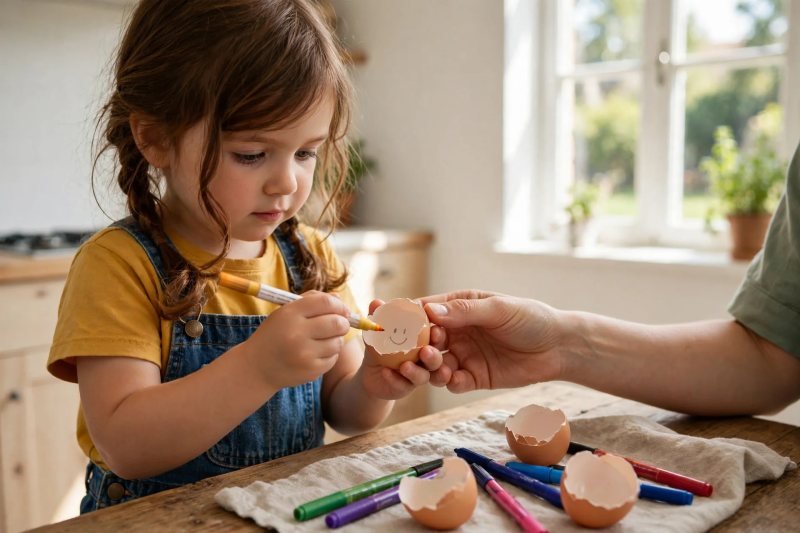
**Draw a face on each shell.** Hand your child the felt tips and let them draw whatever faces they fancy — happy, grumpy, surprised. Simple faces work best; the face is the front of the head.
-
**Soak cotton wool, then squeeze it out.** Dunk cotton wool in the mug, squeeze it until properly damp but not dripping, and tuck it into a shell just below the rim. Damp, not waterlogged, is the whole secret.

-
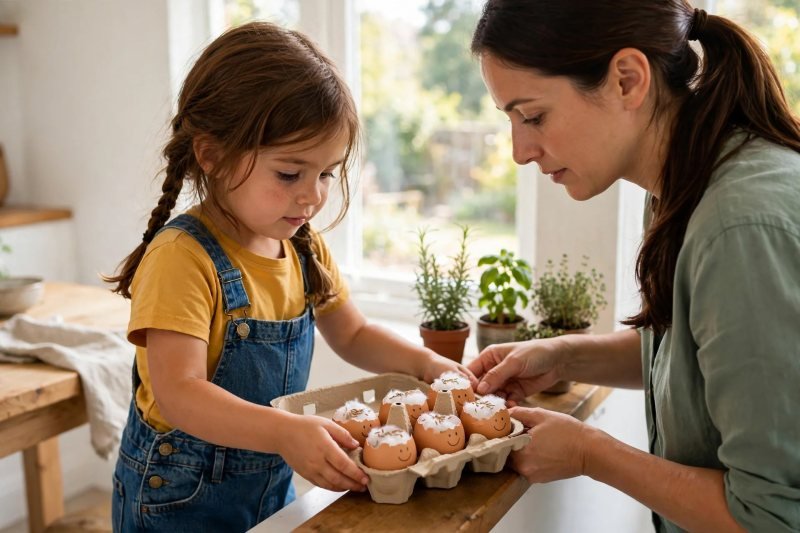
**Stand the shells in the egg box.** Slot each decorated shell into a cup of the egg box. This stops them rolling off the table mid-week and turns them into a little family lined up together.

-
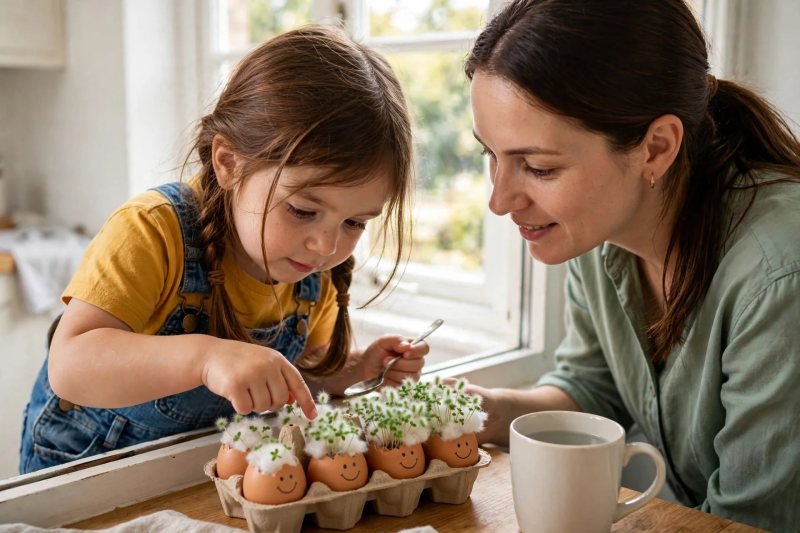
**Scatter cress seeds over the cotton wool.** Let your child pinch and sprinkle the seeds thickly and evenly across the damp cotton wool — tiny seeds are great finger practice, and an even spread grows the tidiest hair.

-
**Move them to a warm, bright windowsill.** Set the egg box on a windowsill with good daylight — but not blazing all-day sun, which dries the cotton wool out too fast. A kitchen or living-room window is ideal.
-
**Check every morning and add a teaspoon of water if dry.** Each morning, your child presses a finger to the cotton wool: dry means a teaspoon of water, damp means leave it alone. This daily check is the heart of the activity.
-
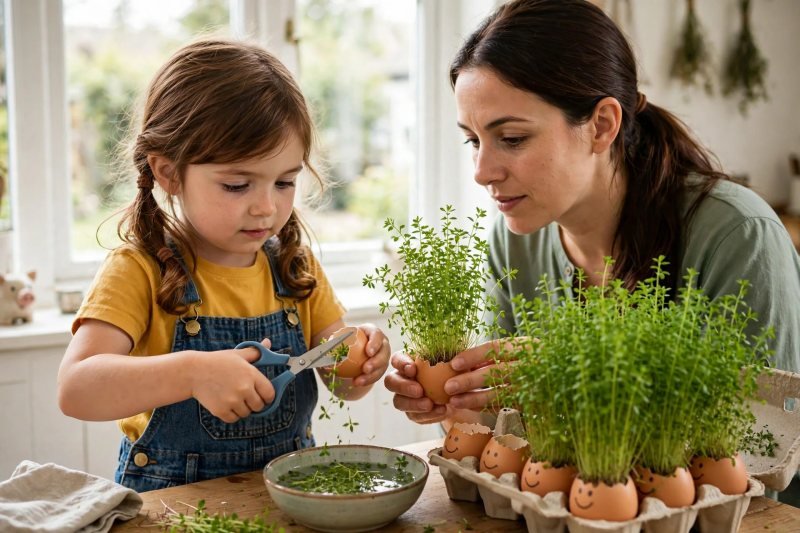
**After about a week, give the cress heads a haircut.** When the green hair stands tall, let your child snip it with child-safe scissors while you steady the shell, then wash the cuttings in cold water — this is the moment the activity becomes lunch.
-
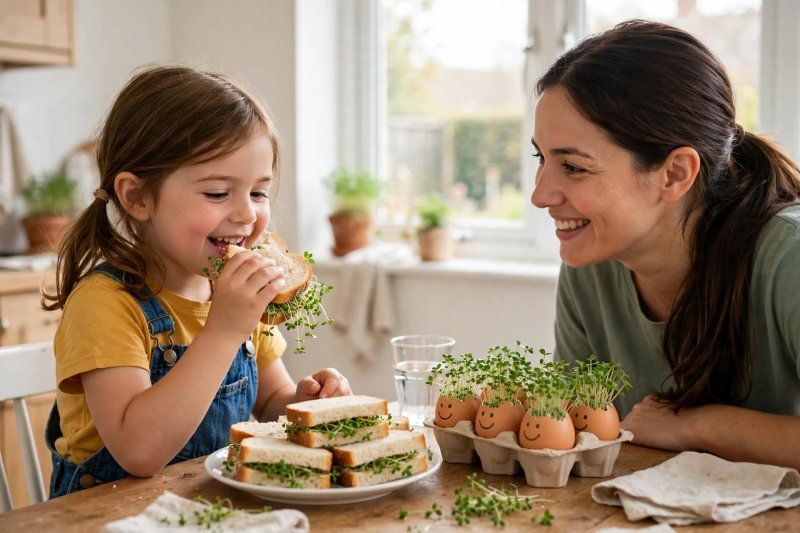
**Eat them in egg-and-cress sandwiches, then start again.** Mash the saved eggs into egg mayonnaise, pile in the fresh cress, and eat your harvest. Re-sprinkle seeds on the same shells for a second crop, or compost the whole thing.


Make it easier
You do the cracking, rinsing and cotton-wool soaking; your child does the faces, seed sprinkling and watering. One shell each keeps the week focused on a single hero head.
Make it harder
Grow a proper experiment: two cress heads, one on the windowsill and one in a dark cupboard. Each morning your child checks both and reports what is different, then compares the hair after a week — pale and leggy versus short and green. A daily picture of the windowsill head records its progress.
Other ways to play it
- **Yoghurt-pot heads.** No eggshells handy? Halve a yoghurt pot, wrap a strip of paper round it for the face, and follow the same steps inside.
- **Name-tag race.** Make one cress head per family member, give them names, and see whose hair grows tallest by harvest day.
- **Bean-in-a-bag companion.** While the cress grows, start a Bean in a Bag: Watch Seeds Sprout for Preschoolers experiment alongside it — roots are visible in the bag version, which answers all the questions the cotton wool hides.
- **Cress sandwiches for friends.** Double the shells and invite grandparents for harvest-day tea — four- and five-year-olds love feeding people food they grew themselves.
How it changes by age
- Adult-led for 4–5-year-olds. Four-year-olds can draw the faces, sprinkle the seeds and manage the daily watering with reminders; the shell cracking and scissor haircut need an adult's hands nearby. Five-year-olds can run the whole routine themselves apart from cracking the eggs, checking their head before breakfast every morning.
What they're learning
Real early science: what a seed needs to grow (water, light, warmth) and that growth takes time. Cress suits four-year-olds perfectly — fast enough for their patience, slow enough to need daily care, which is a genuine little taste of responsibility. Daily checking builds observation skills ("it was flat yesterday, now it is fuzzy") and words like sprout and harvest land naturally in conversation. Pair it with What Do Plants Need to Grow? Simple Lesson for Preschoolers to name the science, and Planting Seeds with Toddlers: First Garden Activity to graduate to real soil later.
Clearing up
Bin any leftover cotton wool, wipe the windowsill and worktop with a damp cloth, and wash the mug, bowl and scissors. The egg box can be recycled, and the shells, cotton wool and all composted when the growing is done.
Questions parents ask
Where can I buy cress seeds in the UK?
How long do cress heads take to grow?
Why has our cress gone slimy or mouldy?
Is it safe for children to eat cress they have grown?
Can you regrow cress after cutting it?
Can you grow cress heads without eggshells?
Cress grows all year indoors in the UK, so this works as well in February half term as in the Easter holidays. If the cotton wool dries out for a day or two, re-dampen it and give the seeds a couple more days.

save it for later
Pin this for the next rainy afternoon
Keep it on a board so it is there when you need it, rather than when you happened to find it.
Save to Pinterest
