


Animal Homes for Preschoolers: Make-and-Play Matching Game
Animal homes for preschoolers turn into a hands-on matching game: make 10 pairs of cards — bird and nest, bee and hive, rabbit and burrow — then flip two at a time to reunite each animal with its home. Card-making takes about 20 minutes, each round plays in 10–15, and every match sneaks in real science vocabulary.
Make 20 cards: 10 animals and 10 matching homes (bird–nest, bee–hive, rabbit–burrow, fish–pond, spider–web, dog–kennel, horse–stable, bear–den, ant–anthill, squirrel–drey). Lay them face down, flip two at a time, and reunite each animal with its home. Start with 3 pairs for a 3-year-old. Say each picture's name out loud — naming is where the vocabulary sticks.

The short version
- Start with just 3 pairs — six cards is a winnable first round for a 3-year-old.
- Name every picture out loud as you flip — naming is where the vocabulary sticks.
- Mismatches flip back over exactly where they were — the memory work is the game.
- Let your child deal, flip, and win — ownership of the handmade cards keeps the game coming back.
- End every round with a cheer — "Every animal is home!" — and let your child count the pairs.
- Age
- Ages 3–4
- Prep
- 20 min
- Play time
- 15 min
- Mess
- None
- Where
- Indoor
Why kids love this
Flipping cards is pure suspense for a preschooler — is this the one? — and this animal-homes matching game adds a treasure-hunt twist: every animal is lost until it finds its home. Three-year-olds adore being the expert, correcting you loudly: "No! The bee lives in the HIVE!" And making the cards together first means the game is theirs in a way a store-bought box never is. They drew the spider. They know exactly which card it is. That ownership is why the tin keeps coming back off the shelf for weeks. ## What are the 10 animal-home pairs in this game? 1. Bird – nest. The classic first pair; most 3-year-olds already know it from books. 2. Bee – hive. A lovely word to say out loud, and easy to draw as stacked stripes. 3. Rabbit – burrow. A tunnel underground — draw it as an arch in a hill. 4. Fish – pond. The only water home in the set; draw wavy blue lines. 5. Spider – web. A few crossed lines with a spider in the middle does the job. 6. Dog – kennel. Familiar from cartoons and neighbors — an instant confidence pair. 7. Horse – stable. A barn door shape is all the drawing this one needs. 8. Bear – den. The cave where a bear sleeps through winter; draw a dark arch. 9. Ant – anthill. A little brown mound — the pair most children find funniest. 10. Squirrel – drey. A drey is the twiggy ball nest a squirrel builds high in a tree — a brand-new word for little collectors.
What you'll need
- 20 blank cards, cut from white cardstock or sturdy index cards — about 3 × 3 inches suits small hands
- Crayons or washable markers
- Scissors (grown-up does the cutting)
- A small tin, zip bag, or rubber band for storage
- Optional: animal stickers if drawing feels daunting — they work just as well.
Before you start
Cut the cardstock into 20 same-size cards — matching sizes matter, because odd sizes give the game away. Set out the crayons while your child watches; naming the plan is half the fun: "We're going to make a game about where animals live!" Decide which 3 pairs you'll start with (bird–nest, bee–hive, and dog–kennel make the easiest first round). Clear the table so the whole grid fits.
How to do it
-
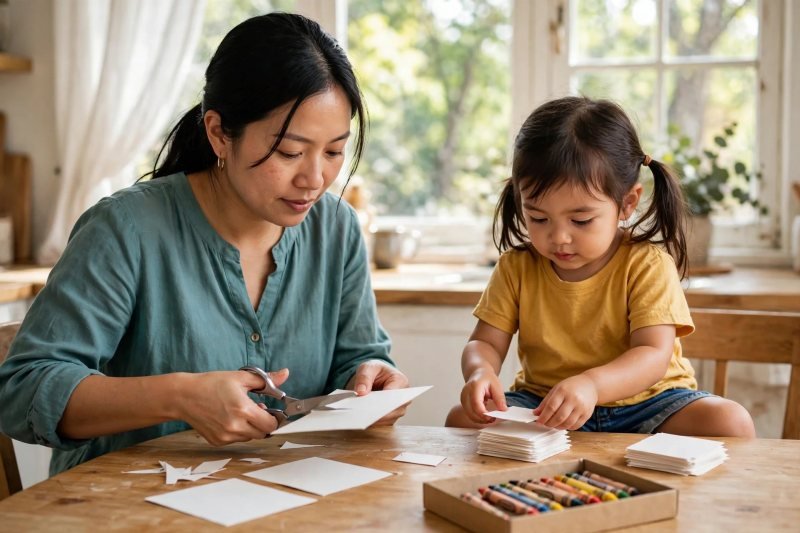
**Cut 20 cards the same size.** You cut, your child stacks — stacking is a real job, and they take it seriously.
-
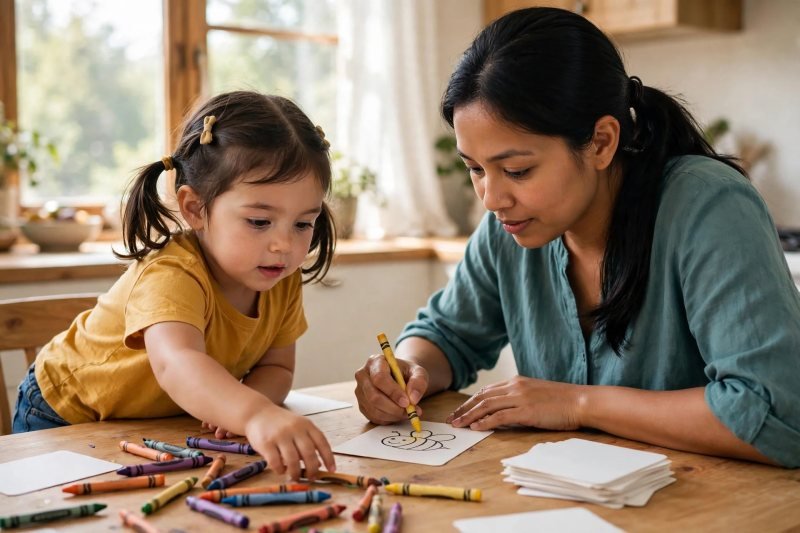
**Draw the 10 animals, one per card.** Bird, bee, rabbit, fish, spider, dog, horse, bear, ant, squirrel. Stick figures are fine; preschoolers prefer your wobbly bee to a perfect one.
-
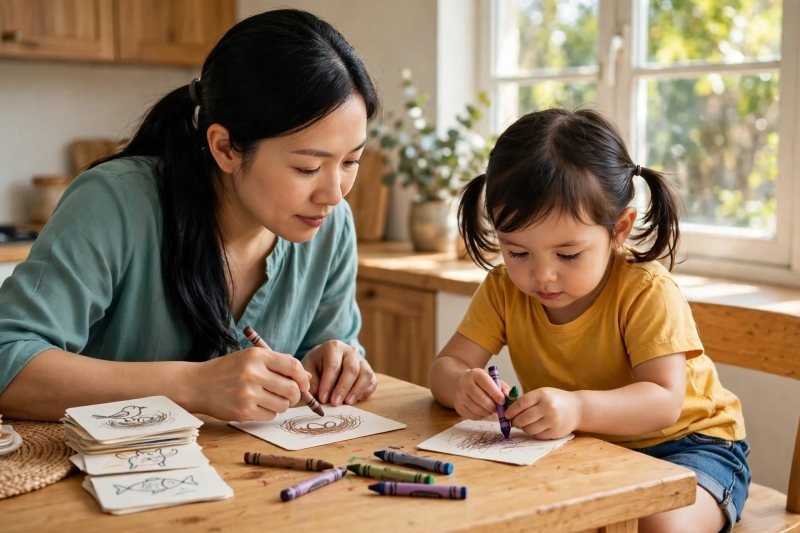
**Draw the 10 homes on the remaining cards.** Nest, hive, burrow, pond, web, kennel, stable, den, anthill, drey. Keep each home simple — crossed lines for the web, an arch for the burrow entrance.
-
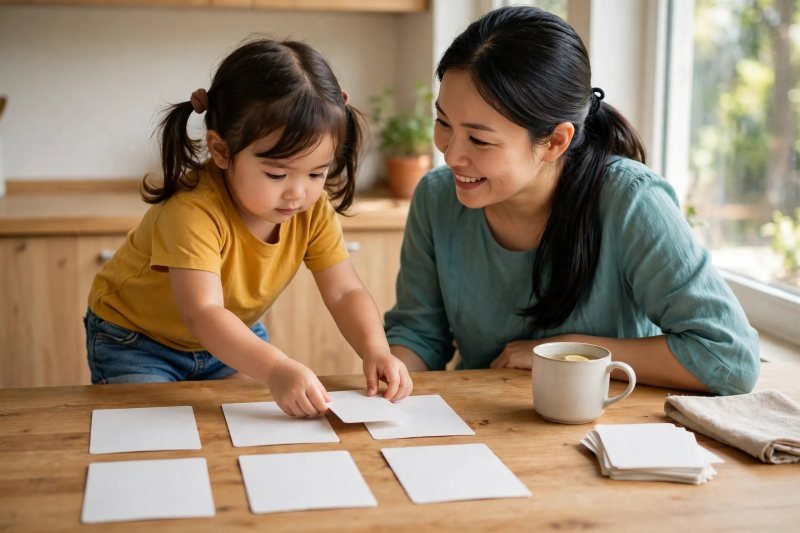
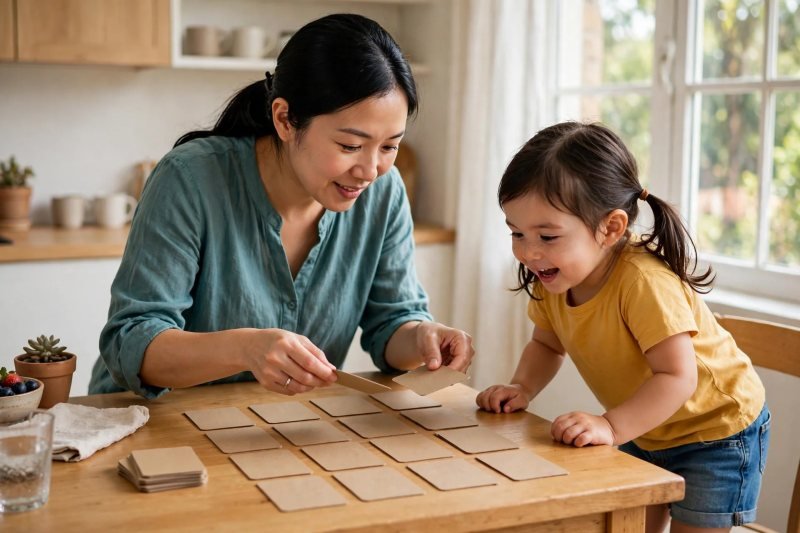
**Pick 3 pairs and lay them face down in a grid.** Six cards, two neat rows. Name the rule once: "We flip two, and we find where each animal lives."
-
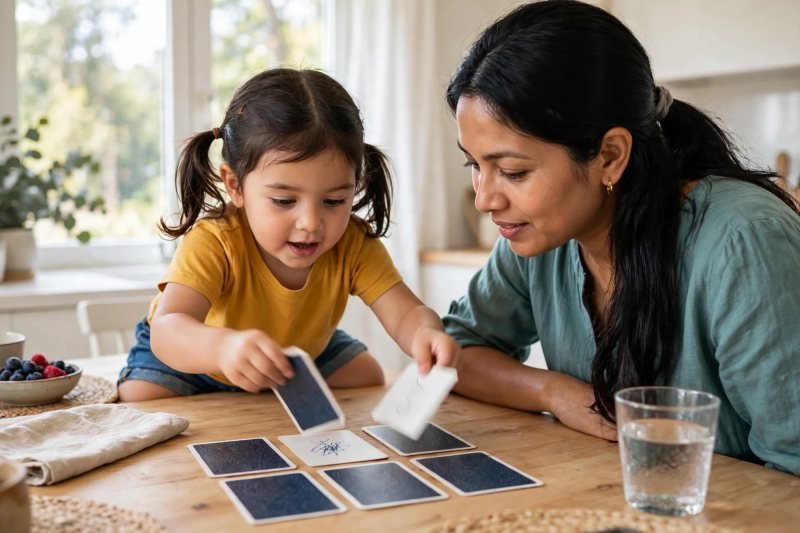
**Take turns flipping two cards.** Whoever flips names each picture out loud: "Spider… web!" Naming is the learning — don't skip it.
-
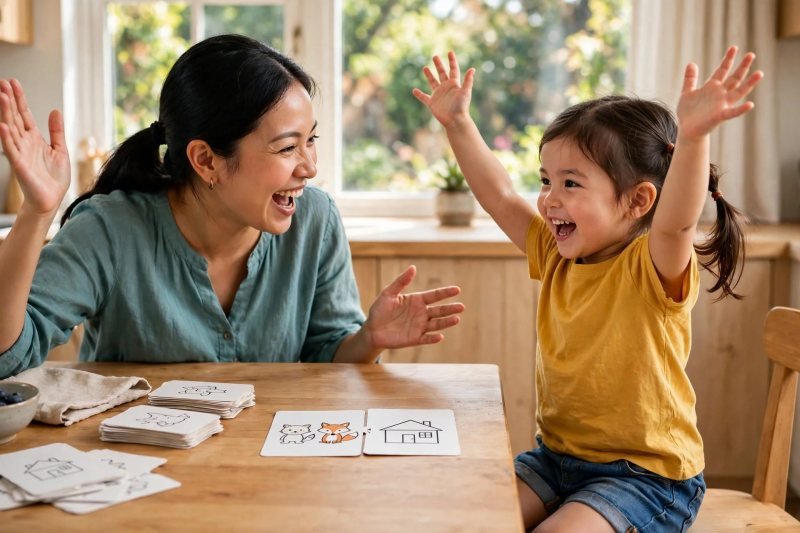
**Match an animal to its home to keep the pair.** "The spider lives in the web — it's a match!" Stack won pairs to one side where everyone can admire them.
-
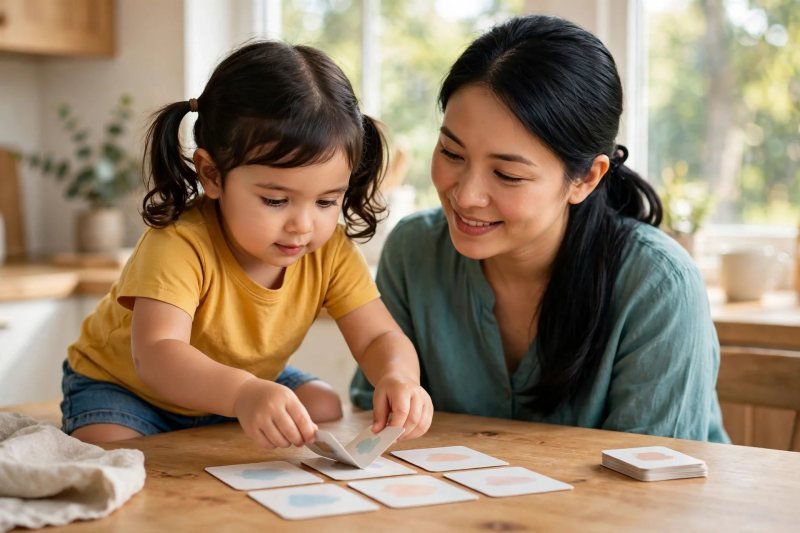
**Flip misses back over, exactly where they were.** "Bee… pond. Not a match." Now everyone tries to remember: where was the hive?
-
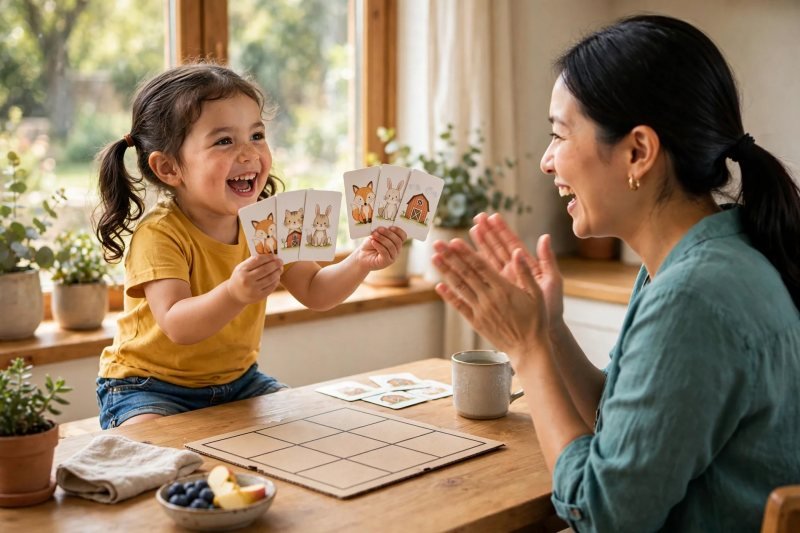
**Play until every pair is home.** When the last match lands, do the cheer: "Every animal is home!" Let your child count the pairs out loud.
-
**Add one pair at a time in the next round.** Three pairs becomes four, then five. Grow the grid only when your child wins comfortably.
-
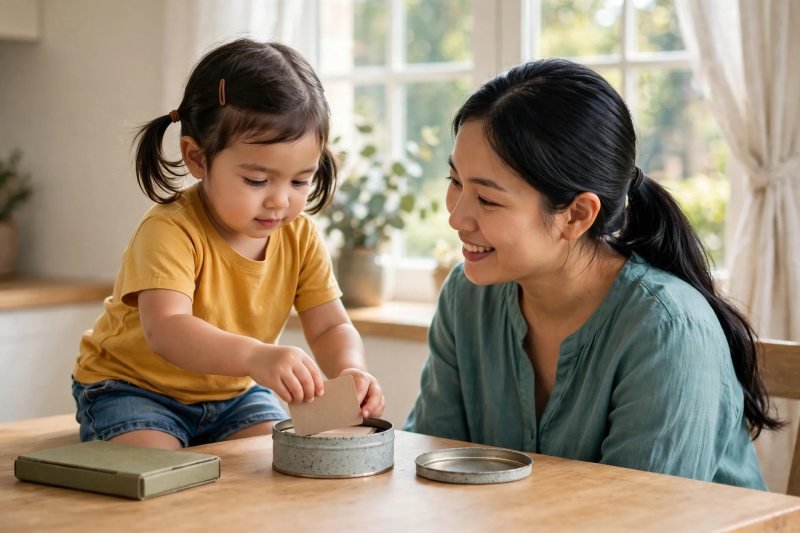
**Put the cards to bed in their tin.** Cards in, lid on, tin on the shelf. Tomorrow's game starts the moment they ask for it.


Print it out
Make it easier
Play open-face first: all cards face up, just find the animal and its home — the memory layer can wait a week. Drop to 2 pairs (4 cards) for a brand-new 3-year-old. You flip, they name. Or they point and you do the flipping. Play cooperatively with no turns at all: "Let's find the rabbit's home together."
Make it harder
Play the full 10-pair grid once 6 pairs feels easy. Add the "call your shot" rule: before flipping, say which two cards you're going for and why. Quiz mode with no grid: hold up an animal card — "Where does the bear live?" — and answer from memory. Count total flips and try to clear the grid in fewer next time. Count together; the math is a bonus.
Other ways to play it
- Animal homes Go Fish. Deal 5 cards each and ask "Do you have the nest?" to complete your pairs.
- Sorting game. Deal all 20 cards face up and sort them into three piles: homes in the air, on the ground, in the water.
- Real-world hunt. On your next walk, spot a real web, a real nest, a real anthill — then find the matching cards at home.
- Story pairing. Read a book about a bear, then find the den card. The story makes the pair stick.
How it changes by age
- At 3, start open-face or with 3 pairs, and expect joyful random flipping — strategy arrives closer to 4. You handle the drawing setup; they flip, name, and celebrate.
- At 4, most children manage 5–6 pairs, start remembering positions ("The hive was in the corner!"), and love teaching the game to a grandparent.
- Not ready yet? Drop to 2 pairs and revisit in a few weeks — the cards keep.
What they're learning
Science vocabulary: nest, hive, burrow, den, drey, anthill, kennel, stable — real words, learned by using them. Working memory: holding "the web was here" in mind while choosing the next flip. Matching and categorizing: deciding what belongs with what — the root of early science thinking. Turn-taking: waiting, watching, and handling not getting the match this time. Fine motor control: flipping small cards without disturbing the neighbors.
Clearing up
Under a minute: cards into the tin, lid on, crayons back in the box. If markers wandered onto the table, one damp cloth handles it. Make cleanup the game's final step — "The animals are all home, now the cards go home too" — and 3-year-olds will do it themselves.
Questions parents ask
What animal homes should preschoolers learn first?
How many matching pairs should a 3-year-old start with?
Can I buy the cards instead of making them?
My preschooler just flips cards randomly. Is that normal?
How can I make the cards last longer?
What new animal-home pairs can we add later?
A free printable version of all 20 cards is attached to this page as a download — handy if you'd rather print than draw, or want a spare set for grandma's house. For a sturdier homemade set, cover each card front with a strip of clear packing tape: instant lamination. And once the 10 pairs feel easy, invent new ones together — fox and den, owl and tree hollow, chicken and coop.

save it for later
Pin this for the next rainy afternoon
Keep it on a board so it is there when you need it, rather than when you happened to find it.
Save to Pinterest


