


15 Sweater Outfits for Boys for Cool Mornings
Quick answer
The best sweater for a child is one he can adjust himself. Quarter-zips vent without coming off, cardigans open completely, and both beat a pullover that needs an adult. Choose machine-washable knits and check the neckline, since a tight crew neck is why most sweaters get refused.
Key takeaways
- A quarter-zip vents without removal, which is the most useful feature in a swinging temperature.
- Pullovers need an adult, so they either stay on when he is too hot or get lost.
- Machine washable is non-negotiable — hand-wash knitwear gets worn twice.
- A tight crew neck is the single most common reason a child refuses a sweater.
1.Quarter-Zip Knit Over A Collared Shirt
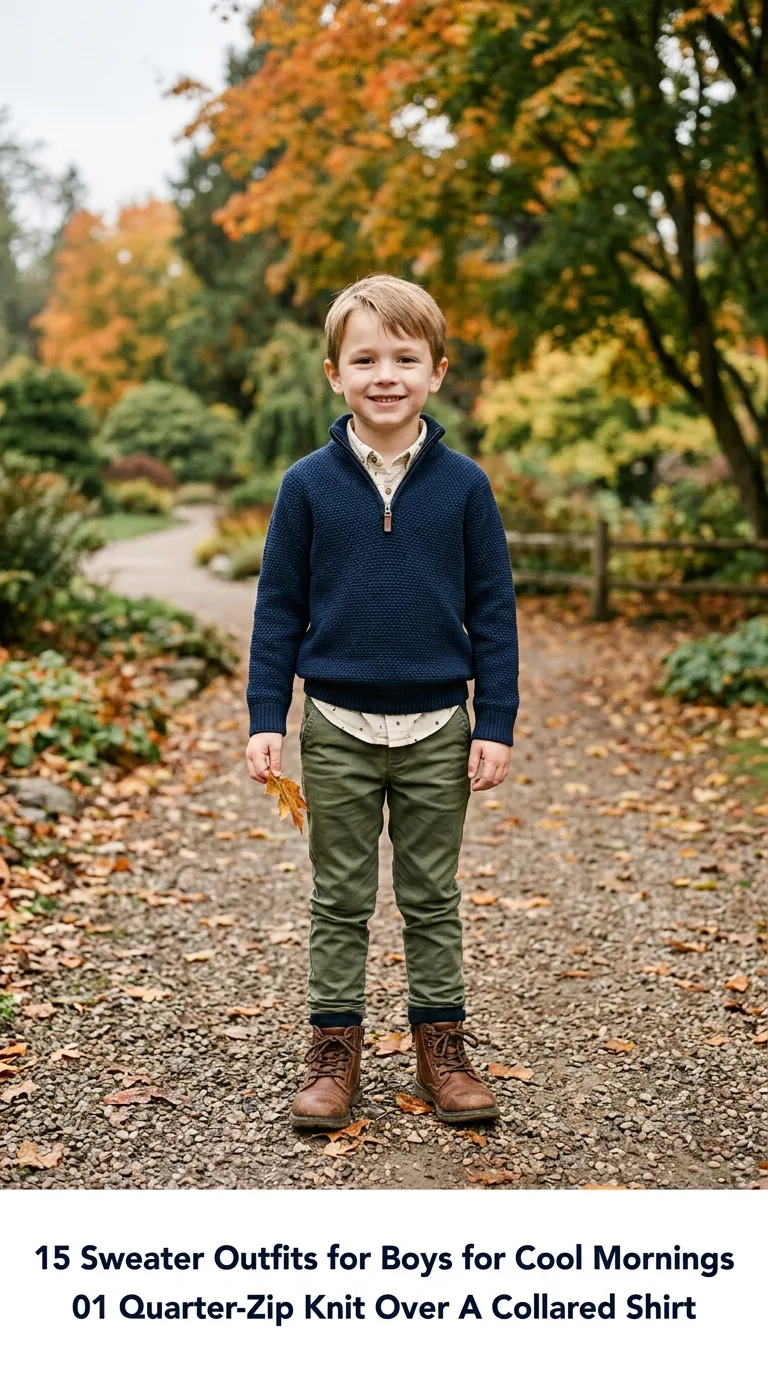
The flat-lay shows a navy quarter-zip knitted sweater over a cream collared shirt, beside olive chinos and brown boots. This is the most practical sweater a boy can own and the zip is the reason. A classroom that starts cold and becomes overheated by mid-morning is the normal pattern, and a quarter-zip lets him vent by pulling the zip down without removing anything — which means the garment stays with him rather than ending up on a cloakroom floor. That is the entire problem with pullovers, and it is a mechanical problem rather than a behavioural one. The collar showing underneath is worth arranging, since it takes seconds, adds a second color at the neckline, and reads as considerably more put together in photographs. Choose a machine-washable merino or acrylic blend rather than pure wool, which felts in a warm wash and will be avoided after the first accident.
2.Cable Knit Sweater With Dark Jeans
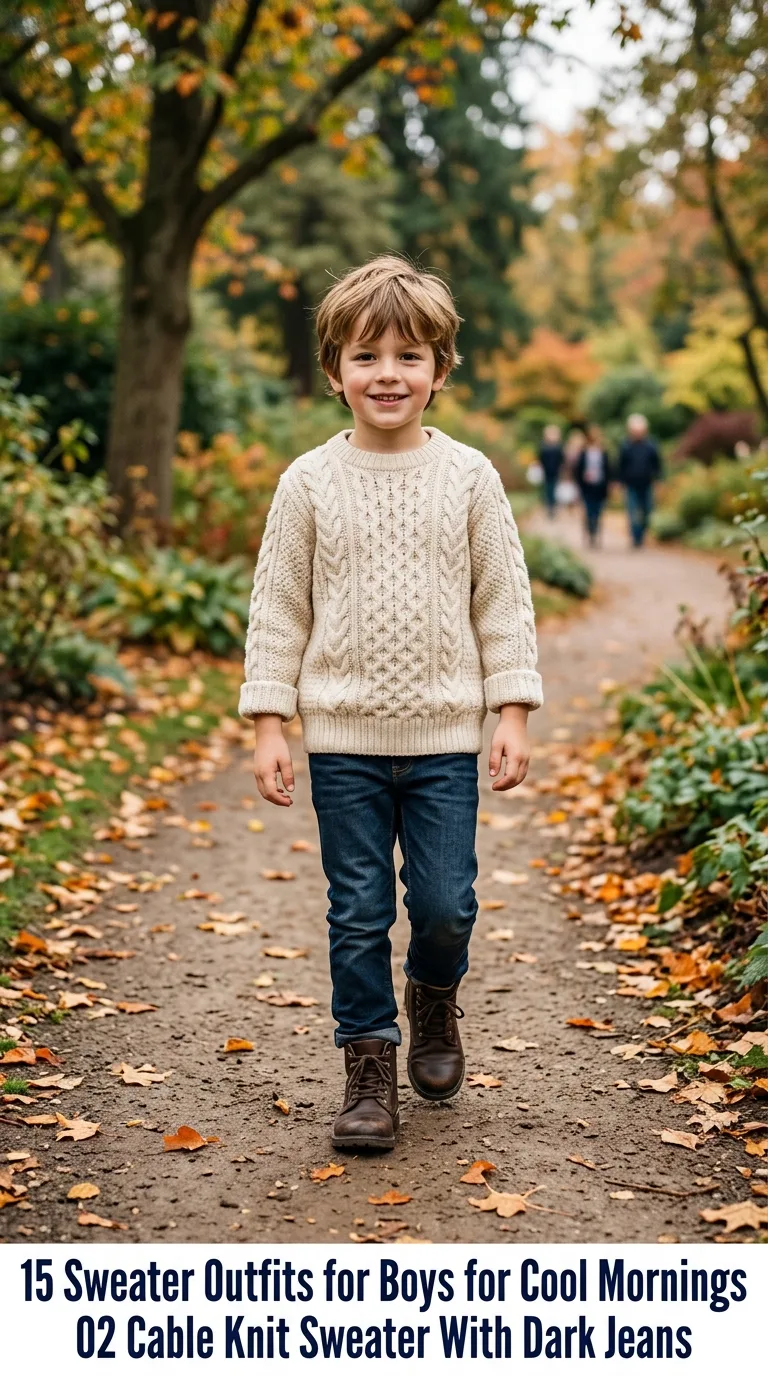
The flat-lay shows a cream cable-knit sweater beside dark wash jeans and brown boots. Cable knit is warmer than plain knit for the same weight, since the raised stitch structure traps more air, and it photographs considerably better because the texture catches light where a flat knit reads as a solid block. The trade-off is bulk under a coat. Check the coat still fastens over it before treating this as a school sweater rather than a weekend one. Cream shows marks, so oatmeal is the more forgiving version.
3.Cardigan For Full Adjustability
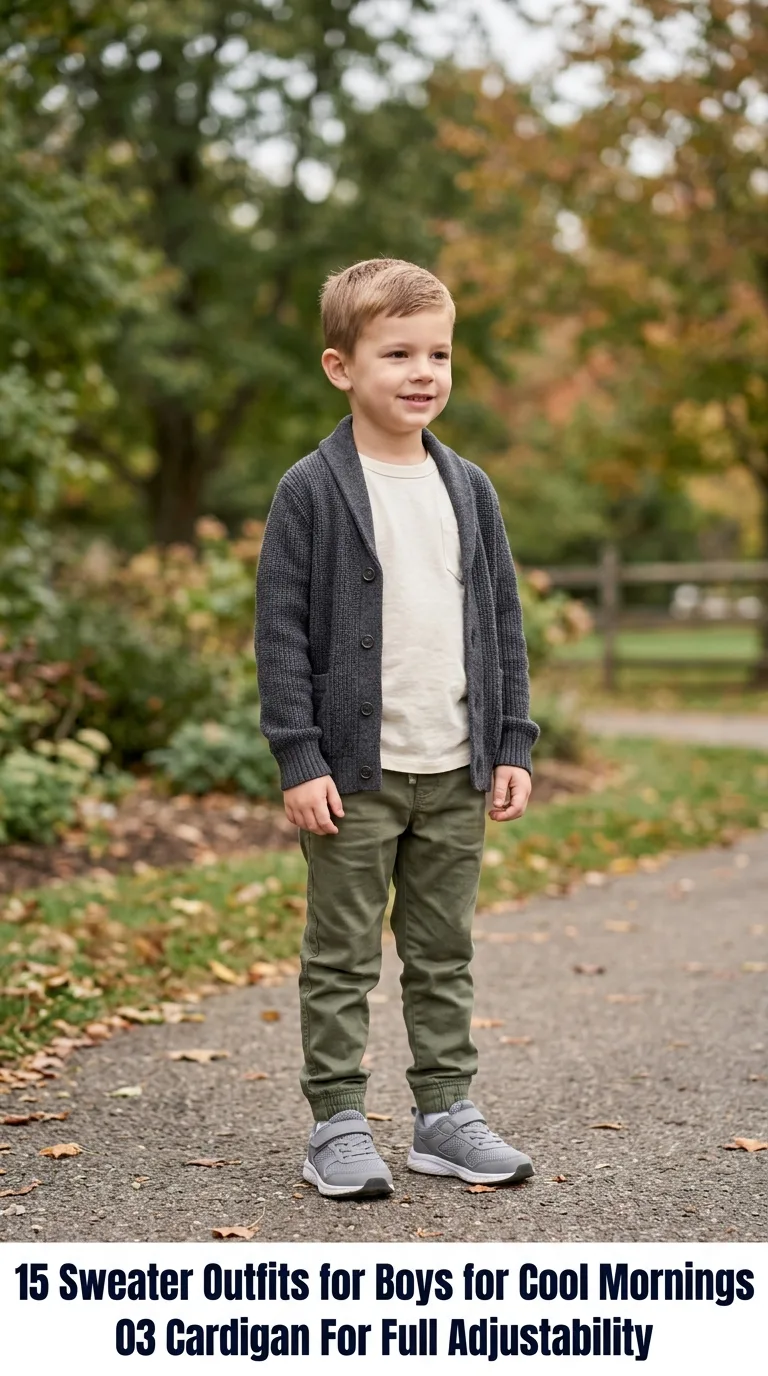
The flat-lay shows a charcoal knitted cardigan beside a cream tee, olive joggers, and grey sneakers. A cardigan is as useful for boys as for girls and is under-bought for them, largely out of habit rather than for any real reason. It opens completely, which means he manages it entirely alone across a day of changing temperature. Choose a plain shape with a simple placket rather than anything decorative, and large buttons or an open front for a younger child.
4.Sweater Vest Over A Long Sleeve
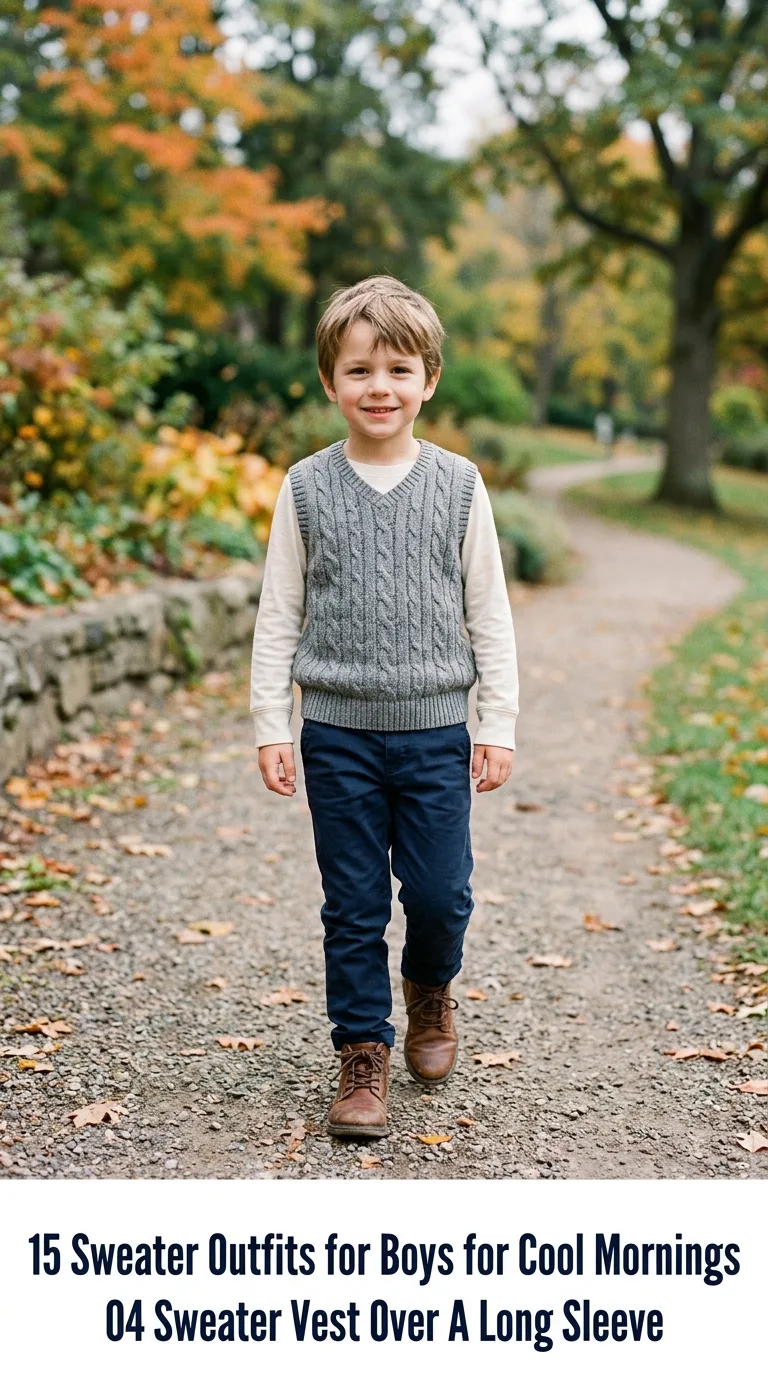
The flat-lay shows a grey knitted sweater vest over a cream long-sleeve tee, beside dark chinos and brown shoes. A vest warms the core, which is what actually determines whether a child feels cold, while leaving the arms completely free for writing, painting, and climbing. It also does not overheat in a warm classroom the way a full sweater does, so it rarely needs removing at all. This is the smartest option here and one of the most comfortable.
5.Crew Neck With Enough Room
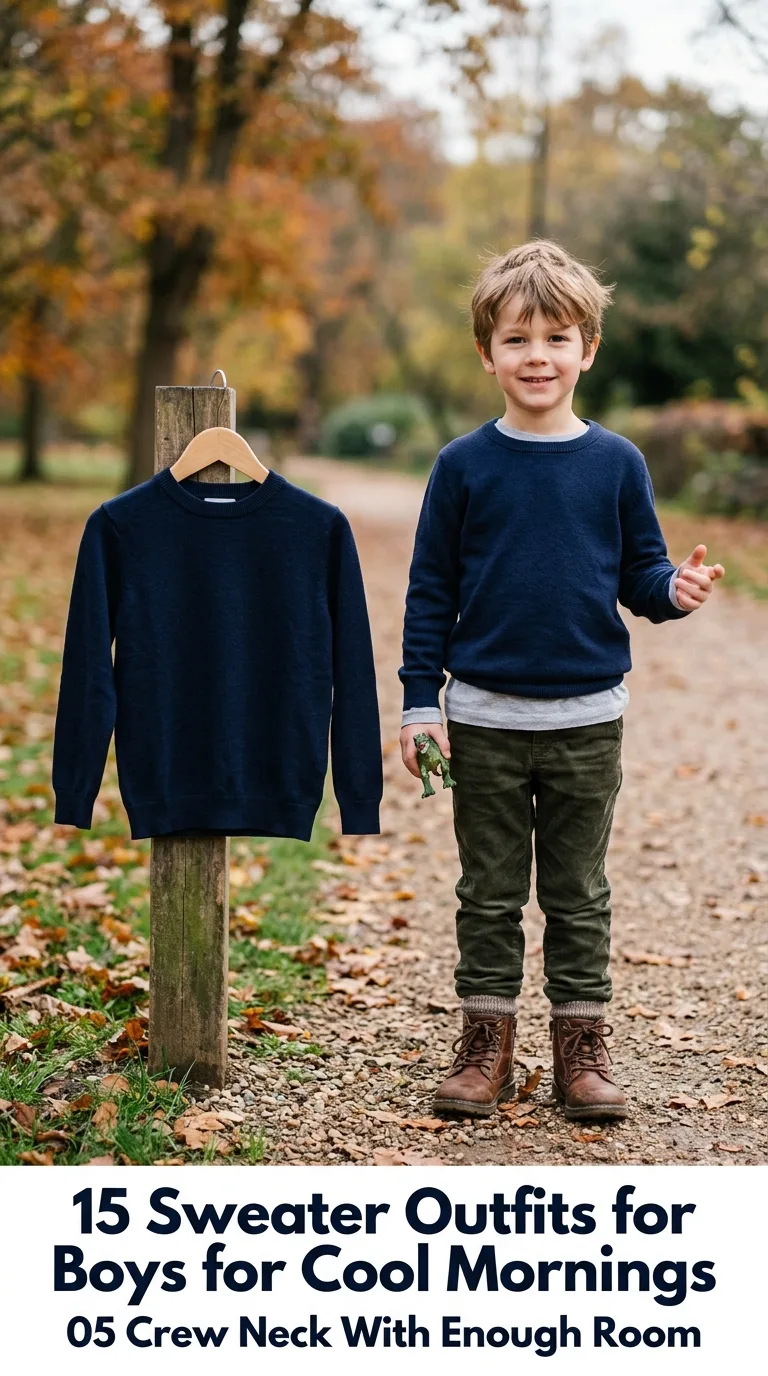
The flat-lay shows a navy crew-neck sweater with a relaxed neckline beside a tighter version for comparison. The neckline is the single most common reason a child refuses a sweater, and it is entirely checkable before buying. A tight crew neck drags over the ears going on and presses at the throat once worn, and a boy who has had that experience once will resist every sweater afterward. Check the opening stretches easily over his head without catching, and choose a slightly wider neckline where available.
6.Half-Zip Over A Plain Tee
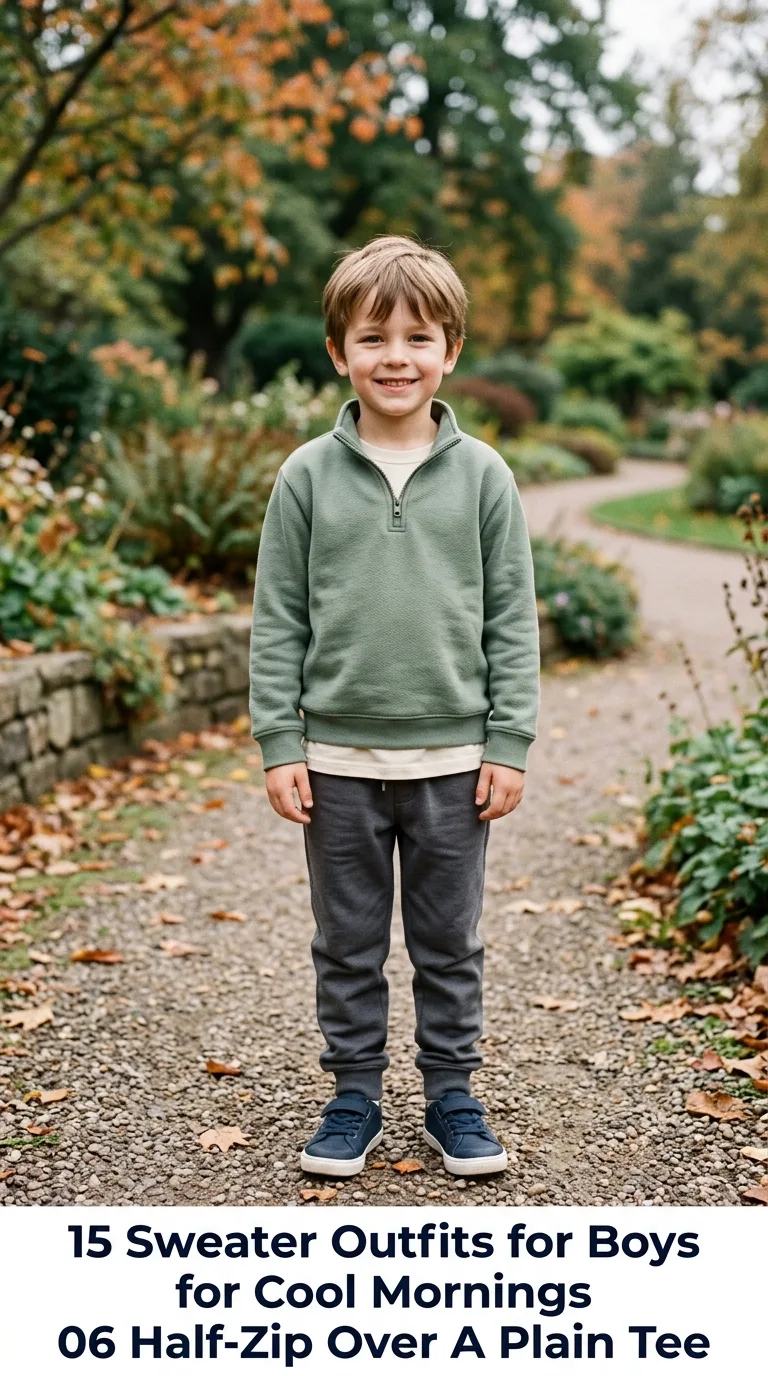
The flat-lay shows a sage half-zip sweatshirt over a cream tee, beside charcoal joggers and sneakers. A half-zip in a loopback cotton rather than a knit is the casual version and often the one he will actually choose. It vents the same way, washes at a high temperature repeatedly, and does not snag the way fine knit does. Loopback rather than brushed fleece, which pills within a term and traps heat uncomfortably indoors.
7.Chunky Knit For Cold Weekends
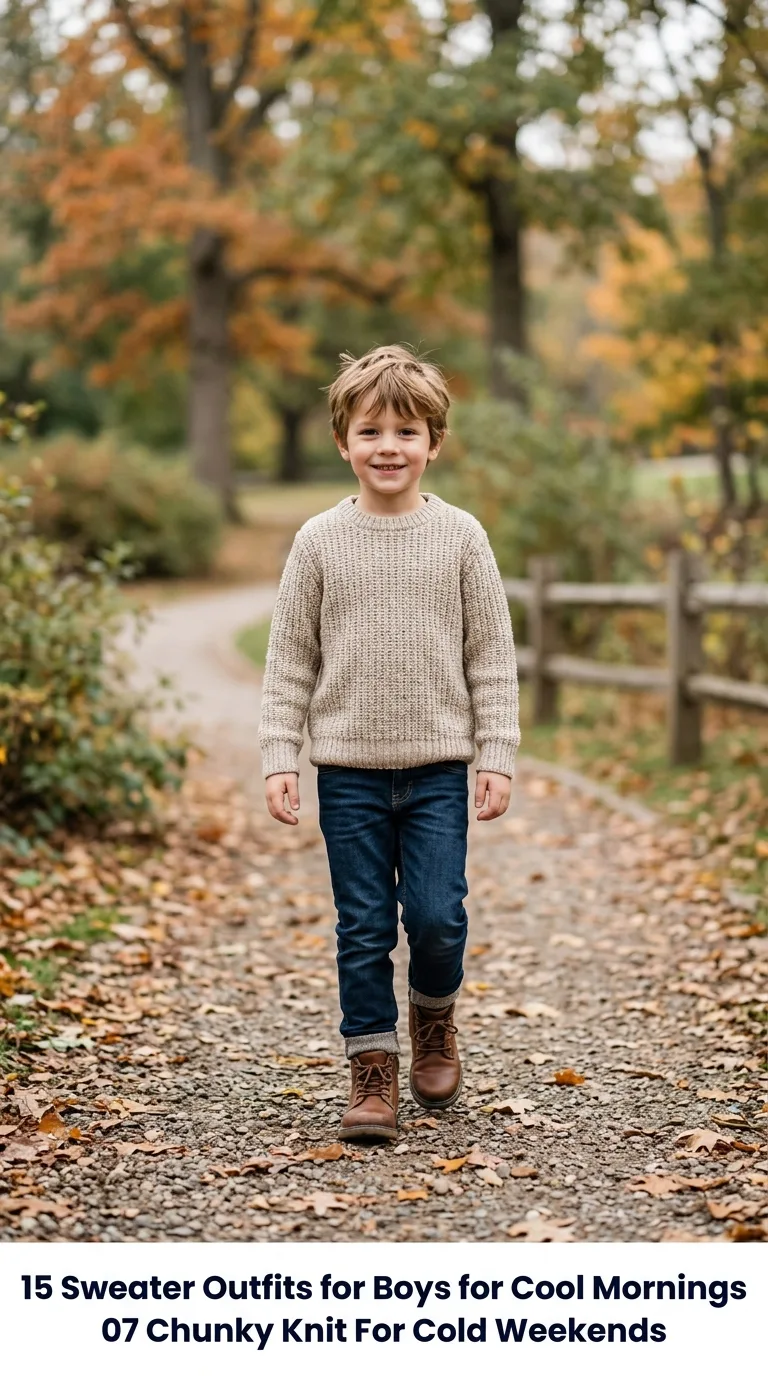
The flat-lay shows a chunky oatmeal knit sweater beside dark jeans and brown boots. Chunky knit is genuinely warmer than fine knit for the same weight because the deeper stitch traps more air, which makes it right for a cold weekend outdoors. It is usually too bulky for school, both under a coat and in an overheated classroom. Treating chunky knits as weekend garments and fine knits as school garments is a sensible division.
8.Layering Two Thin Knits
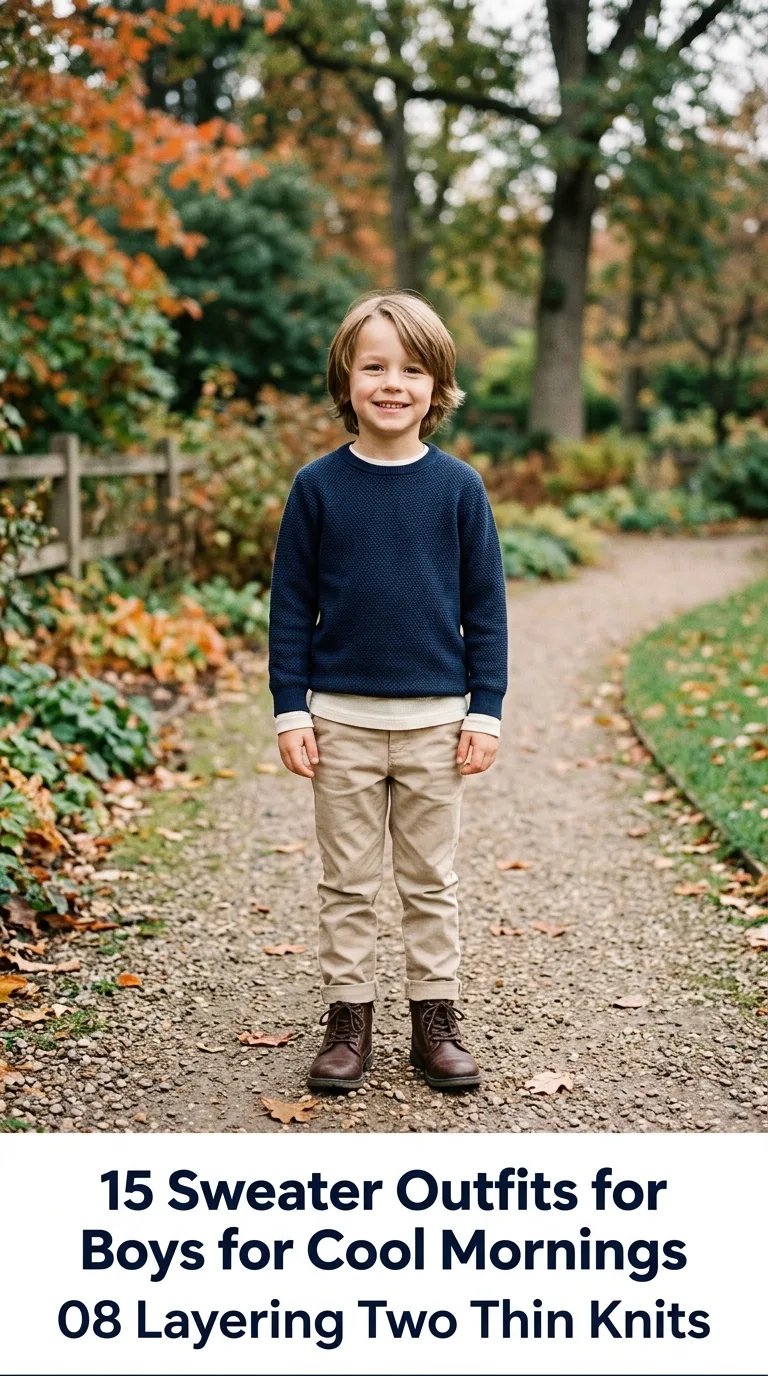
The flat-lay shows a thin cream long-sleeve knit under a thin navy sweater, beside chinos and boots. Two thin layers are warmer than one thick one, because the air trapped between them does the insulating. It is also considerably more adjustable — he can remove one and still be dressed, where removing a single thick sweater leaves him in a tee. This is the layering principle applied to knitwear rather than to outerwear, and it works the same way.
9.Sweater Over A Plaid Shirt Collar
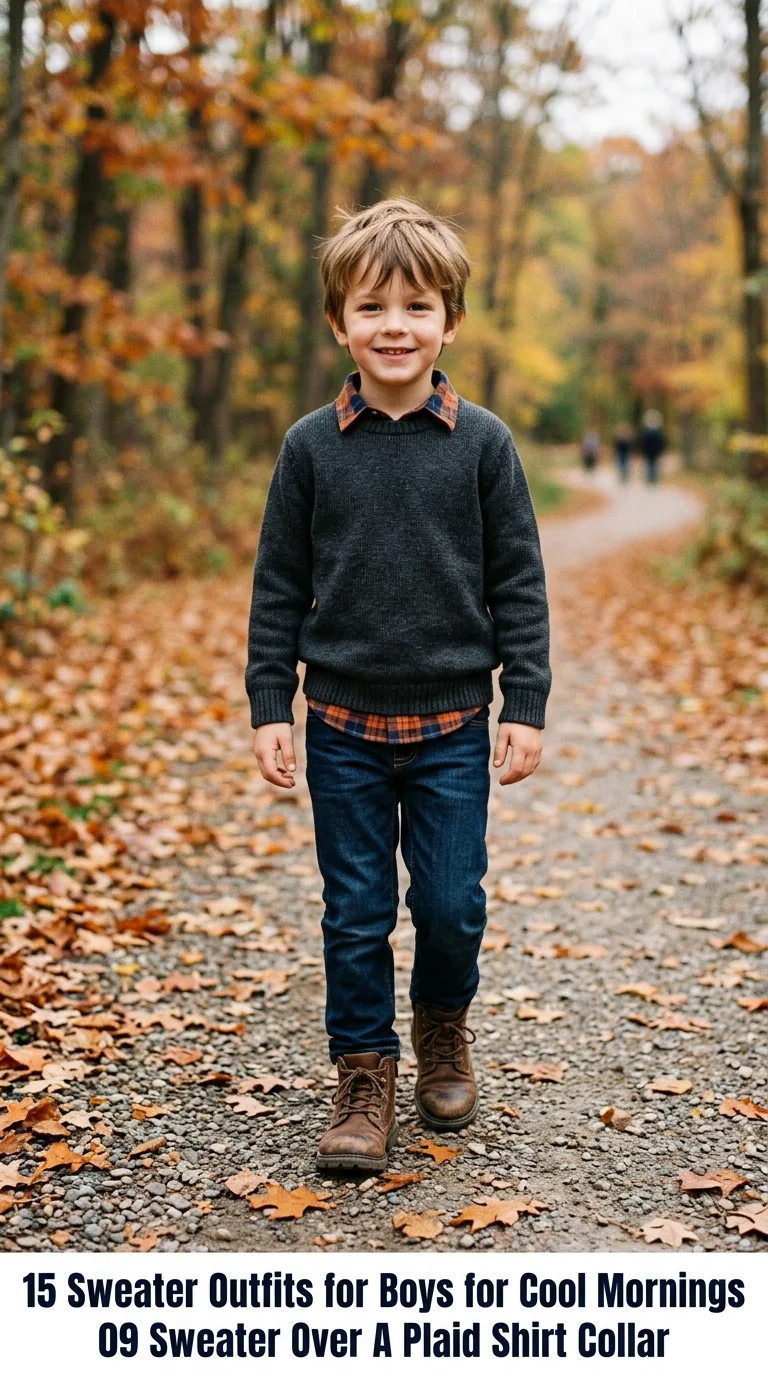
The flat-lay shows a charcoal sweater with a rust plaid shirt collar showing beneath, beside dark jeans and brown boots. A patterned shirt under a plain sweater adds visible interest at the neckline and cuffs without a fully patterned garment, which is a useful trick when a plain outfit needs lifting for a photograph or an occasion. Only the collar and a cuff shows, which is enough. Check both collar points sit flat before any photographs.
10.Machine Washable Only
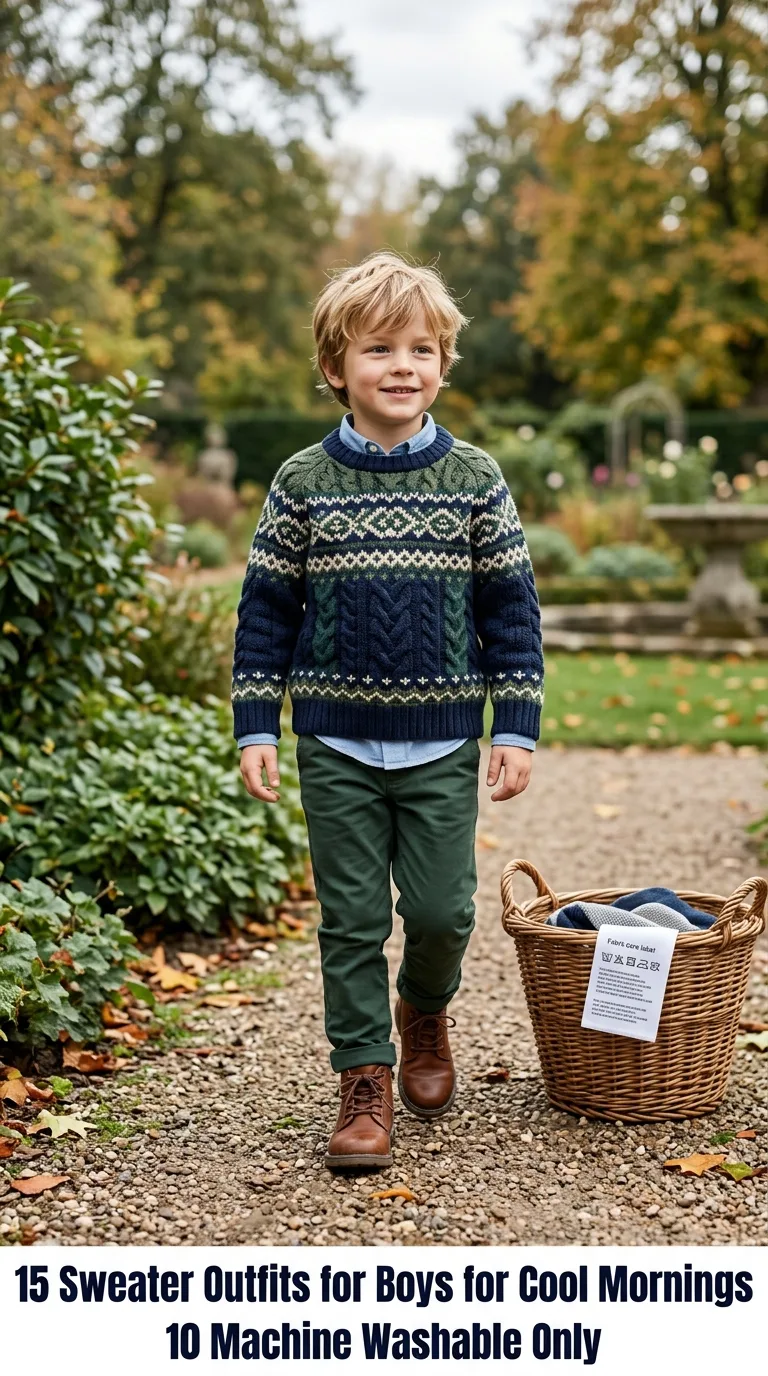
The flat-lay shows a knitted sweater beside a care label and a laundry basket. This is the check that determines whether a sweater gets used. Boys' knitwear gets paint, snack, mud, and playground on it, and anything requiring hand washing or dry cleaning will be worn twice and then quietly avoided. Cotton and acrylic blends handle a warm machine wash repeatedly. Merino labelled as machine washable has been treated to resist felting and is worth the small premium.
11.Neutral Sweater That Works With Everything
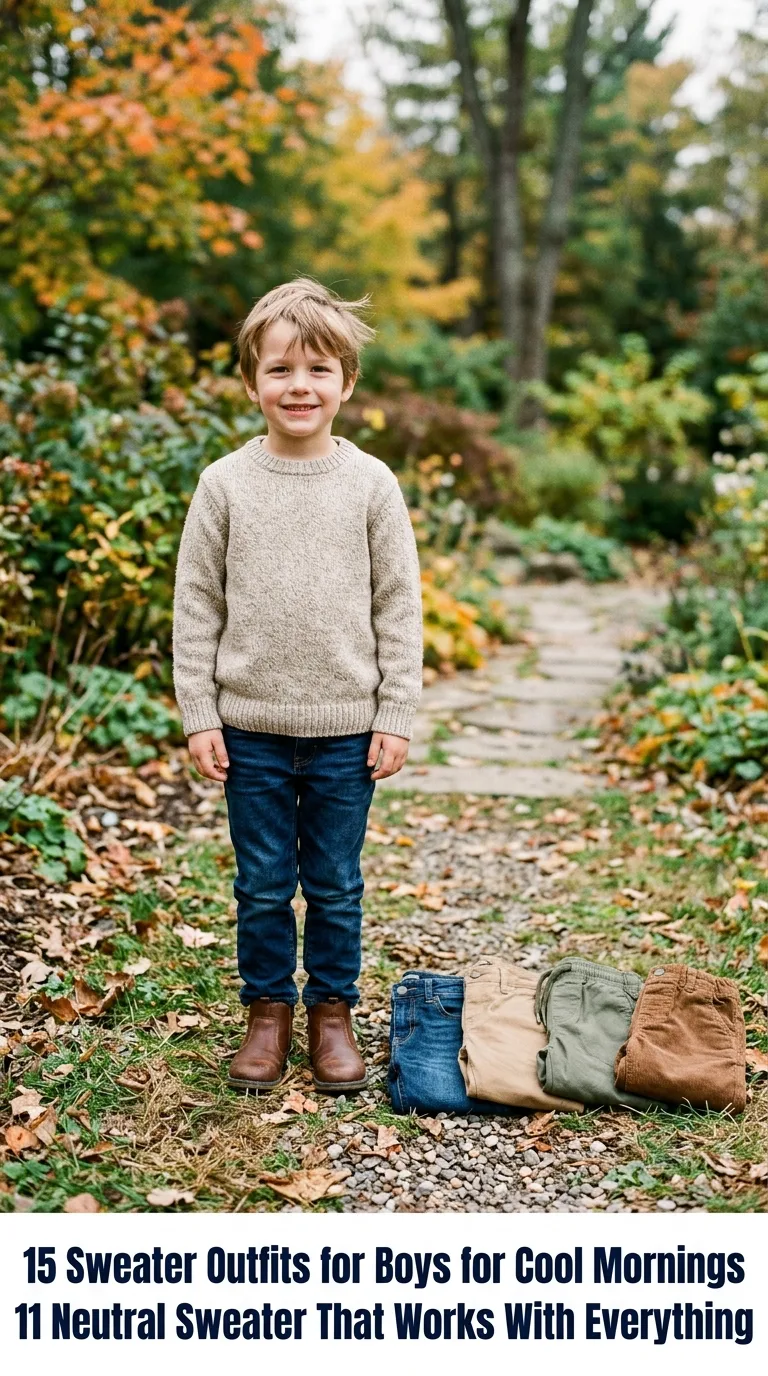
The flat-lay shows an oatmeal sweater laid beside four different bottoms — jeans, chinos, joggers, and corduroy. If you buy one sweater, buy it in oatmeal, charcoal, or navy. A true neutral coordinates with every trouser he owns, which means it gets worn daily rather than only with the two things it happens to match. That makes it considerably better value than a brighter one.
12.Zip Sweater For Younger Children
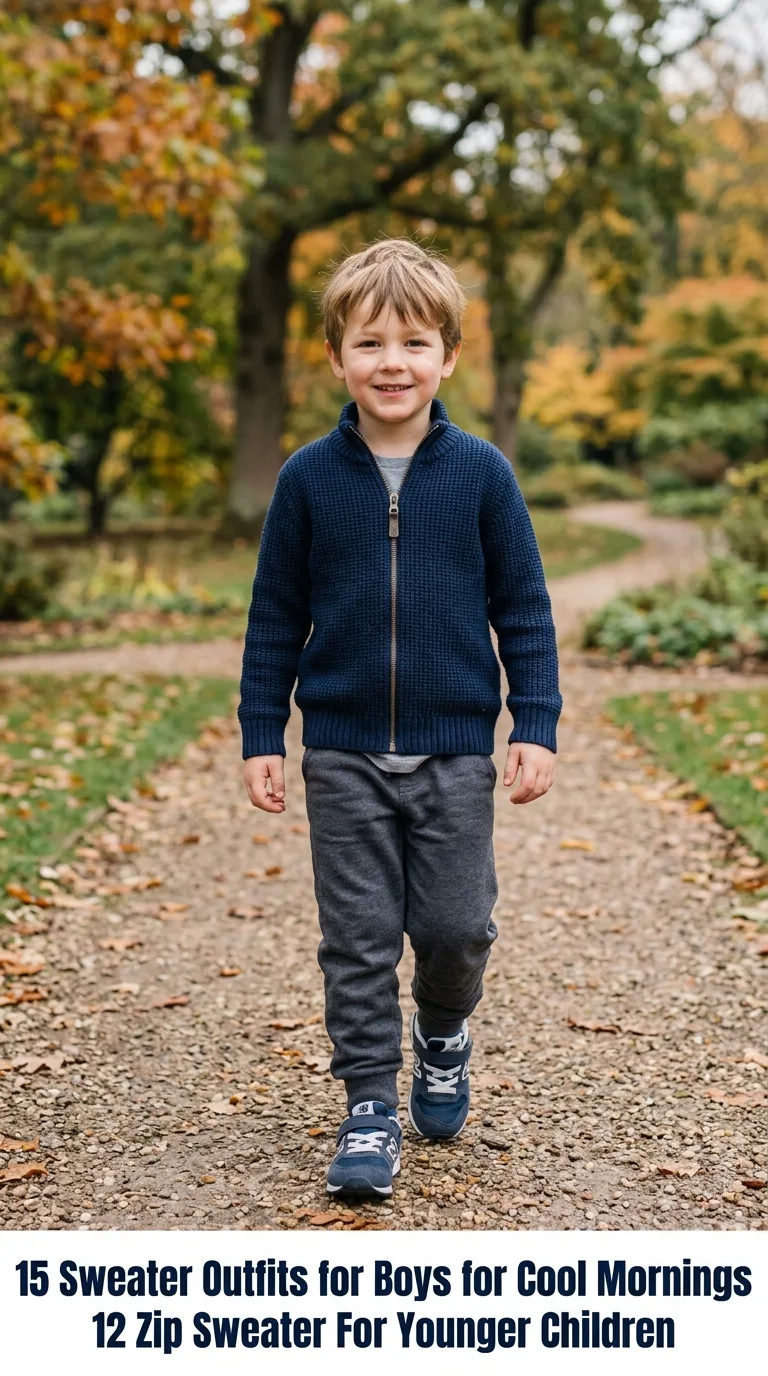
The flat-lay shows a full-zip knitted sweater beside joggers and sneakers, with a large zip pull visible. A full zip is easier for a young child than any other fastening and considerably easier than pulling knitwear over the head. Check the zip pull is large enough for small fingers — many children's zips have pulls sized for adults, which makes the garment functionally unusable alone. A fabric loop can be added to a small pull if needed.
13.Sweater Under A Waterproof Shell
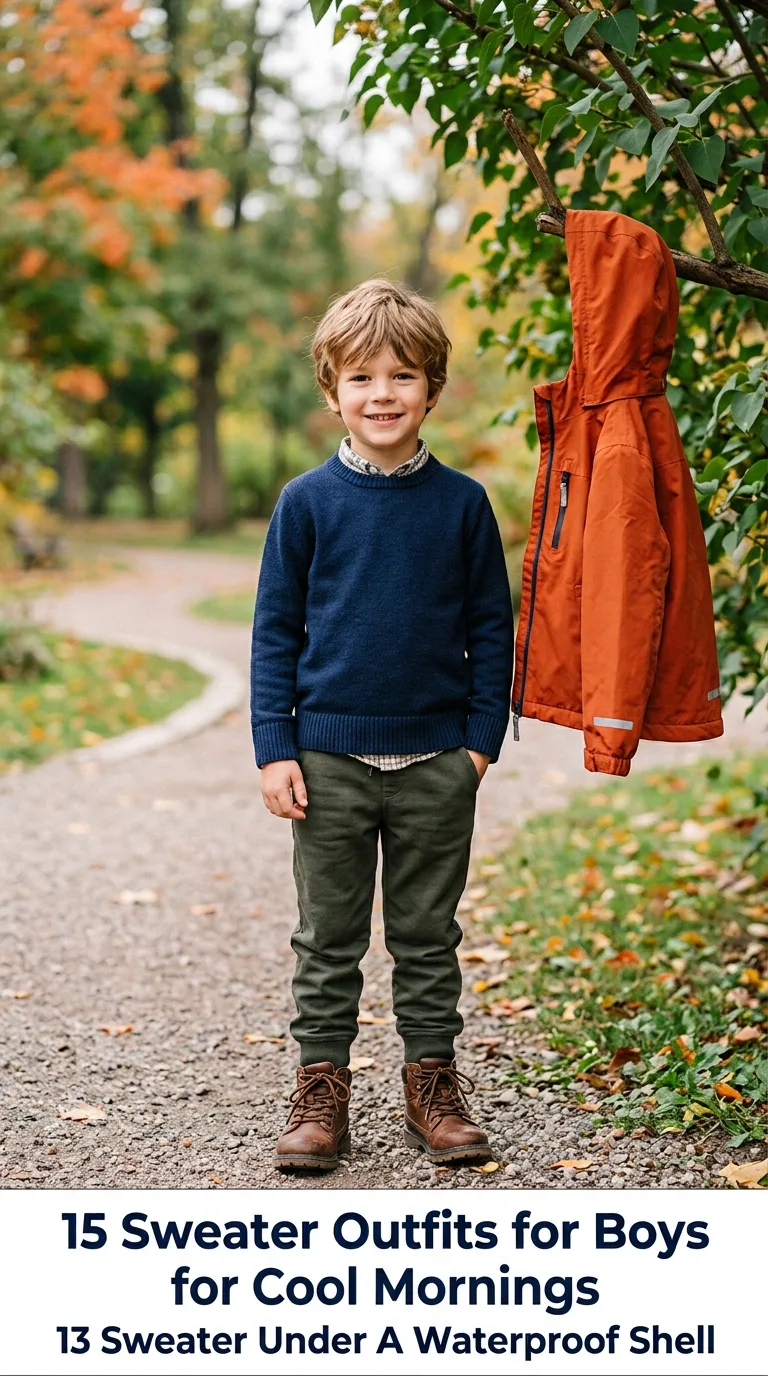
The flat-lay shows a fine knit sweater beside a waterproof shell coat, joggers, and boots. Pairing a knit with a shell rather than buying a padded coat gives you a system that adjusts across more conditions — shell alone on a mild wet day, sweater alone indoors, both together when cold. Fine knit rather than chunky, since bulk under a shell restricts movement and stops the coat fastening properly.
14.Sweater That Survives The Elbows
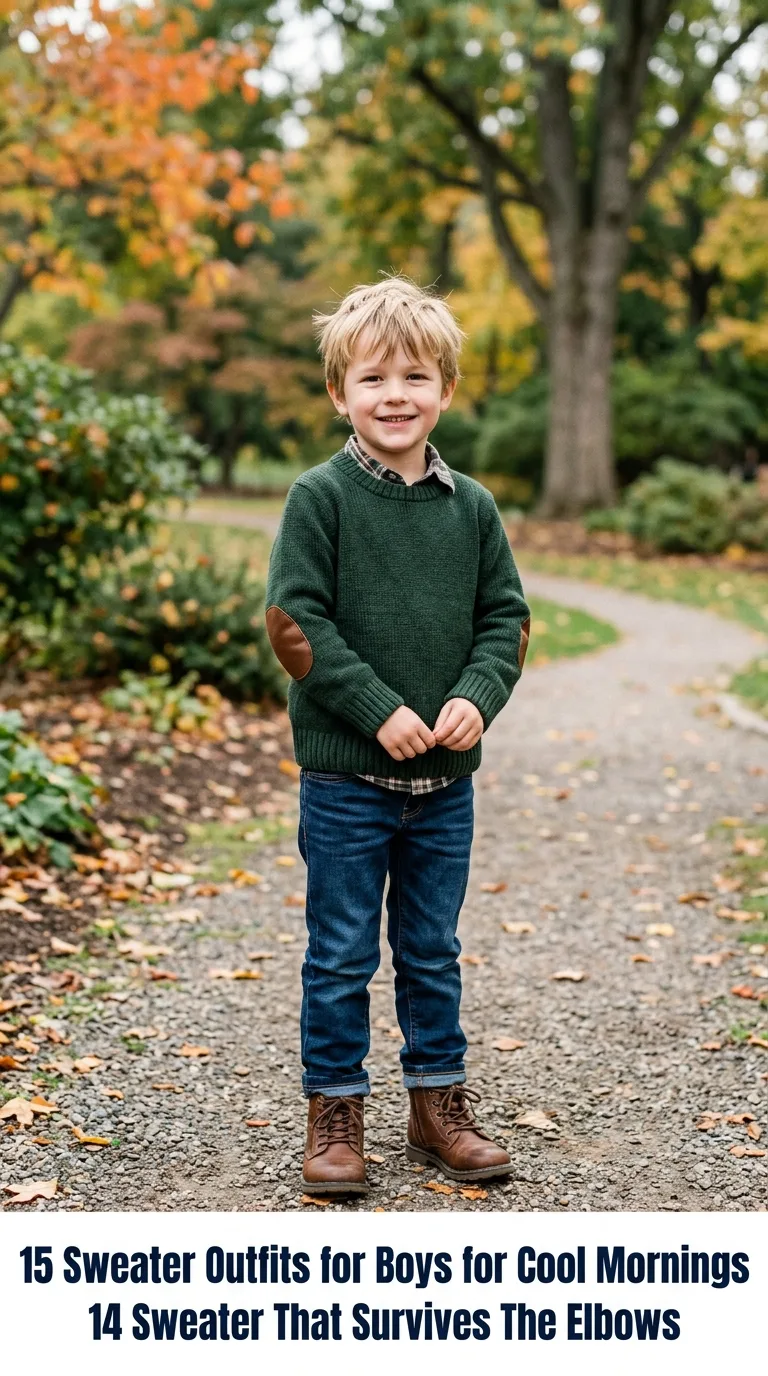
The flat-lay shows a sweater with visible elbow reinforcement patches beside jeans and boots. Elbows are where a boy's sweaters wear through, usually before anything else, from leaning on desks and tables. Sweaters with reinforced elbow patches last considerably longer, and the patches also read as a deliberate style detail rather than a repair. Alternatively, a heavier gauge knit resists wear better than a fine one at the same price point.
15.Spare Sweater Left At School
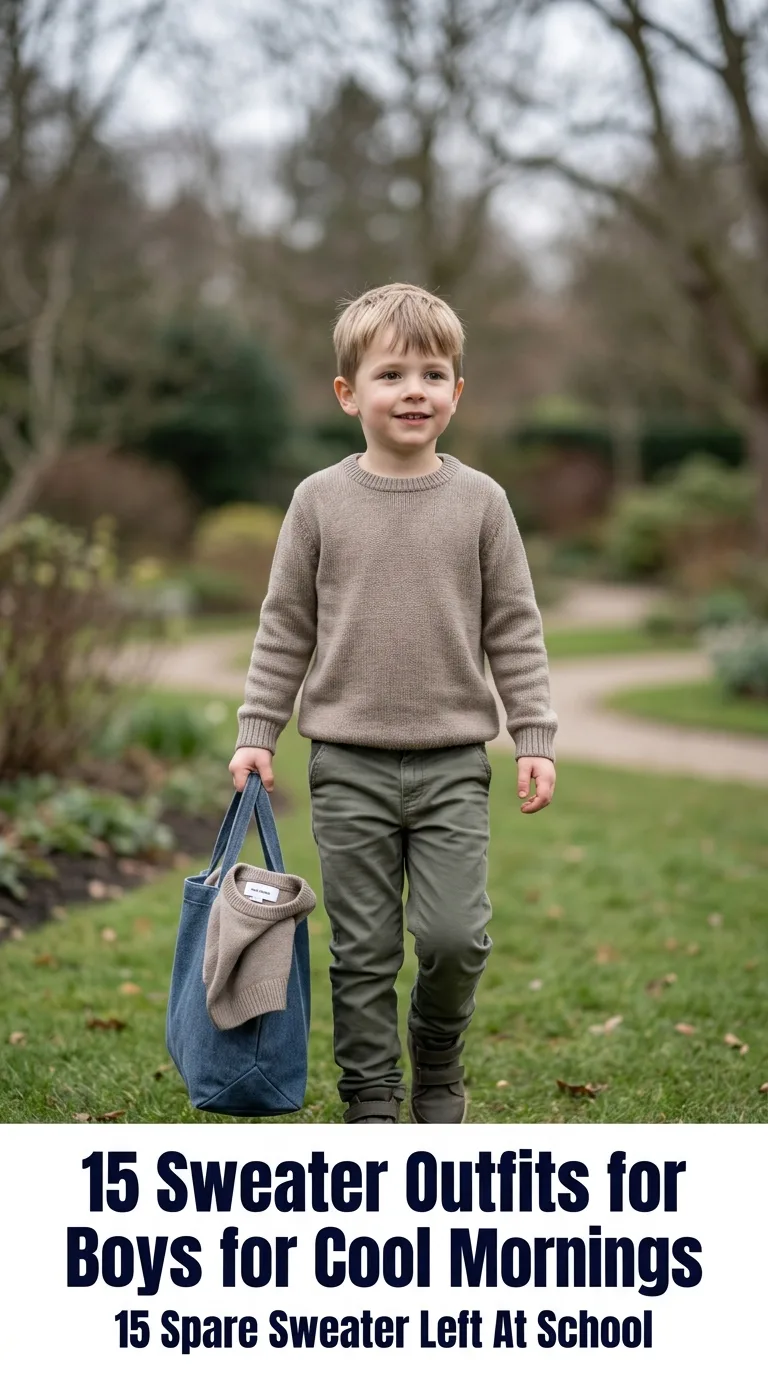
The flat-lay shows a folded plain sweater with a name label in a fabric bag. Sweaters get left behind — cloakrooms, playgrounds, friends' houses — and that is simply what happens across a school year. Keeping a cheap plain labelled spare at school means a cold afternoon does not depend on whether the good one came home yesterday. Label everything, and budget for replacing at least one across the year rather than treating each loss as a failure.
Frequently asked questions
What is the most practical sweater for a boy?
A quarter-zip. It vents without needing to come off, which handles a cold morning and an overheated classroom without an adult being involved.
Why does my child refuse to wear sweaters?
Usually the neckline. A tight crew neck drags over the ears and presses at the throat, and one bad experience makes him resist every sweater afterward.
Are cardigans suitable for boys?
Yes, and they are under-bought out of habit. A cardigan opens completely, so he manages it alone across a day of changing temperature.
What knitwear material is best for children?
Machine-washable cotton, acrylic, or treated merino. Anything hand-wash or dry-clean-only gets worn twice and then avoided.
Are two thin sweaters better than one thick one?
Yes. The air trapped between two layers insulates, and removing one still leaves him dressed rather than in just a tee.
The takeaway
The best sweater for a boy is the one he can adjust without help. A quarter-zip vents, a cardigan opens, and both stay with him where a pullover ends up lost. Check the neckline stretches easily and the label says machine washable — those two checks decide whether it gets worn all winter or refused after the first week.
Bright Play Days is reader-supported. This article is general styling guidance and reflects our own opinions.