


15 Rainy Day Outfits for Boys
Quick answer
Three details decide whether a wet weather outfit works: taped seams, a hood that stays up in wind, and thick socks inside the boots. Everything else is optional. Let the outer layers do the work and keep what is underneath comfortable and quick-drying.
Key takeaways
- Water-resistant is not waterproof — taped seams are the difference and they are visible inside.
- A hood that blows back is the most common failure in children's rain coats.
- Rain boots have no insulation, so the sock determines whether feet stay warm.
- Keep a spare set including two pairs of socks in his bag through the wet months.
1.Navy Raincoat With Taped Seams
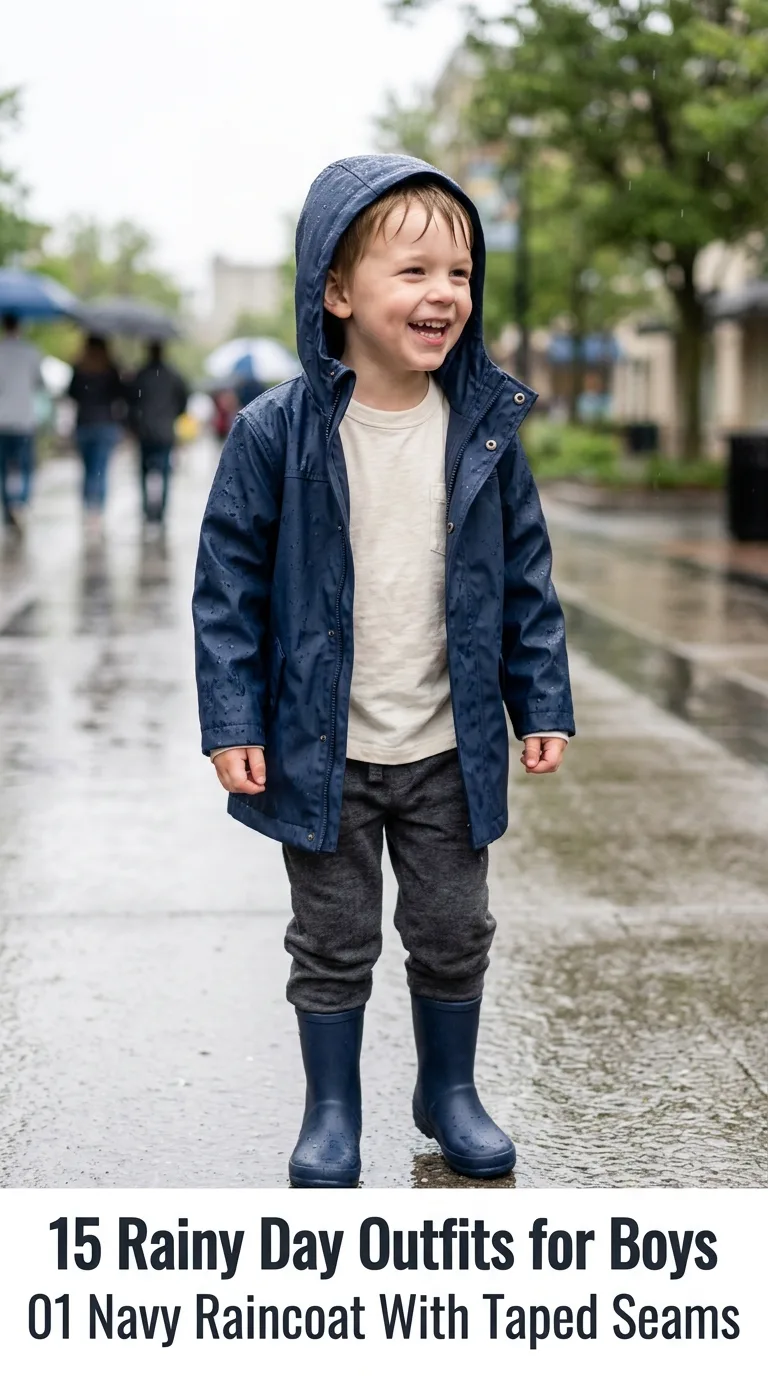
The flat-lay shows a navy hooded raincoat beside a cream long-sleeve tee, charcoal joggers, and navy rain boots. The coat is the whole outfit and the detail that decides it is invisible from the outside. Taped seams are what separate genuinely waterproof from merely water-resistant — every stitch line is a row of holes, and without sealing tape on the inside, water works through within twenty minutes of steady rain. Turn the coat inside out in the shop and look for the shiny tape strips running along the seam lines. The second thing to check is the hood, which must stay up in wind. Look for a drawcord, an elasticated edge, or a stiffened brim. Most children's rain coats fail here, and a hood that blows back on a windy morning means a soaked head before he reaches the classroom, which is exactly the thing the coat was bought to prevent.
2.Puddle Suit For Full Coverage
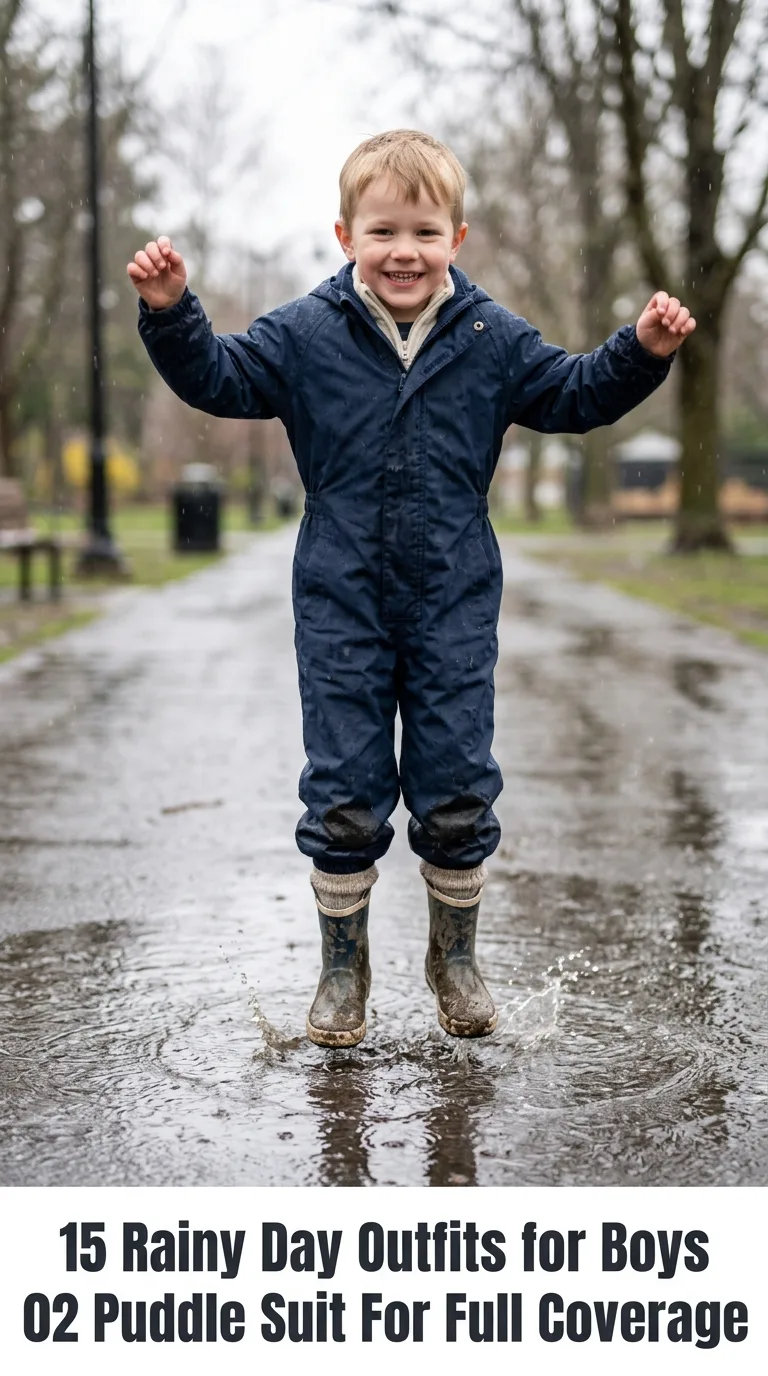
The flat-lay shows a navy one-piece waterproof puddle suit beside cream layers, thick socks, and rain boots. A puddle suit is the highest-value wet weather purchase for a young boy, because it covers the seat and knees — which is precisely where a boy gets wet, since he will be kneeling and sitting in puddles rather than standing beside them. One garment goes over whatever he is already wearing, and comes off in one piece at the door, which turns a muddy child into a two-minute problem rather than a full change of clothes. Look for elasticated cuffs and ankles and reinforced knees.
3.Waterproof Trousers Over Joggers
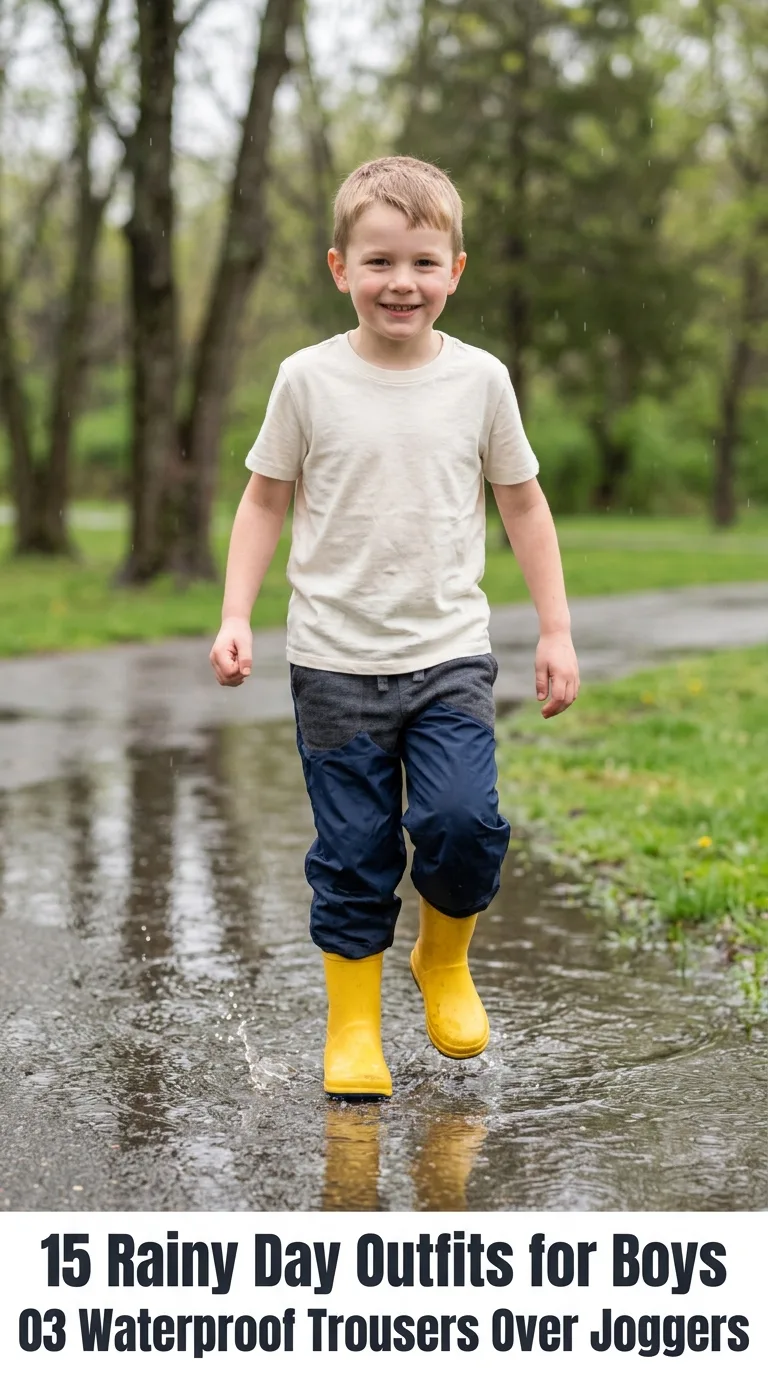
The flat-lay shows navy waterproof over-trousers beside charcoal joggers, a cream tee, and rain boots. For a school-aged boy, separates are usually more practical than a puddle suit because bathroom independence matters across a full day. Over-trousers pull on over whatever he is wearing and come off at the classroom door. The elasticated ankles should fit over the top of the boots rather than tucking inside — trousers tucked into boots channel water straight in, which is the opposite of the intended effect.
4.Thick Socks Inside Rain Boots
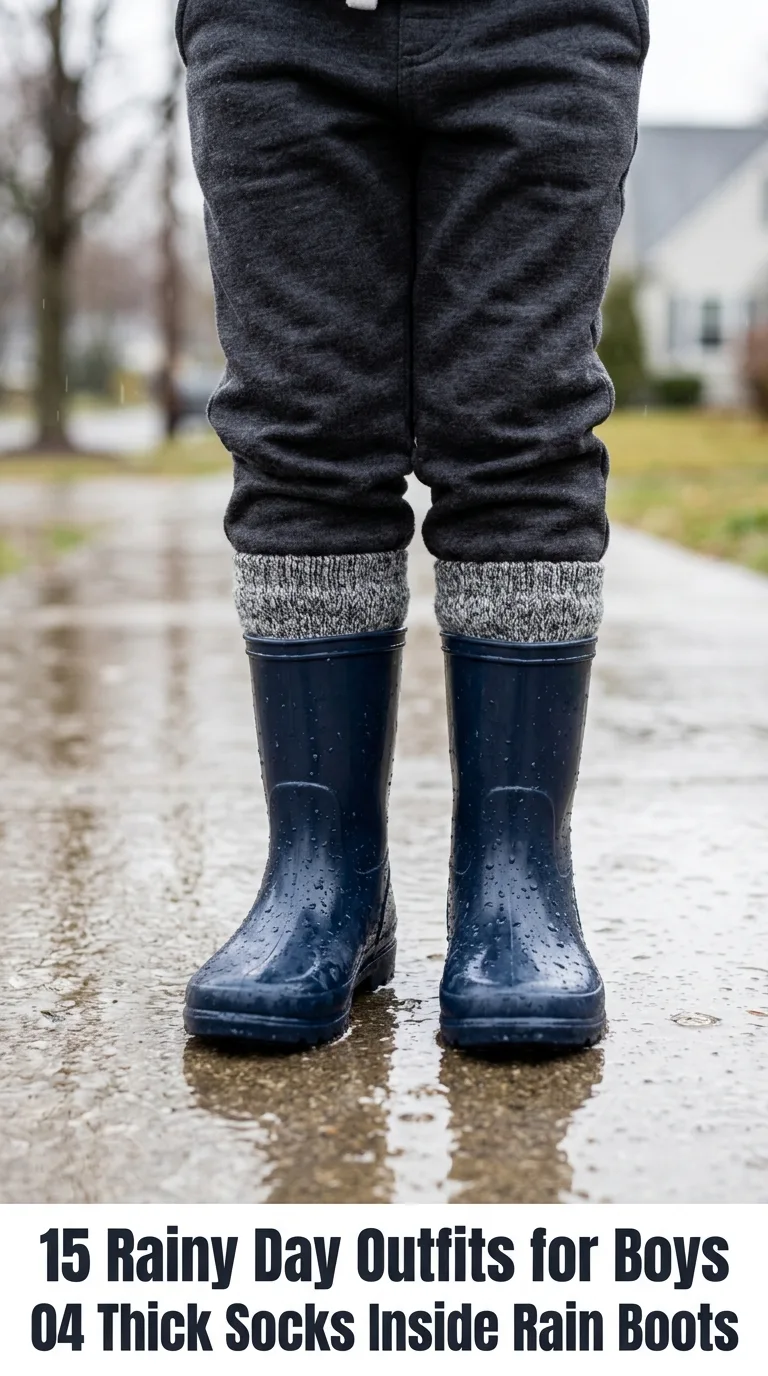
The flat-lay shows two pairs of thick wool-blend socks beside navy rain boots and charcoal joggers. This is the detail most commonly overlooked and the one that matters most. A rain boot is a hollow rubber shell with no insulation whatsoever, so a thin cotton sock means cold damp feet within an hour regardless of how good the boot is. Thick cotton or wool-blend socks change it entirely. Check the fit with the thick sock on — a boot packed too tightly restricts circulation and is colder rather than warmer, so leave air space around the toes.
5.Fleece Under A Waterproof Shell
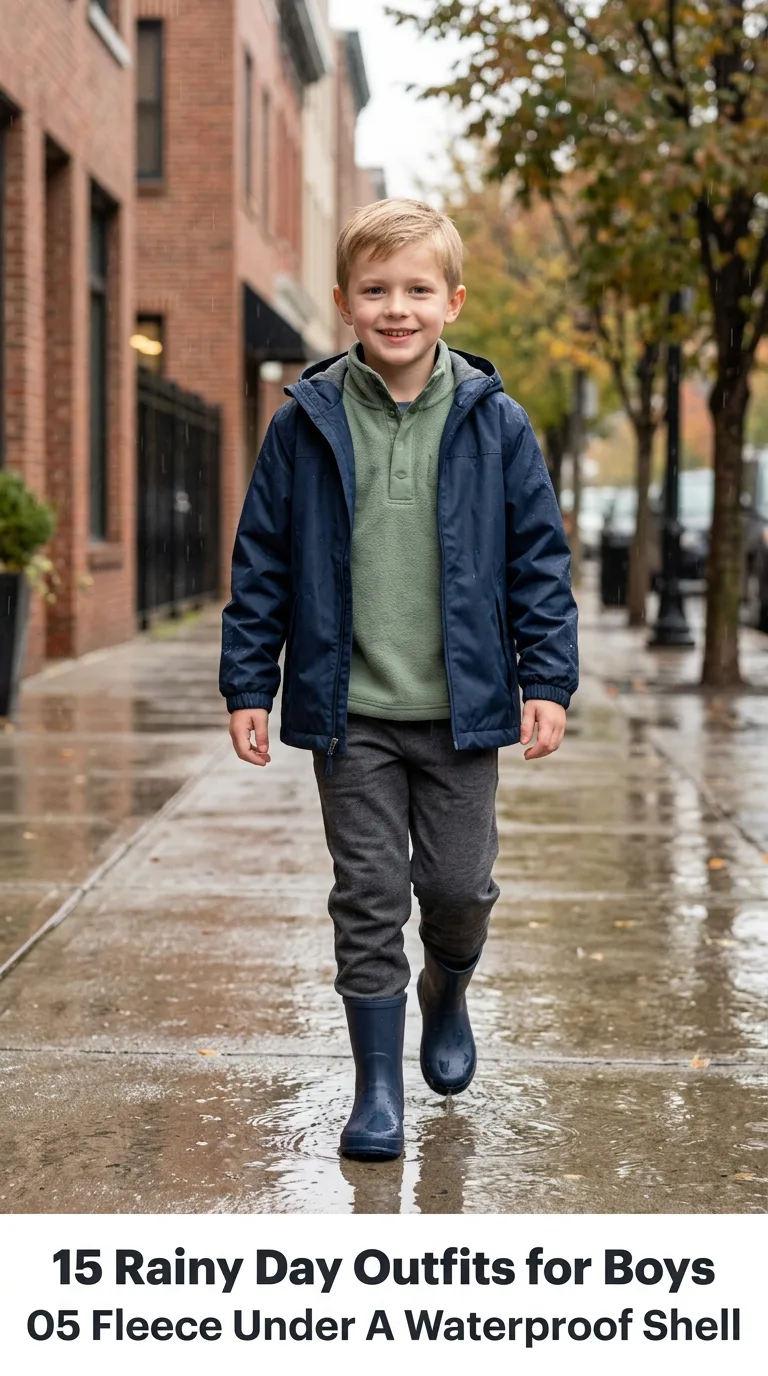
The flat-lay shows a sage fleece pullover beside a waterproof shell coat, charcoal joggers, and rain boots. A fleece and shell combination adjusts across more conditions than a single padded waterproof coat — shell alone on a mild wet day, fleece alone indoors, both together when it is cold and wet. It also dries far faster, since a padded coat soaked through stays damp for a day or more. Fleece stays warm when damp, which padded fill does not.
6.Reinforced Knee Trousers For Puddles
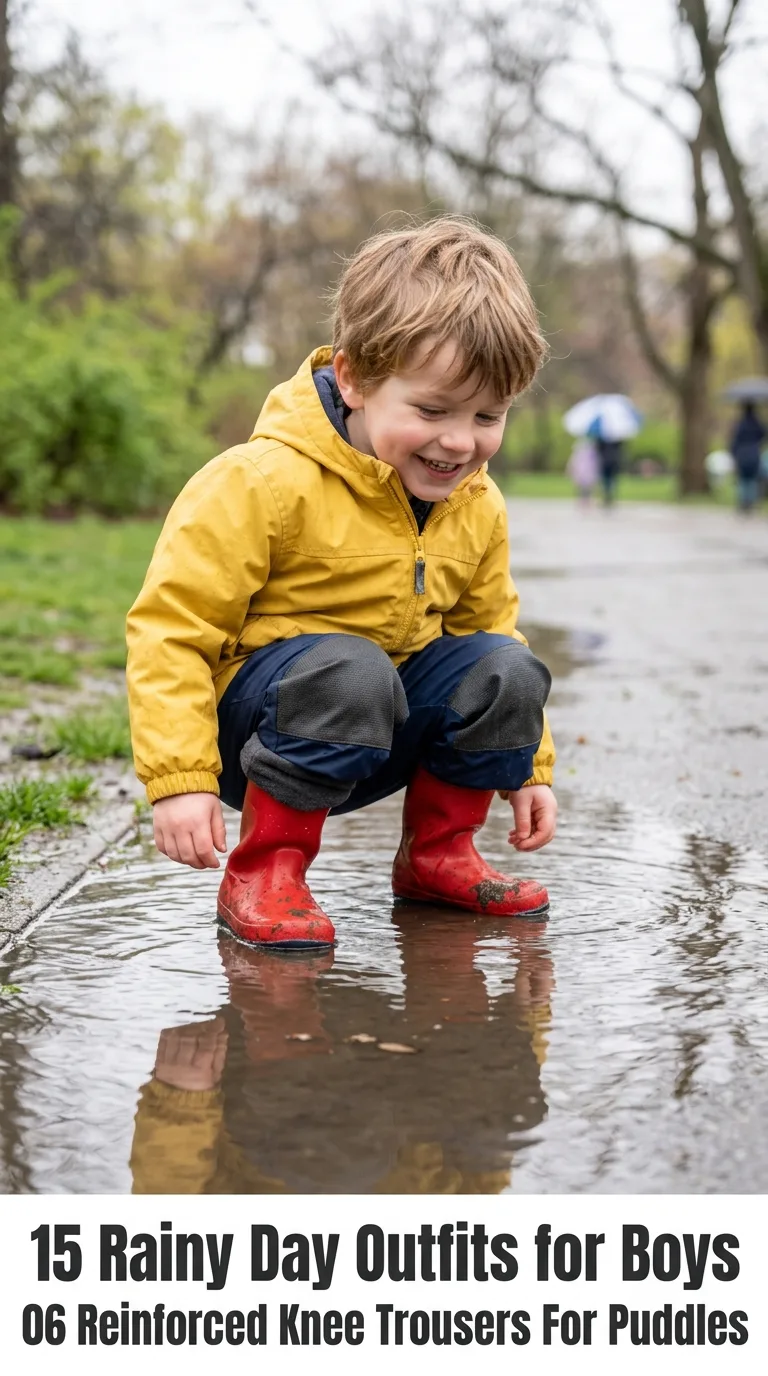
The flat-lay shows waterproof over-trousers with reinforced knee panels, beside charcoal joggers and rain boots. Knees are where a boy's wet weather gear fails first, because puddles get knelt in rather than walked around. Over-trousers with a double layer or reinforced panel at the knee last considerably longer than plain ones. This is worth seeking out specifically rather than assuming all waterproof trousers are equivalent — the difference in lifespan is usually a full season.
7.Bright Coat With Reflective Detail
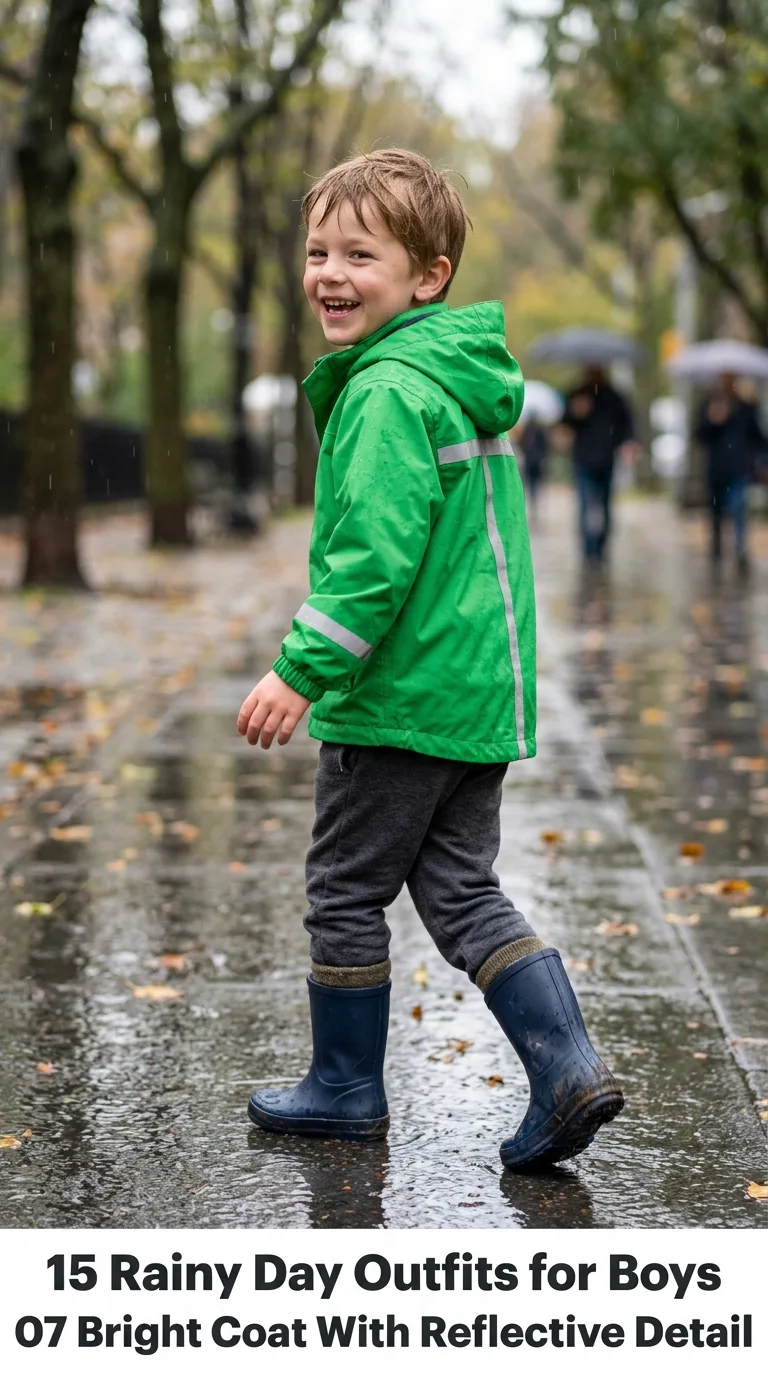
The flat-lay shows a bright green waterproof coat with reflective strips on the sleeves and back, beside joggers and rain boots. Wet mornings are dark mornings and visibility is a safety matter rather than a style one. Look for reflective strips that form part of the design rather than a small logo, positioned on the back and sleeves where traffic will see them. Bright colors also make him easier to spot in a crowded playground, which is a smaller but real benefit.
8.Quick-Dry Base Layers
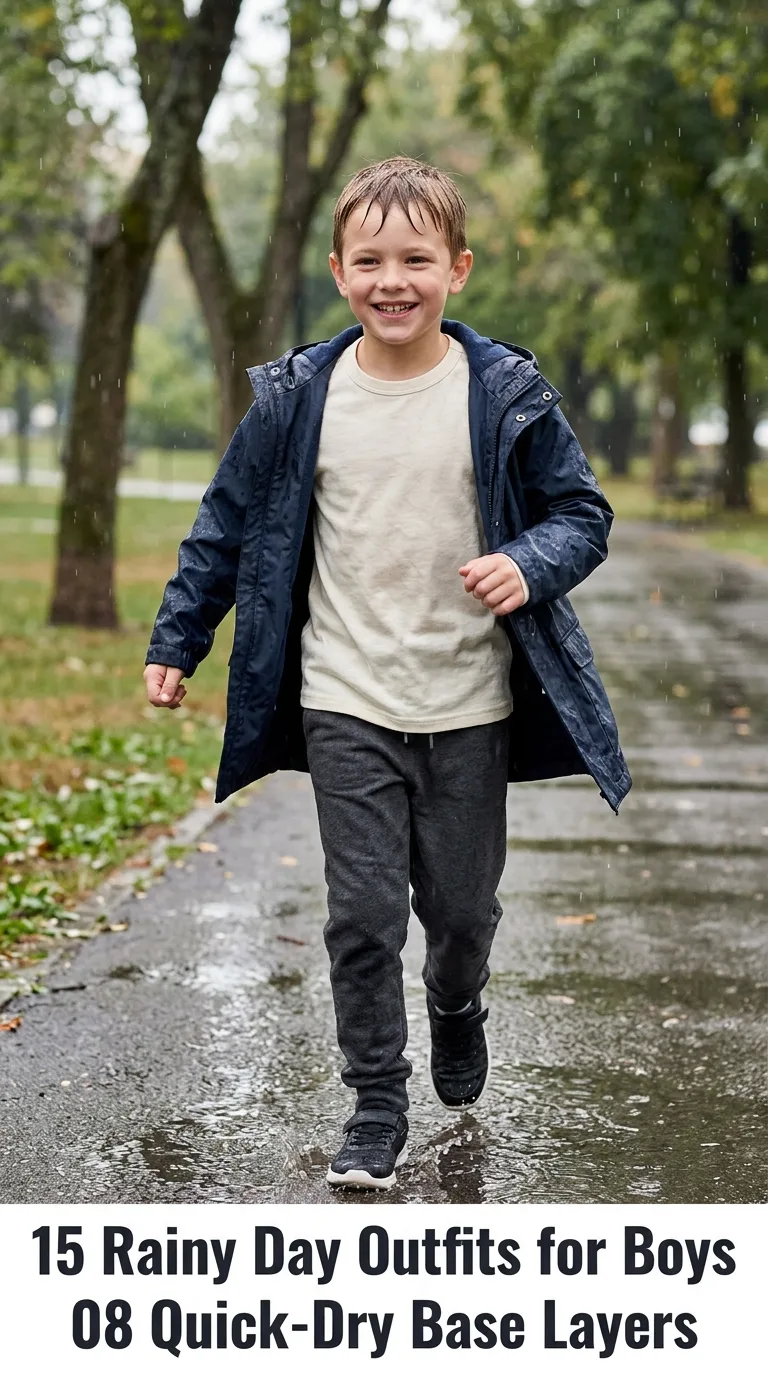
The flat-lay shows a cream cotton-blend long-sleeve tee beside charcoal joggers and a waterproof coat. What goes underneath matters more on a wet day than a dry one, because some water always gets in at the cuffs and neck. Pure cotton holds that water against the skin and stays cold for hours, while a cotton blend or a technical fabric dries within a lesson. This is not about specialist kit, only about choosing the blend tee over the pure cotton one when the forecast is bad.
9.Longer Cut Coat For Coverage
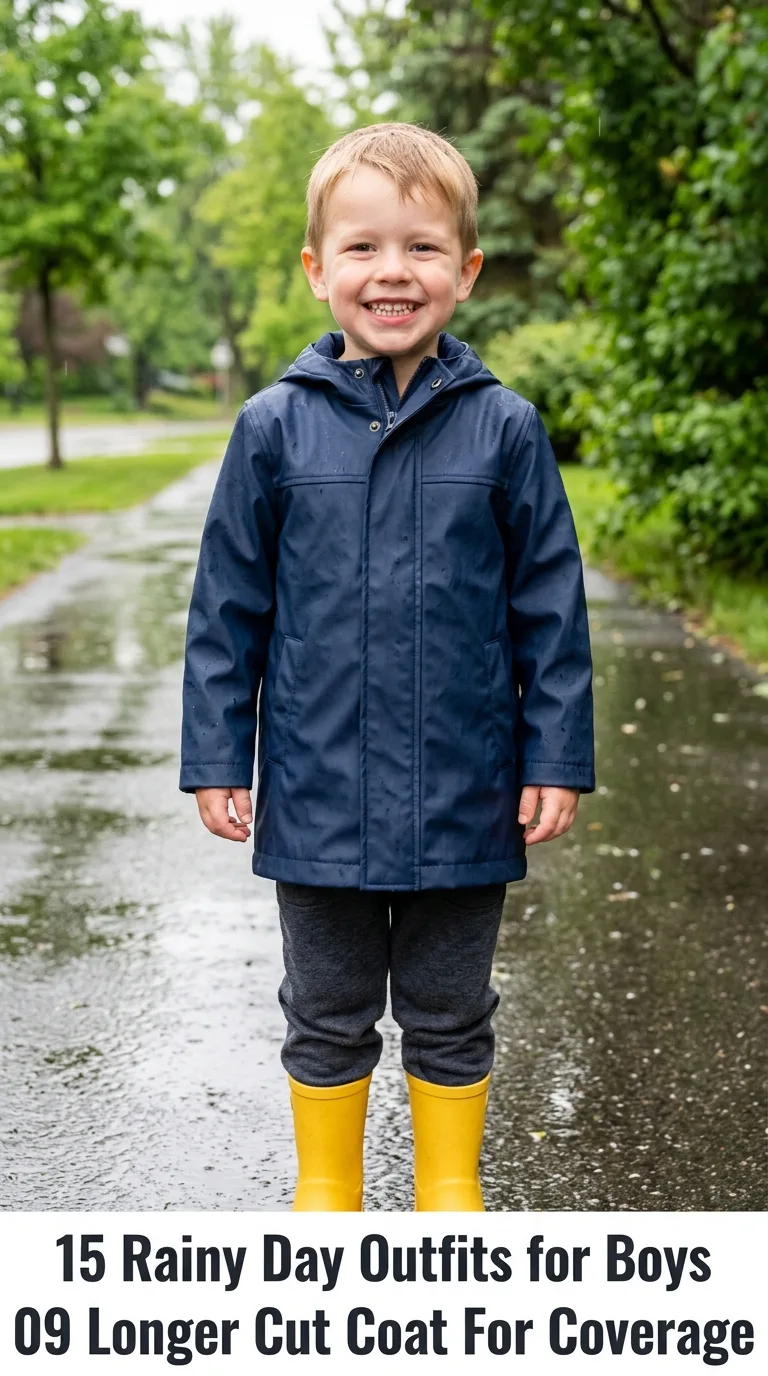
The flat-lay shows a navy waterproof coat cut to mid-thigh beside joggers and rain boots. Coat length matters more in rain than in cold. A short coat leaves the lower back and the tops of the legs exposed, and those soak first when he bends, sits, or the wind drives rain sideways. A coat reaching mid-thigh covers the gap between the hem and the boot top, which is where most rain actually reaches a child.
10.Rain Boots With Pull Loops
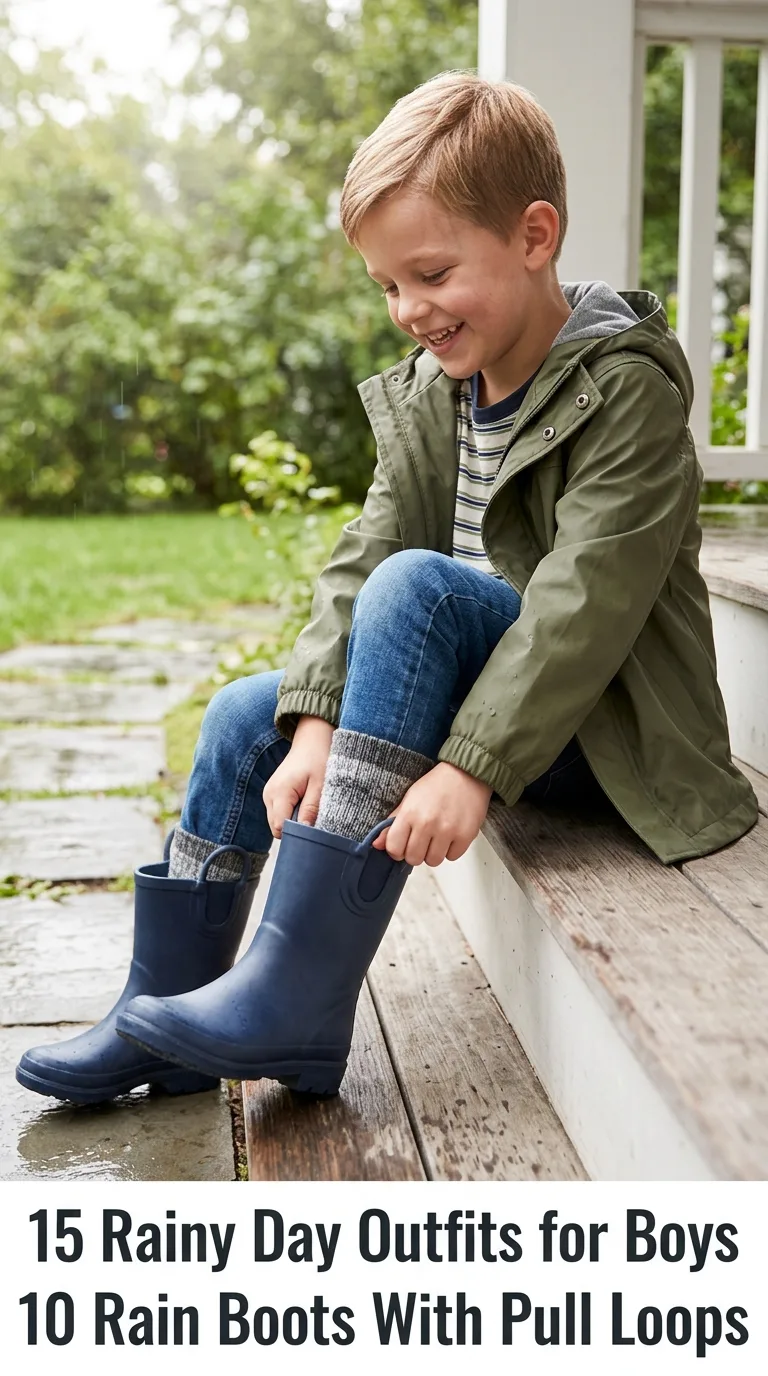
The flat-lay shows navy rain boots with fabric pull loops at the top, beside thick socks. Pull loops determine whether he can put his own boots on. Rain boots grip against a sock and are genuinely difficult for a young child to pull on without something to hold, which means a parent doing it every single morning. Boots with proper stitched fabric loops let him manage alone from around age three. Check the loops are stitched rather than glued, since glued ones detach within a season.
11.Waterproof Gloves Not Knitted
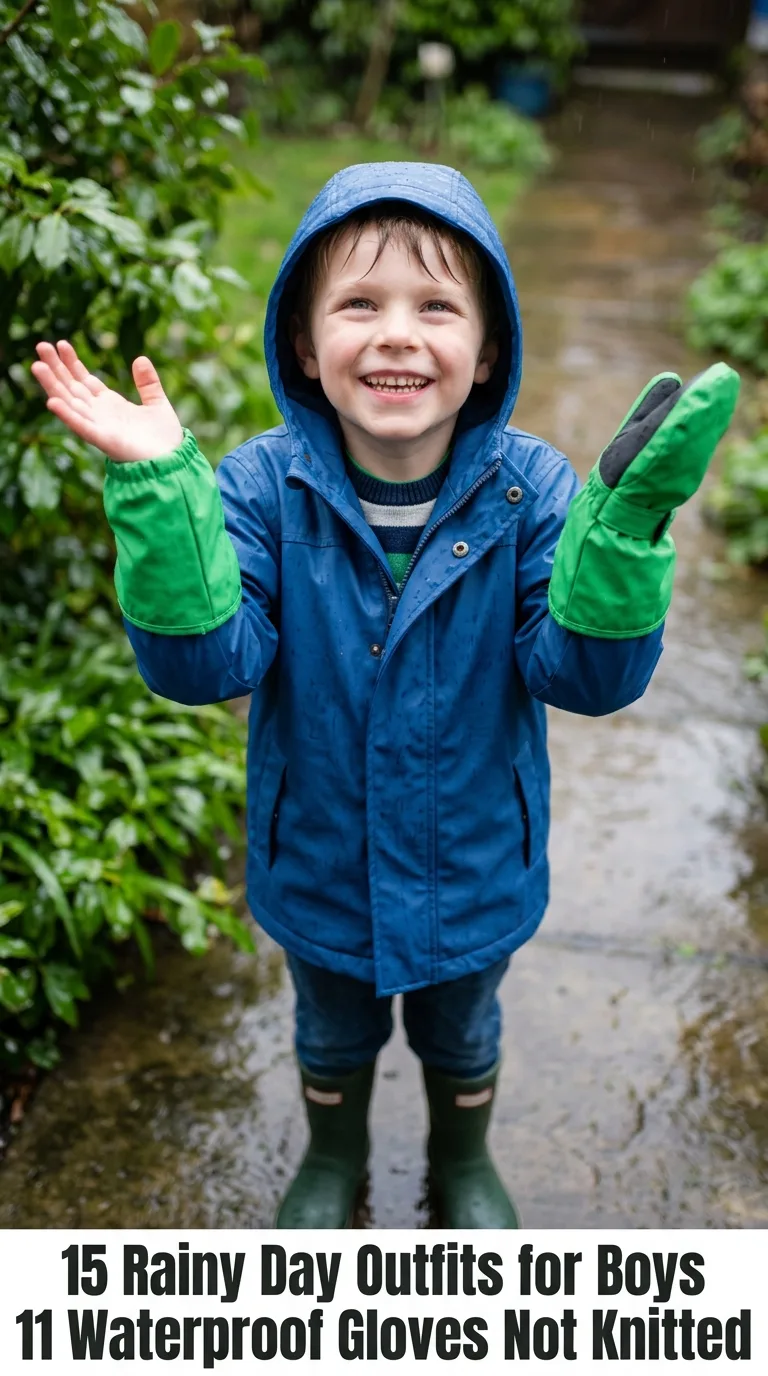
The flat-lay shows waterproof mittens with long cuffs beside knitted gloves shown for comparison. Knitted gloves in rain are worse than none at all — they soak through within minutes and then hold cold water against the hands, which actively chills. Waterproof mittens or gloves with a fleece lining are the correct wet weather choice. Long cuffs worn over the coat sleeve rather than under stop water running down the arm and in at the wrist, which is a common route for a soaking.
12.Waterproof Backpack Cover
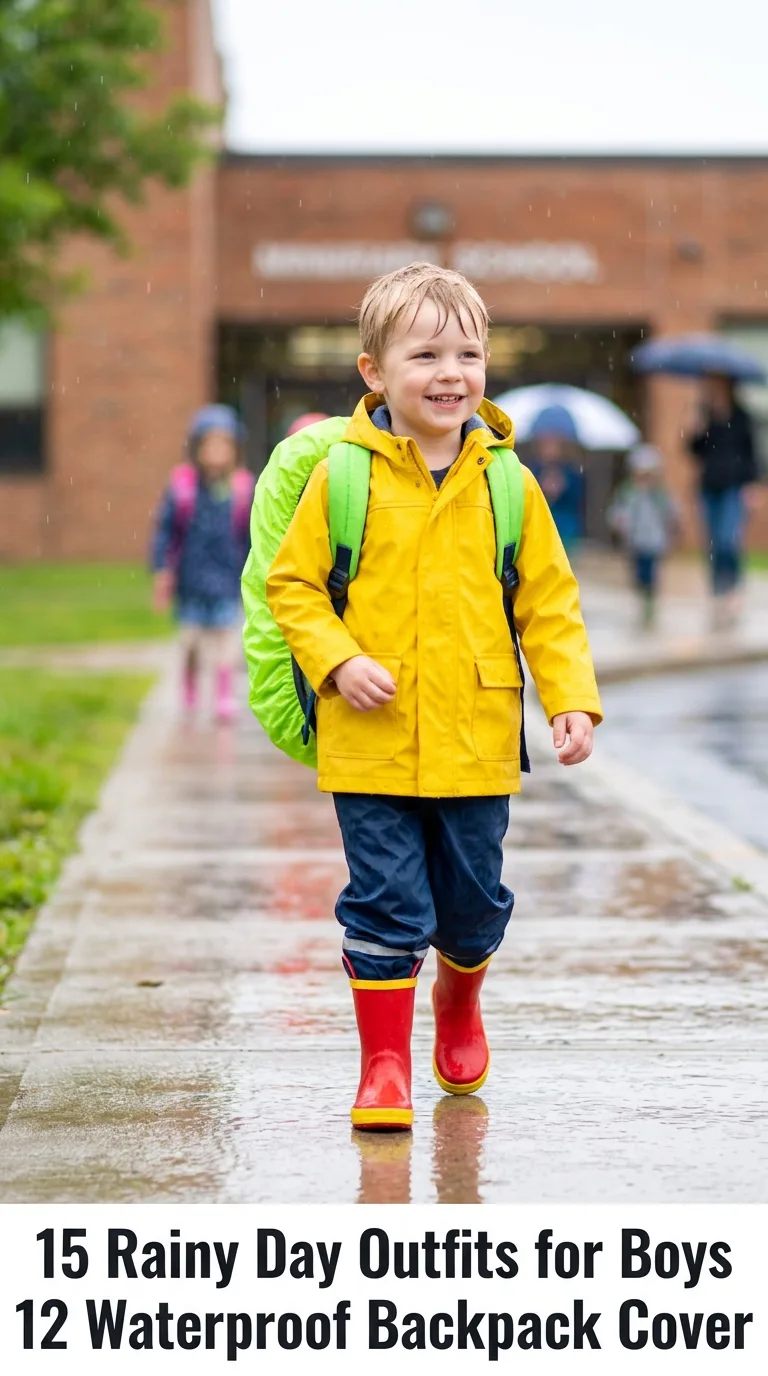
The flat-lay shows a bright waterproof cover stretched over a school backpack, beside a raincoat and boots. A wet bag means wet books, wet homework, and a wet spare set of clothes, which defeats the point of packing one. A pull-on cover costs very little and solves it completely. Choose a bright color, which doubles as visibility on a dark morning. A large sealed plastic bag inside the backpack achieves most of the same result for nothing.
13.Indoor Shoes In A Fabric Bag
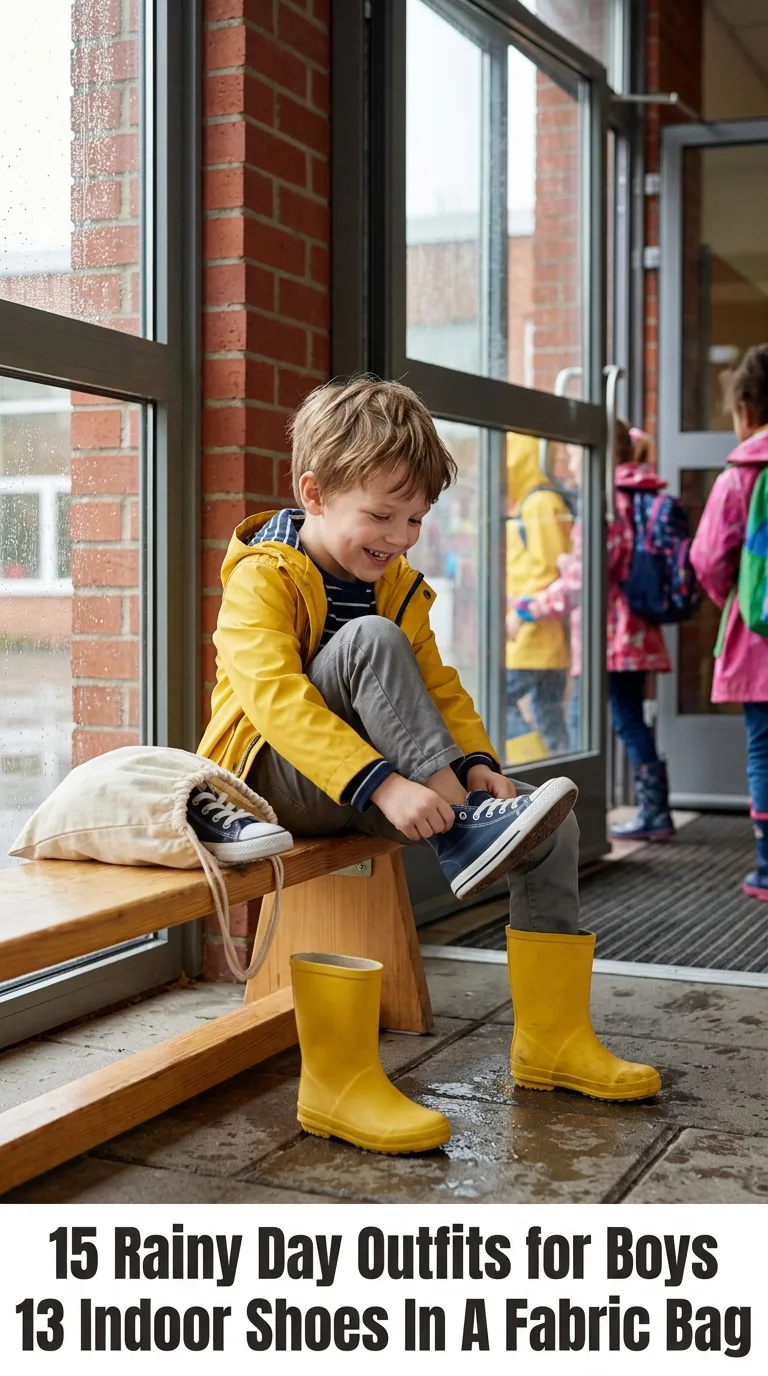
The flat-lay shows canvas sneakers in a drawstring fabric bag beside rain boots and thick socks. Rain boots are not comfortable for a full school day — no arch support, sweaty feet, and heavy. Sending indoor shoes in a bag means he changes at the classroom door and spends the day comfortable. Most schools expect this in wet weather. Use a fabric drawstring bag rather than plastic, which traps damp and makes everything inside smell.
14.Layering Order For Wet Mornings
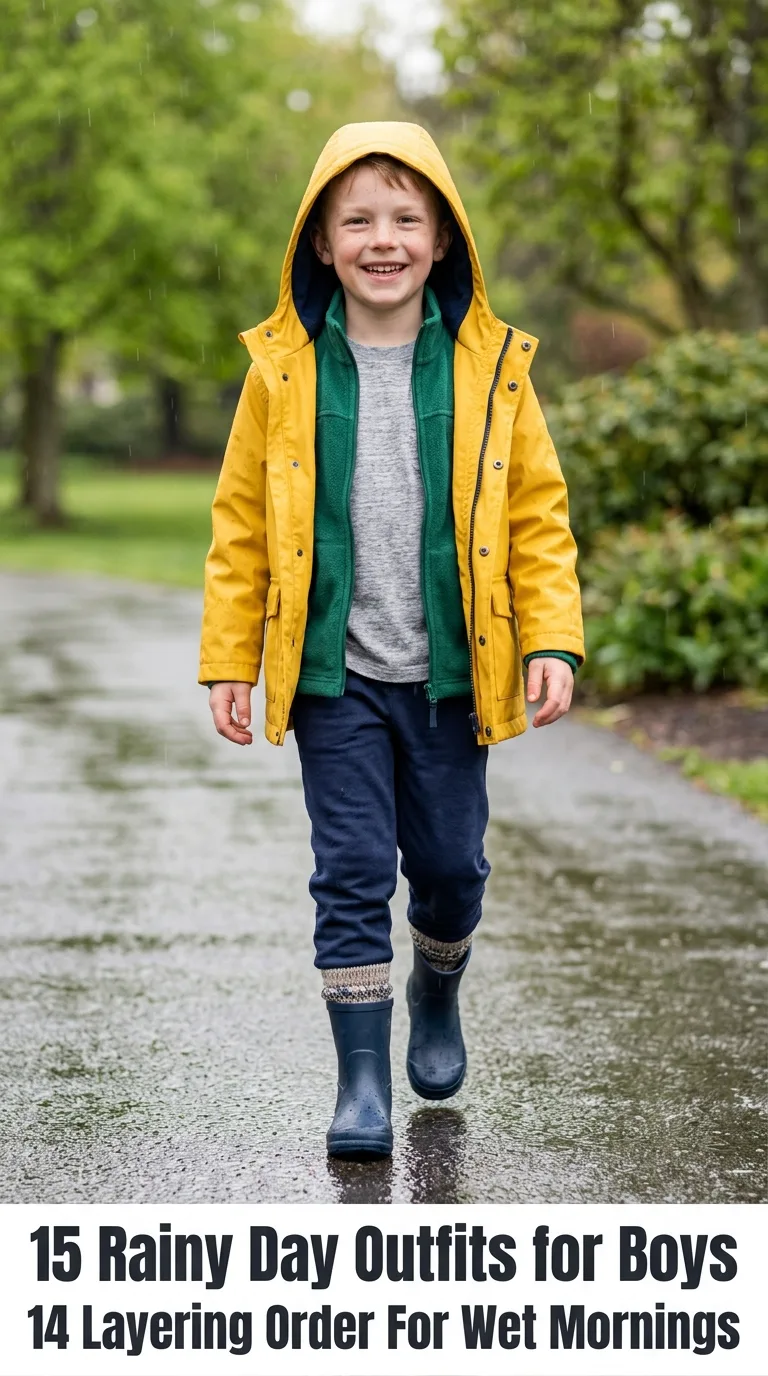
The flat-lay shows a blend tee, joggers, a fleece, a waterproof coat, thick socks, and rain boots arranged in the order they go on. Setting this out the night before removes the morning negotiation, which on a wet day is usually the hardest part of getting out of the door. Base layer, fleece, waterproof coat, then boots last with the over-trousers pulled down over them rather than tucked in. Having it laid out in order also means he can do most of it himself.
15.Spare Set With Two Pairs Of Socks
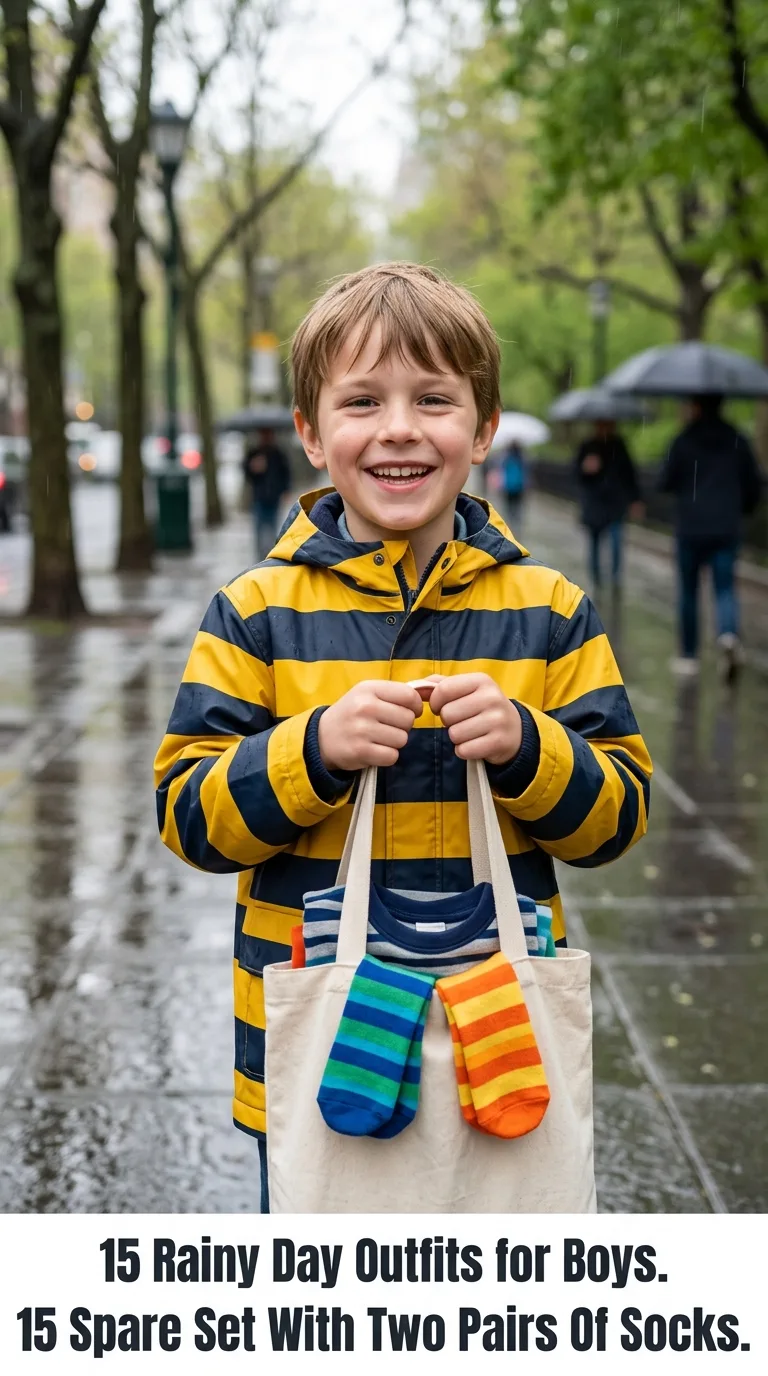
The flat-lay shows a folded spare outfit — joggers, a long-sleeve tee, underwear, and two pairs of socks — sealed in a fabric bag. This saves more days across a wet season than any other item here. A boy soaked at morning break spends the rest of the day cold unless there is a spare set in his bag. Two pairs of socks rather than one, since socks are what actually get wet and what nobody remembers to pack. Keep it in a sealed fabric bag so it stays dry inside a wet backpack, and refresh it monthly as sizes change.
Frequently asked questions
What makes a rain coat genuinely waterproof?
Taped seams. Without sealing tape on the inside, water works through the stitch lines within twenty minutes of steady rain.
Why are his feet cold in rain boots?
Rain boots have no insulation. A thin cotton sock means cold damp feet regardless of the boot — thick cotton or wool-blend socks fix it.
Should waterproof trousers go over or into boots?
Over the top, always. Tucking them inside channels water straight into the boot.
Are knitted gloves any good in rain?
No — they soak through in minutes and then hold cold water against the hands. Waterproof mittens with long cuffs are the correct choice.
What should be in a wet weather school bag?
A spare set with two pairs of socks, indoor shoes in a fabric bag, and a waterproof cover for the backpack.
The takeaway
Wet weather dressing comes down to three things most outfits get wrong: taped seams instead of water-resistant fabric, a hood that stays up, and thick socks inside the boots. Add reinforced knees, because a boy will kneel in the puddle rather than walk around it. Then pack a spare set with two pairs of socks and the worst day of the term becomes manageable.
Bright Play Days is reader-supported. This article is general styling guidance and reflects our own opinions.