


15 Back to School Outfits for Boys
Quick answer
Back to school outfits for boys need to survive concrete, grass, paint, and lunch, and he needs to be able to manage them alone. That means reinforced knees, elastic or adjustable waists, and shoes with velcro or elastic laces. Four or five coordinating pieces will produce more usable outfits than a drawer full of unrelated ones.
Key takeaways
- Knees are where boys' school trousers fail first — reinforced or double-layer knees roughly double the life of a pair.
- Elastic and adjustable waistbands remove the most common school-day independence problem.
- Mid-tones and small patterns hide marks far better than pale solids or plain black.
- One good waterproof coat matters more than any other single purchase for the autumn term.
1.Olive Cargo Joggers With Cream Tee
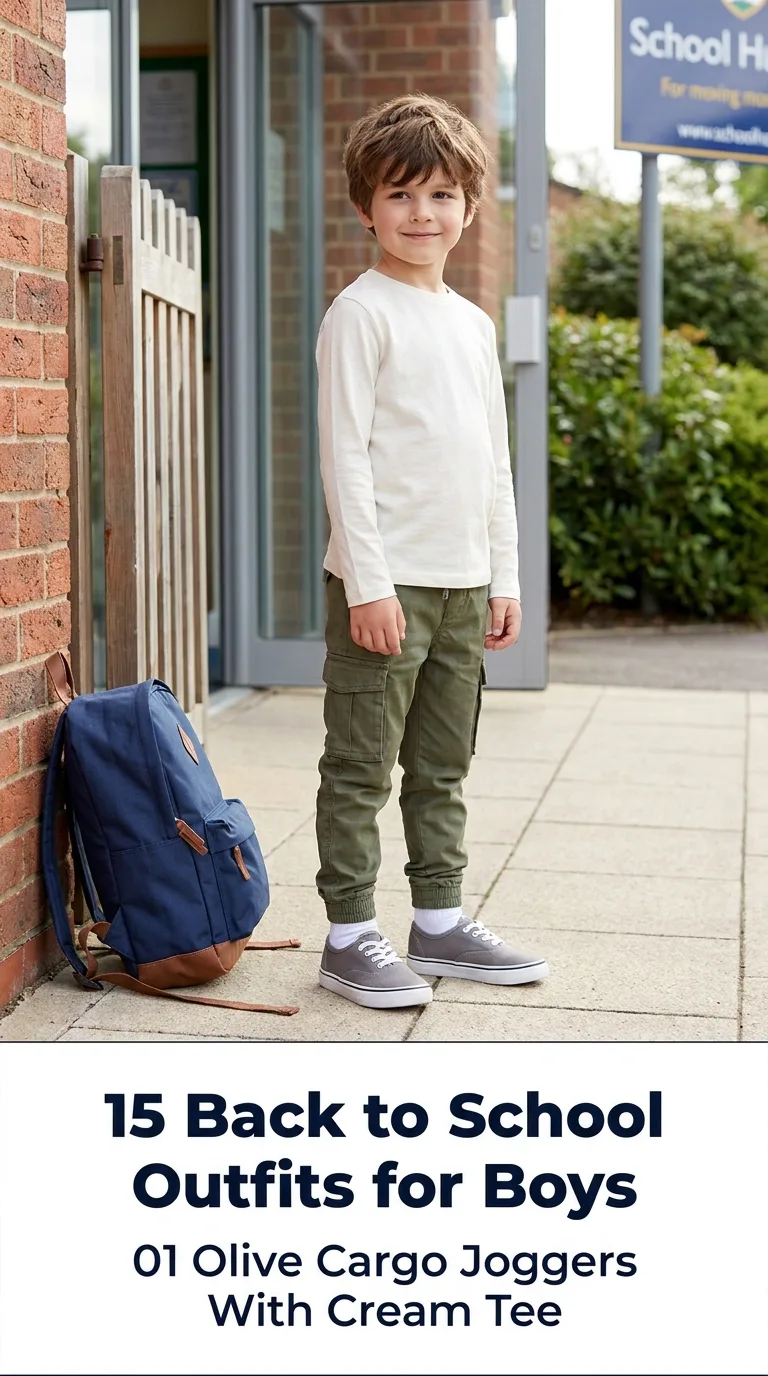
The flat-lay shows olive cotton joggers with side pockets and a ribbed cuff, laid beside a plain cream long-sleeve tee, with grey sneakers and folded white socks below. This is the outfit that gets worn more than any other in the drawer, and the reason is that nothing about it creates a problem. The waistband is fully elastic, so he manages the bathroom alone from about age three. The cuff at the ankle means the leg does not drag through puddles or catch when he climbs. The pockets matter more than adults expect — a child who can carry a conker, a stone, and a bottle cap is a child who is content at break time. Olive is the color worth choosing over the more obvious navy or grey, because it hides grass stains and dried mud noticeably better than either, and it coordinates with rust, cream, mustard, and denim. Look for joggers in a heavier loopback cotton rather than a thin jersey. The heavier fabric costs slightly more, holds its shape through a term of washing, and does not go thin at the knee by October.
2.Rust Flannel Shirt Over Plain Tee
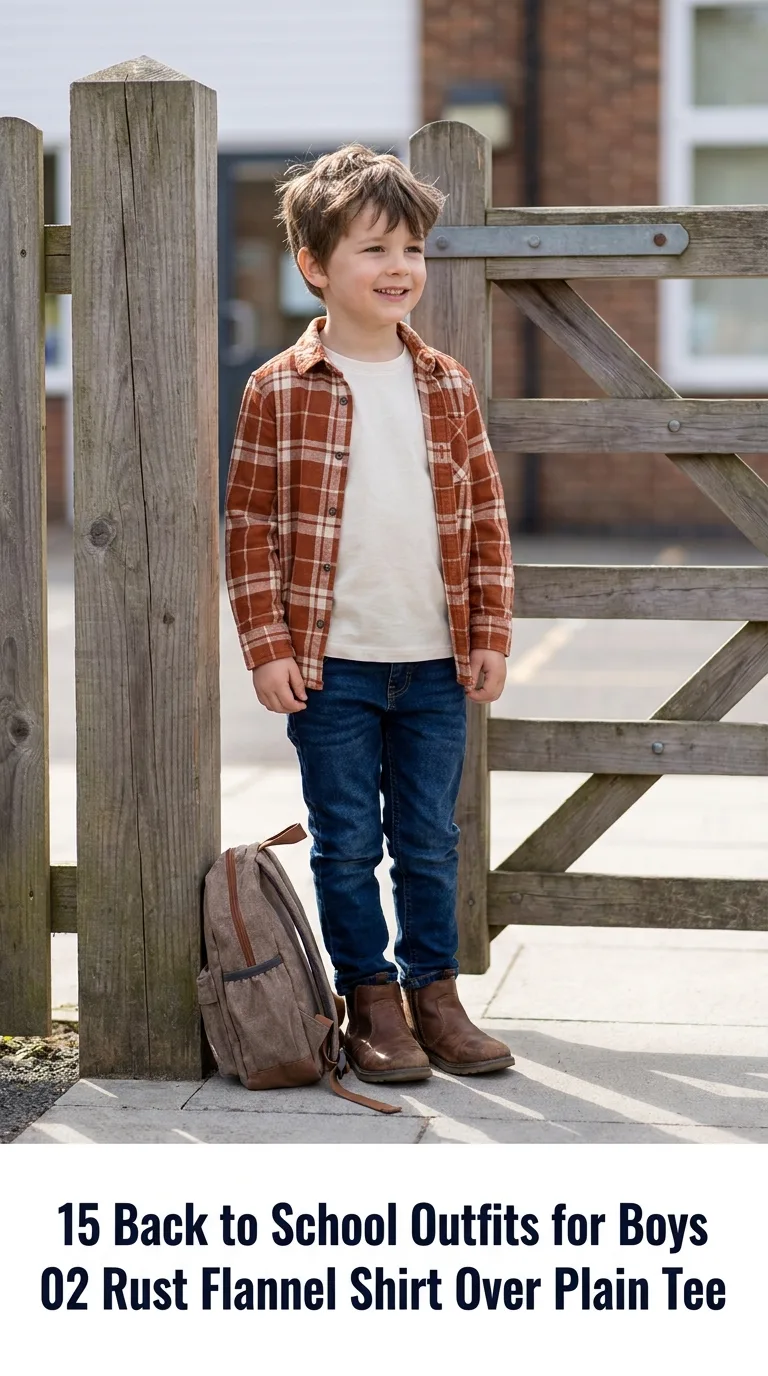
The flat-lay shows a rust and cream checked flannel shirt laid open over a plain cream tee, with dark denim jeans and brown boots arranged below. A flannel shirt worn open as a layer is the most useful autumn garment a boy can own, because it functions exactly the way a cardigan does for a girl — it comes off and goes back on without going over his head, which means it stays with him rather than ending up on the cloakroom floor. Flannel is also genuinely warm for its weight and it softens with every wash. The check pattern is doing practical work as well as visual work: a check disguises marks better than any plain fabric, so a full day of paint and playground leaves it looking essentially unchanged. Buy it one size larger than his current fit. A flannel shirt worn as a layer is supposed to be roomy, and the extra size buys another full year of wear.
3.Navy Sweatshirt With Reinforced Knee Jeans
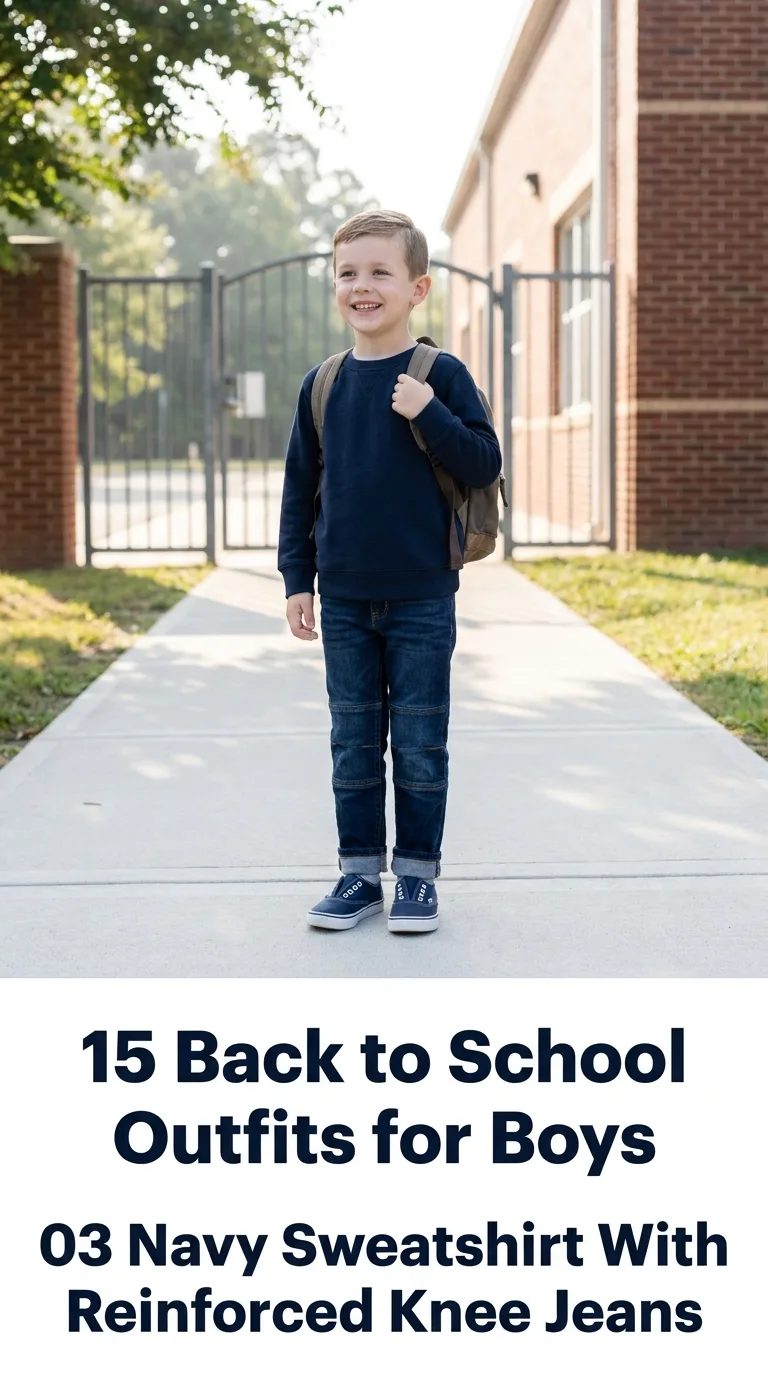
The flat-lay shows a navy crewneck sweatshirt beside dark wash jeans with visible reinforced knee panels, with navy sneakers and grey socks below. The jeans are the point of this outfit. Knees are where boys' trousers fail, almost always before anything else wears out, and a pair with a double layer or reinforcement panel at the knee will last roughly twice as long as a standard pair. Many school-specific ranges include this and it is worth seeking out deliberately rather than hoping. Check the waistband too — the best school jeans have an internal elastic adjuster with a button, which lets one pair fit across a full growth year. A navy sweatshirt is the most versatile top he can own because it works with every trouser color on this list, hides marks well, and looks tidy enough for a school photo without being anything he needs to be careful in.
4.Grey Joggers With Striped Long Sleeve
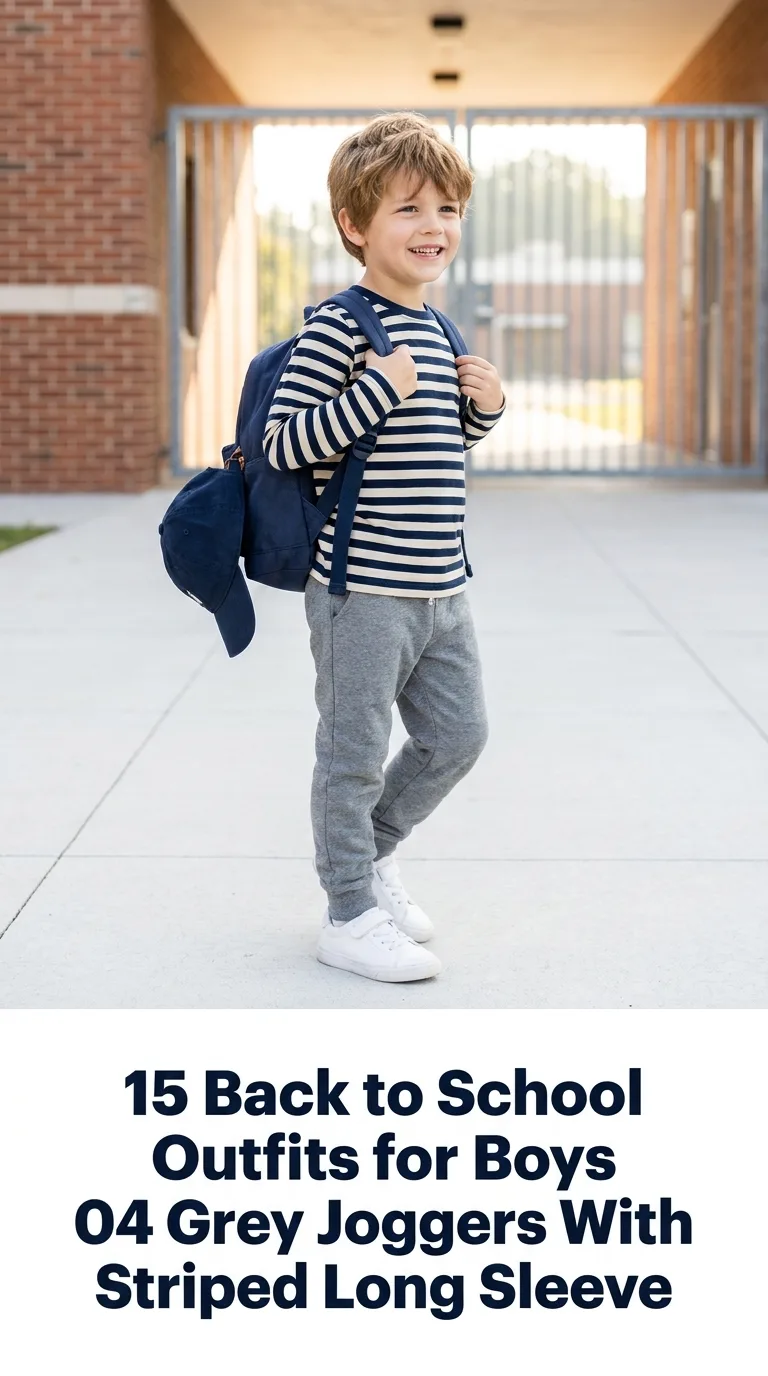
The flat-lay shows mid-grey joggers beside a navy and cream striped long-sleeve tee, with white sneakers and a navy cap at the corner. Stripes are worth choosing for school on entirely practical grounds. The alternating pattern breaks up the visual surface, which means a small stain, a crease, or a smear genuinely is less noticeable than it would be on a plain top. That is why striped tees stay looking presentable through a school day when a plain white one does not. Mid-grey marl is the same principle applied to trousers — the flecked yarn disguises marks in a way that a flat solid grey cannot. This is a good outfit for a PE day, since nothing here restricts movement and the whole thing can be pulled on and off quickly in a changing room. Choose joggers with a drawstring that has been stitched down at the centre, so it cannot be pulled out.
5.Denim Overalls With Mustard Long Sleeve
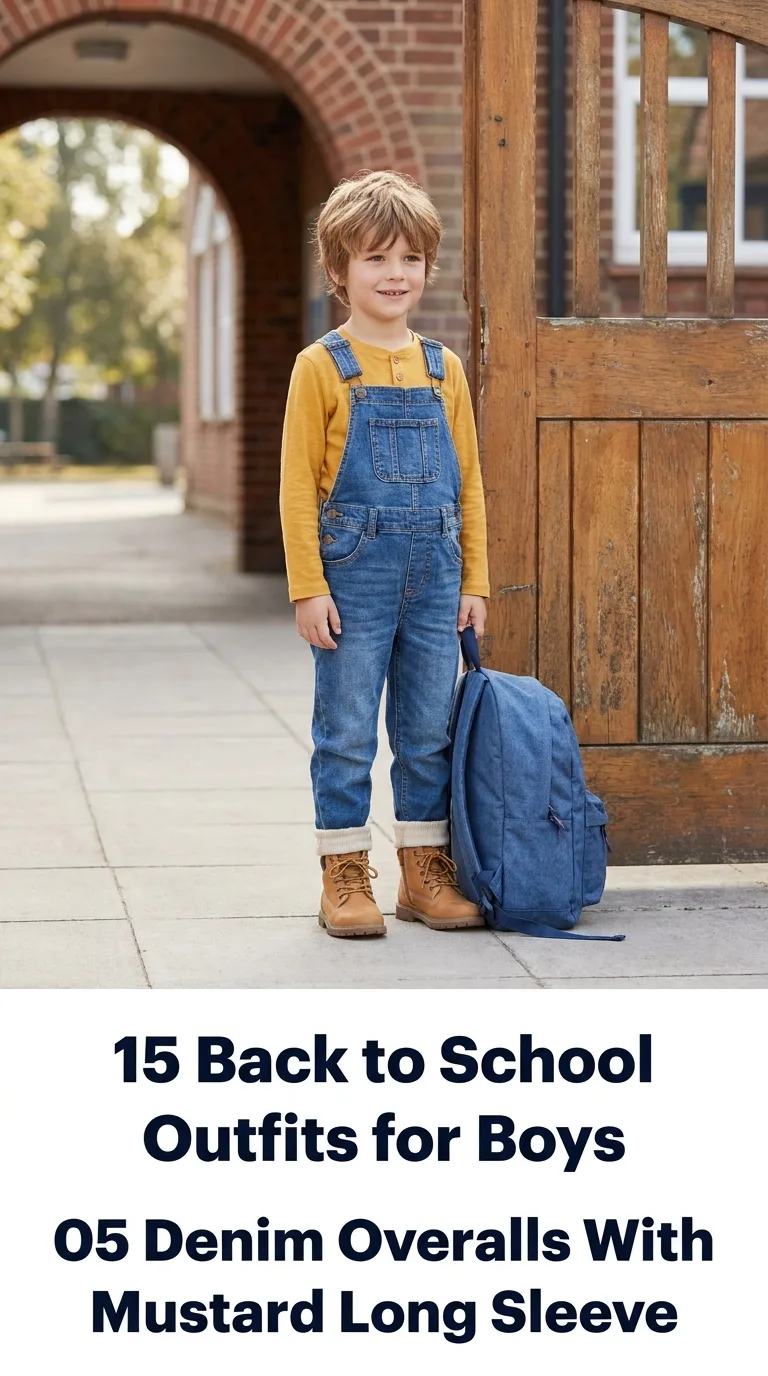
The flat-lay shows mid-wash denim overalls beside a mustard long-sleeve tee, with tan boots and cream socks below. Overalls work as well for boys as for girls and for the same reason — the bib protects the front of the shirt through the three activities that generate almost all school stains, which are art, snack, and lunch. Denim is heavy enough to take knees on concrete repeatedly. The independence question is the one to resolve before the first day: side buckles are difficult for a young child to manage alone, so look for elasticated straps that stretch enough to pull down without unfastening, or simple poppers rather than slide buckles. Test it at home. A child who cannot manage his own clothing at school will wait rather than ask, and that is a genuinely avoidable problem. Mustard underneath lifts the denim and coordinates with the rest of an autumn wardrobe.
6.Quarter-Zip Sweater With Chino Trousers
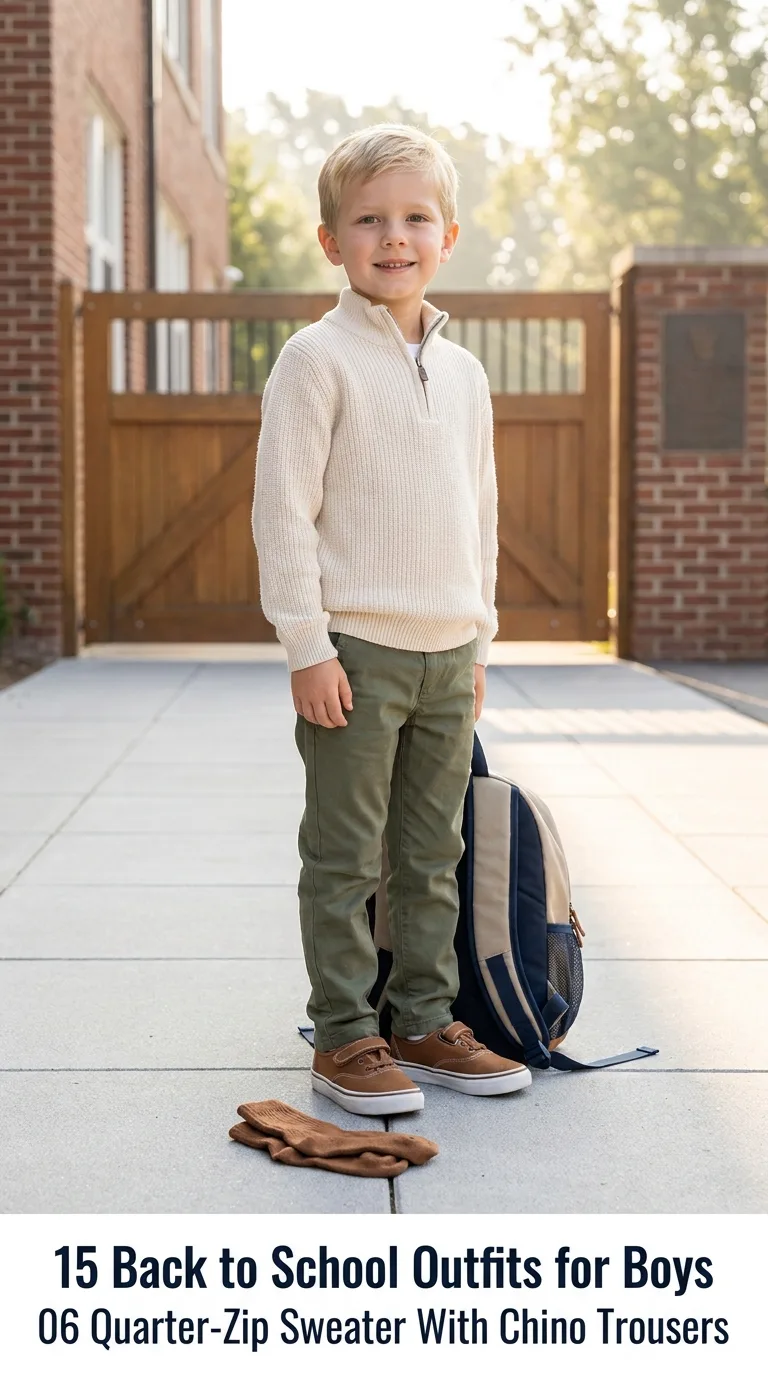
The flat-lay shows a cream quarter-zip knitted sweater beside olive chino trousers, with brown sneakers and a folded pair of socks below. This is the smarter end of school dressing, appropriate for a school photo, an assembly, or a school with a soft dress code. The quarter-zip is a better choice than a full crewneck because it vents — he can pull the zip down when the classroom warms up rather than needing the whole garment off. Chinos are the trouser worth understanding: they are considerably smarter than joggers, more comfortable than jeans, and the good school versions have an internal elastic waist adjuster so they fit across a growth year. Choose a cotton twill with a small amount of stretch, since pure rigid cotton restricts a running child. Olive again rather than the more common beige, because beige chinos and a school playground are a poor combination.
7.Cream Hoodie With Dark Joggers
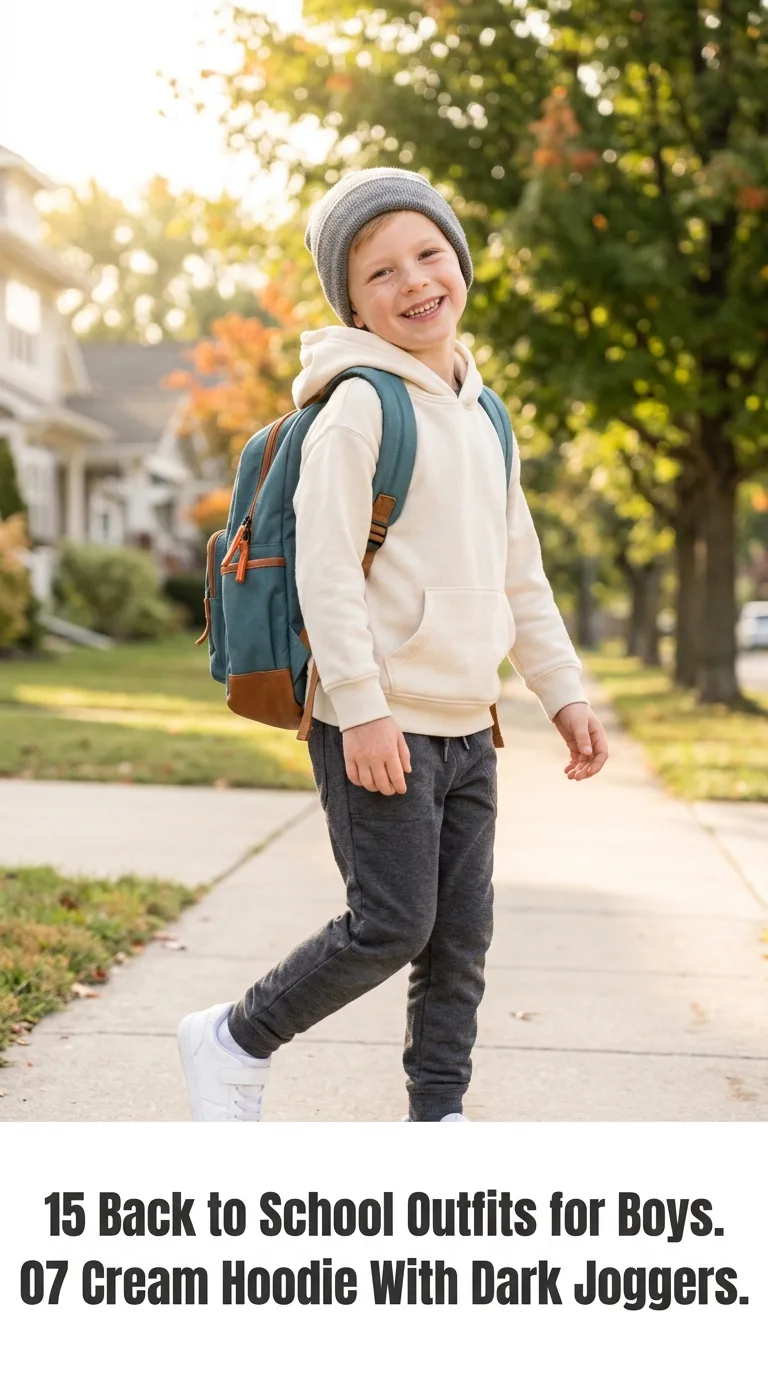
The flat-lay shows a cream pullover hoodie beside charcoal joggers, with white sneakers and a grey beanie at the corner. A hoodie is the garment every child reaches for and the one most school policies have opinions about, so check before buying. Where it is allowed, it is genuinely useful — the hood functions as a spare layer in an unexpectedly cold break time, and the front pocket serves the same purpose as cargo pockets. Look for a hoodie in loopback cotton rather than brushed fleece. Fleece pills within a term and traps heat uncomfortably indoors, while loopback stays neat and breathes. Cream will show marks, so if it is worn daily choose oatmeal or sage in the same shape. Charcoal joggers rather than black, because true black fades to a patchy grey after a term of hot washes while charcoal ages evenly.
8.Plaid Shirt With Corduroy Trousers
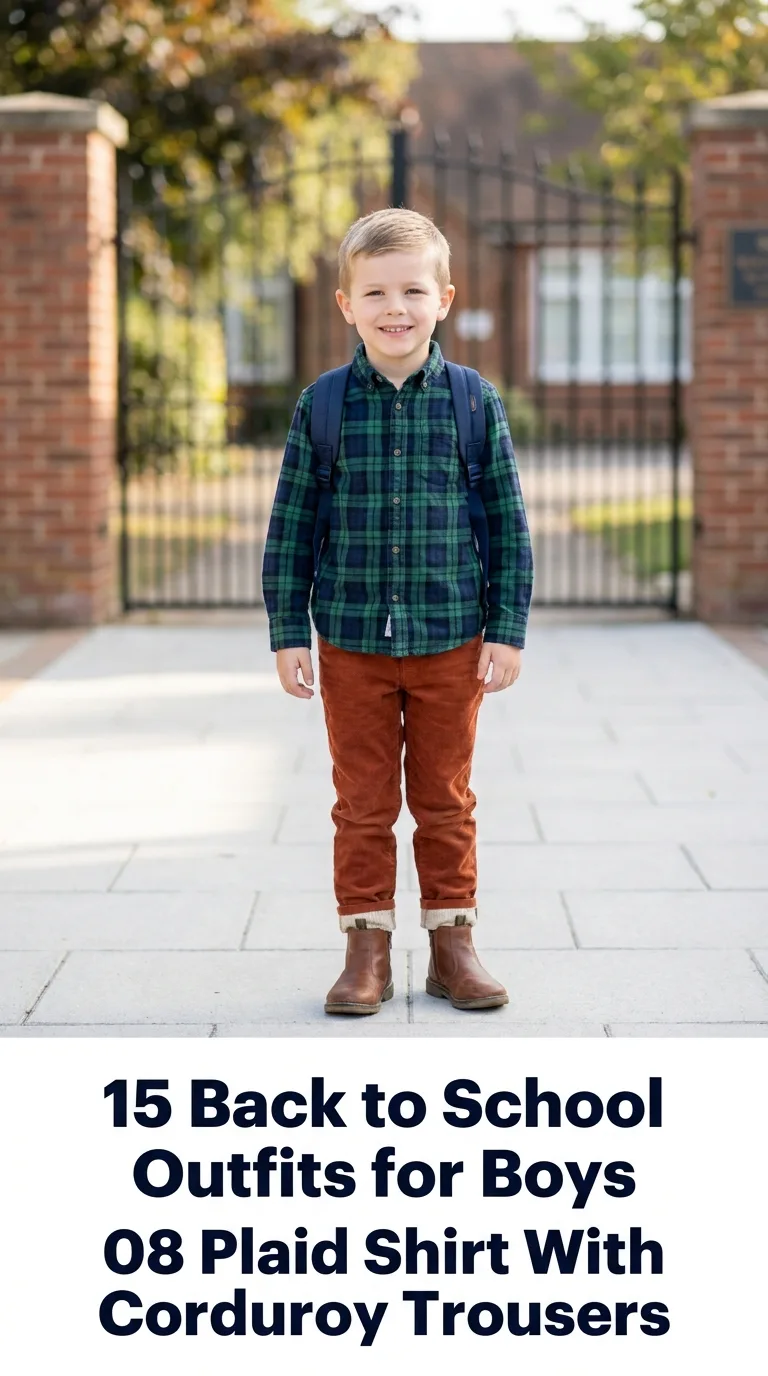
The flat-lay shows a green and navy plaid shirt beside rust corduroy trousers, with brown boots and cream socks below. Corduroy is underused for boys and it deserves more attention, because it is one of the most durable fabrics available for children's trousers. The ribbed pile resists abrasion far better than smooth cotton, it hides marks in the texture, and it softens with washing rather than thinning. Rust is a genuinely practical color that happens to also look good — it disguises mud almost completely. A plaid shirt worn buttoned rather than open makes this an outfit for a colder day, and the two patterns work together because one is a check and the other is a texture rather than a competing print. Look for corduroy trousers with an elasticated back waist and a flat front, which is the construction that looks smart while still being independent.
9.Navy Polo With Grey Shorts
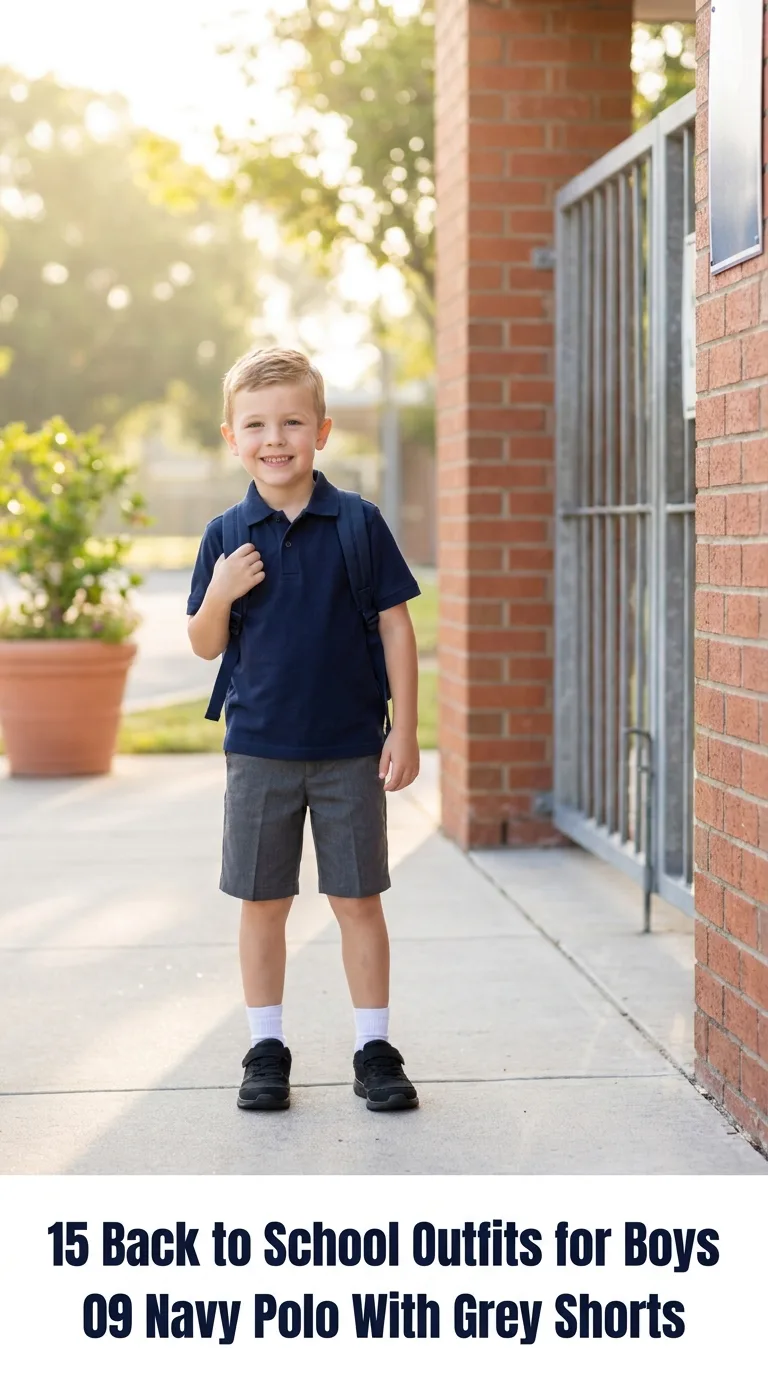
The flat-lay shows a navy cotton polo beside grey school shorts, with white socks and black sneakers below. September in much of the United States is still warm, and shorts remain the right answer for the first several weeks of term in most states. A polo rather than a tee is worth it for the collar, which reads as tidier in photographs and satisfies most soft dress codes, and for the fact that a polo collar does not stretch out of shape the way a crew neck does. Choose a cotton and polyester blend rather than pure cotton for polos specifically — pure cotton creases heavily and the blend keeps its shape through a school day. Grey shorts with an adjustable internal waistband will fit across the whole autumn and then again next spring, which makes them one of the better value items in the drawer.
10.Fleece-Lined Sweatpants With Thermal Top
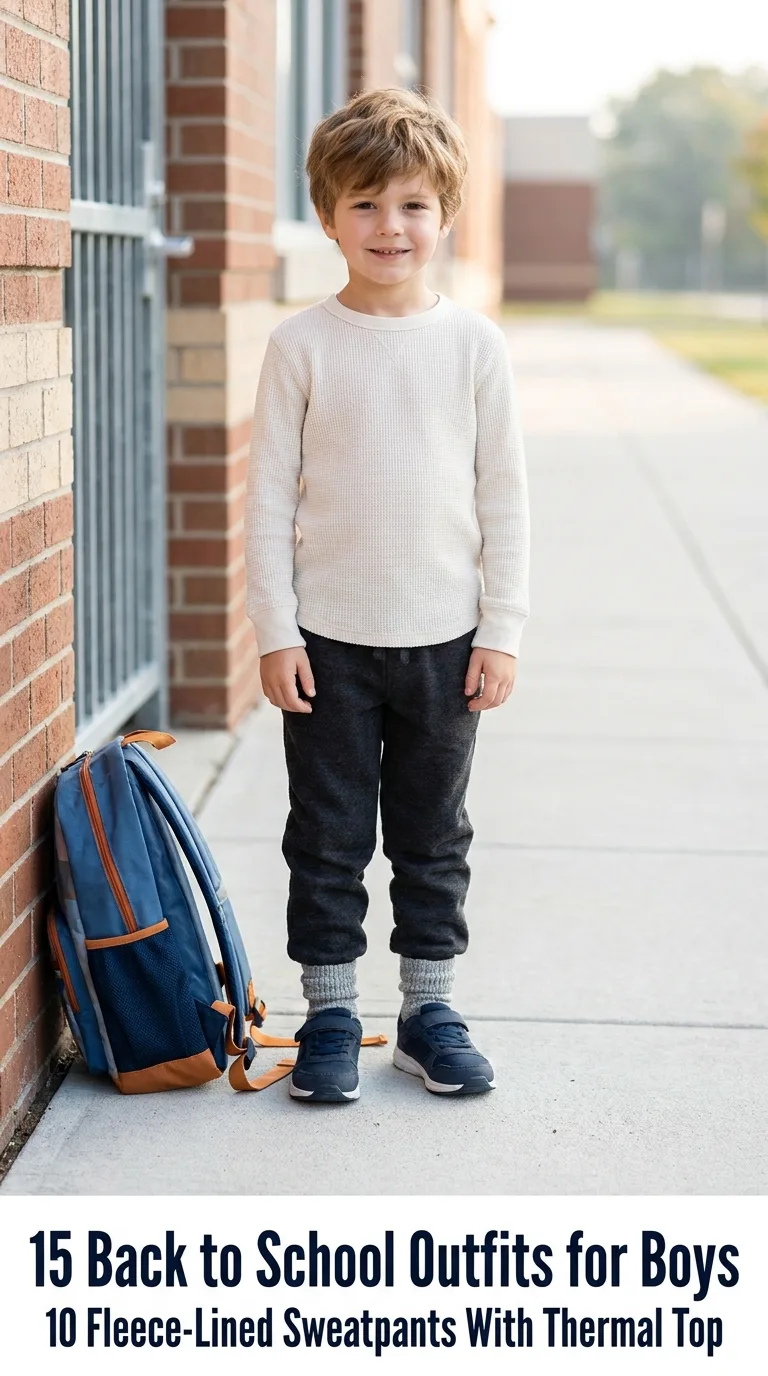
The flat-lay shows charcoal fleece-lined sweatpants beside a cream waffle-knit thermal top, with dark sneakers and thick socks below. This is the cold-morning outfit and it is worth owning specifically, rather than trying to make a summer wardrobe work in November. Fleece-lined joggers are considerably warmer than an equivalent thickness of plain jersey and they do not require an extra layer underneath, which matters because a child who has to peel off two layers indoors will lose one of them. A waffle-knit thermal is the top worth knowing about — the textured surface traps air, which makes it substantially warmer than a plain long-sleeve tee of the same weight, and the texture also hides marks. It works as a base layer under a sweater on the coldest days and as a standalone top on milder ones.
11.Utility Jacket Over Simple Layers
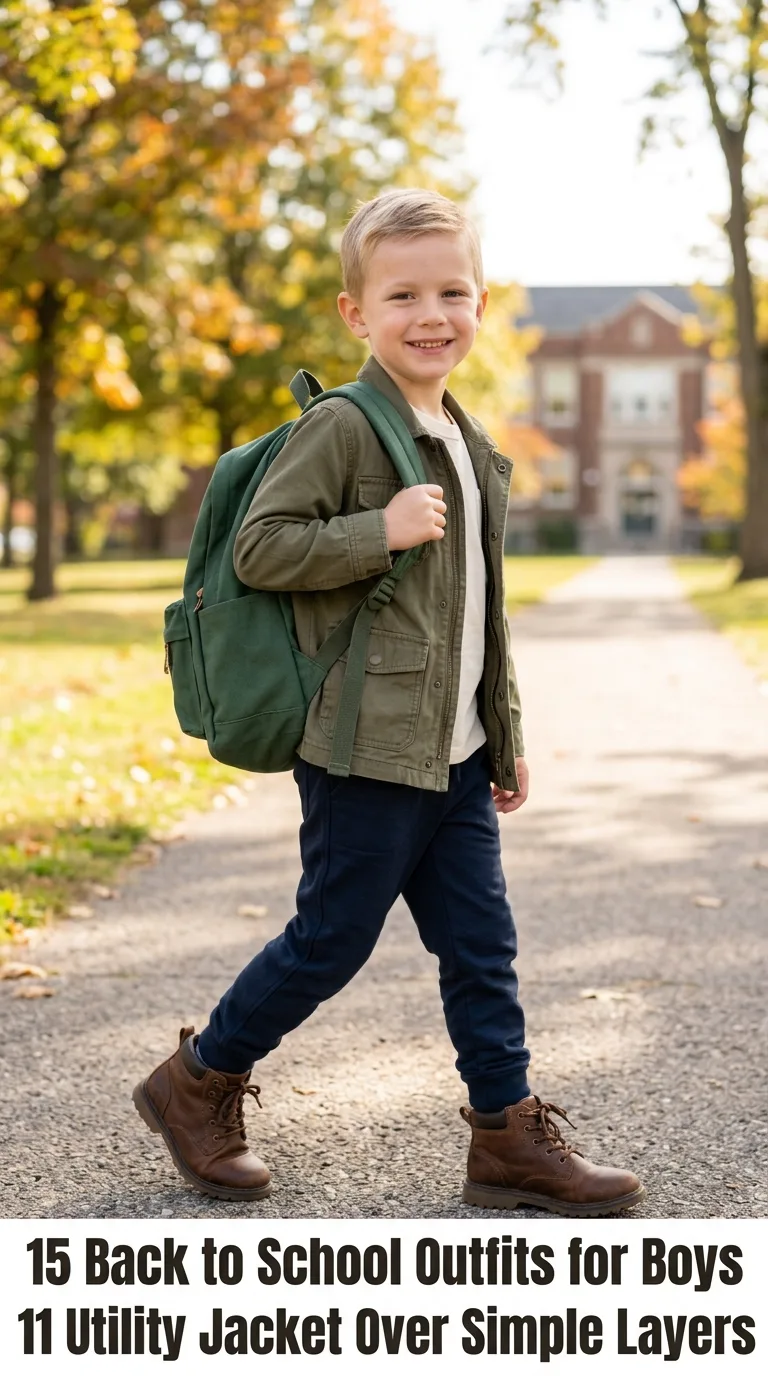
The flat-lay shows an olive cotton utility jacket beside a cream tee and dark joggers, with brown boots at the base. A utility jacket sits between a shirt and a coat and it fills a gap that most children's wardrobes have — the layer for a day that is too cold for a shirt and too warm for a coat, which describes most of September and October. It works indoors as well as out, so it does not get abandoned in the cloakroom. Look for one in a heavy cotton canvas rather than a thin poplin, with proper pockets and a full front fastening he can manage. Poppers are easier than buttons for small hands. Olive is the traditional color and it is traditional for a reason: it does not show dirt. Buy one size up, since a utility jacket looks correct slightly oversized and gains a second year of wear.
12.Rugby Shirt With Dark Denim
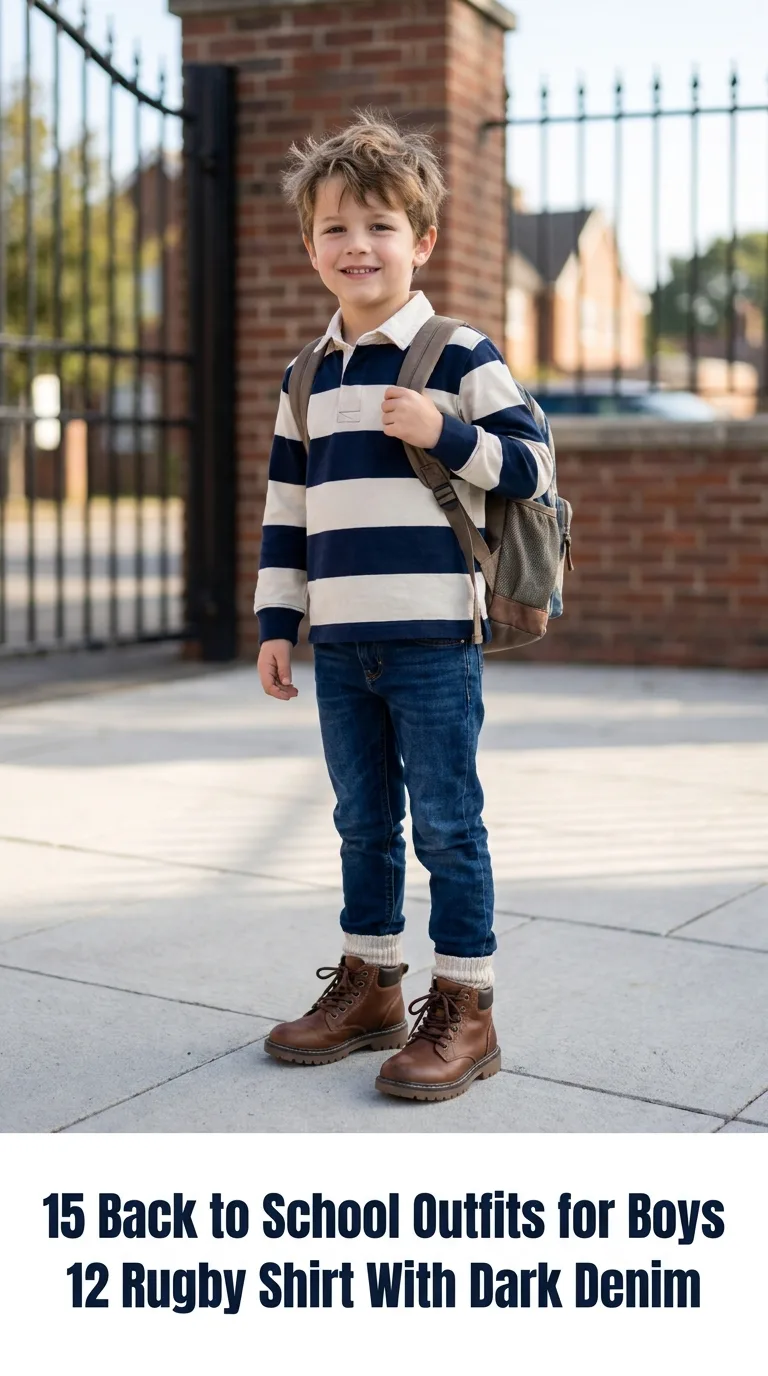
The flat-lay shows a navy and cream striped rugby shirt beside dark wash jeans, with brown boots and cream socks below. A rugby shirt is one of the most durable tops available for a child and it is worth knowing why: the fabric is a heavy cotton jersey originally designed to survive contact sport, and the collar and cuffs are reinforced. It will outlast three ordinary tees. The broad stripe is excellent at hiding marks. It also happens to look considerably smarter than a sweatshirt while being equally comfortable, which makes it useful for a day that includes both a school photo and a playground. Choose one with a soft twill collar rather than a stiff one, and check the buttons at the placket are securely stitched, since that is the one place these shirts occasionally fail.
13.Grey Sweater Vest Over Collared Shirt
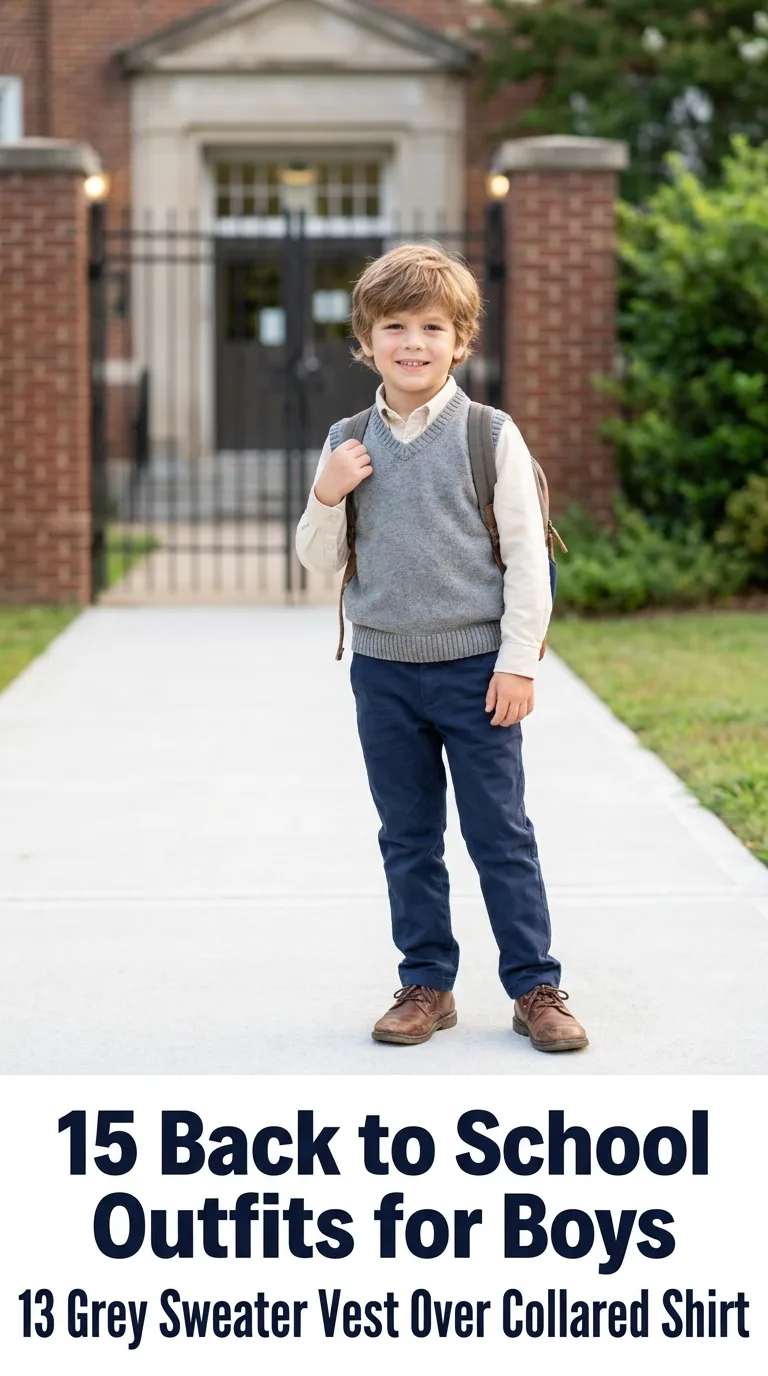
The flat-lay shows a grey knitted sweater vest laid over a cream collared shirt, with navy chinos and brown shoes below. This is the smartest outfit on the list and the right choice for a first day photograph, an assembly, or a school with a stricter dress code. A sweater vest is a better option than a full jumper for a classroom, because it warms the core while leaving the arms completely free for writing and painting, and it does not overheat indoors. It also does not need to come off, which means it does not get lost. Look for a machine-washable merino or acrylic blend rather than pure wool. The collared shirt underneath should be a soft cotton with a relaxed fit — a stiff formal shirt is uncomfortable for a full day and he will fidget with the collar.
14.Camo Print Joggers With Plain Top
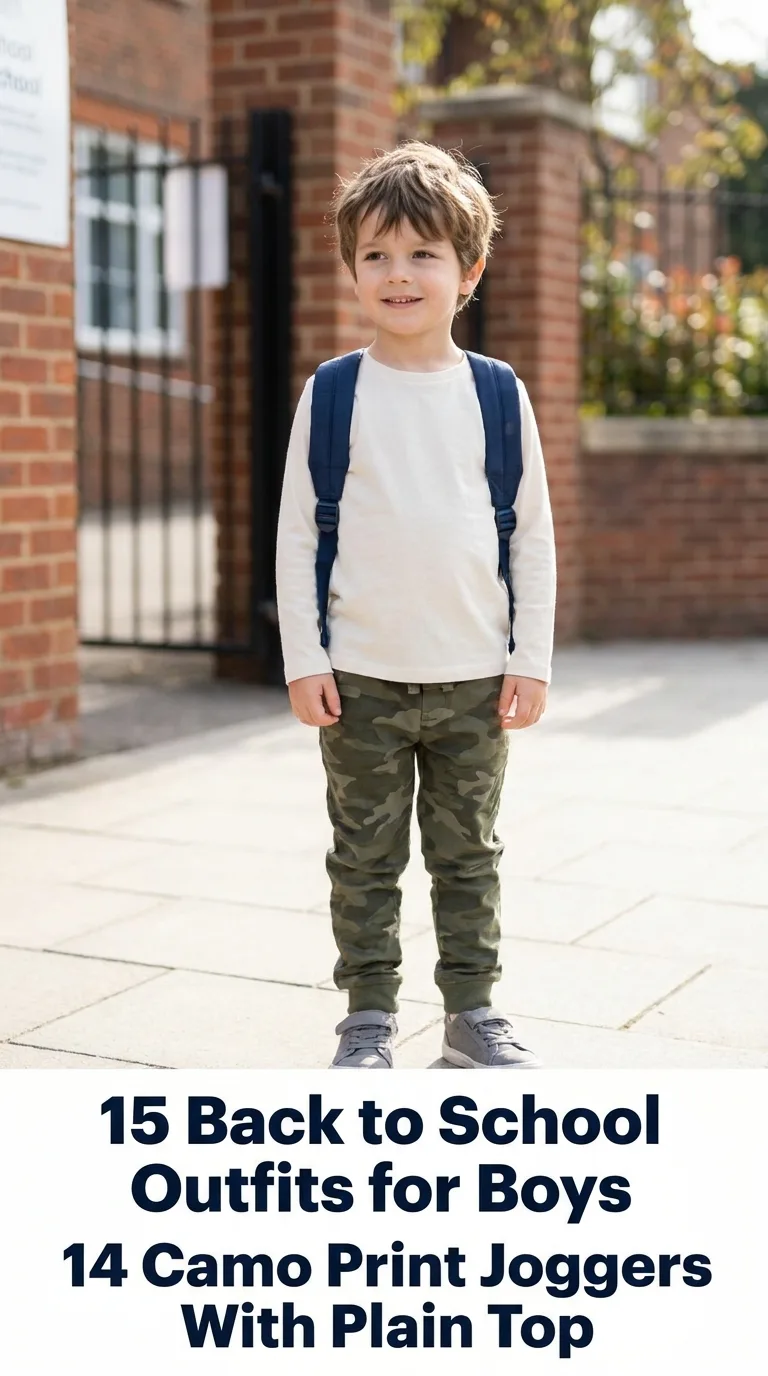
The flat-lay shows olive camouflage-print joggers beside a plain cream long-sleeve tee, with grey sneakers below. Camo is the most effective mark-hiding pattern that exists in children's clothing, which is not an accident given what it was designed to do. Mud, grass, and paint disappear into an irregular multi-tone print in a way they never will on a solid color. If you have one child who consistently comes home filthy, this is the practical answer. Pair it with a plain top rather than another pattern, since camo is busy enough to carry the outfit alone. Choose a muted olive and khaki version rather than a high-contrast one, which reads as more wearable and coordinates with the rest of an autumn wardrobe. The same principle applies to any irregular multi-tone print, so a tie-dye or a heather pattern will work similarly.
15.Rain-Ready Layers With Waterproof Coat
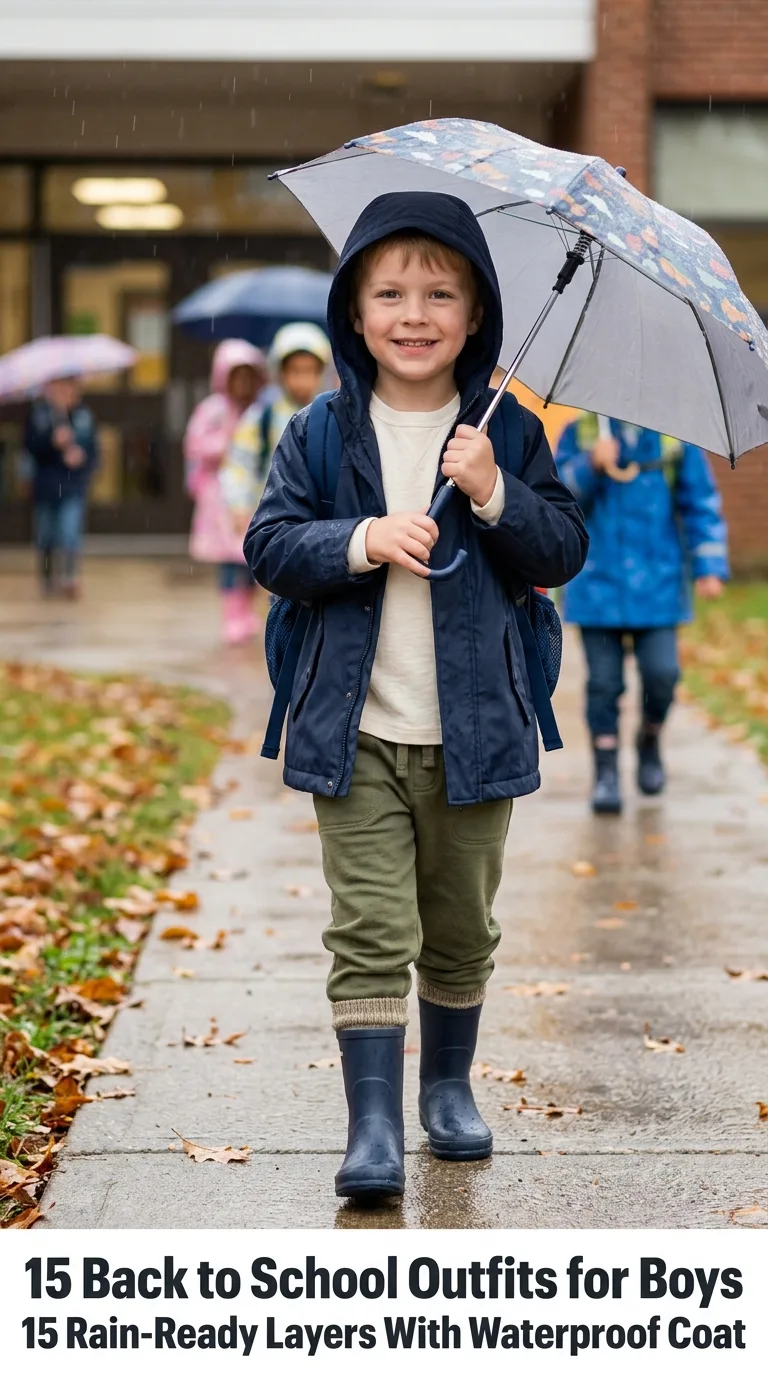
The flat-lay shows a navy waterproof coat with a hood laid beside olive joggers, a cream long-sleeve tee, and navy rain boots, with thick socks folded at the corner. This is the single most important purchase of the autumn term and it is worth spending properly on. The coat needs to be genuinely waterproof with taped seams, not shower-resistant, and the hood needs to stay up in wind — most children's coats fail on the hood specifically, and a hood that blows back means a wet head at nine in the morning and a miserable day afterward. Look for a drawcord or elasticated hood edge. Rain boots need thick socks to work at all, since the boot provides no insulation whatsoever and a cold foot ruins break time. Keep a spare pair of socks and joggers in his bag from October onward, because at some point he will need them.
Frequently asked questions
What should a boy wear on the first day of school?
Something already broken in. New shoes and unfamiliar waistbands cause problems on a day that is stressful enough — pick a known outfit in a smarter color if photographs matter.
How many school outfits does a boy need?
Five bottoms and seven tops covers a week with laundry margin. Choosing pieces that coordinate matters far more than the total count.
What trousers last longest for school?
Anything with reinforced or double-layer knees. Knees fail before any other part of a boy's school trousers, and reinforcement roughly doubles the usable life.
Are joggers acceptable for school?
In most US elementary schools, yes, and they are the most practical option for children under six because of the elastic waistband. Check your school's dress code first.
What colors hide school stains best?
Olive, rust, charcoal, and grey marl, plus any irregular pattern — camo, plaid, or stripe. Avoid pale solids and true black, which fades unevenly.
The takeaway
Boys' school clothes get judged by one thing at the end of term: what survived. Reinforced knees, heavier fabrics, and mark-hiding colors are what determine that, and they matter considerably more than how anything looks in September. Get an elastic or adjustable waist so he is independent, spend properly on one genuinely waterproof coat, and build the rest from four or five coordinating pieces in olive, rust, cream, and charcoal.
Bright Play Days is reader-supported. This article is general styling guidance and reflects our own opinions.