


15 Winter Outfits for Boys That Stay Warm
Quick answer
Winter warmth comes from layering, not from one thick coat. A thermal base, a knit or fleece middle, and a windproof outer trap more warm air than any single garment. Get the base layer out of cotton, put the money into the coat's hood and cuffs, and do not skimp on socks.
Key takeaways
- Three thin layers outperform one thick one, because the air trapped between them insulates.
- Cotton base layers hold sweat against the skin and make an active child colder, not warmer.
- Boys typically move more at recess, so breathable mid-layers matter more than maximum thickness.
- Snow pants or a snowsuit are the difference between ten minutes outside and an hour.
1.Merino Base Under Fleece And Shell
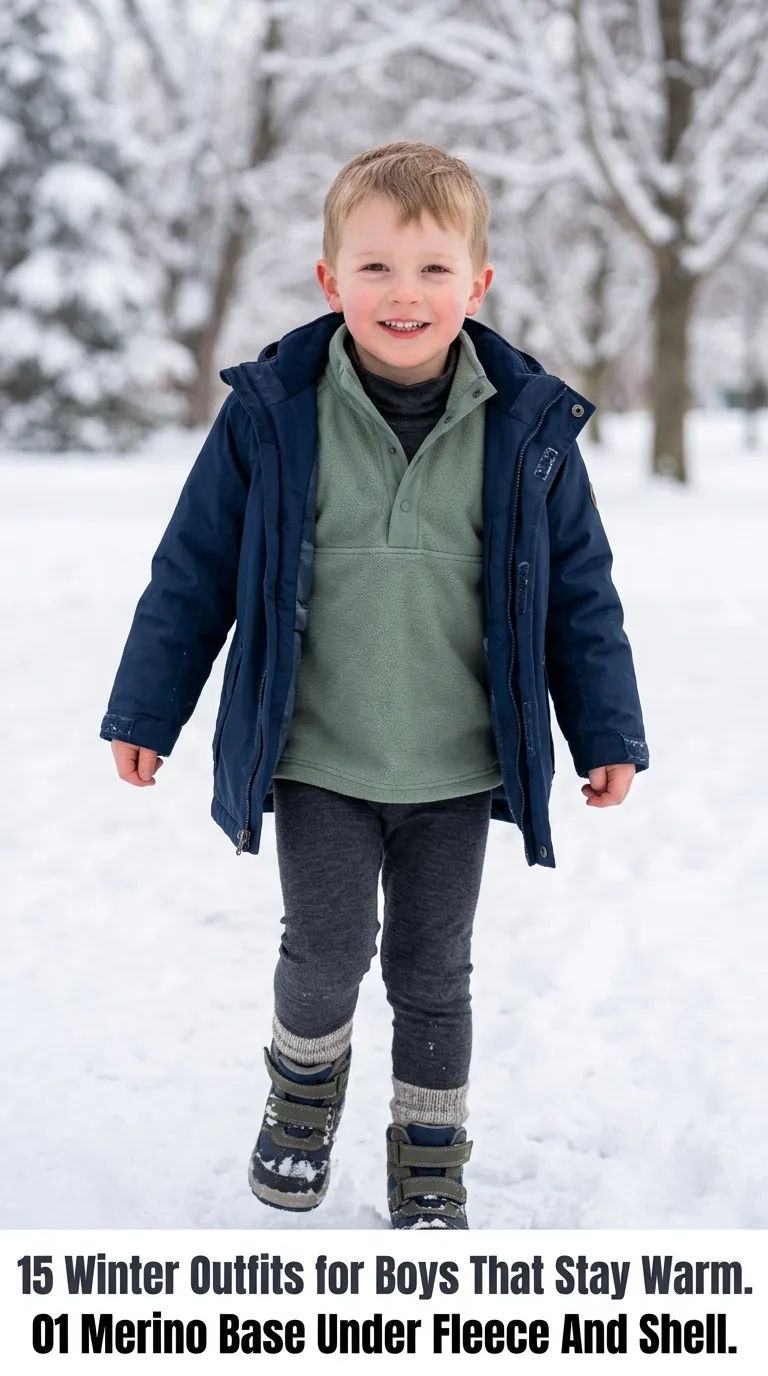
The flat-lay shows a charcoal merino thermal top and leggings, laid beneath a sage fleece pullover, with a navy waterproof shell coat, thick wool socks, and waterproof boots. This is the complete layering system and it is worth understanding as a system rather than as three separate purchases, because each layer has one job. The base moves moisture away from the skin. The fleece traps air. The shell blocks wind and water. Get any one of the three wrong and the other two underperform. The base layer is where most people go wrong — cotton absorbs sweat and holds it against the skin, so a boy who runs hard at recess in a cotton thermal comes back damp and then chills rapidly. Merino or a technical synthetic wicks that moisture outward instead. Merino costs more but regulates in both directions and resists odor, so it goes several days between washes, which softens the price considerably over a winter.
2.Fleece-Lined Joggers With Thermal Top
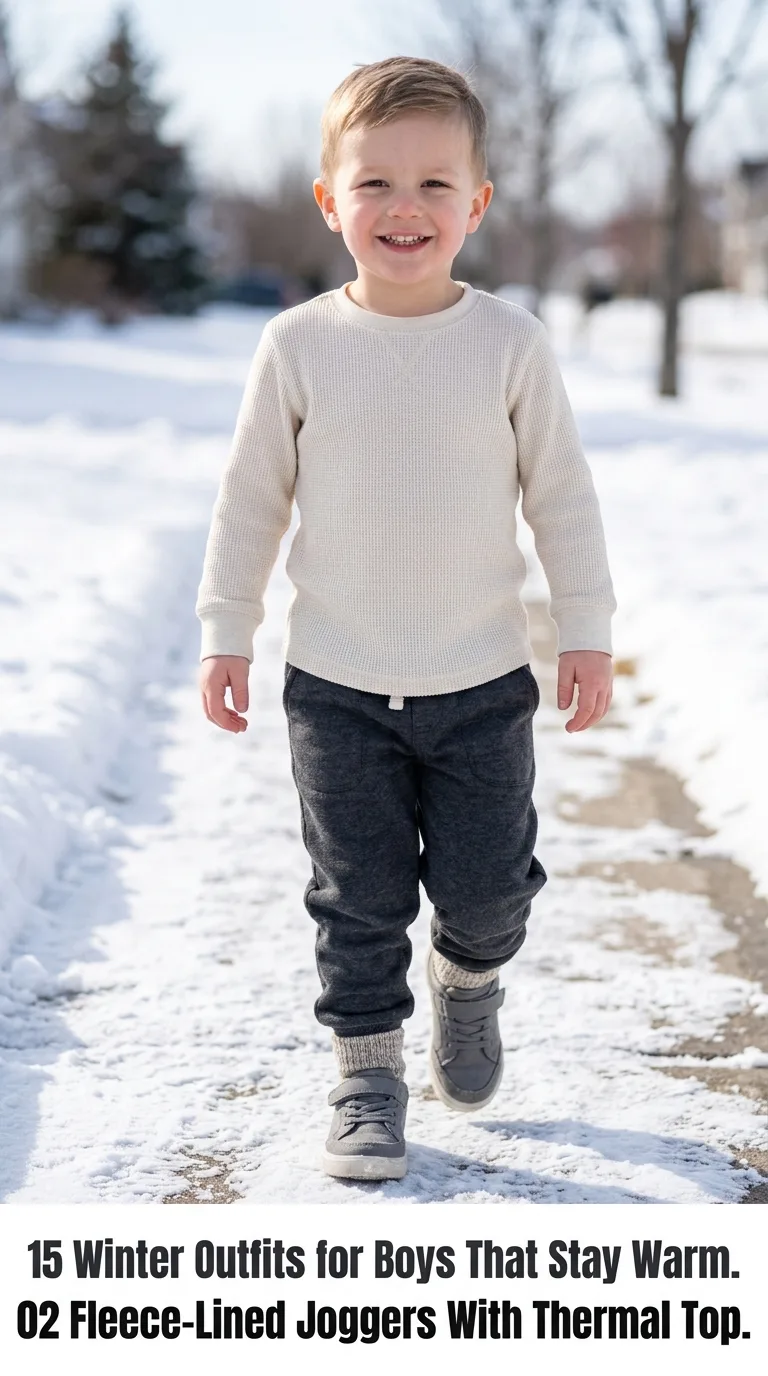
The flat-lay shows charcoal fleece-lined joggers beside a cream waffle-knit thermal top, with grey sneakers and thick socks. Fleece-lined joggers are the best value winter purchase for a boy and considerably warmer than layering two pairs of ordinary trousers, because the brushed inner surface traps air where two smooth layers simply compress. They also work as a single garment rather than needing a base underneath, which matters for a child who resists getting dressed. Waffle-knit thermal is the top equivalent — the raised grid holds air, making it noticeably warmer than a plain long-sleeve tee of the same weight.
3.Padded Coat With Storm Cuffs
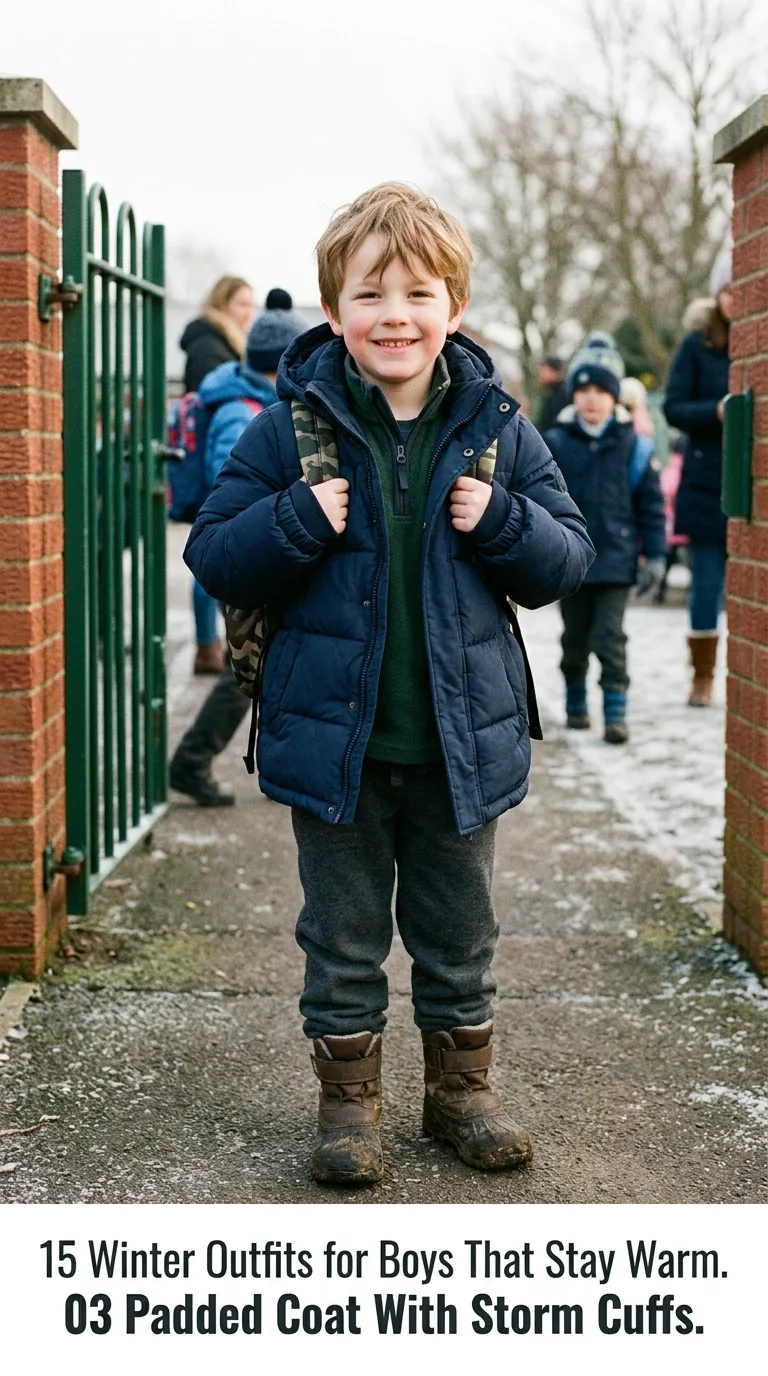
The flat-lay shows a navy padded coat with elasticated inner cuffs, beside a fleece pullover, charcoal joggers, and waterproof boots. The everyday winter coat is the highest-impact purchase of the season and three details determine whether it works. The hood must stay up in wind — most children's coats fail here, and a hood that blows back means a cold head all morning. Inner storm cuffs stop cold air travelling up the sleeve, which is the second most common failure. And length should reach at least mid-thigh, since a short coat leaves the lower back exposed every time he bends or sits. Synthetic fill rather than down for school, since synthetic keeps insulating when damp.
4.Snow Pants Over Ordinary Layers
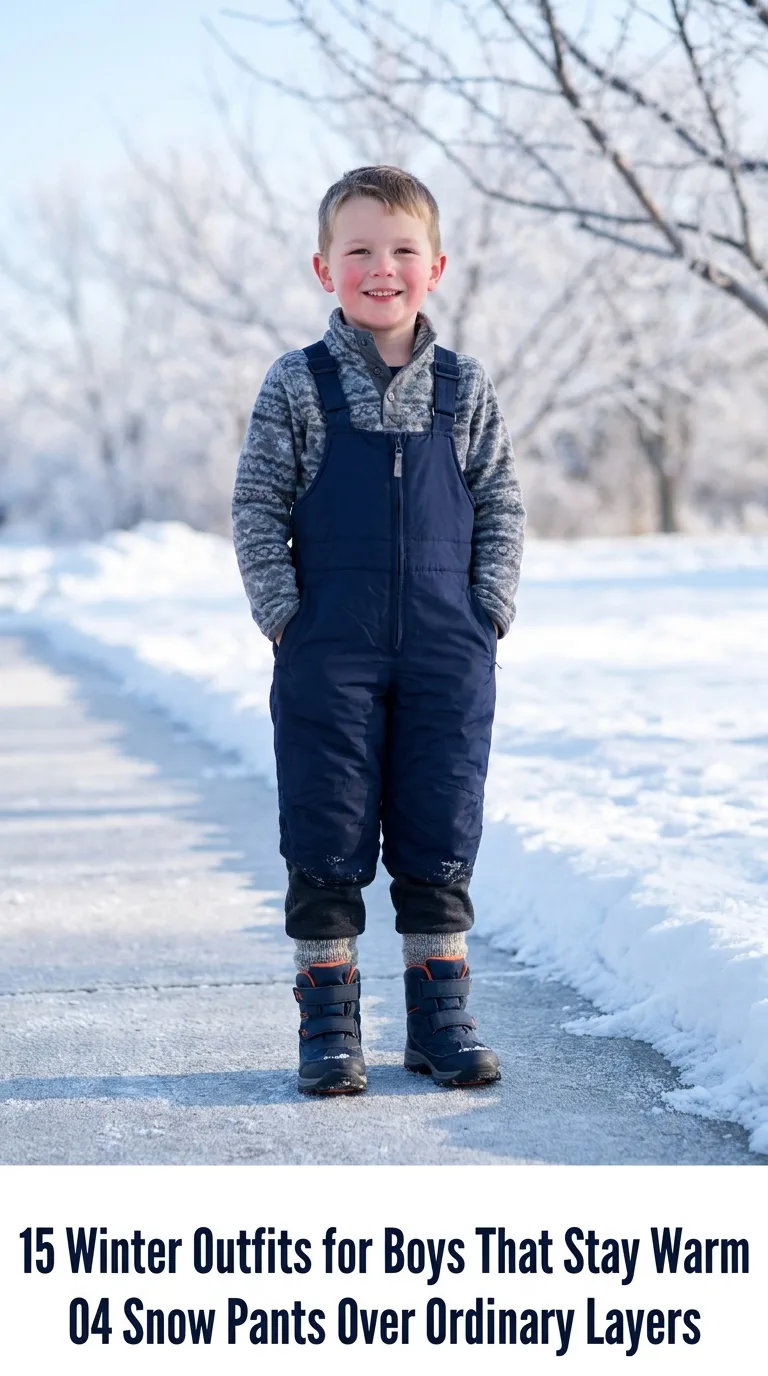
The flat-lay shows navy insulated snow pants beside charcoal joggers, a fleece top, wool socks, and snow boots. Snow pants are what determine whether a boy stays outside for ten minutes or an hour, and they are the item most commonly skipped. Ordinary trousers get wet within minutes of kneeling in snow, and a wet leg ends the outing immediately. Bib-style snow pants are warmer than waist-style because there is no gap at the back when he bends, though waist-style is easier for bathroom independence at school. For a child under six who is at school all day, waist-style is usually the more practical trade.
5.Chunky Knit Sweater Over Thermal
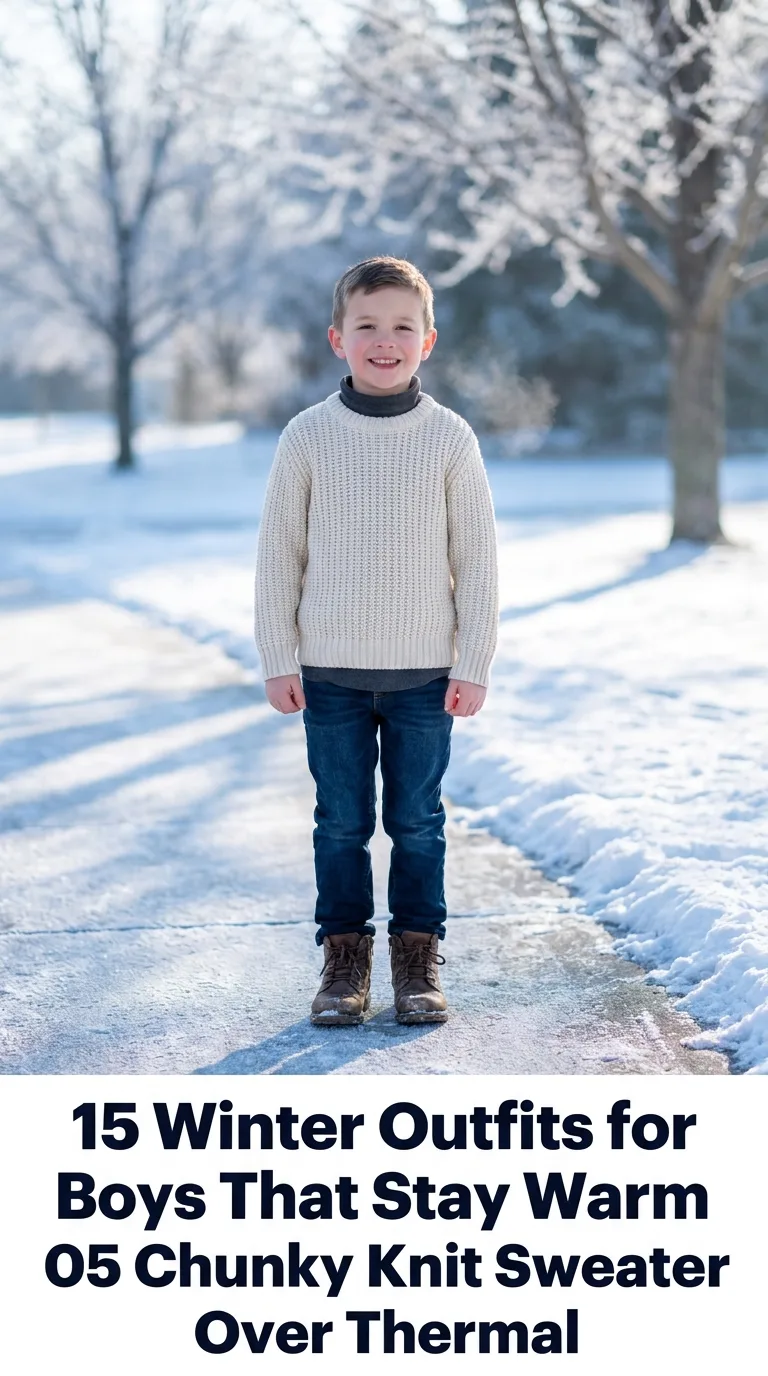
The flat-lay shows a cream chunky-knit sweater over a charcoal thermal top, beside dark jeans and brown boots. Chunky knit is warmer than fine knit because the deeper stitch structure holds more air, and worn over a thermal base it is a genuinely effective mid-layer. The trade-off is bulk under a coat, so check the coat still fastens comfortably over the sweater before committing to this as a school outfit rather than a weekend one. Cream shows marks, which is a real consideration in winter when clothes are worn longer between washes — oatmeal or grey marl is the more forgiving choice.
6.Wool Socks Inside Insulated Boots
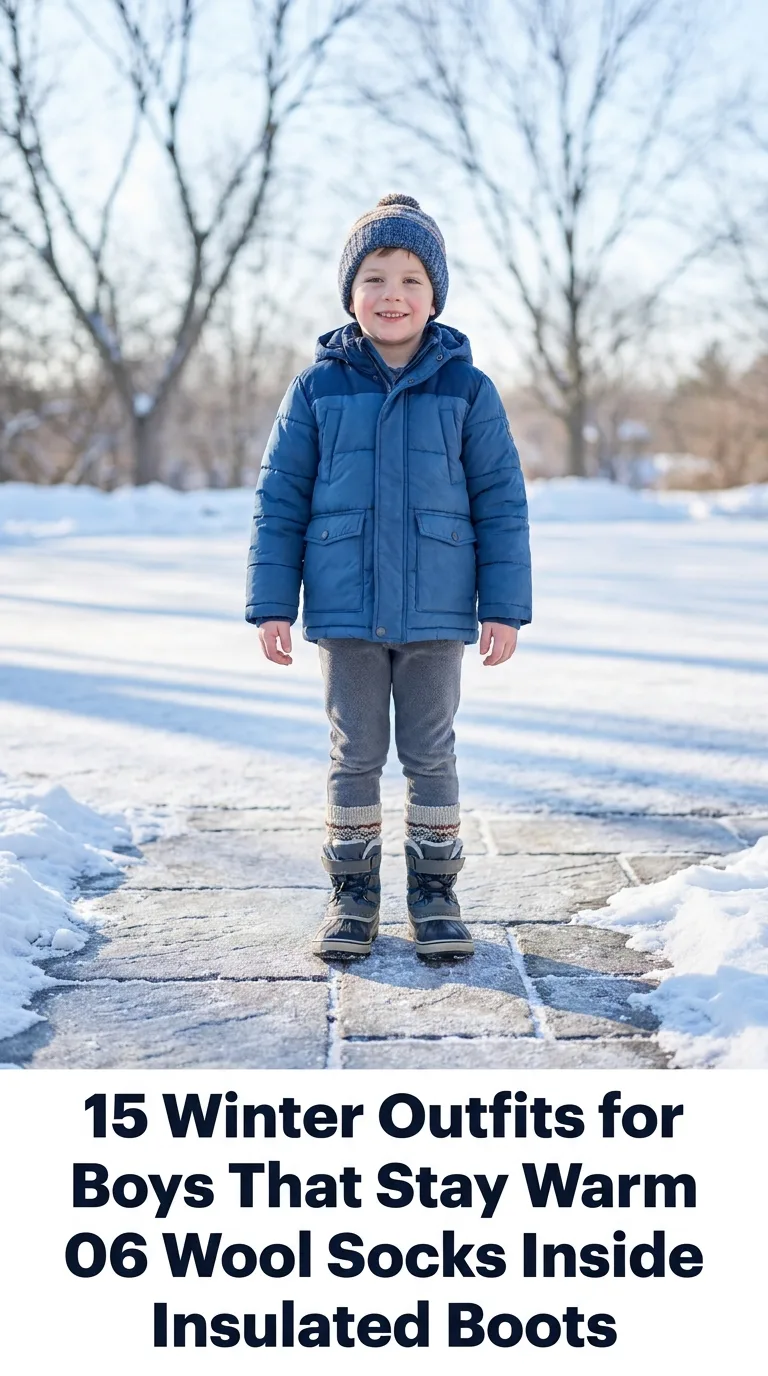
The flat-lay shows insulated waterproof boots beside two pairs of thick wool socks and fleece-lined leggings. Feet are where winter outfits fail most often, and it is almost always the sock rather than the boot. An insulated boot does very little with a thin cotton sock inside it, because cotton holds moisture and conducts cold directly. Wool socks change this immediately and the difference is obvious within one outing. The second point is fit — a boot packed too tightly with thick socks restricts circulation and makes feet colder rather than warmer. Buy with enough room that a thick sock still leaves air around the toes.
7.Flannel Shirt As A Mid-Layer
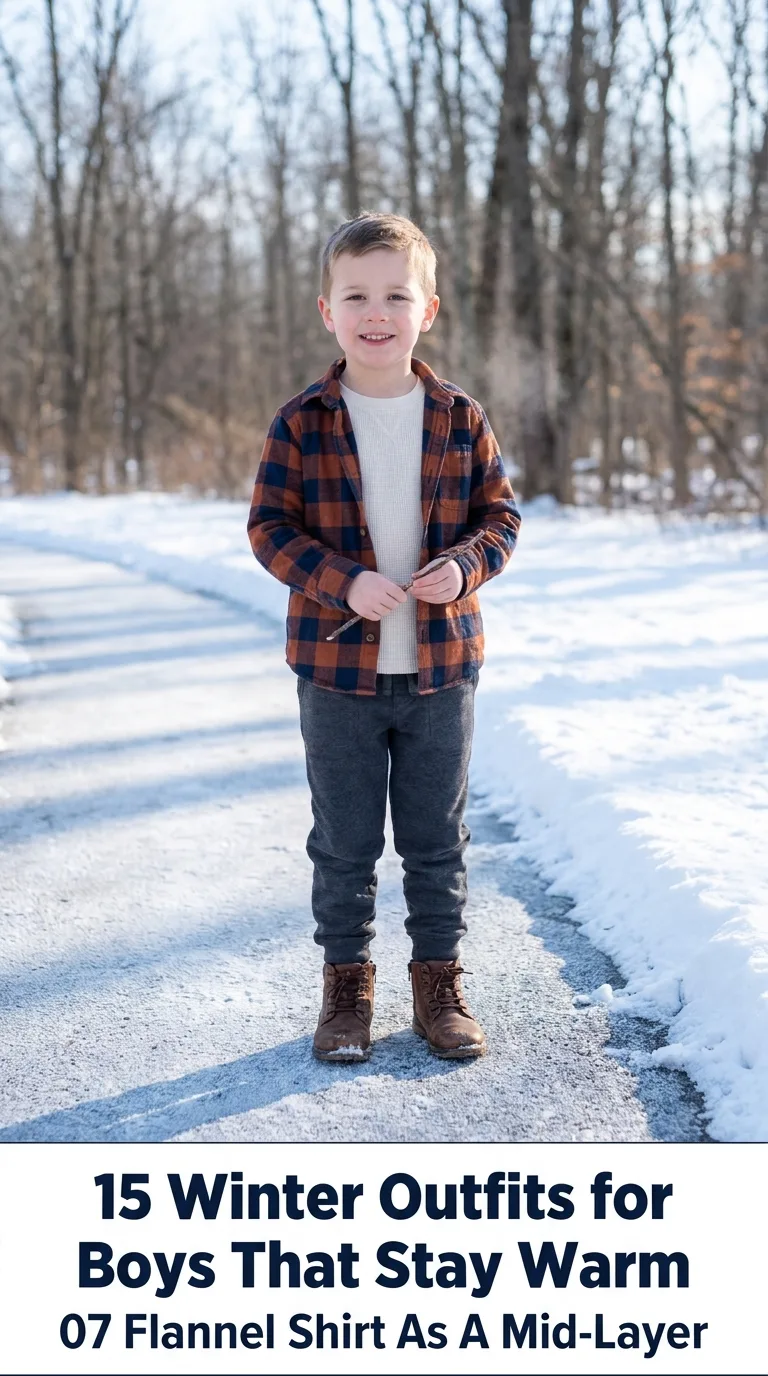
The flat-lay shows a rust and navy checked flannel shirt worn open over a cream thermal top, beside charcoal joggers and brown boots. Flannel is a genuinely warm mid-layer and it has the advantage of being open-fronted, which means he can adjust it himself as he moves between a cold corridor and a warm classroom. Anything that has to go over the head gets abandoned instead. Brushed cotton flannel is warmer than plain woven cotton because the raised nap traps air. This is the right choice for a mild winter day where a fleece would overheat.
8.Fleece Mid-Layer With Shell Coat
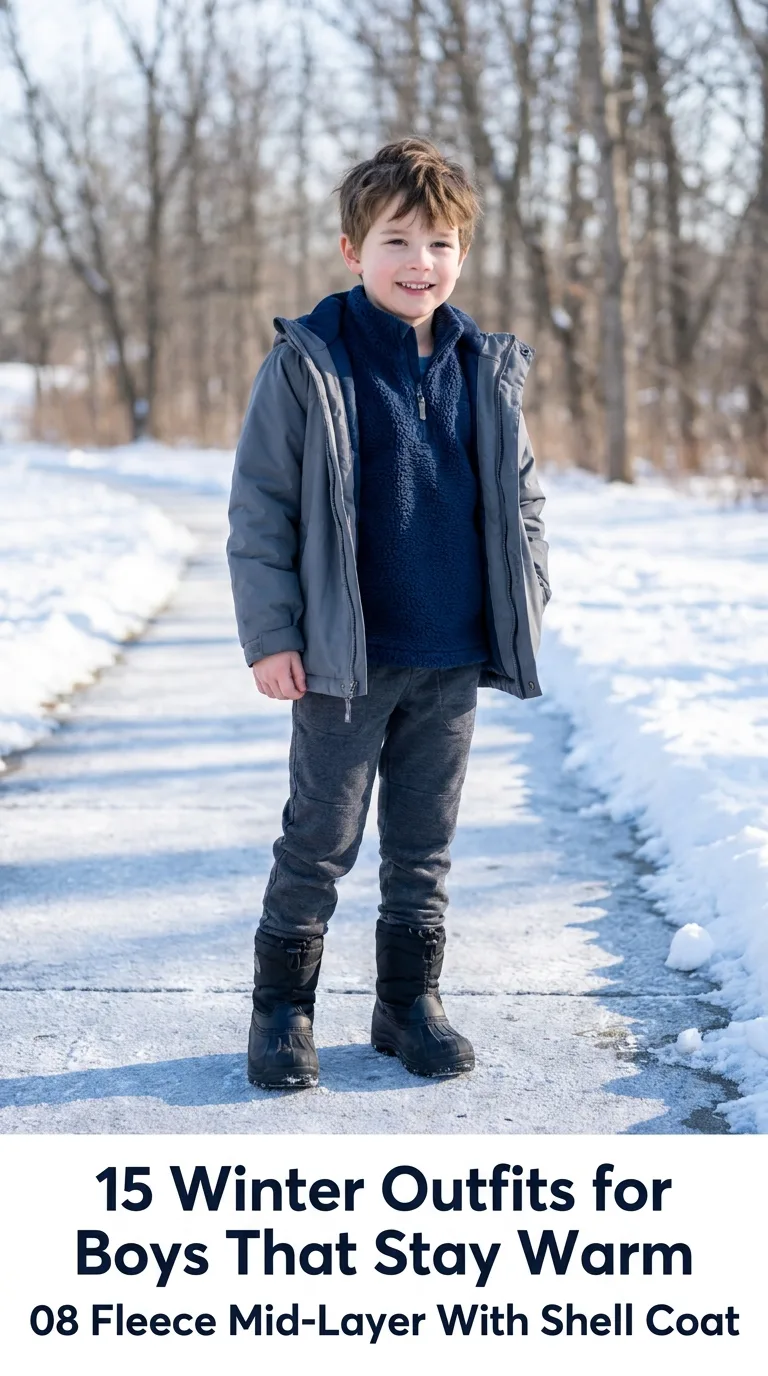
The flat-lay shows a navy fleece pullover beside a grey waterproof shell coat, charcoal joggers, and waterproof boots. Pairing a fleece with a shell rather than buying one thick padded coat gives you a system you can adjust — shell alone on a mild wet day, fleece alone indoors, both together when it is genuinely cold. It usually costs less than a good padded coat and covers a far wider range of conditions. Fleece also dries quickly if it gets damp, which padded coats do not. Look for a shell with taped seams rather than one that is merely shower-resistant.
9.Neck Warmer Instead Of A Scarf
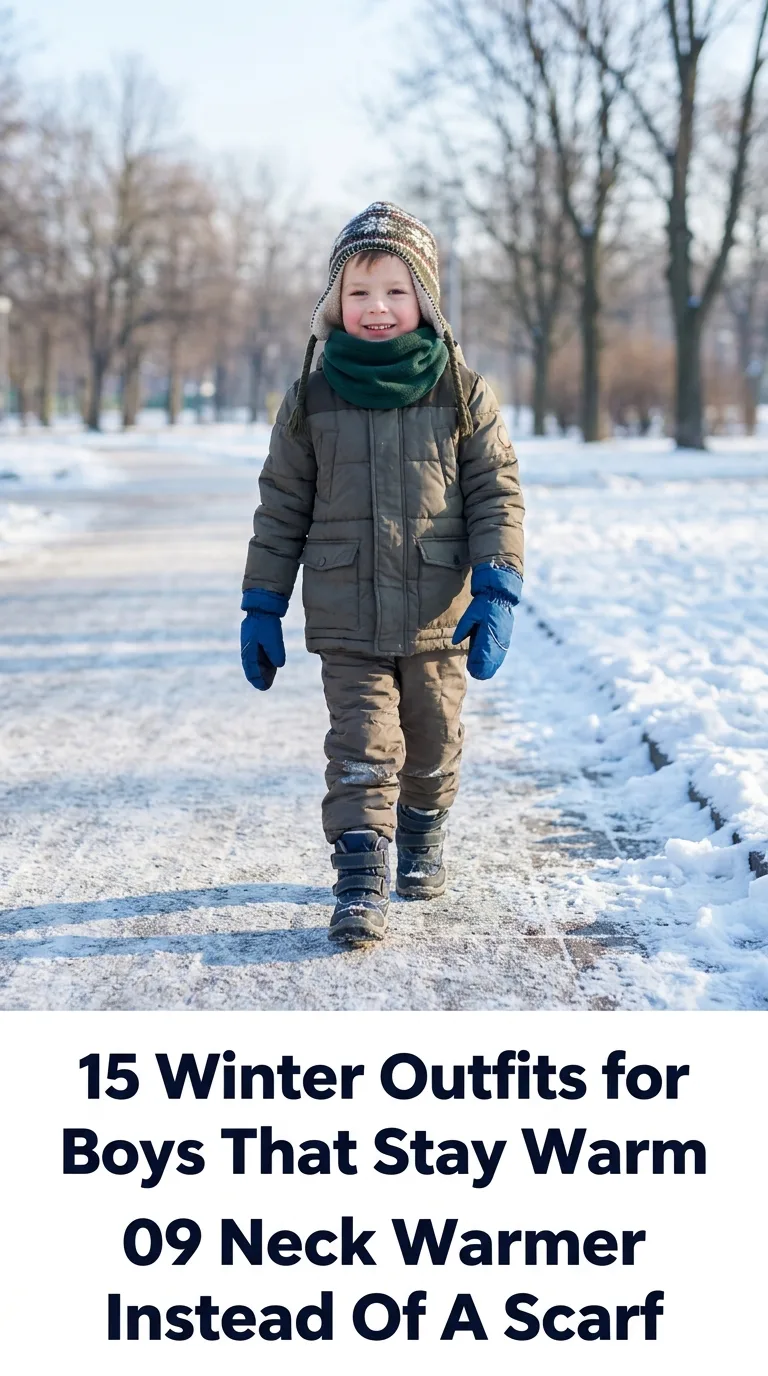
The flat-lay shows a fleece neck warmer beside a knitted hat with ear flaps and waterproof mittens. A neck warmer is both warmer and safer than a scarf for a young child — it closes the gap at the collar completely with no loose ends, and there is nothing to catch on playground equipment. It is also considerably less likely to be lost. Pair it with a hat that covers the ears properly, since a beanie sitting above the ear line leaves the coldest and most exposed area uncovered. A fleece lining in the hat adds warmth without bulk.
10.Mittens With Long Cuffs
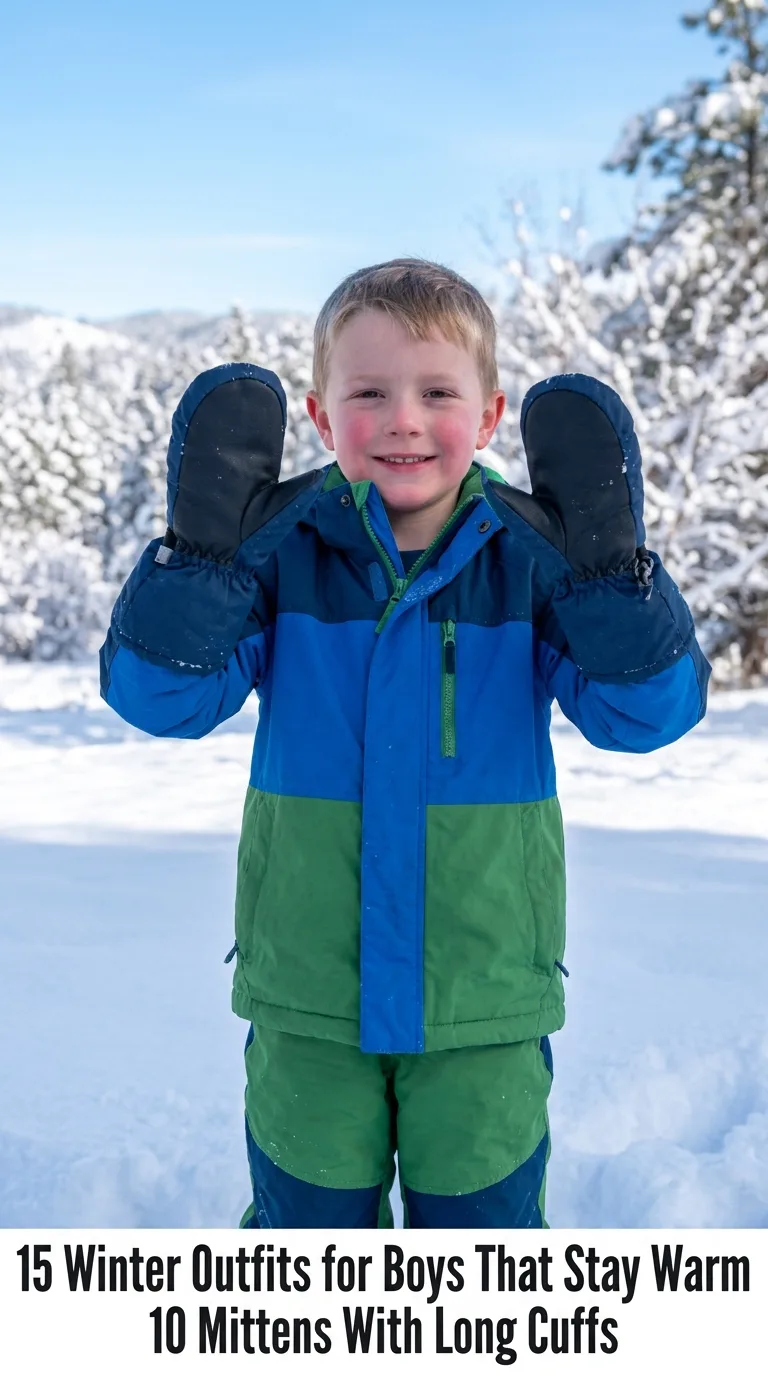
The flat-lay shows waterproof mittens with long gauntlet cuffs, beside a shell coat and snow pants. Mittens are warmer than gloves and it is not close — fingers together share heat, while separated fingers each lose heat independently. For a boy under about seven who is not doing anything requiring dexterity, mittens are simply the better choice. The detail that matters is the cuff: it should go over the coat sleeve rather than under it, which stops snow entering at the wrist. Waterproof rather than knitted, since knitted mittens soak through in snow within minutes and then actively cool the hands.
11.Quilted Vest Over Knit Sweater
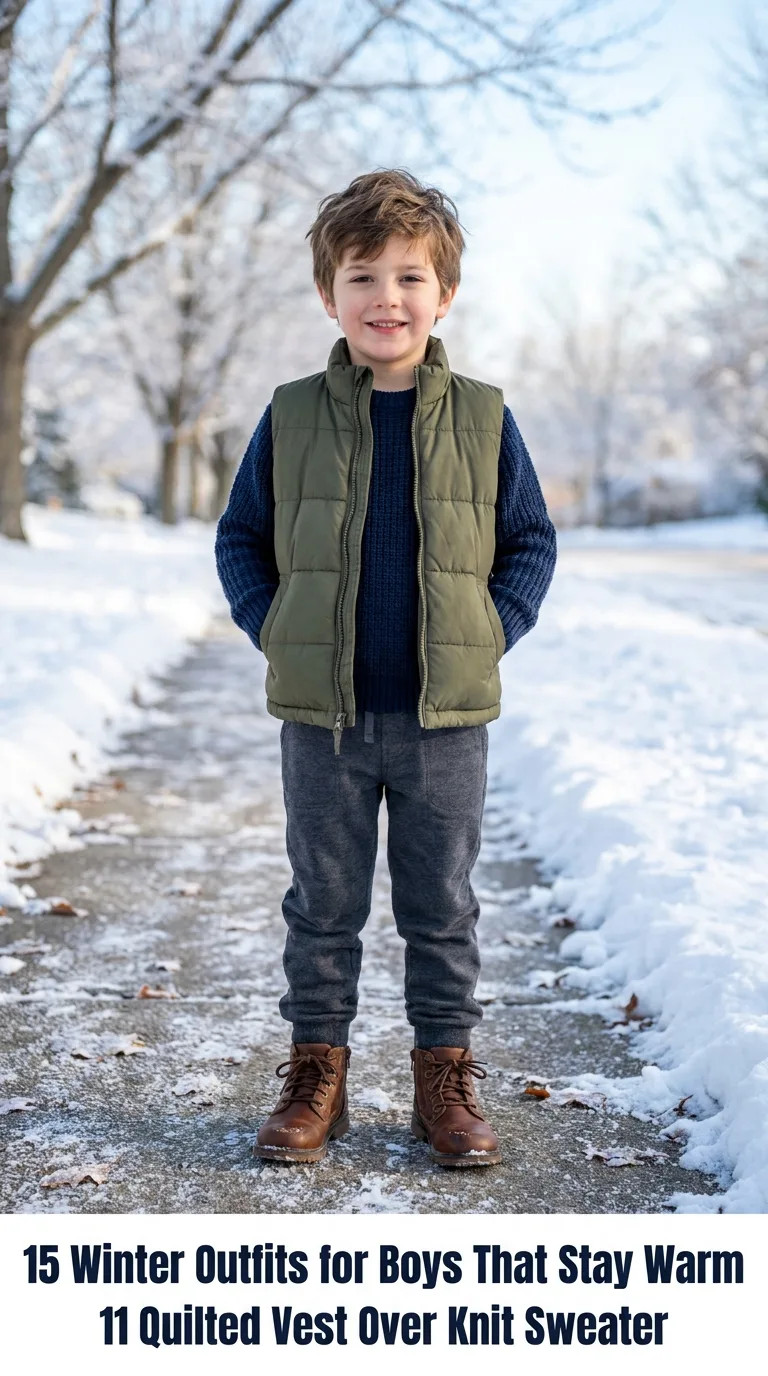
The flat-lay shows an olive quilted vest over a navy knitted sweater, beside charcoal joggers and brown boots. A vest over a sweater is the mild-winter arrangement and often more comfortable than a full coat, because it windproofs the core while leaving the arms in breathable knit. For an active boy this prevents the overheat-then-chill cycle that happens when a padded coat is worn during running. Quilted rather than fleece for the vest, since quilting blocks wind and fleece does not.
12.Corduroy Trousers Over Thermal Leggings
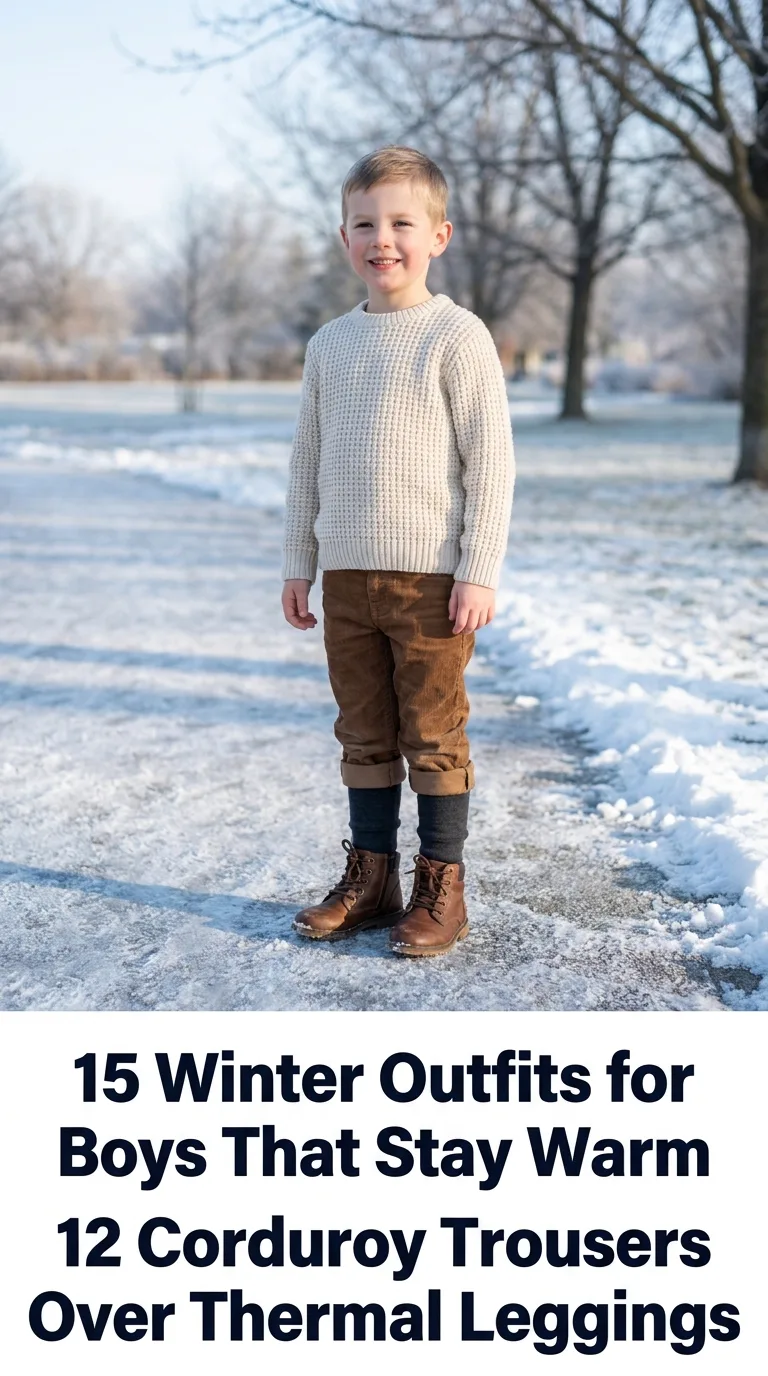
The flat-lay shows brown corduroy trousers beside charcoal thermal leggings, a cream knit sweater, and brown boots. Corduroy is warmer than plain cotton twill because the ribbed pile traps air, which makes it a genuinely better winter trouser than jeans. Worn over thermal leggings it handles cold dry days well. This is a smarter option than joggers for a family occasion while remaining considerably more comfortable than anything formal. Look for a fully elasticated waist or an internal adjuster.
13.Snowsuit For Very Young Children
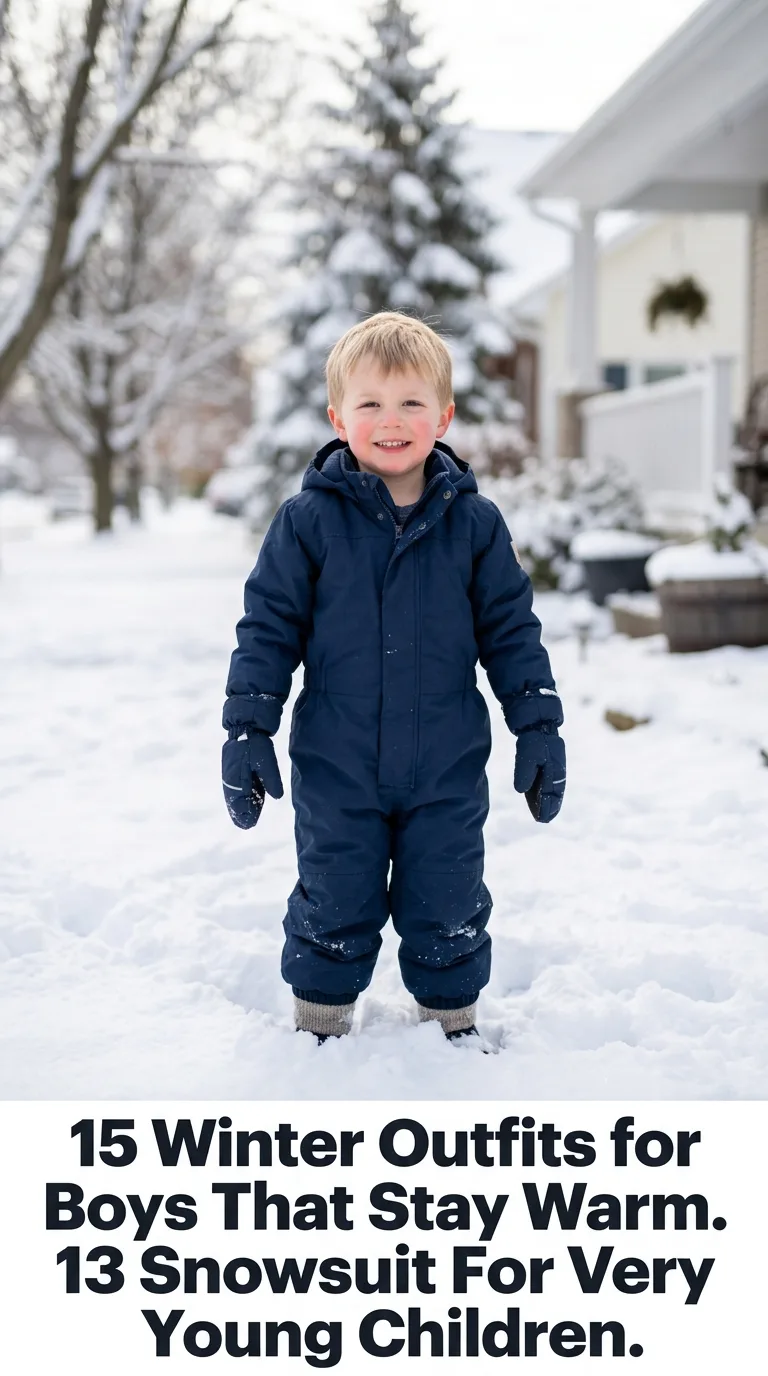
The flat-lay shows a one-piece navy snowsuit beside thermal base layers, wool socks, and waterproof mittens. A one-piece is warmer than separates because there is no gap at the waist for cold air or snow to enter, which is the main failure point when a child is sitting in snow rather than standing. It also goes on in one action. The limitation is bathroom independence, which makes it right for toddlers and weekends and usually wrong for a school-aged child who is out all day.
14.Grey Marl Set For Indoor Warmth
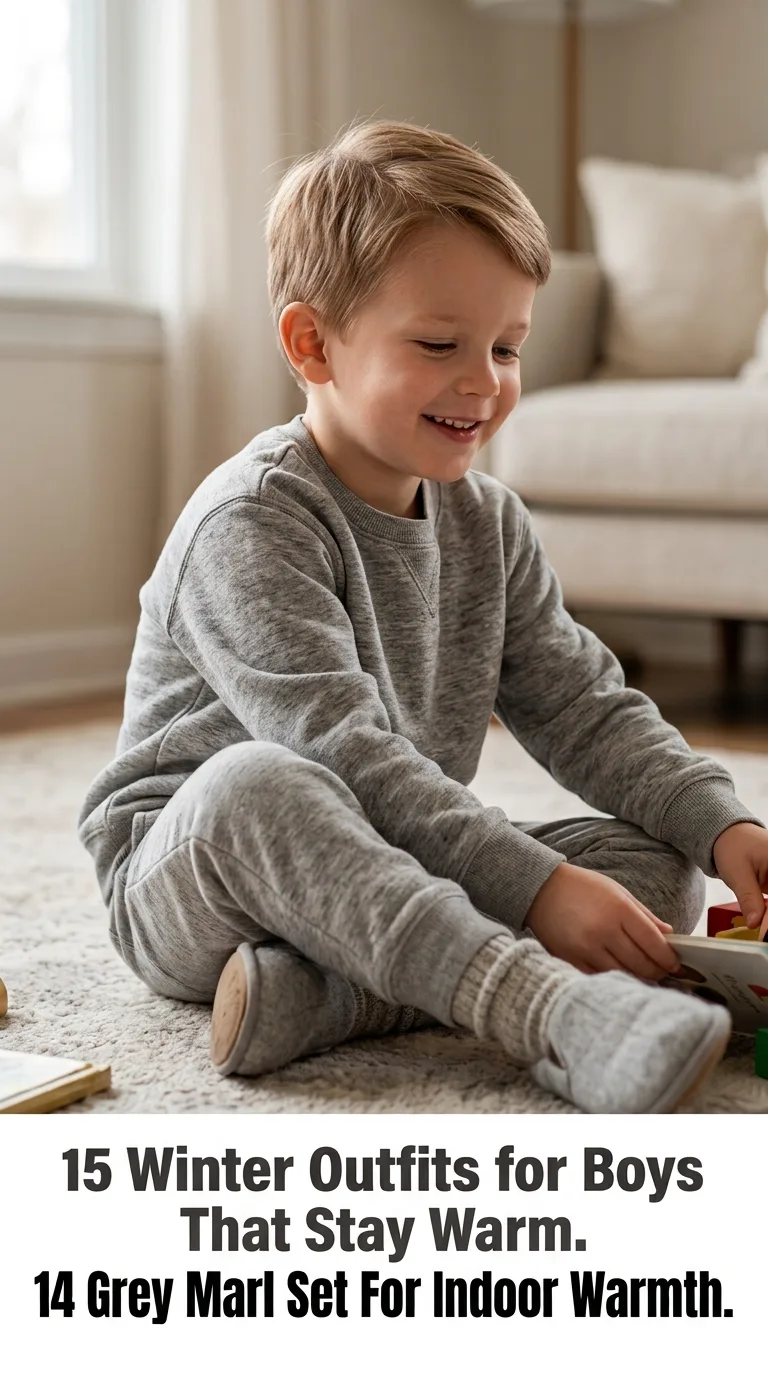
The flat-lay shows a matching grey marl sweatshirt and jogger set beside thick socks and slippers. Winter includes a great deal of time indoors, and having a warm comfortable set is more useful than a third outdoor layer. Grey marl hides marks well because the flecked yarn breaks up the surface, which matters when clothes are worn longer between washes in winter. Loopback cotton rather than brushed fleece, which pills quickly and holds static badly in dry heated air.
15.Thin Base For Overheated Classrooms
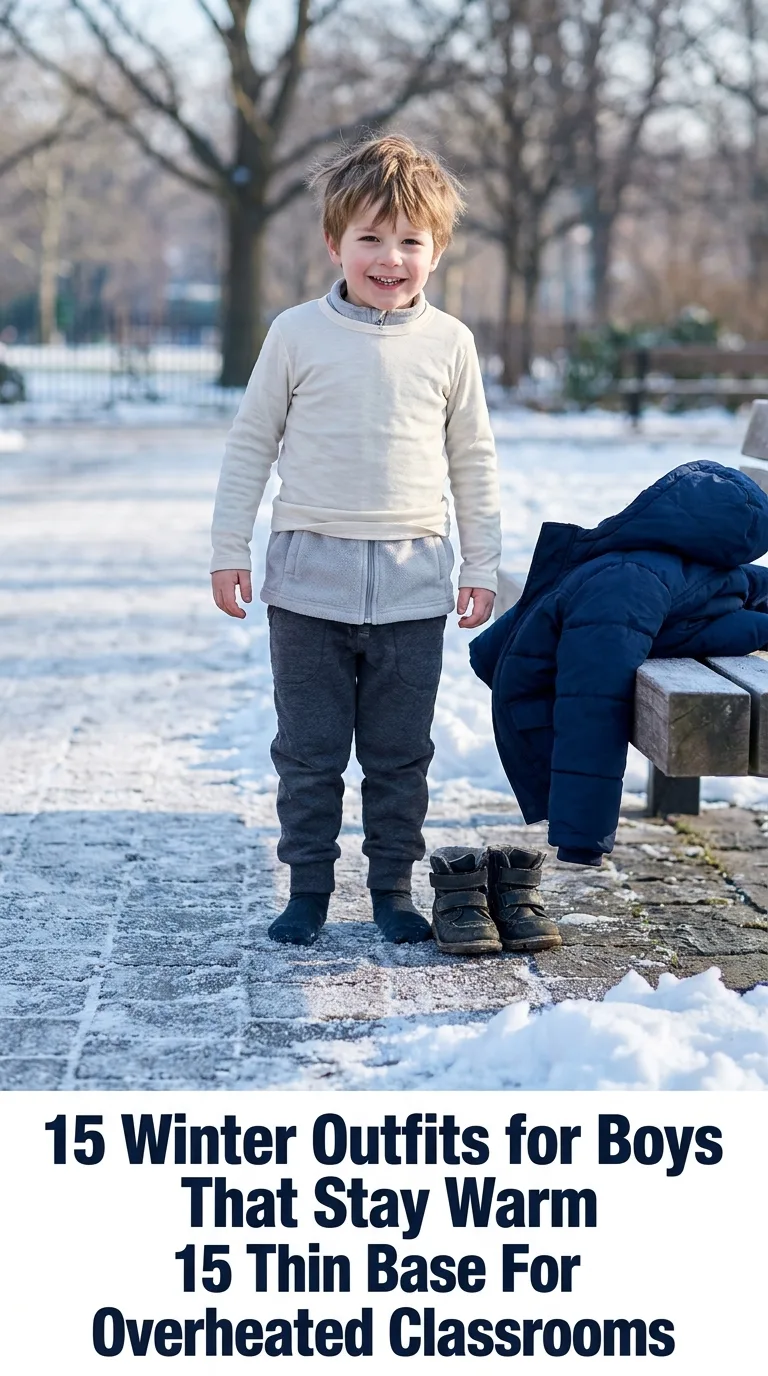
The flat-lay shows a thin cream long-sleeve top beside a light fleece and charcoal joggers, with the heavy coat and boots set aside. The most overlooked part of winter dressing is indoors. Schools are frequently overheated, and a boy dressed for a freezing playground will be uncomfortably warm within twenty minutes, then sweat, then chill when he goes back out. The fix is to keep the base layer thin and put the bulk into removable outer layers and accessories. A thin base, a fleece he can take off himself, and a properly warm coat and hat is the arrangement that works across a full school day.
Frequently asked questions
How should boys be layered for winter?
A thermal base, a fleece or knit middle, and a windproof outer. The air trapped between three thin layers insulates better than one thick coat.
What base layer should kids wear in cold weather?
Merino or a technical synthetic, never cotton. Cotton holds sweat against the skin, which makes an active child colder after recess than before.
Are snow pants necessary?
If there is snow, yes. Ordinary trousers soak through within minutes of kneeling, and a wet leg ends the outing immediately.
Mittens or gloves for boys?
Mittens for children under about seven. Fingers together share heat; separated fingers each lose heat independently. Choose long cuffs worn over the coat sleeve.
Why is he still cold in a thick coat?
Almost always the head, hands, or feet. A good coat does little against a thin hat, knitted mittens, or cotton socks inside insulated boots.
The takeaway
Winter dressing is a system, not a coat. Start with a merino or technical base — never cotton — add fleece or knit in the middle, and put the money into an outer layer with a hood that stays up and cuffs that seal. Then buy wool socks, waterproof mittens with long cuffs, and a hat that covers the ears, because that is where the cold actually gets in.
Bright Play Days is reader-supported. This article is general styling guidance and reflects our own opinions.