


Twinkle Twinkle Little Star Lyrics, Actions and Why Toddlers Love It
Teach your toddler the words to Twinkle Twinkle Little Star with easy hand actions, fun singing games, and simple ways to make this classic lullaby part of your day.
Twinkle Twinkle Little Star works beautifully for ages 2–3 with simple actions: twinkle fingers for the twinkle lines, a head-tilt wonder pose, arms stretched high for the sky, and a diamond shape with your fingers. Sing it slow for bedtime and fast for playtime, and let your toddler copy the actions before the words.

The short version
- The traditional lyrics are public domain — sing them freely.
- Pair each line with one action; toddlers copy actions before words.
- Repetition is the teaching method — sing it daily.
- Try slow, fast, and whisper versions for different moments.
- End with a flashlight star hunt or playdough stars.
- Age
- Ages 2–3
- Play time
- 10 min
- Mess
- None
- Difficulty
- Easy
- Where
- Indoor
Why kids love this
Few songs are as instantly familiar to a two-year-old as Twinkle Twinkle Little Star. The melody is gentle and repetitive, the words paint simple pictures — a star, the sky, a diamond — and the rhythm rocks along like a slow swing. Toddlers love repetition: the same sounds in the same order build confidence, and within a few sing-throughs most two-year-olds make twinkle fingers before they can say the words. The notes move in small steps little voices can hum, and the steady beat slows wiggly bodies — handy in the car, at bedtime, and in the stroller.
What you'll need
- None — just your voice and your hands. Optional extras for the games at the end: a small flashlight, playdough with a star cookie cutter, or a star cushion to point at.
Before you start
1. Nothing to set up. Just make sure you can see your toddler's hands. 2. For the flashlight game, pick a room you can make dark — a bedroom with closed curtains works well. 3. Sing the verse through once in your head so the words feel comfortable before you start.
How to do it
-
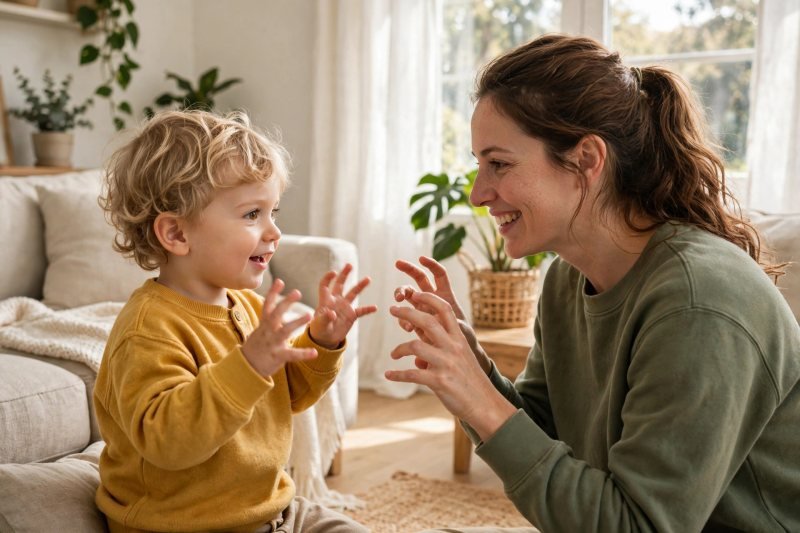
Twinkle fingers. Face your toddler, hands up, and open and close your fingers like twinkling lights while you sing "Twinkle, twinkle, little star."

-
Copy the twinkle fingers. Let them copy the twinkle fingers — praise the move: "Look at those twinkling fingers!"
-
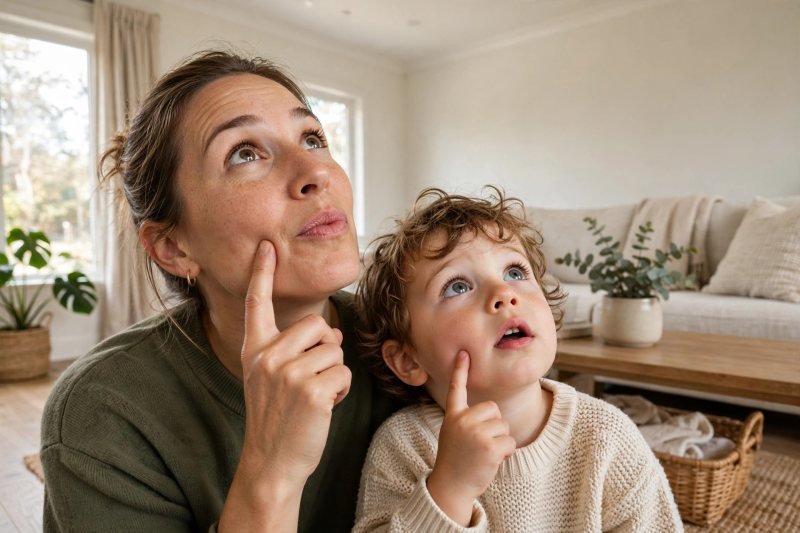
Wonder pose. Sing "How I wonder what you are!" with a head tilt, a finger to your cheek, and wide wondering eyes.
-
Reach for the sky. For "Up above the world so high," stretch both arms up tall — stand up and reach for the sky.

-
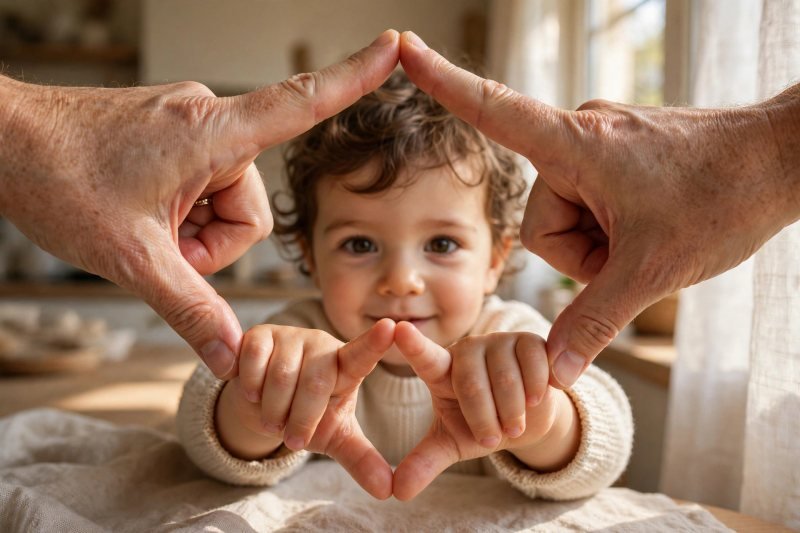
Diamond shape. Sing "Like a diamond in the sky" and make a diamond with your thumbs and index fingers; let your toddler peek through it.
-
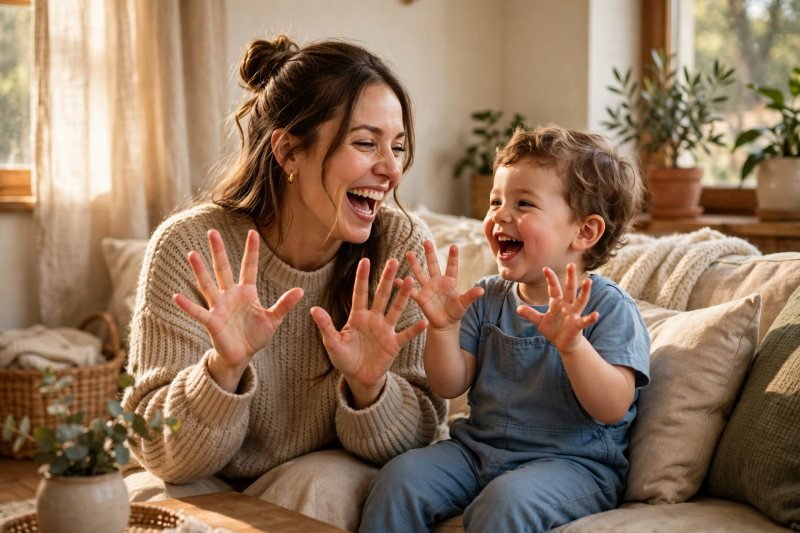
Repeat the closing lines. Repeat the closing lines — "Twinkle, twinkle, little star, / How I wonder what you are!" — back to twinkle fingers, so they get a second chance to join in.
-
Slow and sleepy. Sing it SLOW and sleepy: stretch every word, yawn between lines, and let your twinkle fingers droop.

-
Fast and bouncy. Sing it FAST and bouncy: wild twinkle fingers, bouncing on the spot, as silly as they like.

-
Whisper version. Whisper the whole verse curled up together — it teaches volume control and works as a calm-down.

-
Star hunt. End with a star hunt: darken the room, shine a flashlight on the ceiling, and sing while they point at each "star" — or press playdough stars while you sing.



Make it easier
Skip the words and just do the actions while you sing. Starting with actions only is completely normal at two. More songs that work this way live in our nursery rhymes for toddlers roundup. Repeat only the first two lines if the full verse feels long. A small repeated piece builds confidence faster than a wobbly run through the whole song.
Make it harder
Ask your toddler to sing a line solo while you do only the actions — then swap. Pause before the last word of each line and let your child fill it in: "Twinkle, twinkle, little…"
Other ways to play it
- Bedtime version: Dim the lights, whisper the verse, rock side to side — end with a big quiet yawn. Singing before sleep builds early reading — see our benefits of nursery rhymes for reading.
- Car version: Twinkle fingers work in a car seat — slow to calm, fast to energize.
- Dance version: March during the verse, then freeze in a star shape (arms and legs spread) at each line's end.
How it changes by age
- Expect exposure rather than performance. Most two-year-olds join in with the actions — twinkle fingers, arms up high — well before singing the words, and some just watch and bounce at first. That quiet watching is still learning: their brains are mapping the melody and sound sequence. Around three, expect single words; by late three many sing most of the first verse. Never correct a toddler's singing — the goal is joyful repetition, not accuracy. When words start to stick, our guide on how to teach a child to read builds on the same sound awareness. For more age-by-age learning ideas, explore our learn hub.
What they're learning
The steady rhythm builds phonological awareness — hearing the separate sounds inside words — a foundation of reading. Memorizing the line order strengthens working memory, and pairing each line with an action links language to the body. The melody is a memory hook: tunes stick far more easily than spoken words. Singing face to face builds turn-taking and eye contact, while the slow and whisper versions gently teach emotional regulation. For more at-home learning play, see our toddler learning activities at home ideas.
Questions parents ask
What are the traditional lyrics to Twinkle Twinkle Little Star?
At what age can a toddler learn Twinkle Twinkle Little Star?
What hand actions go with Twinkle Twinkle Little Star?
Why do toddlers love Twinkle Twinkle Little Star?
How can I use Twinkle Twinkle Little Star at bedtime?
What are some fun ways to extend the Twinkle Twinkle song?
The words and melody of Twinkle Twinkle Little Star are in the public domain — the poem behind them was published in 1806 — so sing freely. Toddlers learn through repetition, not instruction, so sing often and casually. If your child has a favorite line, let them request it on repeat — that is how the learning happens.

save it for later
Pin this for the next rainy afternoon
Keep it on a board so it is there when you need it, rather than when you happened to find it.
Save to Pinterest


