


Thanksgiving Crafts for Preschoolers: A Turkey-and-Gratitude Craft Afternoon
Thanksgiving crafts for preschoolers in one complete afternoon: a paper-plate turkey with handprint feathers, a pinecone turkey, and a gratitude-leaf tree your child builds leaf by leaf. Ten steps from bare table to centerpiece, with honest mess notes.
Thanksgiving crafts for preschoolers work best as one themed afternoon: paint a paper-plate turkey body, press painted handprints as its feathers, glue on a paper face, then slow down for a gratitude-leaf tree. Finish with a pinecone turkey and fingerprint place cards, and your child has made the whole Thanksgiving table in about ninety minutes.

The short version
- One hero craft first: the paper-plate turkey with handprint feathers carries the afternoon.
- Adult cuts, preschooler paints, presses, and glues — the honest division of labor at ages 4–5.
- The gratitude tree in the middle slows the pace and gives the holiday its meaning, leaf by leaf.
- Pinecone turkeys and fingerprint place cards finish the table with crafts kids genuinely made.
- Everything is washable paint, paper, and glue sticks — and the table covering makes cleanup five minutes.
- Age
- Ages 4–5
- Mess
- Some
- Difficulty
- Easy
- Where
- Indoor
Why kids love this
Preschoolers love Thanksgiving crafts because the turkey is the rare craft subject that is also a joke: a bird made from your own hand, with feathers you painted yourself and a beak you glued on crooked and adored anyway. This afternoon is built so a 4- or 5-year-old does the real work — painting, pressing, gluing, placing — while the theme does the charming. The paper-plate turkey comes first because it is the hero piece; the gratitude tree slows the pace in the middle, when little hands need a quieter job and the conversation turns to who and what they love; the pinecone turkey finishes with treasure-hunt energy, because a craft you foraged feels different from a craft you were handed. By the end, your child has not made decorations for the holiday — they have made the holiday itself.
What you'll need
- The base: white paper plates (one per turkey, plus spares), brown washable paint, paintbrushes, a cup of water, paper towels
- Feather paper: white card stock or thick paper, washable paint in red, orange, gold, and brown
- Turkey face kit: orange and red construction paper (beak and wattle shapes), large self-adhesive googly eyes or paper circles
- Glue sticks and child-safe scissors (adult uses craft scissors for the plate work)
- Gratitude tree: paper leaves cut from red, orange, and gold construction paper; crayons; a bare branch in a jar of pebbles, or a drawn tree trunk on a big sheet of paper; tape or glue dots
- Pinecone turkey: clean, dry pinecones (bought craft cones or foraged and baked clean), extra feather shapes, a small pom-pom or paper head
- Table protection: an old tablecloth or opened paper bags, aprons or play clothes, a tray for finished pieces to dry on
Before you start
1. Cover the table completely and set out supplies in step order down its length — plate station, paint station, gratitude station, pinecone station — so the afternoon flows like an assembly line your child walks along. 2. Cut the beak and wattle shapes and the paper leaves ahead of time (or let a confident 5-year-old cut leaves with safety scissors as part of step 6); preschool craft afternoons die waiting on adult cutting. 3. Put a small amount of each paint color on a palette plate; full bottles at a preschool craft table are a spill with a time delay. 4. Decide where finished pieces will dry — a tray or a clear counter edge — because a wet turkey carried to a bookshelf is a heartbreak with paint on it.
How to do it
-
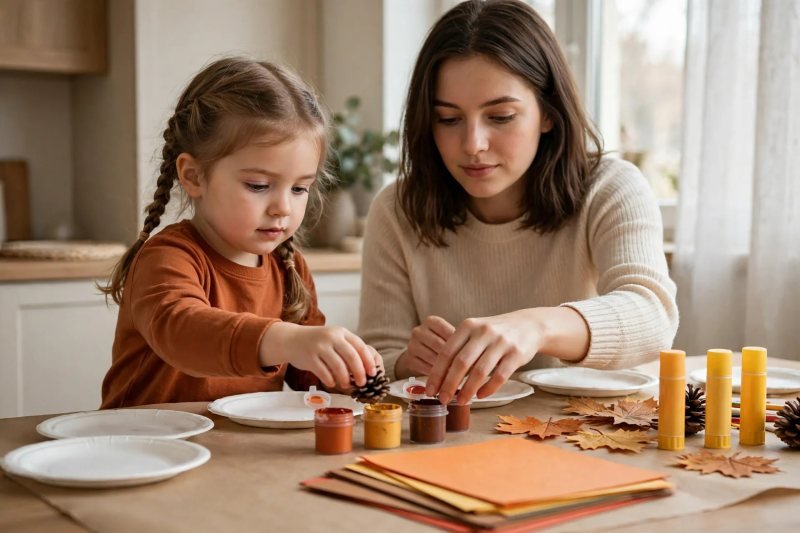
Cover the table and lay out the whole afternoon. Spread the tablecloth or paper bags, set the apron on your preschooler, and walk the table together, station by station: plates and brown paint first; feather paper and fall colors second; paper leaves and crayons third; pinecones last. Say: "Today we are making the whole Thanksgiving table — a big turkey, a gratitude tree, and a pinecone turkey — and everything we need is already here." Let your child arrange the small pumpkins or decorations at the table's far end as the "finish line" the crafts will join. A preschooler who has seen the whole afternoon laid out settles in and works steadily instead of asking what is next every four minutes, and that calm opening hands straight into the hero craft.
-
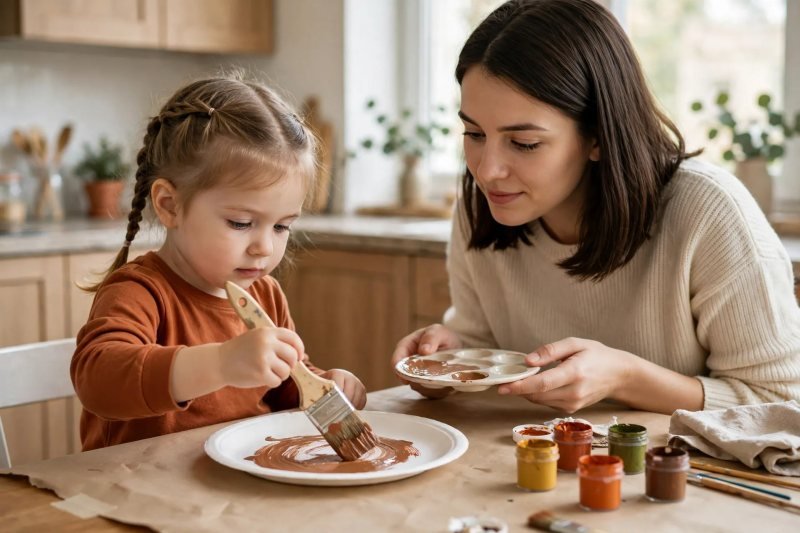
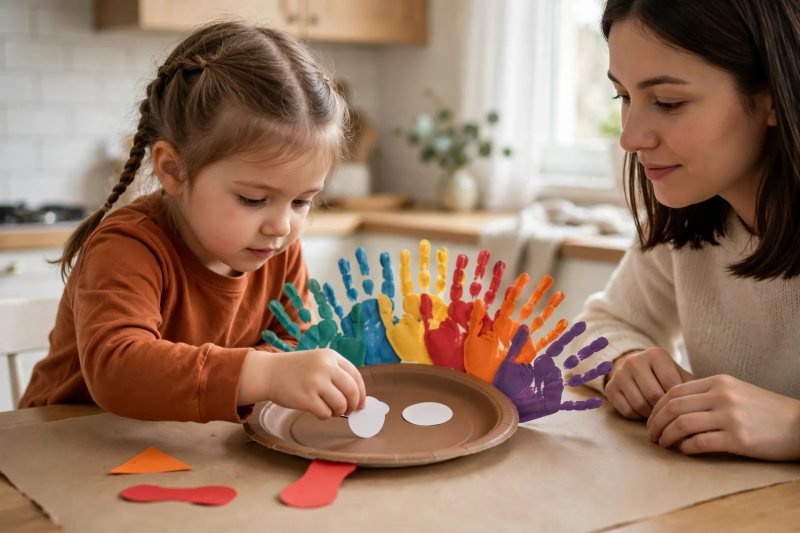
Paint the paper plate into a turkey body. Set a white paper plate in front of your child, put brown paint on the palette, and hand over the big brush. Say: "Paint the whole plate brown — every white bit — because this plate is going to be our turkey's round tummy." Show the first two strokes, then let those small hands do the honest work: preschool painting is streaky, and streaky brown reads as feathers once the plate is dry, so praise coverage, not neatness. Turn the plate as they paint so the rim gets its share, and park the finished body on the drying tray. While it dries, tell the turkey's plan out loud — body first, feathers next — because the handprint step that follows is the one your child will remember all year.
-
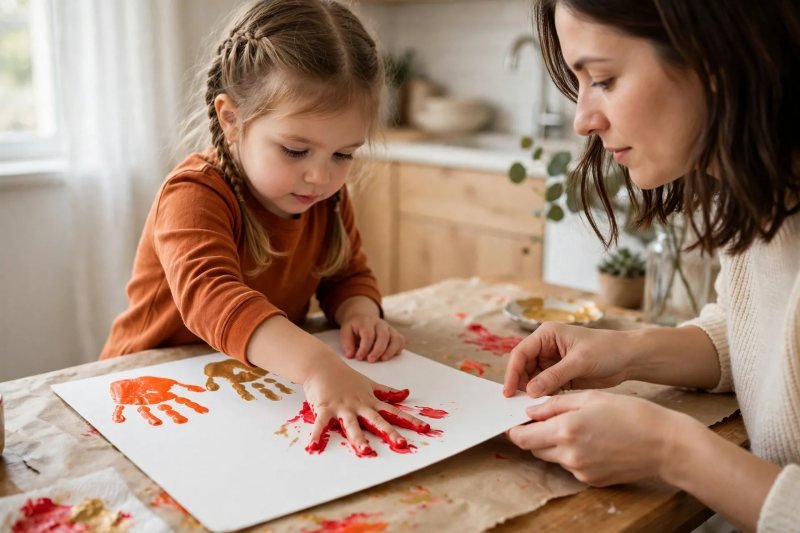
Press painted handprints to make the feathers. This is the heart of the afternoon, and it runs on the same paint-mixing joy as this site's color mixing activities: brush red paint over your child's whole palm and fingers — tickly, and they will tell you so — then press the hand firmly onto card stock, fingers spread wide like a fan. Lift straight up, cheer the print, and repeat in orange, gold, and brown until you have five or six good feathers. Say: "Your hand IS the feather — look, your fingers are the feather's fingers." If a print smudges, it becomes a background feather; turkeys are forgiving. Wash hands at the sink together, and while the feathers dry, admire them in a row — choosing which print is the grandest is a serious preschool decision.
-
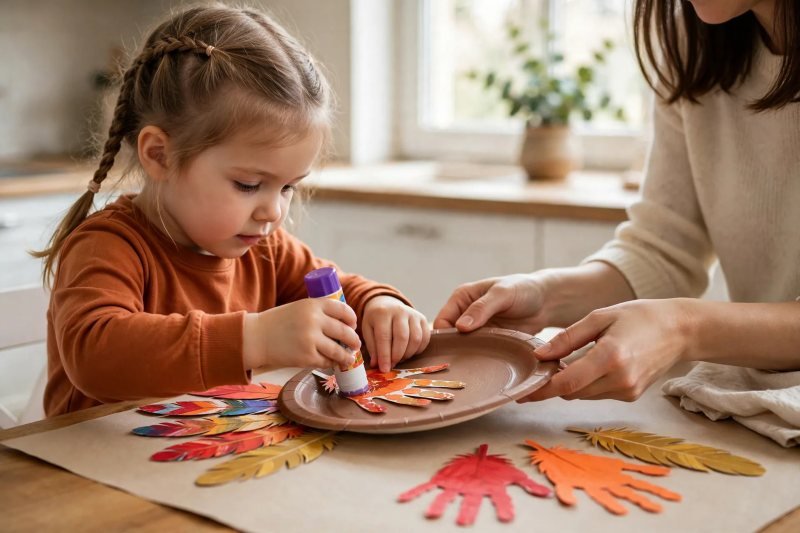
Cut the feathers out and glue them behind the body. Adult scissors do this part, or safety scissors in a confident 5-year-old's hands with you beside them: cut around each handprint, keeping the finger-feathers long. Fan the cut feathers behind the dry paper plate in a rainbow arc — reds and golds high, browns low — and let your child direct the arrangement before any glue appears: "Tell me where each feather goes; you are the turkey designer." Then your preschooler runs the glue stick along each feather's palm edge and presses it into place behind the plate, holding for a slow count of five. This careful squeezing, placing, and pressing is exactly the hand-strength work this site's fine motor activities are built on — disguised, as all the best practice is, as making something wonderful.
-
Give the turkey a face with a beak, a wattle, and two round eyes. Bring the turkey body back to center table and lay out the face kit: two big round eyes, a folded orange triangle beak, and a wobbly red wattle. Let your child place every piece dry first — eyes high, beak under them, wattle dangling beside the beak — and step back together to judge the result; a slightly crooked turkey has ten times the personality of a perfect one, so resist rearranging. Say: "You decide the face. Funny or serious?" Glue stick on the back of each piece, press, count to five. Add two thin paper legs at the bottom if your artist insists the turkey must stand in the picture, then sign the back of the plate with your child's name and the year — future you, unpacking this in a decade, will be grateful.
-
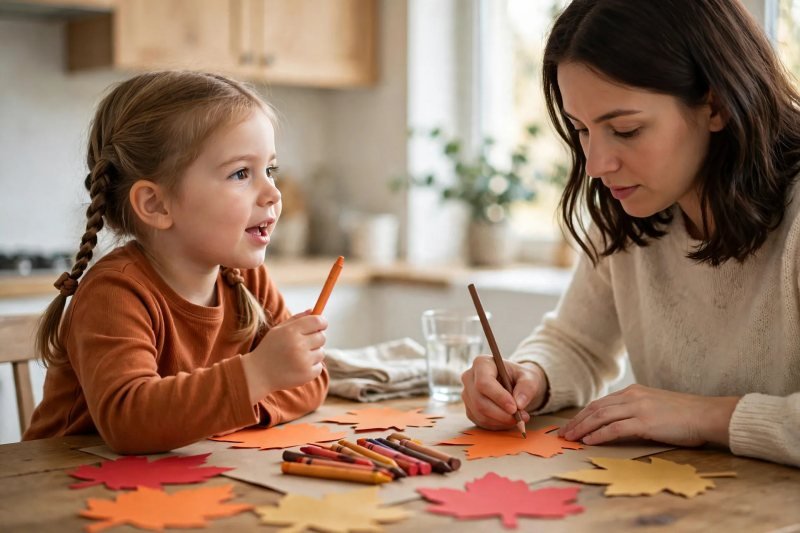
Slow down and make the gratitude leaves. Shift to the quiet station: paper leaves in fall colors, crayons, and a slower voice. Ask the year's kindest question one leaf at a time: "What are you thankful for?" Take dictation like a royal scribe — write your child's exact words on the leaf in your handwriting (their words, your letters is the honest preschool division of labor), or let them draw the thing instead: a wobbly dog, a grandmother-shaped scribble, a heroic cookie. Say each one back as you finish it: "This leaf says: thankful for Grandma's soup." Aim for six to ten leaves; stop while it is still sweet, because gratitude assigned is gratitude lost. This pause in the middle of the afternoon is deliberate — painting energy spent, gluing patience returning — and it hands into building the tree the leaves will cover.
-
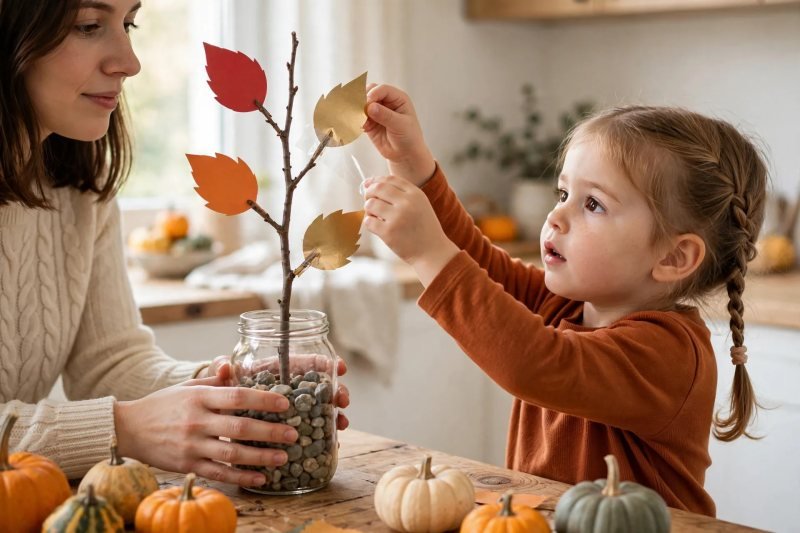
Hang the leaves on the gratitude tree. Stand the bare branch in its jar of pebbles (or tape the drawn trunk to the wall) where it will live all season — table center or hallway are both honorable postings. Your child tapes or glue-dots each leaf onto the branches, choosing heights and reading each one aloud as it goes up, with help for the words they dictated an hour or a minute ago. Say: "Our tree grows thanks instead of apples." Cluster a few leaves low where small guests can reach to read them on the day. When the last leaf lands, step back for the official unveiling: this odd, lovely branch is now the centerpiece the paper turkey was always destined to stand beside, and on Thanksgiving Day it gives every guest a job — add a leaf of their own.
-
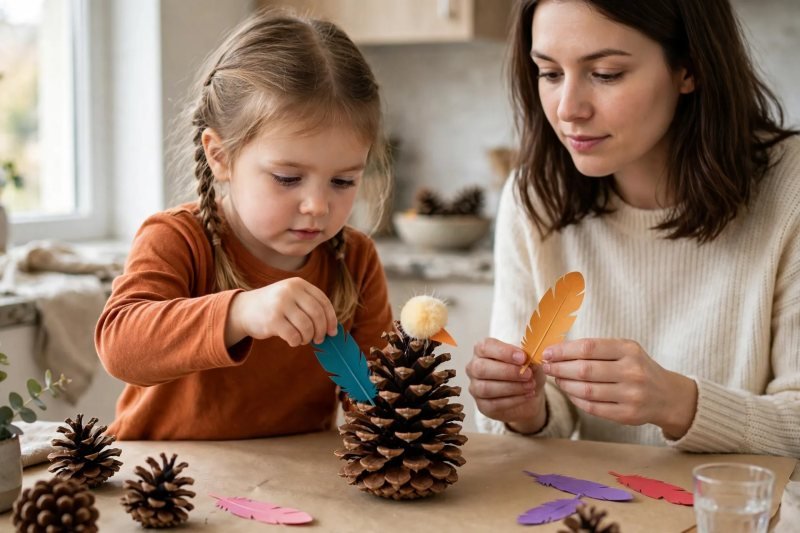
Build the pinecone turkey from the treasure box. Open the pinecones and the turkey becomes woodland: choose the fattest cone, stand it wide-end down, and push paper feather shapes — leftover handprints work, or simple leaf shapes — between the scales at the back in a fan. Glue a small pom-pom or folded paper head at the front top, add two dot eyes and the tiniest triangle beak from the face-kit scraps, and the pinecone is a turkey with genuine forest credentials. Say: "This one came from a real tree, so it is the gratitude tree's cousin." Foraged cones should be adult-prepared (baked clean and dried before craft day — a grown-up job, done ahead); bought craft cones skip that step. One per child is the rule, because a whole rafter of pinecone turkeys on the table will start arguments about whose is best, and all of them will be right.
-
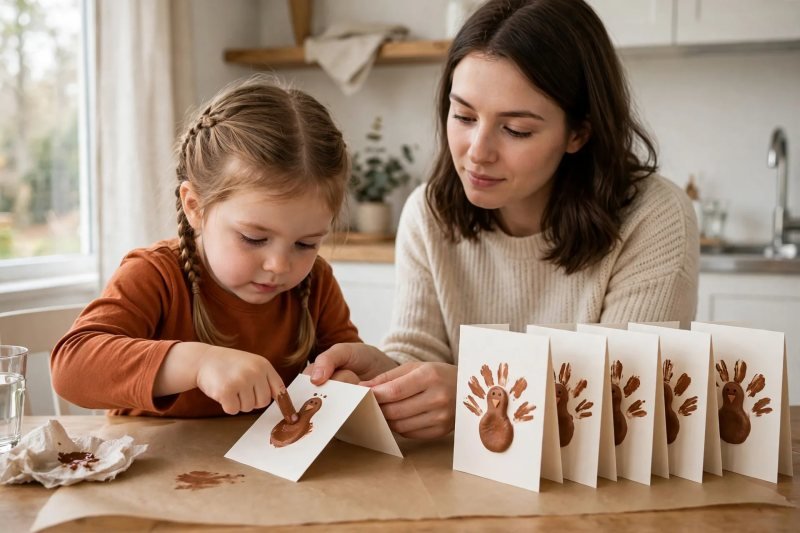
Fold simple place cards for the holiday table. Back to paper for the finishing craft: fold small rectangles of card stock into tents, one per expected guest, and let your preschooler decorate each with a crayon turkey fingerprint — a brown thumbprint body, tiny feather strokes around it in fall colors, two dot eyes. Names are an adult pen job for guests, or your child copies the first letter of each name if they are letter-proud this month. Say: "You made everyone's seat — when they sit down, they will know it was you." Keep the design identical across cards so no guest's card outranks another's; uniformity is hospitality. Stack the finished cards in the order the table will be set, which quietly teaches the guest list better than any rehearsal.
-
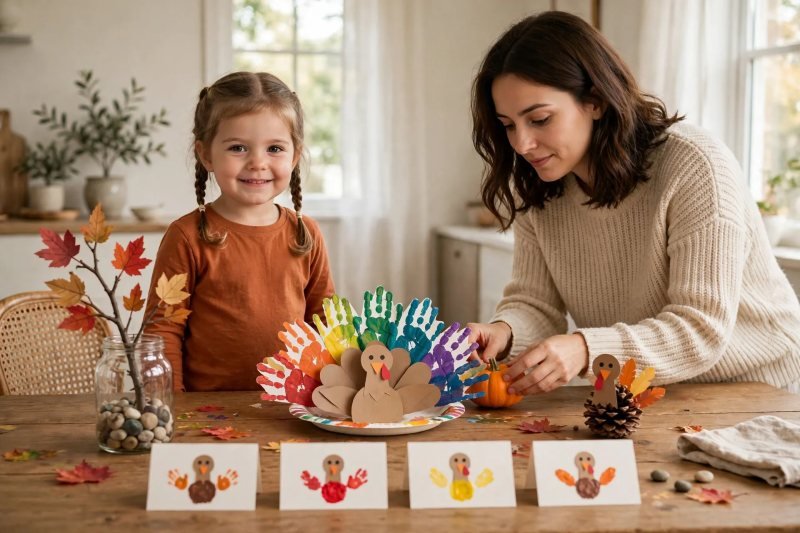
Set the finished crafts on the table and tidy the craft zone together. Carry the dry paper-plate turkey to its place of honor, stand the pinecone turkey beside it, check the gratitude tree's leaves are secure, and line the place cards along the empty table like a preview of the feast. Say: "Look what this table was this morning: nothing. Look what you made." Photograph the artist with the full display before anything migrates. Then tidy as a team with jobs sized to the worker: lids on paint pots, brushes in the water cup, paper scraps hunted into the recycling like a scavenger game, aprons off. A craft afternoon that ends with the table set and the floor clean teaches the whole arc — make something real, give it its place, and put the room back better than you found it.


Make it easier
Run one hero craft only — the paper-plate turkey with handprint feathers is a complete afternoon for a young 4-year-old; the gratitude tree makes a lovely second session. For a shorter set of seasonal makes, see Thanksgiving crafts for kids. Pre-paint nothing, but pre-cut everything: beaks, wattles, leaves, and feather paper sized and stacked so small hands only paint, press, and glue. Swap the pinecone turkey for a second paper turkey in different colors if pinecones are not available; the arc of the afternoon matters more than the materials.
Make it harder
Let a confident 5-year-old cut their own handprint feathers and paper leaves with safety scissors, with an adult beside them — real cutting practice with a proud purpose. Add a feather pattern challenge: arrange the handprint feathers in a repeating color pattern (red, gold, red, gold) before gluing, and photograph the pattern first so it can be rebuilt after the dry run. Grow the gratitude tree into a family project all week: a basket of blank leaves by the tree, and everyone — parents, siblings, guests — adds one a day until Thanksgiving.
Other ways to play it
- Keepsake handprint turkey on canvas: press the painted handprint onto a small stretched canvas instead of paper, paint a beak and eye onto the thumb, and you have the version grandparents get sent photos of — hand size preserved forever, which is the true point of a handprint craft. Place-card versions are covered in handprint turkey place cards.
- Footprint turkey: a brown footprint (heel as body, toes as the tail end) with paper feathers glued around it — the variation for a child who would rather take shoes off than wash paint off hands, and a gift for babies to contribute a tiny print beside a big sibling's.
- Classroom set: in a preschool class, every child makes one handprint feather for a single giant shared turkey on the bulletin board, and the gratitude leaves go on a paper tree by the door — twenty feathers, one bird, zero arguments. Start with an autumn leaf collection and sorting walk to gather real leaves first.
How it changes by age
- Age 4: Fours own the painting, pressing, and gluing with both hands and strong opinions; keep your jobs to cutting, hot decisions, and scribing their gratitude words exactly as spoken. Expect the face placement to take longer than the painting — it should; that is authorship.
- Age 5: Fives can run nearly the whole table: cutting feathers and leaves, arranging patterns, copying first letters onto place cards, and leading the tidy-up. Hand them the run sheet and let them call the steps; a 5-year-old art director is a force of nature with a glue stick.
What they're learning
Fine motor strength: brushing paint, pressing prints, squeezing glue sticks, and placing small paper pieces all build the hand control that writing will soon ask for. Sequencing and planning: body before feathers, dry before glue, leaves before tree — the afternoon is a gentle lesson in doing things in an order that works. Gratitude as a practice: dictating thankful words leaf by leaf turns an abstract holiday theme into specific, nameable good things — people, foods, dogs, cookies. A simpler version lives in this thankful tree made from paper leaves. Pride of place: making the actual centerpiece the family will use connects a child's work to a real celebration, which is why holiday crafts are remembered for years.
Clearing up
The covered table makes cleanup a five-minute operation: gather the paper covering with scraps inside and recycle the whole bundle, rinse brushes and palettes in one sink trip, and cap every paint pot before it migrates. Finished crafts go to their Thanksgiving posts immediately — a turkey left on the craft table becomes a casualty by dinner. Check sleeves before the apron comes off: rust-orange paint on a cream sweater is this afternoon's most predictable souvenir.
Questions parents ask
What are some easy Thanksgiving crafts for preschoolers?
How do you make a paper plate turkey?
What can a 4-year-old make for Thanksgiving?
How do you make a gratitude tree for kids?
Are Thanksgiving crafts for preschoolers messy?
How long do these Thanksgiving crafts take?

save it for later
Pin this for the next rainy afternoon
Keep it on a board so it is there when you need it, rather than when you happened to find it.
Save to Pinterest
