


A Thankful Tree
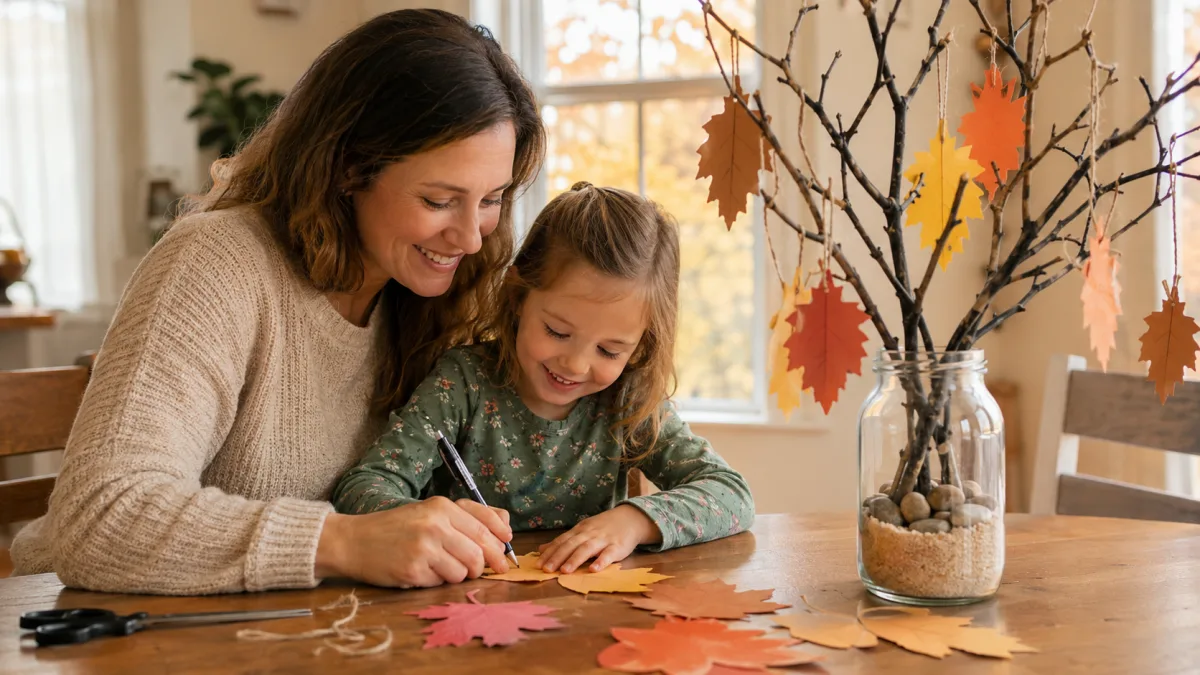
A branch in a jar and a paper leaf each day. Small, slow, and it ends up being the thing everyone reads at the table.
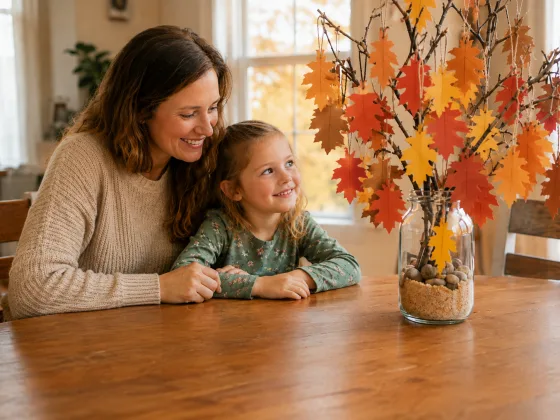
Stand a bare branch in a jar and add a paper leaf each day with something a family member is thankful for. Suits ages 3 to 8, takes ten minutes to set up and one minute a day.
The short version
- Weight the jar properly or it falls over on day two.
- Cut all the leaves in advance so the daily part takes one minute.
- Read them all out at the end. That is the payoff.
- Age
- Ages 3–8
- Prep
- 10 min
- Play time
- 15 min
- Mess
- Low
- Difficulty
- Easy
- Where
- Indoor
Why kids love this
It grows. A branch with two leaves on Monday and twenty by the following week is visible progress, and children check it. Writing on it is also a rare chance to say something that gets kept and read out rather than tidied away.
What you'll need
- A bare branch, about 40cm, from the garden or a park
- A jar or vase, weighted with stones or dry rice
- Coloured paper in autumn colours
- Scissors
- A pen
- String, thread or paper clips to hang the leaves
Before you start
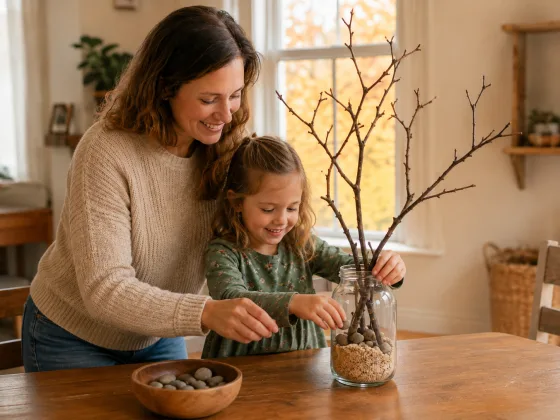
Wedge the branch upright in the jar using stones or dry rice — a branch that keeps falling over ends the activity on day two. Cut a stack of leaf shapes in advance, twenty or so, and punch a hole in each.
How to do it
-
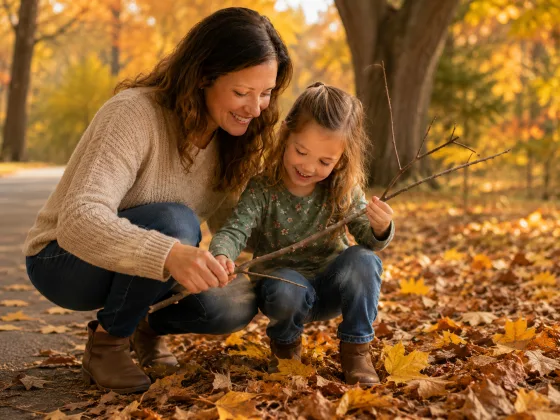
Find a branch on a walk. Let them choose it.
-
Stand it in the jar and pack stones round the base until it stays put.
-
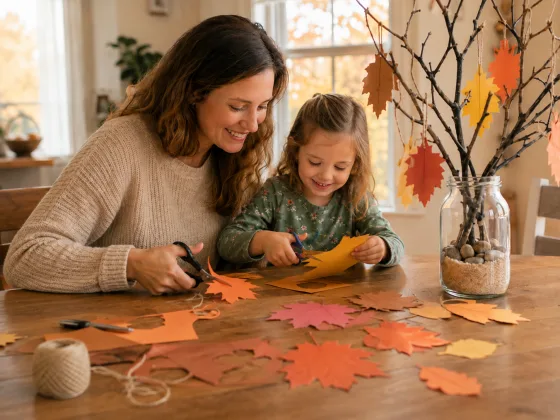
Cut leaf shapes from coloured paper — a rough oval with a point is plenty.
-
Punch a hole near the stem end of each leaf and thread a loop of string through.
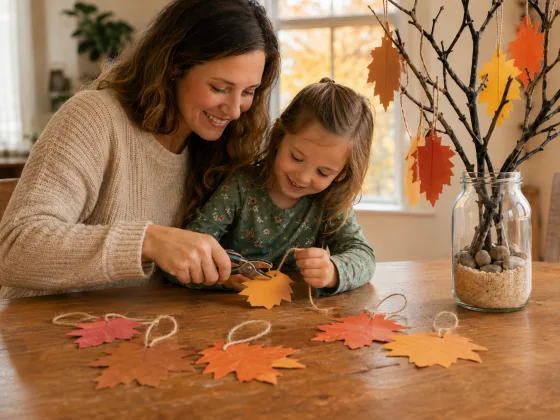
-
At dinner, each person says one thing they are glad about.
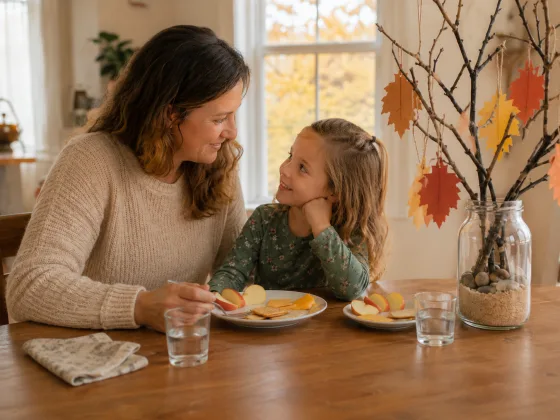
-
Write it on a leaf. Younger children can draw it instead, or tell you what to write.
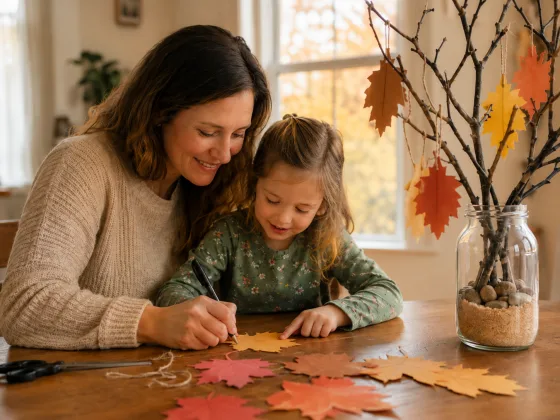
-
Hang the leaf on the branch.
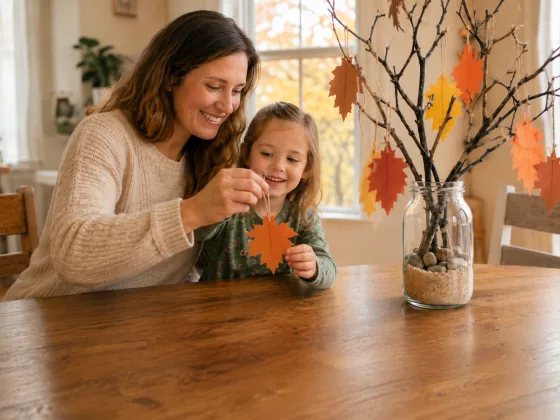
-
Do one each, every day, until the branch is full. Read them all out at the end.
Make it easier
They draw rather than write, or they tell you what to put and you write it. Nobody should be doing handwriting practice at dinner.
Make it harder
Ask for something specific each day — a person, a place, something that happened today, something small nobody would notice.
Other ways to play it
- Do it as a countdown to a birthday or a holiday instead.
- Use hand-print leaves for the youngest children.
- Keep the leaves in an envelope afterwards and read them again next year.
- Swap leaves for paper hearts in February.
- Make one for a grandparent and post the leaves to them.
How it changes by age
- Three: drawings, and one word you write for them.
- Four to five: they dictate, you write, they hang it.
- Six and up: they write their own, and often start writing longer ones as it goes on.
What they're learning
Writing for a real reason, read by real people, is worth a great deal more than writing practice — and this gives a child a sentence a day with an actual audience. Saying what you are glad about out loud is also a way of noticing it, which is most of the point.
Clearing up
Keep the leaves in an envelope with the year on it. The branch goes on the compost, or into a cupboard for next time.