


Printing Your Own Wrapping Paper
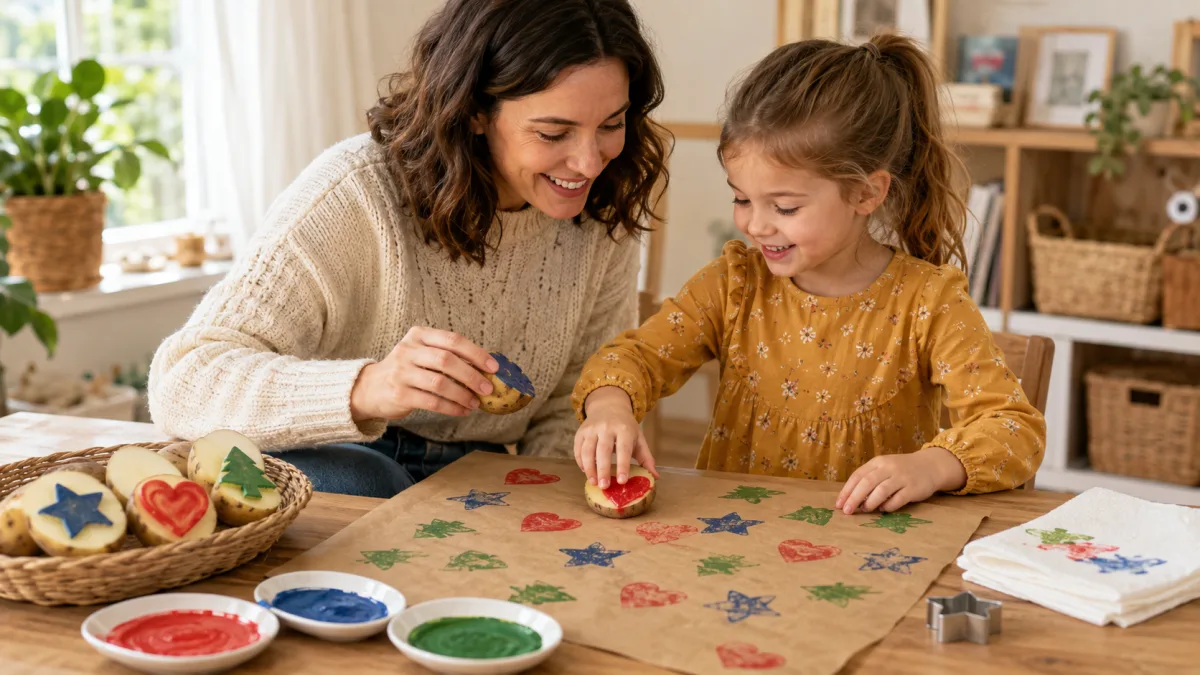
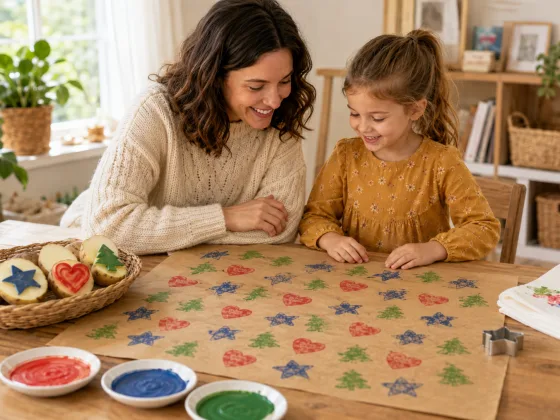
A halved potato, a shape cut into it, and a roll of plain paper. It looks far better than it has any right to.
Cut a simple shape into a halved potato, dip it in paint and print a repeating pattern onto plain paper to make wrapping paper. Suits ages 4 to 8, takes about 30 minutes plus drying.
The short version
- Dry the cut face before printing, or nothing sticks.
- Press down and lift up — sliding smudges it.
- A cookie cutter pressed in first makes carving simple.
- Age
- Ages 4–8
- Prep
- 10 min
- Play time
- 30 min
- Mess
- High
- Difficulty
- Medium
- Where
- Indoor
Why kids love this
Stamping is instantly repeatable and instantly impressive. One shape, printed forty times, produces something that genuinely looks designed. And it gets used. Paper a child printed themselves, wrapped round a present for somebody, is a much bigger deal than a picture that goes on the fridge.
What you'll need
- Large potatoes
- A small sharp knife (adult only)
- A cookie cutter, if you have one — it makes the shape much easier
- Thick paint in two or three colours
- A plate or tray for the paint
- Plain paper — lining paper, brown parcel paper, or the back of used wrapping paper
- Kitchen paper
Before you start
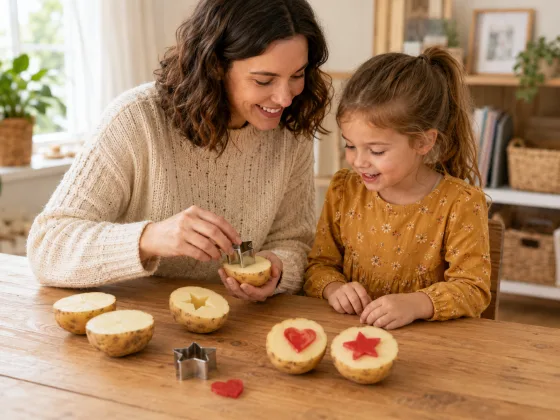
Cut the potatoes in half and pat the cut face dry with kitchen paper. Wet potato does not print. Press a cookie cutter into the cut face, then cut away the potato around it so the shape stands proud by about half a centimetre. Without a cutter, carve a simple shape — a star, a heart, a triangle. Keep it simple; detail does not print.
How to do it
-
Cut and prepare the potato stamps yourself.
-
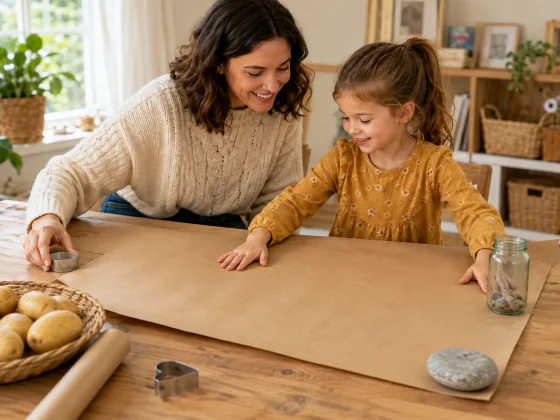
Spread the paper out and weigh the corners down.
-
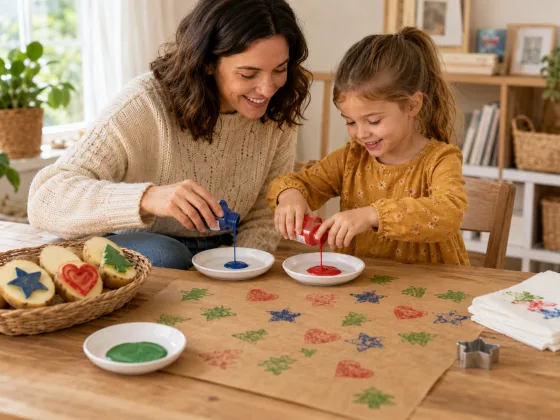
Pour a little paint onto a plate — a thin layer, not a puddle.
-
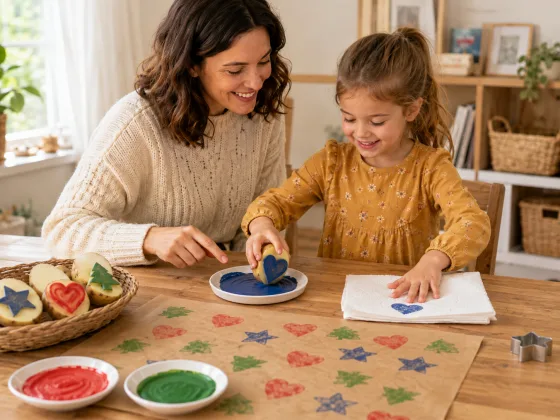
Press the potato into the paint, then press it onto some kitchen paper once to take off the excess.
-
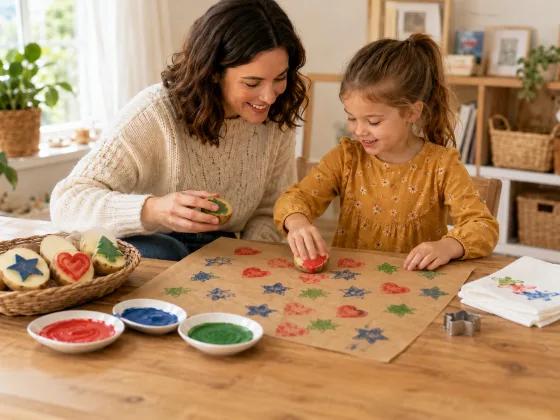
Print firmly onto the paper. Press straight down and lift straight up rather than sliding.
-
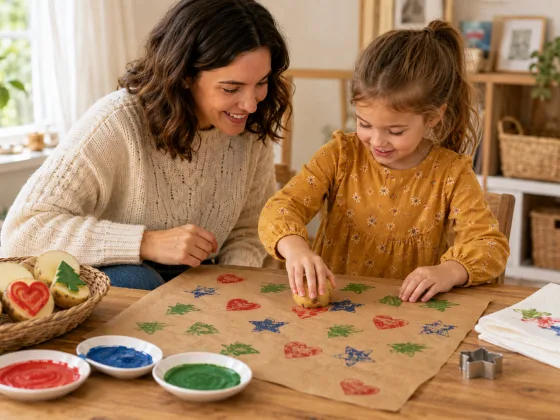
Repeat in rows, or scattered, or in a pattern.
-
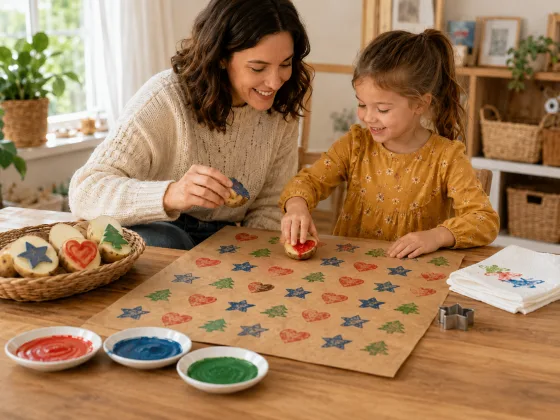
Swap colours and shapes when they want to.
-
Leave to dry flat for an hour.
Make it easier
One shape and one colour. Swapping colours is where it gets muddy and where a younger child loses the thread.
Make it harder
Ask for a two-colour repeating pattern with a rule, or a design that has to fit a specific present.
Other ways to play it
- Print a repeating pattern — star, heart, star, heart — and see if they can keep it going.
- Make matching gift tags from card offcuts.
- Print on a plain cotton bag with fabric paint for a present.
- Use an apple half instead of a potato for a different shape.
- Print on tissue paper for something more delicate.
How it changes by age
- Four: one stamp, one colour, printing wherever they like.
- Five to six: patterns and two colours.
- Seven and up: they can plan the design, and can carve a simple shape themselves with close supervision.
What they're learning
Repeating patterns are early maths, and this is one of the most enjoyable ways to do them. Pressing straight down and lifting straight up is a controlled movement that takes practice — the first few prints are usually smudged, and improving is visible.
Clearing up
Potato stamps in the bin, plates rinsed, paper left flat to dry. It stores rolled up once dry.