


Winter Play When It Is Too Cold to Go Out
Ice, torches, dens and paper snowflakes. The four things that reliably fill a dark afternoon.
Four indoor winter activities: coloured ice painting, torch shadow play, a blanket den and folded paper snowflakes. Suits ages 3 to 8, most need five minutes of setup.
The short version
- Freeze the ice with a stick in it so there is a handle.
- A den needs pegs, or it collapses within a minute.
- Snowflakes: fewer folds and bigger cuts for younger children.
- Age
- Ages 3–8
- Prep
- 5 min
- Play time
- 60 min
- Mess
- Medium
- Difficulty
- Easy
- Where
- Indoor
Why kids love this
Dark afternoons make the house feel smaller, and these four all change it somehow — the lights go off, a den appears, or something cold arrives on the table. They are also all things that feel slightly like an occasion, which is what a fourth grey day needs.
What you'll need
- An ice cube tray, water and food colouring
- Thick paper
- A torch, one per child if possible
- A blanket, some pegs and two chairs
- Square paper and child scissors
Before you start
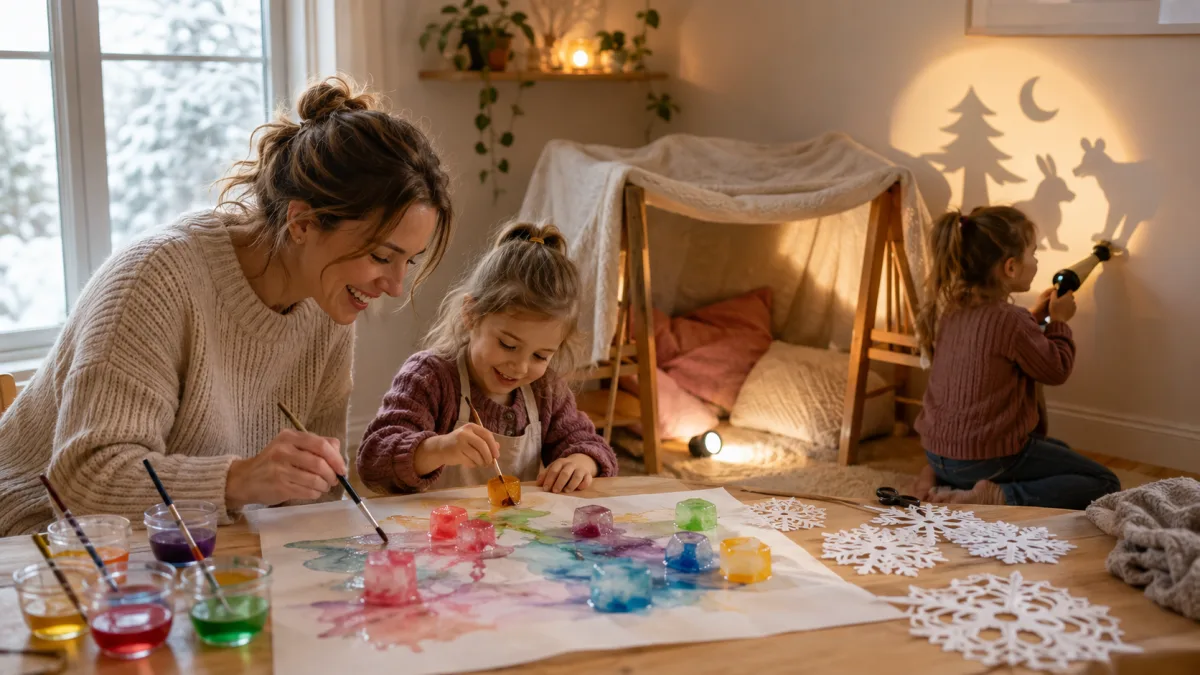
Freeze coloured ice cubes the night before: water plus a few drops of colouring in a tray, with a lolly stick or cocktail stick stood in each once half frozen so there is a handle. Everything else is same-day.
How to do it
-
Ice painting: give them thick paper and the coloured ice cubes, and let them draw with them as they melt. It is slow, quiet and surprisingly pretty.

-
When the ice has gone, hang the paper up to dry.

-
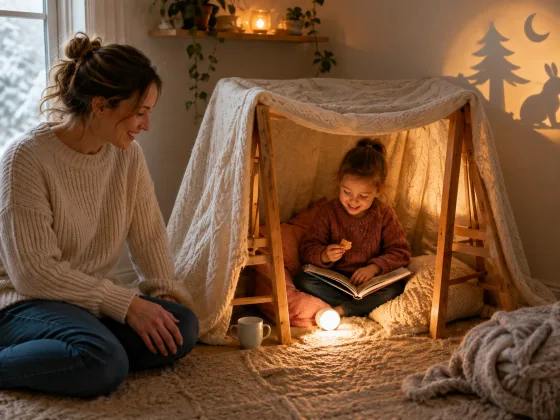
Den: drape a blanket over two chairs and peg it in place. Add cushions and a torch.

-
Let them take a book and a snack in. Do not join them unless invited.
-
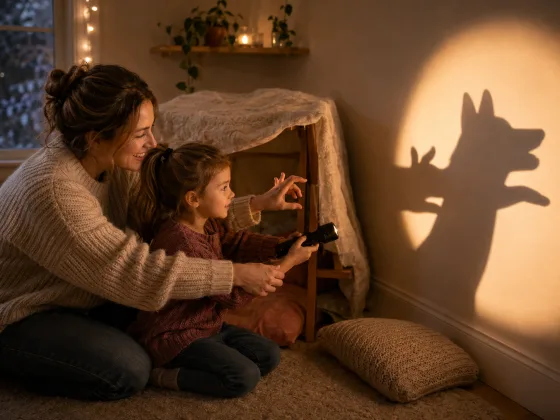
Shadow play: turn the lights off, shine the torch at a wall, and make hand shapes. Start with a dog, then let them invent.
-
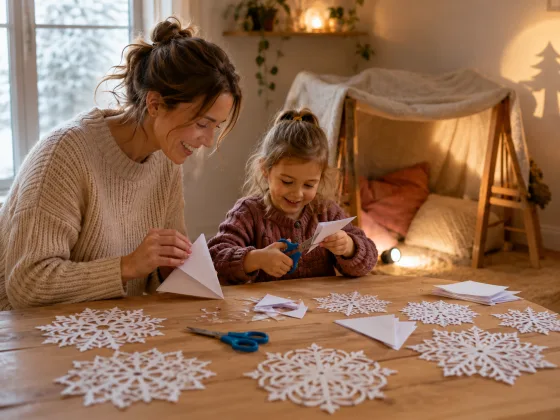
Snowflakes: fold a square of paper into quarters, then into a triangle, and cut shapes out of the folded edges. Open it out.
-
Stick the snowflakes to a window. They look best with the light behind them.

Make it easier
For the snowflakes, fold once rather than three times and cut big shapes. Small folds and small cuts are beyond most under-fives.
Make it harder
Challenge them to make two identical snowflakes, which is very hard, or to cut one with a specific number of points.
Other ways to play it
- Freeze the ice in silicone moulds for different shapes.
- Make the den a reading corner for the whole week rather than an afternoon.
- Project shadow puppets cut from card on sticks.
- Cut snowflakes from used envelopes and old wrapping paper.
- Hang the snowflakes on thread so they turn.
How it changes by age
- Three: ice painting and the den. Snowflake cutting will be an adult job with them choosing where to cut.
- Four to five: all four, with help folding.
- Six and up: they can do all of it alone, including the folding, and will start experimenting with the cuts.
What they're learning
Ice painting shows melting happening slowly enough to watch. Snowflake folding is symmetry you can hold — opening it out and seeing the pattern repeat is a genuinely useful moment. Shadow play is light and distance: move the torch closer, the shadow gets bigger.
Clearing up
Paper hung to dry, blanket folded, snowflake scraps swept up. The snowflakes themselves stay on the window until spring, in most houses.