


15 Pencil Grip Activities for Kids (Fun Exercises That Actually Work)
Fifteen playful pencil grip activities that build the hand strength and finger control behind good handwriting — tweezers, clothespins, spray bottles, short crayons and more, all using things you already own. For ages 3–4. Playful hand-strengthening exercises that build a confident tripod grip — no worksheets required.
The most effective pencil grip activities for ages 3–4 build hand strength through play: pom-pom transfer with tweezers, clothespin clipping, sticker peeling, playdough pinching, rubber bands on a jar, hole punch art, spray bottle water play, sponge squeezing, eye dropper transfer, short crayon colouring, paper tearing, tissue scrunching, bead threading, kitchen tongs hunts, and chalk drawing. Ten to twenty minutes, a few times a week, using household items.

The short version
- Hand strength first, then grip.
- Pinching trains the thumb-finger hold.
- Water play builds whole-hand strength.
- Short crayons encourage tripod grip.
- Fist grip at 3 is normal.
- Never force fingers into position.
- Age
- Ages 3–4
- Prep
- 5 min
- Mess
- Low
- Difficulty
- Easy
- Where
- Indoor
Why kids love this
Children love these because none look like handwriting practice — squeezing spray bottles, fishing pom-poms with tweezers, blasting holes with a hole punch. It all feels like play.
What you'll need
- Short/broken crayons, chalk, pencils
- Pom-poms and kitchen tweezers/tongs
- Clothespins and a bowl
- Spray bottle with water
- Sticker sheets
- Playdough
- Scrap paper, tissue, magazines (tearing)
- Large beads/pasta tubes + shoelace
- Hole punch and paper
- Rubber bands + tin/jar
- Eye dropper, two cups, coloured water
- Kitchen sponges + washing-up bowl
Before you start
1. Pick one activity — each needs only two or three items. 2. Set up at a table or tray, everything within reach. 3. Keep sessions 10–15 minutes; stop while fun. 4. Expect mess with water/tearing — tray or towel underneath.
How to do it
-
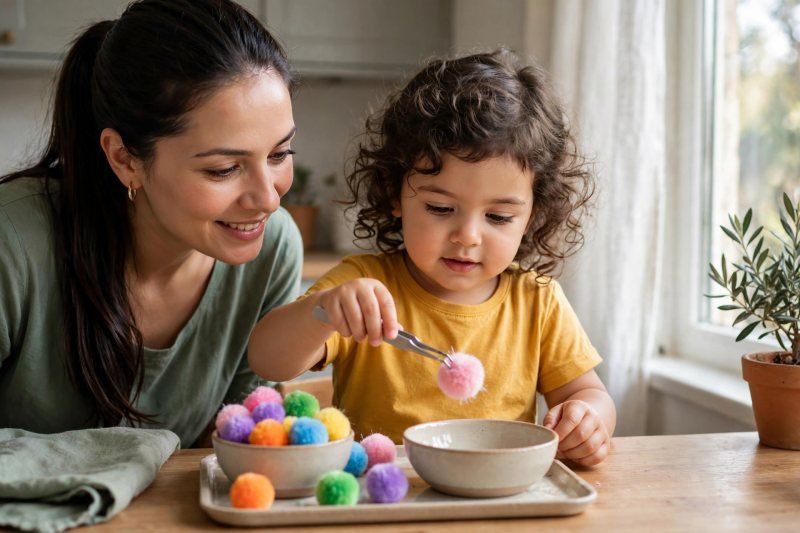
1. **Start with play, not pencils.** Choose any activity below and let your child explore it freely for a few minutes — squeezing, pinching, pulling, tearing.
-
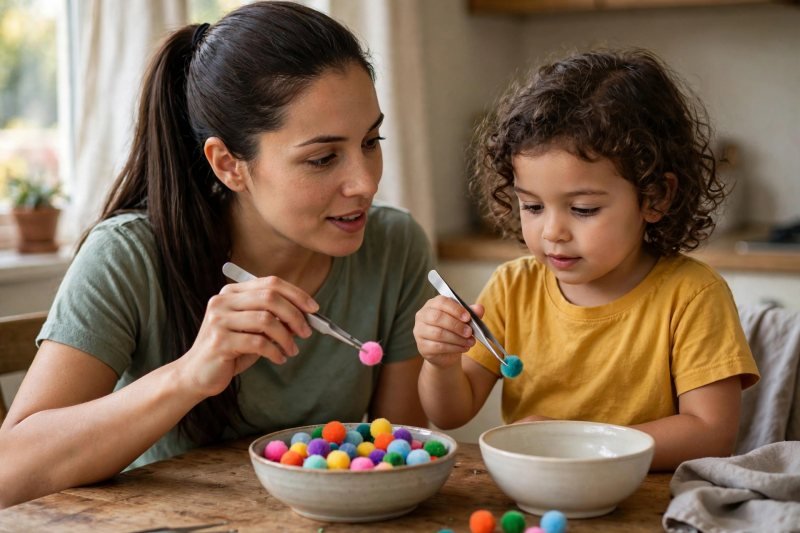
2. **Join in.** Do it alongside them, chatting about what your hands are doing ("I'm pinching the playdough with my two strong fingers").
-
3. **Keep it short and sweet.** Ten to twenty minutes is a full session. Two or three activities a week is plenty.

-
4. **Rotate.** A new activity every few days keeps little hands interested while working the same muscles.
-
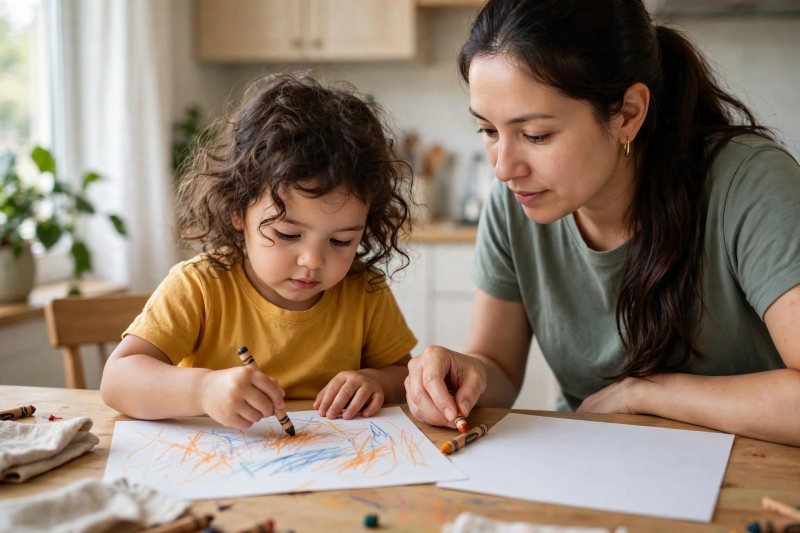
5. **Bridge to real writing.** Once an activity is easy, hand them a short crayon and some paper — you will often see the tripod grip appear on its own.
-
## How Do Pencil Grip Activities Actually Help?
-
Good handwriting starts with hand strength, not handwriting practice. The small muscles of the fingers and thumb do the hard work of holding and controlling a pencil, and pinching, squeezing, pulling and twisting build those muscles through play. When your child later picks up a crayon, their hand already knows what to do. Short tools — stubby crayons, chalk — naturally encourage the tripod grip: thumb, index and middle finger working together. For more ideas, see our [fine motor activities for preschoolers](/activities/fine-motor-activities-for-preschoolers/).
-
## Which Pinch-and-Squeeze Activities Build Writing Muscles?
-
1. Pom-pom transfer — move pom-poms between bowls with kitchen tweezers.
-
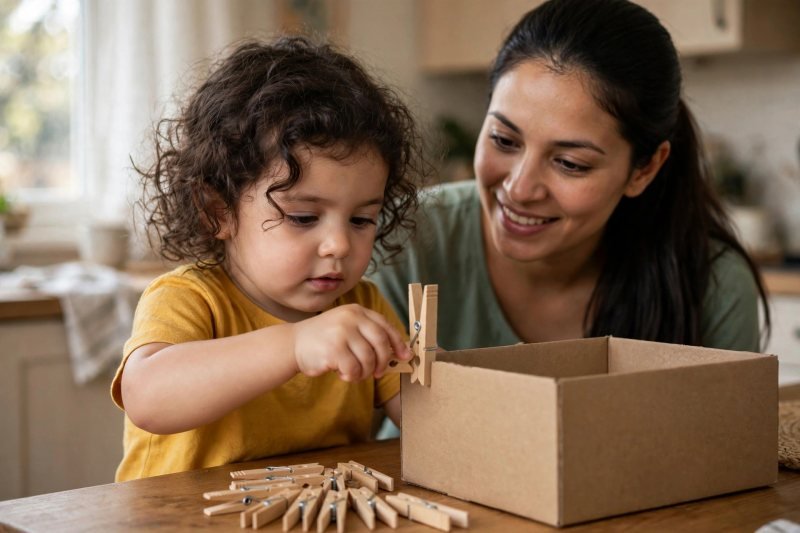
2. Clothespin clipping — clip wooden pegs around a cardboard box edge or bowl rim.
-
3. Sticker peeling — peel stickers and place them carefully on paper.
-
4. Playdough pinching — pinch, roll and poke playdough with thumb and fingers.
-
5. Rubber bands on a jar — stretch rubber bands over a tin or jar.
-
6. Hole punch art — punch holes around the edge of paper to make patterns.
-
7. Kitchen tongs hunts — hunt for small toys and lift them with tongs.
-
8. Paper tearing — tear scrap paper, tissue or magazines into strips.
-
9. Tissue scrunching — scrunch tissue paper into tiny balls.
-
10. Bead threading — thread large beads or pasta tubes onto a shoelace.
-
11. Chalk drawing — draw on paving or a chalkboard with chunky chalk.
-
12. Short crayon colouring — colour with short, stubby crayons that force a tripod hold.
-
13. Spray bottle water play — squeeze a spray bottle to water plants or "paint" the fence.
-
14. Sponge squeezing — soak kitchen sponges and squeeze the water out into a bowl.
-
15. Eye dropper transfer — move coloured water between two cups with a dropper.
-
## What Are the Best Water and Sensory Grip Exercises?
-
Water play builds whole-hand strength: squeezing sponges, squirting spray bottles and transferring water with an eye dropper all work the hand muscles hard while feeling like pure fun. Lay a towel under the tray and let them play — ten minutes of water play is a full hand workout.
-
## Which Everyday Play Activities Strengthen the Pencil Grip?
-
You need no special equipment: pegging socks on a line, posting lids into slots, opening and closing jars, turning keys in play locks and kneading dough all build the same muscles. When the grip is ready, bridge to mark-making with our [letter tracing worksheets for PreK](/activities/letter-tracing-worksheets-prek/).
-
## What If My Child Hates Holding a Pencil?
-
Put the pencils away — no battles. Build hand strength through play for a few weeks, then reintroduce mark-making sideways: chalk on the pavement, finger paint, or a chunky crayon. Interest almost always returns once the hand is stronger.
-
## How Can I Tell If My Child's Grip Is on Track?
-
A fist grip at 3 is completely normal; most children move towards a tripod grip between 4 and 5. What matters is progress over months and a willingness to use their hands. If your child avoids all mark-making, complains of hand pain, or you see no change over several months, mention it to your health visitor or GP.


Make it easier
Start with the biggest tools — chunky chalk, large pegs, big sponges. Break each activity into tiny steps and let them use their whole hand at first. Seat them at a table with feet flat so their shoulders can steady their hands.
Make it harder
Swap in smaller materials — tiny beads, small stickers, mini pegs. Add challenges: race a timer, sort by colour, thread a pattern. Combine two activities, then introduce tracing lines and shapes.
Other ways to play it
- Outdoors: spray-bottle painting on the fence, chalk on paving.
- Bath-time: sponge squeezing and pouring.
- Travel: a small tin of stickers and a mini notebook.
- Siblings: take turns and make it a team relay.
How it changes by age
- At 3: fist grips are normal — focus on play, not correction.
- At 4: the tripod grip often appears on its own; short crayons help.
- At 2: try only the simplest activities with close supervision.
- At 5: use the full set and add tracing.
What they're learning
Tripod grip development — thumb, index and middle finger learning to work together. Hand and finger strength, hand–eye coordination and the fine motor control behind confident handwriting.
Clearing up
Most activities need no clearing up. Lay a tray or towel under water play and tearing; pop lids back on playdough straight away so it doesn't dry out.