


Matching Christmas Pajamas: Family Sets Kids Love
Matching christmas pajamas made simple: choose snug, soft family sets kids love, match colors and motifs across ages, and get photo-ready comfort without brands.
Matching christmas pajamas work best when comfort comes first: snug-fitting soft cotton sets with smooth seams, no hoods or drawstrings, and one shared color story across every age. Match a motif or palette instead of forcing identical garments, run a full evening comfort trial at home, wash one set early, and size up for fast growers so Christmas morning stays cozy.

The short version
- Safety first: children's sleepwear should fit snugly, with soft seams and no hoods, drawstrings or cords anywhere on the set.
- Fabric by house: smooth cotton for most homes and sensitive skin; fleece only where the house is genuinely cold.
- Match the story, not the garment: one palette and one generic motif, with garments shaped to each age from baby to grandparent.
- Trial before the day: one full washed evening at home checking waistband, overheating and bathroom ease finds every problem early.
- Buy early and size up for fast growers, with one spare kids' set washed and ready for accidents.
- Age
- Ages 3–4
- Prep
- 30 min
- Mess
- None
- Difficulty
- Easy
- Where
- Indoor
Why kids love this
Three- and four-year-olds love matching christmas pajamas when the matching part feels like joining a team and the pajama part still feels like their own comfortable bedtime clothes. A preschooler who gets to wear the same colors as Mom and Dad, point to the same reindeer, and run to the tree without a waistband digging in or a seam scratching will ask for the set again and again. Kids this age also love small choices inside the plan — their own accent color, their own socks, the bottom pattern they picked — so this guide builds choice into the matching instead of forcing identical outfits on everyone. When the fabric is soft, the fit is snug and safe, and nothing itches, pulls or overheats, the pajamas stop being a photo costume and become part of Christmas itself: the movie night, the story by the tree, and the morning nobody wants to change out of them.
What you'll need
- Snug-fitting cotton pajama sets for each child — two-piece sets that fit close to the body, with soft seams and no hoods, drawstrings or cords anywhere on the sleepwear
- Adult two-piece pajama sets in the same color story — plain or patterned, chosen for the same fabric feel so the whole family wears one comfort standard
- A baby option if your family includes one — a snap onesie or one-piece sleeper in the shared palette, so the smallest member matches without wearing a garment that does not suit their age
- Fabric choices to compare — smooth cotton for most houses and sensitive skin, fleece for genuinely cold houses and chilly mornings only
- Soft holiday socks with grippy soles for kids — sized to stay on without a tight band, for hard floors on photo morning
- One spare kids' set in the same palette — folded and ready for the spill, accident or middle-of-the-night change
- A laundry basket and your usual gentle wash routine — so one set can be washed, dried and worn for the comfort trial well before Christmas
- Your phone or camera, charged — for a trial photo in your real living-room light, which tells you more about colors than any product picture
Before you start
Decide the shared color story first — red and cream, deep green and cream, or a mix of both — and write it down so every set you consider is judged against the same palette. Measure each child loosely over their usual bedtime layer and note who is between sizes; fast growers and tall preschoolers will need the size-up rule in the final step. Wash one candidate kids' set before the trial evening, so you judge the fabric, seams and waistband as they will actually feel after washing, not fresh from packaging. Clear one sofa-and-tree spot for a test photo, and plan the trial for a normal evening at home — bath, pajamas, story, bathroom trip — so the test copies a real night.
How to do it
-
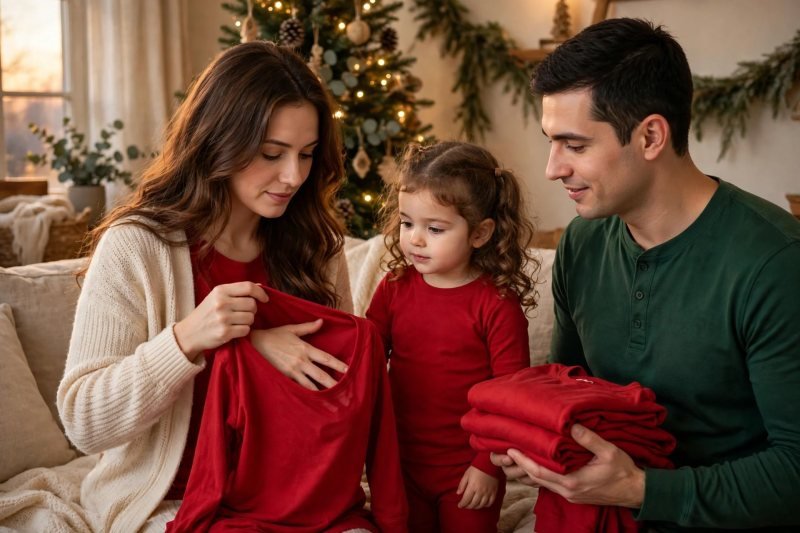
Start with sleep-safe comfort. Every decision in this guide stands on one safety rule — children's sleepwear should fit snugly, because loose, flowing fabric is the kind that can catch near an open flame, and snug-fitting cotton sleepwear is the standard safe choice families are steered toward; snug means close to the body without squeezing, with a waistband that stays put when your preschooler climbs, rolls and races to the tree. Check the inside of every set with your own palm before anyone wears it — seams should feel flat and smooth, tags should be soft or easy to remove, and nothing scratchy, stiff or raised should sit against skin, because a print that feels like a rubber sticker will be complained about by bedtime. Reject any sleepwear with hoods, drawstrings, cords or dangling ties, however cute it looks in a picture — sleepwear needs nothing that can catch, loop or wrap — and give collars and cuffs the two-finger test, snug at the wrist and ankle without leaving a mark. Say, "First we check cozy and safe — soft inside, snug outside, nothing scratchy allowed." A child who trusts the pajamas feel good stops negotiating about them, and that trust is what carries the whole matching plan.
-
Choose the fabric first. Fabric decides comfort more than any print does, so settle it before colors — smooth cotton is the reliable default for most families, because it breathes through warm houses and heated bedrooms, washes well, and stays gentle on skin that reacts to rougher textures; fleece earns its place only when your house is genuinely cold, the mornings are chilly and your child kicks covers off, because the same warmth that helps in a drafty room overheats a preschooler fast under a duvet in a cozy one. Hold both fabrics against your child's cheek during the trial if you can — the face test finds scratchiness faster than any hand — and for children whose skin flares easily, follow the same gentle-fabric logic you would use in a kids' skincare routine, where soft, non-irritating layers against skin come before anything decorative. Think about layering the way you would for daytime cold-weather dressing in toddler winter outfits — warmth you can add or peel beats one thick garment — so a cotton set plus a blanket or a light robe for the cold trip downstairs usually beats fleece pajamas worn all night. Say, "Cotton for cozy houses, fleece for chilly ones — your skin gets to vote." Choosing fabric by house and skin, not by the photograph, is the step most families skip and most children feel.

-
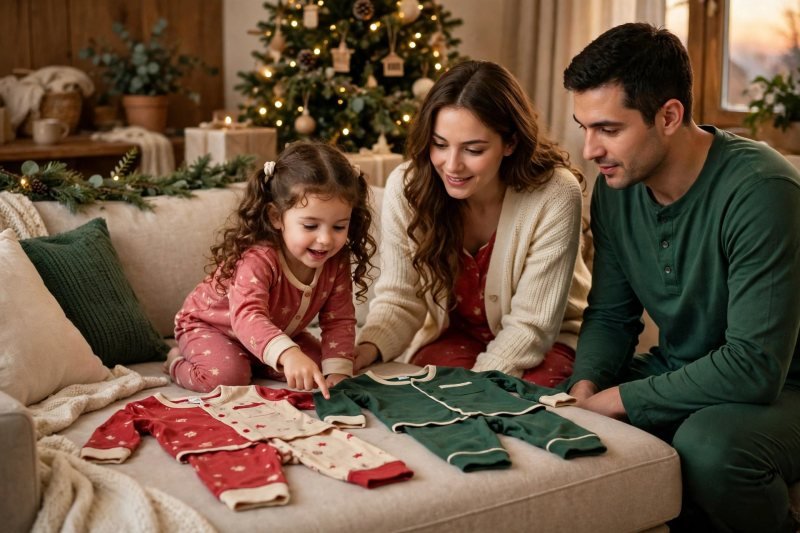
Set the family palette. With safety and fabric settled, pick the colors every set will share, because one disciplined palette is what makes different garments read as one family set — start with (1) classic red-and-cream matching sets, the warm, instantly festive combination that photographs bright against a green tree and suits every skin tone in the picture; then consider (2) deep green and cream sets, the calmer option that hides breakfast dribbles better, flatters adults who find bright red hard to wear, and still reads unmistakably seasonal beside red decorations. Choose one palette as the lead and let the other appear only in small accents — a green set with cream socks, a red set beside a cream blanket — because two full palettes competing in one photo turn matching into muddle. Check the palette in your own living-room light with a quick phone photo during the trial, since warm evening light deepens reds and can make cream look yellow; if the colors sing in that ordinary light, they will sing on Christmas morning too. Say, "We are the red-and-cream team this year — everybody wears our colors." Naming the palette as the family's team colors turns getting dressed into belonging, which is exactly the feeling you are buying.
-
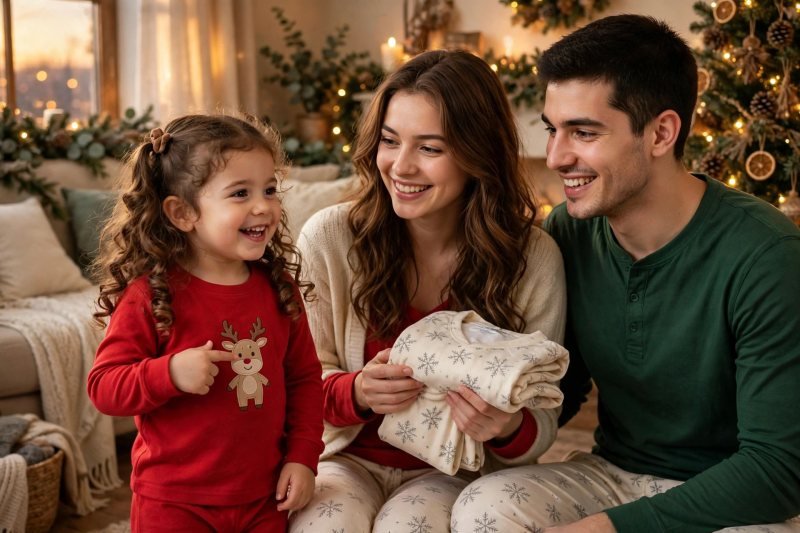
Match one shared motif. Color links the family; one shared motif finishes the job — choose a single generic design and let it appear somewhere on every person's set, starting with (3) generic reindeer motif sets, where a simple reindeer face or silhouette printed or knitted in the shared palette gives preschoolers an animal to love, name and point to in every photo; or go quieter with (4) generic snowflake print sets, scattered flakes in cream on red or green, which suit families who want the photos to feel wintry rather than character-led and which keep working for the whole winter long after Christmas. Keep every motif generic — reindeer, snowflakes, trees, plaid and stripes drawn simply — with no licensed characters, no logos and no trademarked designs anywhere, because generic prints photograph timelessly and no child is left out for not knowing a character. The motif does not need to sit in the same place on everyone; a big reindeer on a child's chest, a small one on a parent's pocket and flakes on everyone's bottoms still tell one story. Say, "Find the reindeer — yours, mine and Daddy's all match." A motif a three-year-old can hunt for across the family turns the photo into a game she wants to keep playing.
-
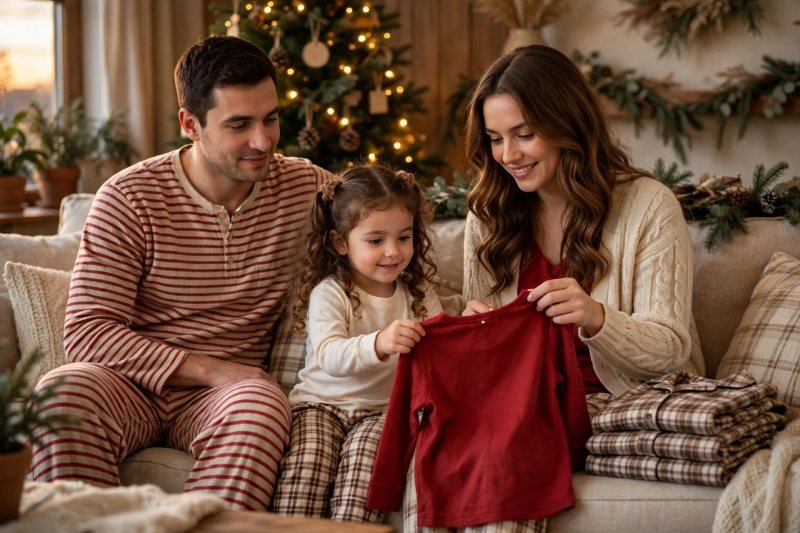
Mix patterns by scale. Once the palette and motif are set, you can safely mix patterns — the trick is scale, because one bold pattern per person, balanced by something plain, keeps a group photo lively instead of dizzy — try (5) plaid bottoms with plain tops, where the plaid carries all the festive energy below the waist and a solid cream or red top keeps faces and the shared motif easy to see; or choose (6) striped sets in the shared palette, red-and-cream or green-and-cream stripes worn by the whole family, the easiest true match of all because stripes scale from a baby to a grandparent without changing character. Follow the scale rule when you mix — big plaid on one person, small stripe on another, plain on the third — and never stack two bold patterns on the same small body, where a preschooler's short torso turns busy into chaos at photo size. Lay all the sets flat on the sofa together before you commit; if your eye settles calmly, the mix works, and if it jumps around, swap one bold piece for its plain twin. Say, "Big pattern, little pattern, plain — that is how our picture stays pretty." Teaching the scale rule out loud gives your preschooler a real design job — pattern checker — that she will take seriously.
-
Solve mixed ages in one photo. Real families span ages, so match the color story and let the garment change with the wearer — use (7) same color story, different garment per age (snap onesie for a baby, two-piece for kids, adult two-piece), where the baby wears a snap onesie or sleeper in the palette because that is the safe, practical shape for a baby, preschoolers wear their snug two-piece sets, and adults wear their own two-piece sets, yet the photograph shows one unbroken family of color; then, for households where adults resist full novelty prints, use (8) kids match exactly while parents wear plain coordinating colors — the children wear identical motif sets as the stars of the picture while parents wear plain deep red or cream tops with simple bottoms, the same palette-coordination logic that makes preschool winter outfits harmonize siblings without identical clothes. Brothers in the picture follow the same shared-palette idea in family photo outfits for boys, where one palette, not one outfit, ties the group together. Nobody in either plan wears a garment that is wrong for their age just to force a match, and the baby plan keeps snaps exactly where nighttime changes need them. Say, "Same colors, right clothes for everybody — that is our family picture." Children accept different garments easily when the colors promise they belong, and adults who feel comfortable smile like it.

-
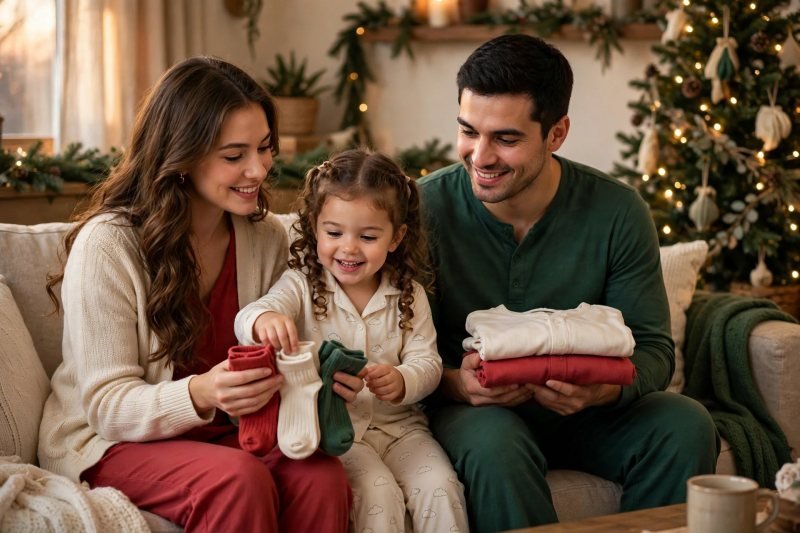
Add photo-morning details. The last layer of the plan is purely for Christmas morning itself — dress the family in (9) cream-and-red sets for tree-morning photos, the brightest combination in the palette, saved fresh and clean for the morning rather than worn all week, so the pictures by the tree glow against green branches and warm lights; and complete every child's outfit with (10) sets finished with soft holiday socks (grippy soles for kids), plain or faintly patterned socks in the palette with grip dots across the sole, because excited preschoolers sprint on hard floors at dawn and fleece or plain cotton socks slide exactly when small feet are fastest. Keep the fresh morning sets folded together the night before — each person's pile with their socks on top — so nobody is hunting through drawers at six in the morning, and agree the photo order in advance: full family first while the fresh sets are clean, then presents, then breakfast in the same pajamas without a care. For the daytime family picture beyond pajamas, family photo outfits for girls applies the same palette-first thinking in everyday clothes. Say, "Fresh pajamas, grippy socks, big smiles — then presents." A morning that starts dressed, safe on its feet and already photographed leaves the rest of the day free for pure celebration.

-
Personalize without printing names. Matching works best when each person is also a little bit themselves, so personalize inside the palette rather than printing names across chests — let (11) each child picks their own accent color inside the palette, choosing, say, red socks against the family's cream-and-green sets or a cream hair bow against red, a small owned detail that shows in photos as a deliberate sparkle and gives a preschooler a reason to defend the whole outfit; and bring in (12) extended-family sets so grandparents slot into the same color story, sending grandparents the palette early — a plain cream top, a green two-piece set or simply socks in the family colors — so nobody needs an identical garment to belong in the picture when they arrive or join by video call. Keep personalization removable and washable — socks, bows, a soft scarf for an adult — and skip printed names, dates and slogans, which date the photographs, complicate hand-me-downs and add stiff lettering against skin. Say, "Pick your special color — it lives inside our family colors." A child who chose one piece of the outfit herself becomes the matching plan's loudest supporter, and grandparents folded into the palette make the photo feel complete.
-
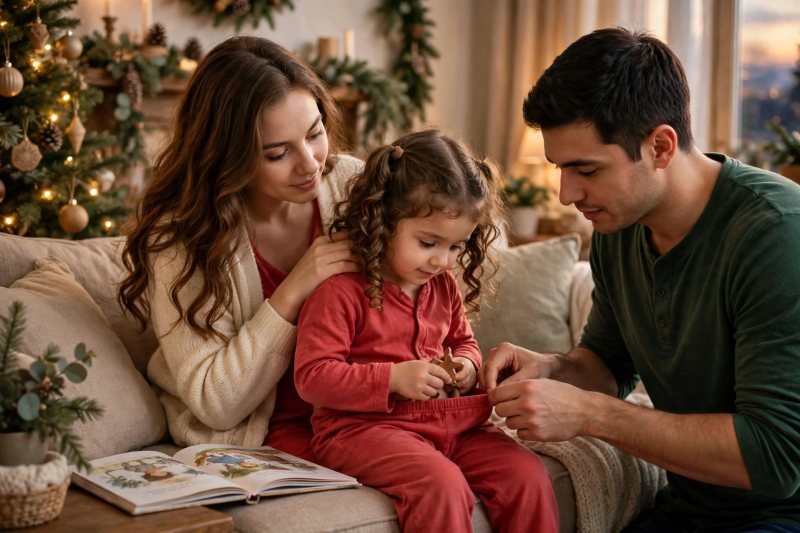
Run the comfort trial. Never let Christmas Eve be the first wear — run one full evening at home in the washed sets, a complete rehearsal of bath time, dressing, playing, a story, a bathroom trip and settling toward sleep, and check four things in order: the waistband check, where you slide two fingers inside the band after dinner and again after active play, looking for digging, rolling or red marks on a full tummy; the overheating check, where you feel the back of your child's neck after half an hour of play and again at story time — warm and dry is right, hot and sweaty means the fabric is too warm for your house and cotton replaces fleece; the bathroom ease test, where your preschooler pulls the bottoms down and up entirely alone, because a set she cannot manage herself will wake you at midnight; and the wash check, because the trial set was washed before wearing, so any shrinking, twisting seams or fading has already shown itself honestly. Photograph the trial too — the family on the sofa in evening light — and study it for fit, color and who is tugging at what. Say, "Tonight is practice pajama night — we test everything before Christmas." Framing the trial as a special practice night makes it an event children enjoy, and every problem it finds is a problem Christmas morning never meets.
-
Wash, size-check and buy in good time. Finish the buying properly — wash every set before its first real wear, not just the trial set, so fabrics soften, any loose dye rinses away and sizes settle to their true fit before you judge them; then size-check each child standing, reaching up and sitting cross-legged, remembering that snug sleepwear should skim the body with room to grow into over the season, not room to swim in tonight. Apply the size-up rule for fast growers: if your preschooler sits between sizes, is due a growth spurt or measures tall for their age, choose the larger snug size and let the cuffs and waistband do their job, because a set outgrown by Christmas is the one true waste in this whole plan. Buy early in the season while your palette and sizes are all still available together — matching across ages fails when one size sells out — and keep one spare kids' set, washed and folded with the socks, for the accident, spill or overnight guest who needs to join the picture. Say, "Washed, tried and ready — Christmas morning is all play now." Families who finish these quiet steps in advance get the only thing matching pajamas are really for — a calm, cozy morning where nobody is thinking about the pajamas at all.


Make it easier
Choose one palette and one motif and stop there — plain cotton two-piece sets in red and cream with a single reindeer or snowflake design match the whole family with almost no decisions left. Let adults wear plain colors they already own inside the palette while only the kids get new motif sets; the photo still reads fully matched and the shopping halves. Run the comfort trial on a weekend evening and take the trial photo then — if it works, Christmas morning needs no plan at all beyond dressing and smiling.
Make it harder
Coordinate an extended-family photo across households: share the palette and motif early, let each household choose its own garments inside the story, and compare trial photos side by side before the day. Build a full Christmas-week pajama rotation — the fresh cream-and-red set for the morning, striped sets for the movie night, plaid-bottom sets for the family party evening — all inside one palette so every photo of the week belongs together. Add a preschooler-led style check: let your child lay out every family member's set the night before, socks on top, and spot anything missing — real sequencing and responsibility practice disguised as excitement.
Other ways to play it
- Warm-house Christmas: drop fleece entirely, choose the lightest cotton sets in the palette, short sleeves for the warmest rooms, and keep grippy socks as the only extra layer.
- Cold-house Christmas: keep long-sleeve cotton sets as the snug base, add fleece as a robe or extra layer for the trip downstairs rather than as the sleepwear itself, and warm the bedroom rather than loosening the fit.
- Photo-only matching: if your family will not wear matching sets all day, match fully for one planned morning photo in the fresh cream-and-red sets, then let everyone change into their own favorites — the picture keeps the magic and nobody spends the day in a costume.
How it changes by age
- Age 3: Three-year-olds need the set to work entirely on comfort — snug two-piece cotton sets with soft elastic they can pull down alone with practice, grippy socks they cannot kick off mid-sprint, and one simple choice offered inside the plan, such as the accent-color socks. Keep the trial short and playful, expect the motif to matter more than the palette, and have the spare set ready because this age tests every waistband with a full evening of snacks.
- Age 4: Four-year-olds can hold the whole idea — team colors, a shared motif, their own accent — and love jobs inside it: pattern checker, sock distributor, laying out the piles the night before. They can manage two-piece sets independently for bathroom trips, give real verdicts in the comfort trial that you should act on, and sit for the planned family photo first when they know presents follow it.
What they're learning
Belonging and family identity: wearing the team's colors and finding the same motif on everyone teaches a preschooler that she is part of a group that plans, matches and celebrates together. Choice within structure: picking an accent color, a pattern scale or a sock inside one shared palette is early decision-making with safe boundaries — her call, inside a plan that still works. Body awareness and comfort language: the trial's waistband, warmth and bathroom checks teach children to notice and report too tight, too hot or too scratchy — and to trust that adults act on the report. Color and pattern recognition: naming the palette, sorting big plaid from small stripes, and hunting the shared motif across garments builds festive visual discrimination and early sorting skills.
Clearing up
As each set comes off after Christmas, sort straight into keep-for-winter, outgrown and stained piles while the sizes are fresh in your mind. Wash the full family's sets together in one gentle load so the palette fades evenly, fold each person's set with its socks inside so next winter's rediscovery is instant, and store the spare set with the Christmas linens if it stayed unworn. Note each child's size and which fabric won in your house — next year's early-season buying becomes a ten-minute job with no trial needed — and pass outgrown generic sets on confidently, since plain palettes and timeless motifs suit any family.
Questions parents ask
How should matching christmas pajamas fit children?
Which fabric is best for family matching pajamas?
How do you match pajamas across babies, kids and adults?
When should you buy matching christmas pajamas?
What if a child refuses to wear the matching set?
How do you keep kids safe in pajamas on Christmas morning?
Internal link targets for publisher: kids-skincare-routine-simple-steps (step 2, anchor "kids' skincare routine"); toddler-winter-outfits-ages-2-3 (step 2, anchor "toddler winter outfits"); preschool-winter-outfits (step 6, anchor "preschool winter outfits"); family-photo-outfits-boys (step 6, anchor "family photo outfits for boys"); family-photo-outfits-girls (step 7, anchor "family photo outfits for girls"). Full 12-option enumeration: (1) classic red-and-cream matching sets; (2) deep green and cream sets; (3) generic reindeer motif sets; (4) generic snowflake print sets; (5) plaid bottoms with plain tops; (6) striped sets in the shared palette; (7) same color story, different garment per age (snap onesie for a baby, two-piece for kids, adult two-piece); (8) kids match exactly while parents wear plain coordinating colors; (9) cream-and-red sets for tree-morning photos; (10) sets finished with soft holiday socks (grippy soles for kids); (11) each child picks their own accent color inside the palette; (12) extended-family sets so grandparents slot into the same color story. Buying discipline: this is a criteria-based guide — no brands, no prices, no product names anywhere in text or images; every recommendation is a fit, fabric, palette or safety criterion a family can apply to any set they find. Imagery discipline: 100% generic festive imagery — plaid, stripes, generic reindeer and snowflake motifs only; no licensed characters, no logos, no trademarked prints in text or images; the whole family fully clothed in pajamas worn as sleepwear outfits in every scene.

save it for later
Pin this for the next rainy afternoon
Keep it on a board so it is there when you need it, rather than when you happened to find it.
Save to Pinterest


