


Letter of the Week Activities for Preschool: A Complete 10-Step System for 3–4-Year-Olds
A complete letter-of-the-week system for preschool at home: how to order your letters, a full sample week of sound games, hunts, sensory play, crafts, snacks, songs and review games, plus a reusable weekly template and progress tracker. Don't try to plan 26 weeks at once — learn one repeatable weekly rhythm and run it for every letter, all year.
Letter of the week activities for preschool work best as a repeatable weekly rhythm: introduce the sound on Monday, hunt the letter Tuesday, trace it in a sensory tray Wednesday, craft it Thursday, build it as a snack plus a book hunt Friday, and review with a game Saturday. Start with your child's name letters, then high-utility sounds like s, a, t, p, i, n.

The short version
- One repeatable 6-day rhythm replaces 26 weeks of planning — only the letter changes.
- Sounds before names: teach "ssss" first, the letter name "ess" comes later.
- Start with the child's name letters, then high-frequency sounds (s, a, t, p, i, n).
- Every day pairs the sound with the shape — mirror, hunt, tray, craft, snack, book.
- A wall chart plus a small celebration every fifth letter keeps momentum all year.
- Age
- Ages 3–4
- Prep
- 10 min
- Mess
- Low
- Difficulty
- Easy
- Where
- Indoor
Why kids love this
One special letter gets the spotlight all week, and children love being the expert on something. By Wednesday your child will be spotting "their" letter everywhere — on cereal boxes, street signs, the fridge — and dragging you over to show you. That pride is the engine of the whole system.
What you'll need
- Blank index cards
- a thick marker
- a small basket or tray
- flour or salt plus a shallow tray
- crayons
- glue
- construction paper
- playdough
- a picture book from your shelf
- and whatever fruit or crackers you already have for snacks
Before you start
Pick your sample letter (we'll use "s" below — one of the most useful early sounds). Write the week's letter BIG on 5–6 blank cards, stash them around the house for the hunt, and set out the sensory tray on a wipeable mat. Everything else comes out of the cupboard day by day.
How to do it
-
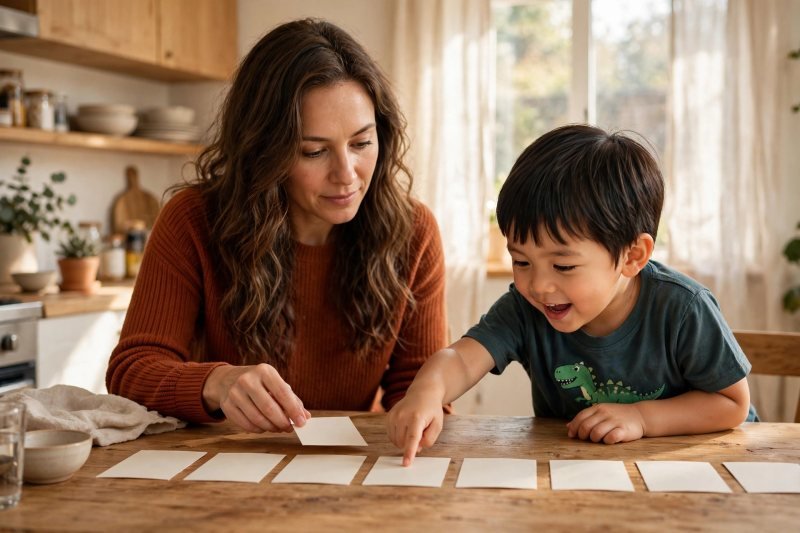
**1. Start with your child's name letters, then the most useful sounds.** Write out your child's name on blank cards — those letters go first, because nothing motivates like your own name. After the name letters, teach high-utility sounds early: s, a, t, p, i, n are the workhorses of early reading. Keep the rest flexible — familiar first, useful early, easy wins often. Write your order on one card and pin it to the fridge.
-
**2. Monday — introduce the sound with a silly face.** Flip the letter card and say the sound only — "ssss" — stretching it like a snake while you make an exaggerated snake face in a hand mirror. Say: "This is the letter s. It says ssss, like a sleepy snake. Can your mouth be a snake?" Your child copies the sound and the face; do it three or four times, getting sillier each round.

-
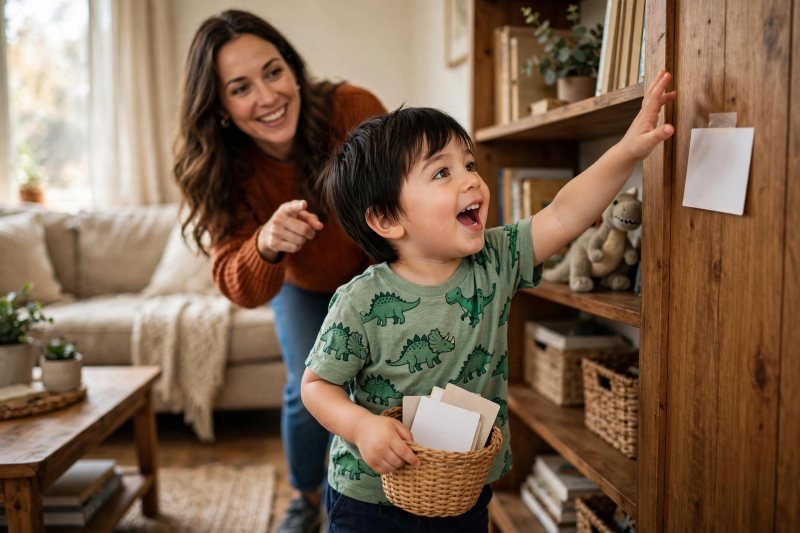
**3. Tuesday — hunt the letter all over the house.** Say: "The letter s is hiding! When you find one, make the snake sound and drop it in your basket." Your child races room to room, and every find gets a sound. Older 4s can hunt two letters at once; younger 3s hunt with you. When the basket is full, spread the cards and count them together, saying "ssss" for each one.
-
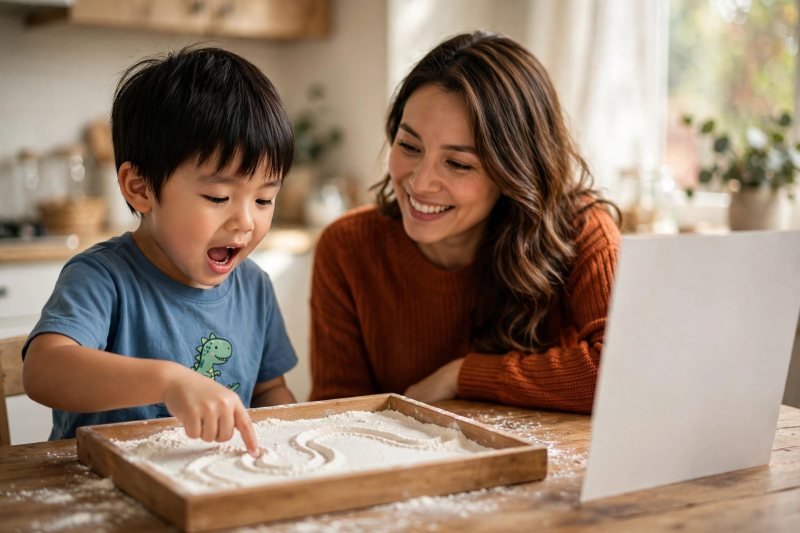
**4. Wednesday — trace it in a sensory tray.** Smooth flour flat in a tray, the big letter card standing where they can see it. Say: "Draw s with one finger — sssslow snake, ssss." Your child traces the shape, saying the sound as their finger moves. Smooth the tray and let them try again, faster. Resist correcting the shape — the tracing motion plus the sound matters more than accuracy.
-
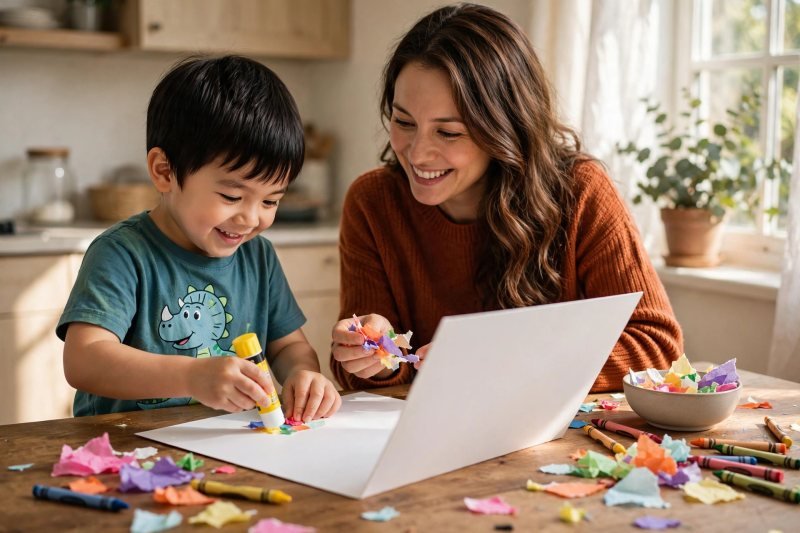
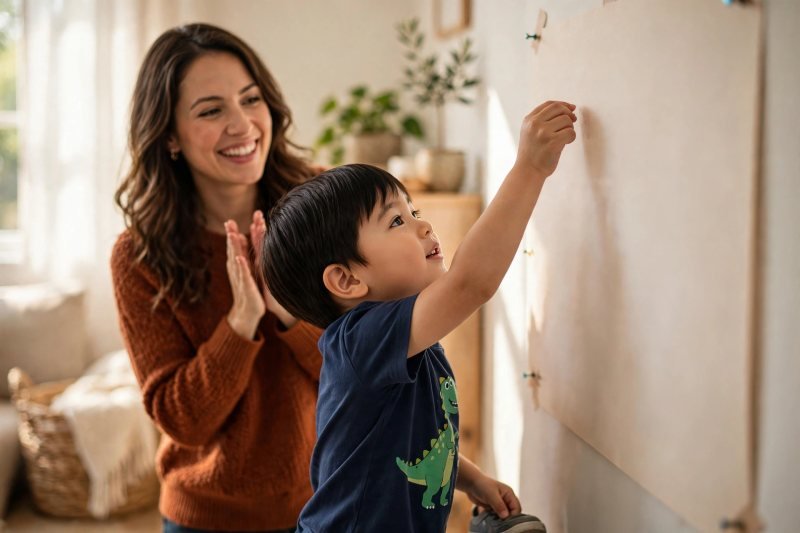
**5. Thursday — craft the letter and hang it up.** Say: "Let's build our s! Stick the pieces inside the lines — and every piece you stick, tell me its sound." Your child glues and says "ssss" on repeat — exactly the repetition reading needs, disguised as art. Hang the finished letter at their eye level where they'll pass it daily.
-
**6. Friday — eat the letter, then read and sing it.** Say: "Can you build our s out of your snack? Ssssnake shape!" Your child arranges (and mostly eats) the pieces, narrating the sound. Then hunt together for the letter in a picture book — "ssssun! ssssock!" Finish with a song: sing the alphabet slowly, and when you reach "s," everyone shouts the snake sound.

-
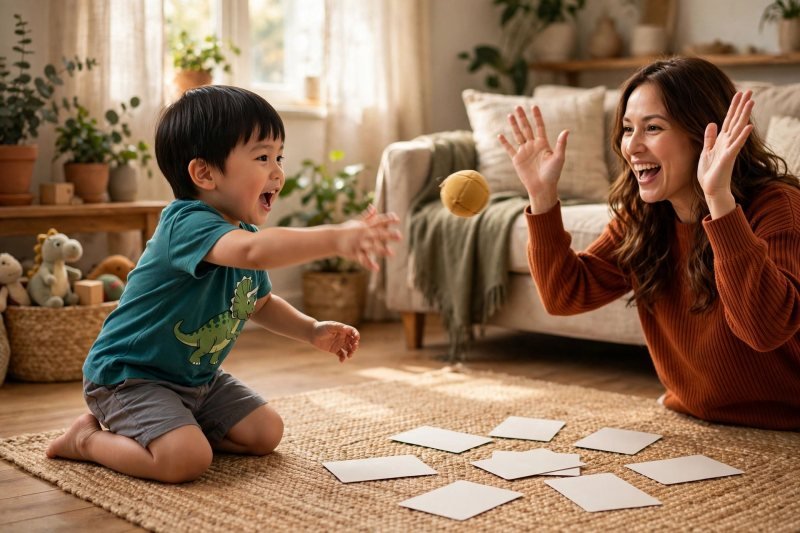
**7. Saturday — play the review game.** Mix this week's cards with 2–3 from previous weeks, face-down. Say: "I'm going to say a sound — throw the ball onto that letter's card!" Call out "ssss!" and your child aims, flips the card, and cheers when it's right. Older 4s can be the caller while you throw. Ten minutes tells you which letters are solid and which need another week.
-
**8. Sunday — plan next week in ten minutes with the template.** Copy this template and fill in next week's letter: Monday introduce the sound; Tuesday letter hunt; Wednesday sensory tray; Thursday craft; Friday snack letter + book hunt + song; Saturday review game. Stash Tuesday's cards and smooth the tray while dinner cooks — that's the whole Sunday prep.

-
**9. Track letters on a wall chart and celebrate every fifth letter.** Each Saturday after the review game, your child colours in the week's letter while you both say its sound. Say: "Look how many letters you know now! Count them!" Every fifth letter, celebrate small: a special snack, a dance party. If a letter didn't stick, repeat the week — no shame, no rush.
-
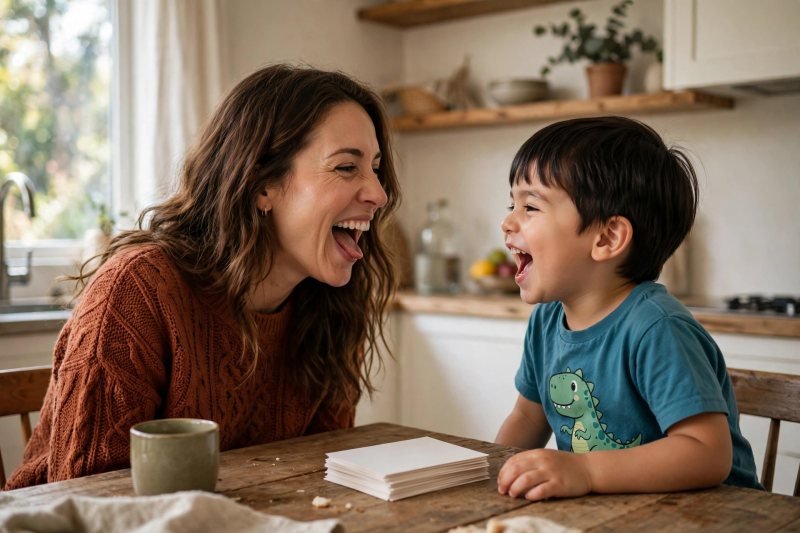
**10. When a day flops, shrink it — never skip the sound.** Some days the tray ends up on the floor. Say: "Okay, speedy version! Show me the snake sound three times — sss, sss, sss — done!" The rule that holds the whole year together: the sound gets said every day, even if the activity collapses. A missed craft is nothing; a week with no sounds is a lost week.


Make it easier
Run just Monday, Wednesday and Friday the first few weeks — sound, tray, snack. Do the steps alongside your child rather than directing, and keep every session to ten minutes. Younger 3s can trace with a whole hand instead of one finger and hunt with you holding their hand.
Make it harder
Older 4s: hunt two letters at once, be the caller in the review game, and start blending — "sss... aaa... tttt — sat!" Add a second sensory material (sand, shaving cream) and have them "teach" the letter to a stuffed animal, saying the sound and tracing it for their pupil.
Other ways to play it
- Outdoor hunts: chalk the letter on the driveway and hunt natural objects that start with its sound.
- Bath-time letters: foam letters on the tub wall — say the sound every time one sticks.
- Car game: spot the week's letter on signs and number plates, shouting the sound.
- Sibling mode: an older 4 runs the Tuesday hunt for a younger 3, calling out the sounds.
How it changes by age
- Younger 3s: focus on the sound, the hunt, and the sensory tray (steps 2–4); keep sessions to ten minutes and expect more watching than doing at first.
- Older 4s: add the review-game caller role, two-letter hunts, and early blending; they can sustain fifteen to twenty minutes and will often ask to repeat favourite days.
What they're learning
Phonemic awareness — isolating and repeating individual sounds (steps 2, 3, 7); letter-sound correspondence through multisensory tracing and building (steps 4, 5); print awareness from book hunts (step 6); memory and recall under playful pressure (step 7); planning and persistence from the weekly rhythm itself (steps 8–10) — plus fine motor control from tracing, gluing and arranging.
Clearing up
Shake the sensory tray contents back into a jar — flour and salt reuse for weeks. A damp cloth handles glue and crumbs in two minutes. Build tidy-up into the routine: "how fast can the cards jump back in the basket?" Keep the week's letter cards in one envelope so next week's prep is grab-and-go.
Questions parents ask
How does the letter of the week system work for preschoolers?
What order should I teach letters in for preschool?
Should preschoolers learn letter names or sounds first?
How long should letter of the week activities take each day?
What if my preschooler already knows some letters?
How do I know when my child is ready for the next letter?
You don't need 26 weeks of pre-planned content — the template IS the content. One letter a week means the alphabet takes about six months; repeating wobbly letters stretches that, and that's fine. If your child already knows some letters, start the system at the first unknown one and let the chart fill in the gaps.
Keep reading: Alphabet Activities for Toddlers (link to https://brightplaydays.com/activities/alphabet-activities-for-toddlers/) for extra letter play, Phonics Activities for Preschoolers (link to https://brightplaydays.com/activities/phonics-activities-for-preschoolers/) to layer in sounds, and Preschool Learning Activities at Home (link to https://brightplaydays.com/activities/preschool-learning-activities-at-home/) for the full weekly picture.


