


Mixing Colours Without the Mess
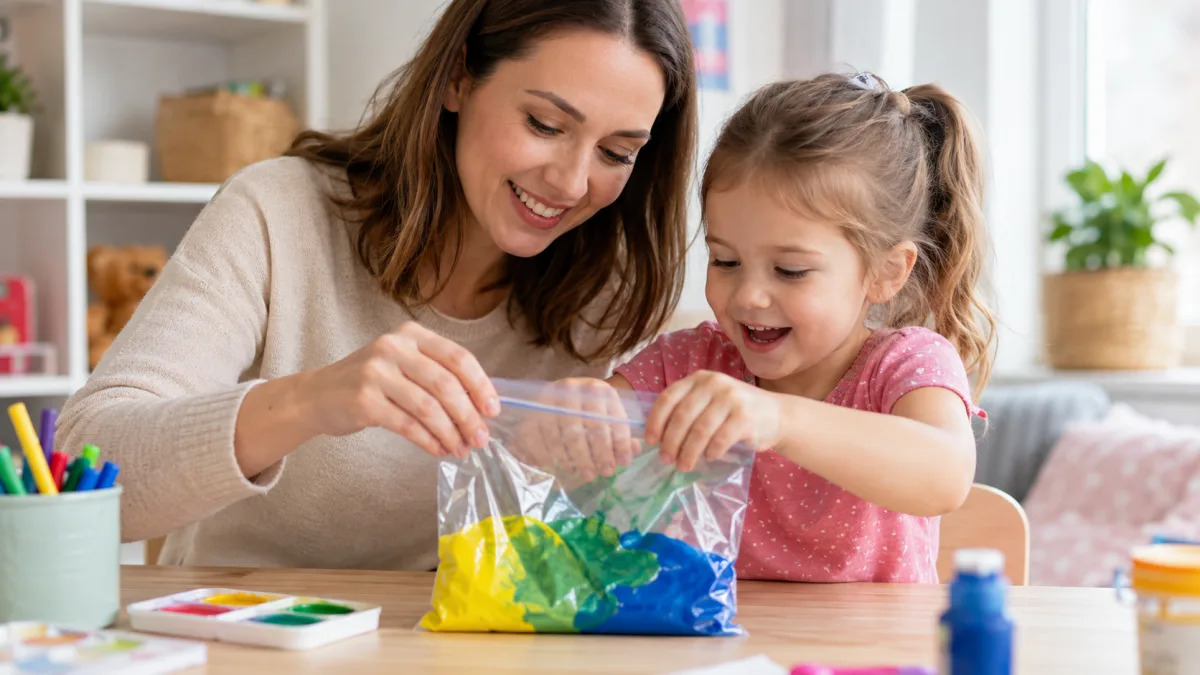
Two blobs of paint sealed in a freezer bag. They squash it, the colour changes, and nothing gets on anything.
Seal two colours of paint inside a freezer bag and let a child squash them together to see the new colour appear. Suits ages 2 to 6, takes one minute to set up, and creates no mess at all.
The short version
- Tape across the seal. Every time.
- Blobs in opposite corners, so the meeting is the moment.
- Ask them to guess first — that is the difference between a trick and an experiment.
- Age
- Ages 2–6
- Prep
- 2 min
- Play time
- 20 min
- Mess
- Low
- Difficulty
- Easy
- Where
- Indoor
Why kids love this
The moment blue and yellow become green genuinely surprises them, and they will squash the bag for a long time afterwards checking whether it happens again. It is also completely contained, so a child who is not usually allowed paint gets to do paint.
What you'll need
- Strong zip-seal freezer bags
- Washable paint in red, yellow and blue
- Strong tape
- Optional: a window or a light box to hold it against
Before you start
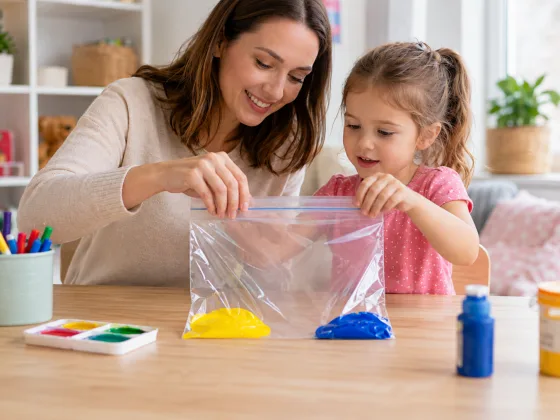
Put a generous blob of each colour in opposite corners of the bag. Do not mix them yet. Squeeze out as much air as you can, seal it, then tape right across the seal. The tape is not optional — a bag that opens turns the tidiest activity here into the messiest.
How to do it
-
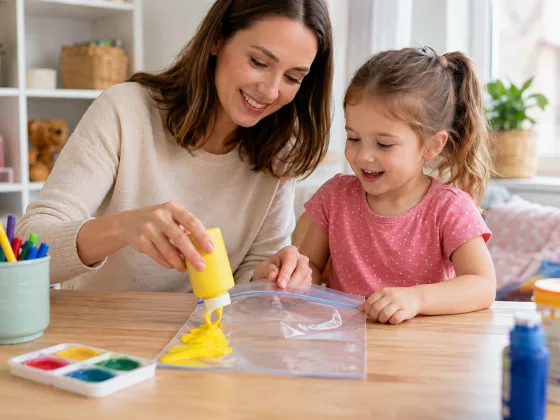
Put one blob of yellow paint in one corner of the bag.
-
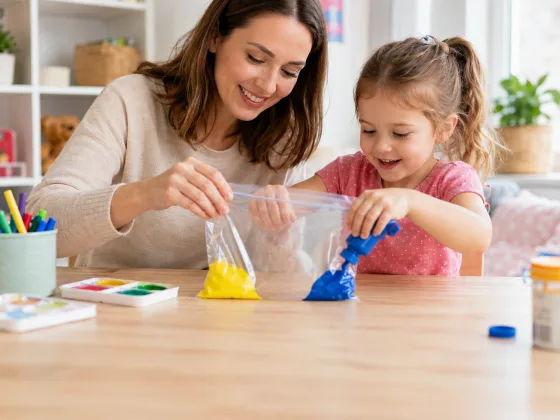
Put one blob of blue in the opposite corner.
-
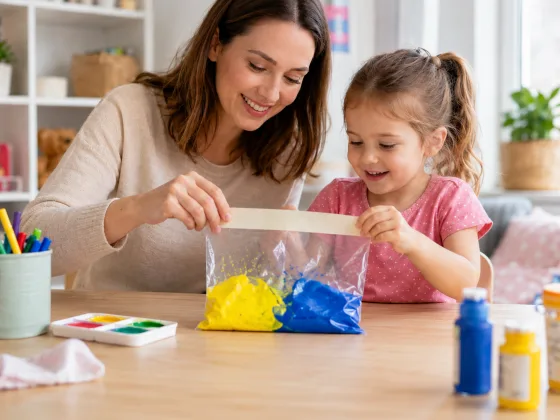
Press out the air and seal the bag.
-
Tape the whole top edge closed.
-
Hand it over and say nothing about what will happen.
-
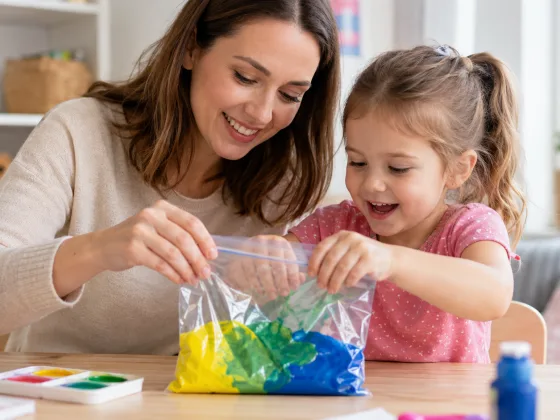
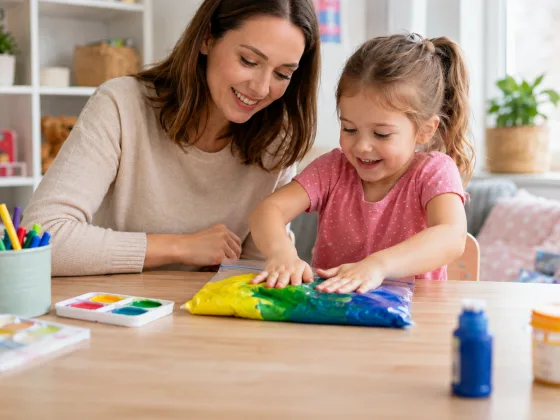
Let them squash, press and roll it until the two blobs meet.
-
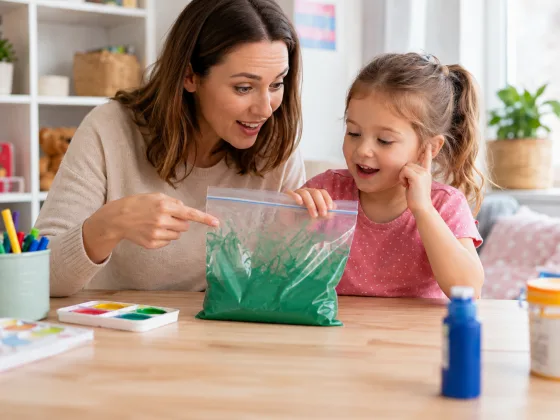
Ask what colour it went, and whether they can get it back.
-
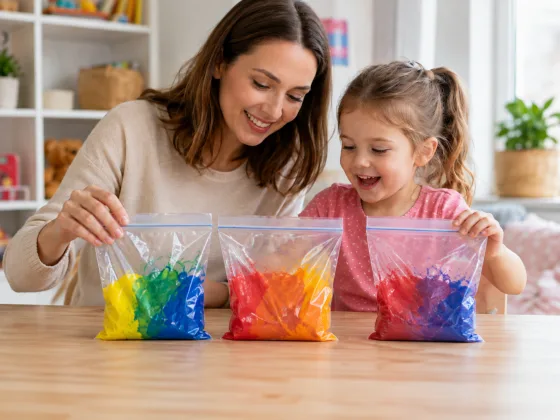
Make a second bag with red and yellow, then a third with red and blue.
Make it easier
Use just two colours and more paint, so the change is obvious and fast.
Make it harder
Ask them to predict the colour before they mix, and to say what they would need to make orange, purple or brown.
Other ways to play it
- Tape it to a window so the light shines through.
- Draw shapes on the outside with a finger and watch them fill back in.
- Add a spoon of hair gel to make it move more slowly.
- Use three colours in one bag and see what happens.
- Tape the bag to the floor and let a crawling baby press it.
How it changes by age
- Two: taped to the floor or a window, pressed with hands and feet.
- Three to four: squashing and naming the new colour.
- Five and up: predicting first, and working out which pair makes which.
What they're learning
Primary and secondary colours, discovered rather than taught. The prediction step is what turns it from a trick into an experiment. Pressing and squashing is also decent hand strength work.
Clearing up
Bin the bag when the colours have gone muddy, which takes about two sessions. Nothing else to do.