


Five Games for the Wait Before the Food
No bag, no crayons, nothing to drop on the floor. Five games that need only the two of you and a table.
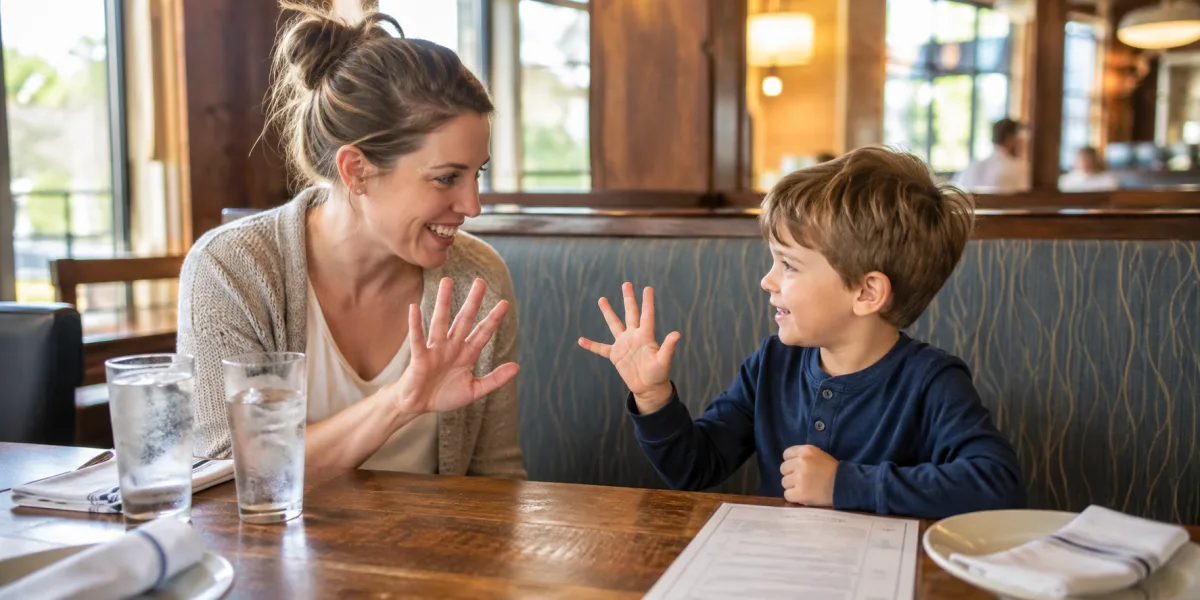
Five quiet games to play at a restaurant table while waiting for food, using nothing but conversation, hands and whatever is already on the table. Suits ages 3 to 8.
The short version
- Rotate through them rather than playing one until it dies.
- Copy my hands is the quiet one — use it when the table is getting loud.
- Nothing to bring, nothing to lose.
- Age
- Ages 3–8
- Play time
- 25 min
- Mess
- Low
- Difficulty
- Easy
- Where
- Indoor
Why kids love this
They involve you, undivided, which is rarer than it sounds and is most of what a bored child at a table actually wants. And nothing can be lost, dropped, spilled or left behind, which is most of what the adult wants.
What you'll need
- Nothing. A napkin and a pen are a bonus but not required.
Before you start
None. That is the point of this list — it is for the moment you realise you brought nothing.
How to do it
-
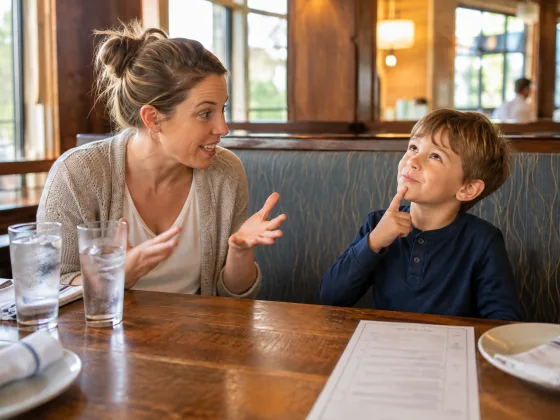
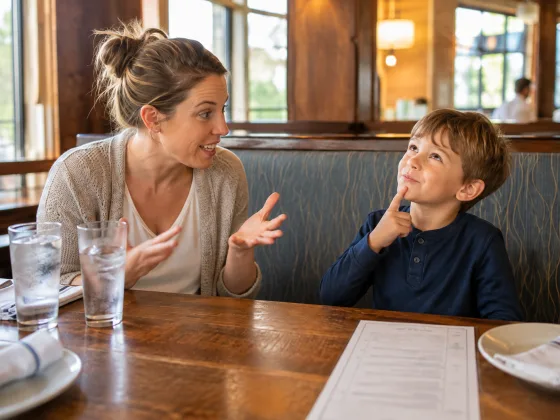
Guess what I am looking at. Pick something in the room and answer only yes or no. Younger children need colour clues.
-
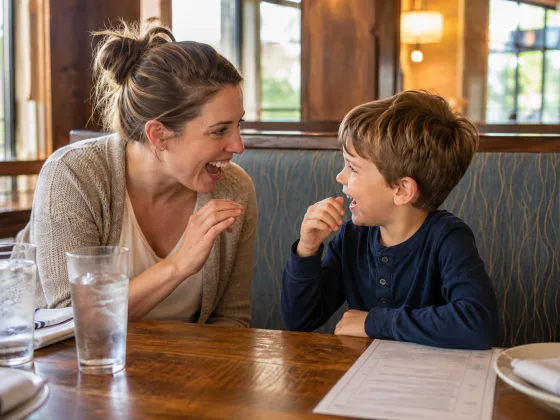
Story one word each. You say a word, they say a word, and you build a sentence together. It gets very silly, which is the point.
-
Would you rather. Two ridiculous options, chosen quickly. Would you rather have hands for feet or a nose like an elephant.
-
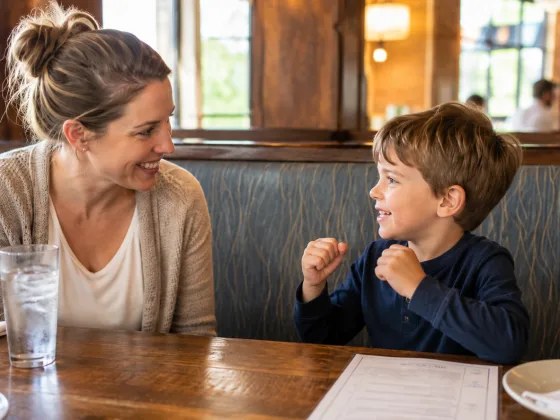
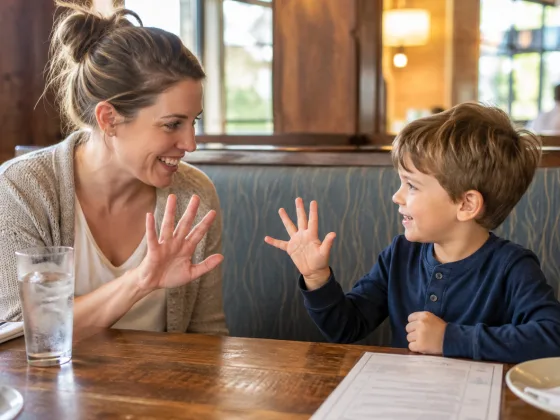
Copy my hands. Make a shape with your hands and see if they can copy it. Then they lead. Surprisingly absorbing and completely silent.
-
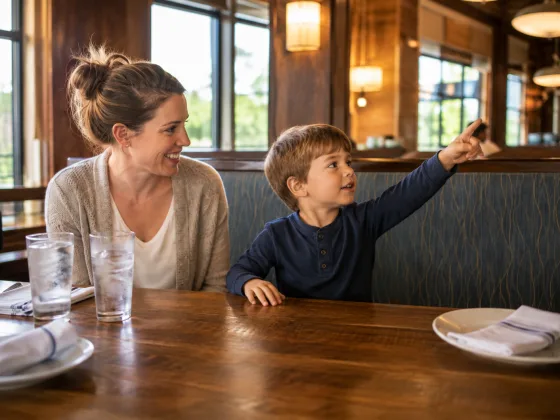
Count the things. How many round things can you see on this table. How many blue things in this room. Good for a child who needs to move their eyes rather than talk.
-
Rotate through them rather than exhausting one. Five minutes each is plenty.
Make it easier
Stick to the copying game and the counting game. Both work from about two and a half and neither needs much language.
Make it harder
Twenty questions properly, with no colour clues, or a story where each person adds a whole sentence rather than a word.
Other ways to play it
- Draw on the back of the menu or a napkin if there is a pen.
- Use a coin, a hair tie or a sugar packet as a prop for a hiding game.
- Play the alphabet game with things on the table.
- Whisper the whole round for a child who is getting loud.
- Let them invent the sixth game — most children have one.
How it changes by age
- Three: copy my hands, and counting things.
- Four to five: guessing games and one-word stories.
- Six and up: twenty questions, would you rather, and inventing new ones.
What they're learning
The guessing games are genuine deduction — narrowing possibilities from an answer. The one-word story is language play and turn-taking at once. Mostly, though, these are about a child managing a wait, which is a skill in itself and one that improves with practice.
Clearing up
Nothing to clear up. That is why this list exists.