


When Can Toddlers Recognize Letters? Milestones at Ages 2 and 3
When can toddlers recognize letters? Most start between ages 3 and 4, beginning with the letters in their own name. This calm guide maps the typical path from age 2 to 3.
Most toddlers recognize their first letters between ages 3 and 4, starting with the first letter of their own name. At 2, zero to two letters is normal; at 3, a handful of uppercase letters is typical. Order: name letters, then favorites, then most letters, sounds last. Watch, sing, read, play.

The short version
- Most children begin recognizing letters between ages 3 and 4; at 2 it's emerging, not expected.
- Progression: first name letter → other name letters → favorites → most letters → sounds.
- At 3, singing the ABC song with prompting and recognizing the first name letter are classic early markers.
- Names before sounds; uppercase before lowercase. Never quiz or drill.
- At a routine visit, ask your pediatrician about no print interest by 4, almost no letters by 5, or lost skills.
- Age
- Ages 2–3
- Prep
- 5 min
- Mess
- None
- Difficulty
- Easy
- Where
- Indoor
Why kids love this
Toddlers absorb letter names the way they learn words: by hearing them constantly in a warm rhythm, never by being tested. The ABC song becomes a cuddle ritual; a big letter on a cereal box turns the grocery aisle into a hunt. And the first letter of their own name — on their door, their cup — means print belongs to them. When letters live inside what kids already love, recognition grows on its own. ## What does letter recognition look like at age 2? Most 2-year-olds are in the warm-up phase: scraps of the ABC song, pointing at print, one letter — usually the first of their name. Many know zero letters, and that's normal. What matters at 2 isn't letters at all — it's engagement: the pointing, the humming, the beloved-book-on-repeat. Your whole job is exposure, never testing. ## What does letter recognition look like at age 3? Around 3, recognition wakes up: many sing the ABC song with prompting and recognize the first letter in their name — the classic early-preschool markers. Expect a handful of uppercase letters with wobbly recall, then watch the name-letter effect spread — first letter of the name, then other name letters, then favorites. ## Do toddlers recognize the letters in their own name first? Yes — one of the most consistent patterns in early literacy: first name letter, then the other name letters, then favorites, then most letters. Their name is the most meaningful print in their world, so its letters get recognized months before random ones. Make the name letter famous with a chunky block and point it out wherever it appears. ## When should I mention letter milestones to my pediatrician? As a question at the next well visit — never an emergency. Mention it if there's no interest in print by age 4, almost no letters by 5, or any loss of skills. Frame it calmly: "Here's what I've noticed; what do you think?" A slow start with genuine curiosity is not a problem.
What you'll need
- One alphabet board book your child likes
- A set of chunky wooden or foam letters
- A notebook or phone notes app
Before you start
Put letters where your child can reach them: a low shelf, the toy bin, the fridge. Pick one daily moment for the ABC song; no quizzing, ever.
How to do it
-
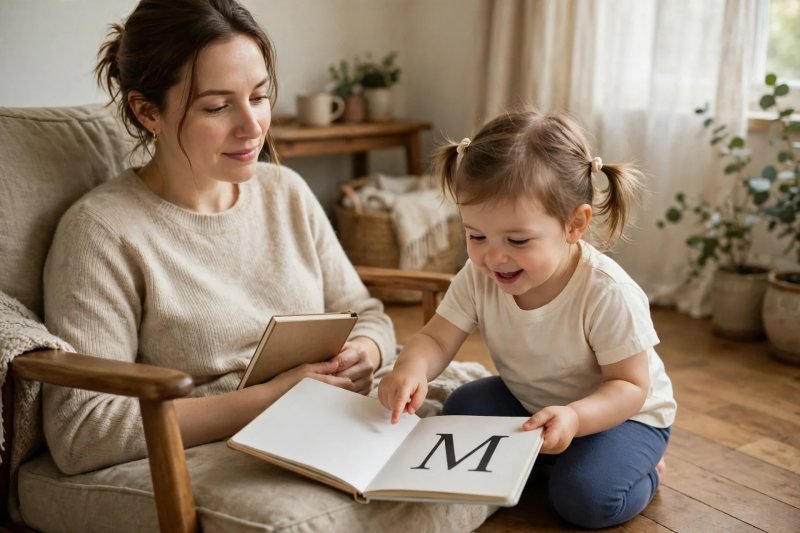
**1. Watch for three days.** Just observe — no pointing, no testing. Notice whether your toddler points at letters on signs, hums the ABC song, or lights up at their written name. This shows you where to start.
-
**2. Sing the ABC song daily.** Singing comes first: the tune teaches the sequence and names before any letter is recognized on sight. Pick one daily moment — bathtime, the drive, the park walk — so the song becomes a ritual, not a lesson.

-
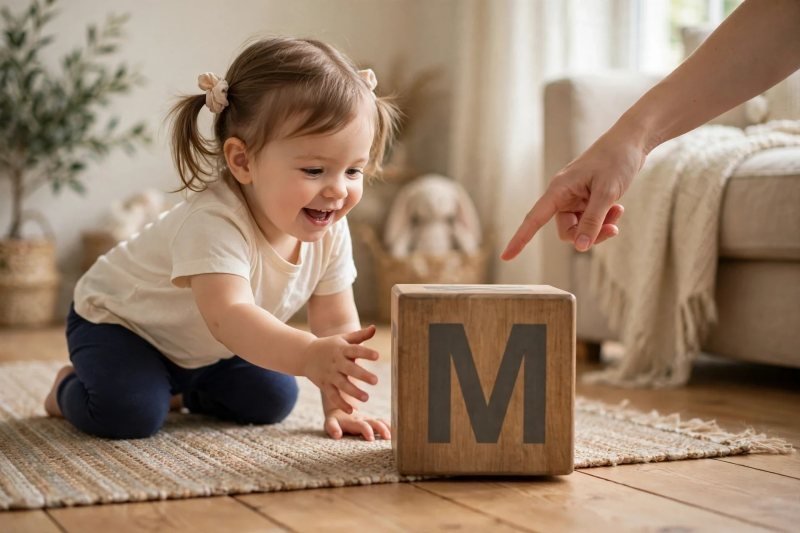
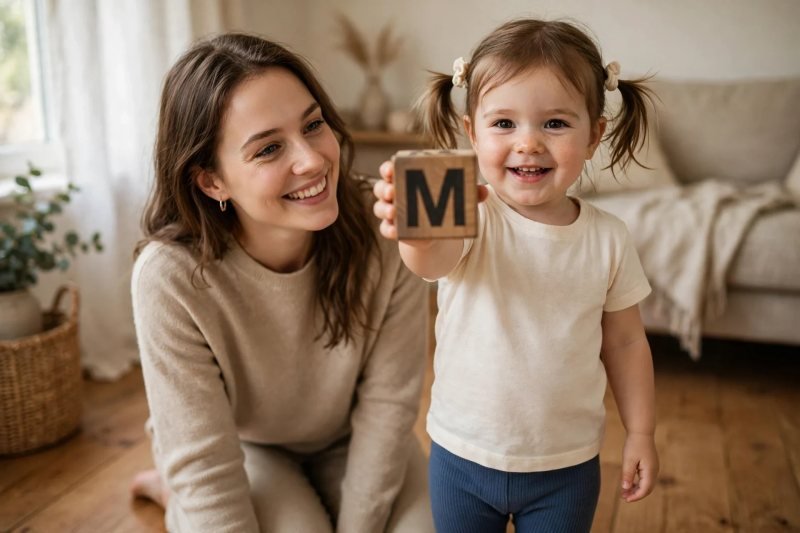
**3. Make their name-letter famous.** Keep the chunky block for the first letter of your child's name within reach and name it whenever it appears: "There's your letter! That's an M!" Names come first, sounds later.
-
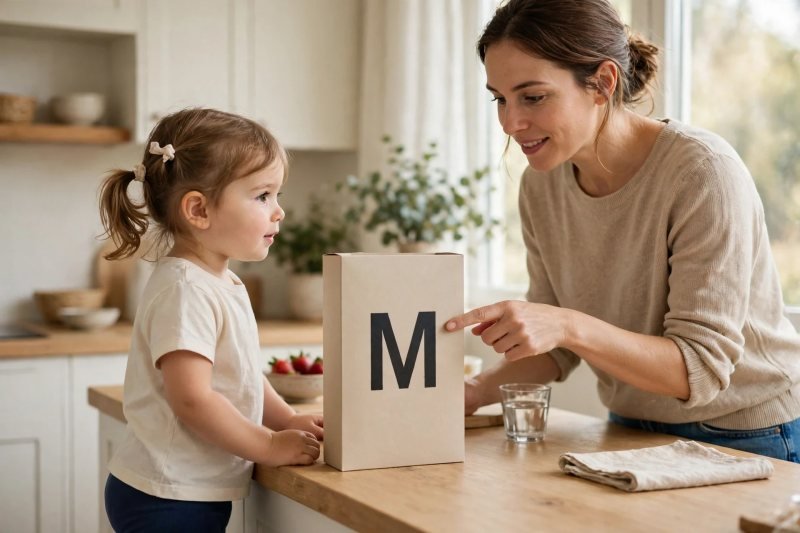
**4. Narrate one letter in the wild daily.** Once a day, point at a letter on a sign, a box, or a t-shirt and name it casually — once, in passing. If your child echoes it, smile and move on — no testing.
-
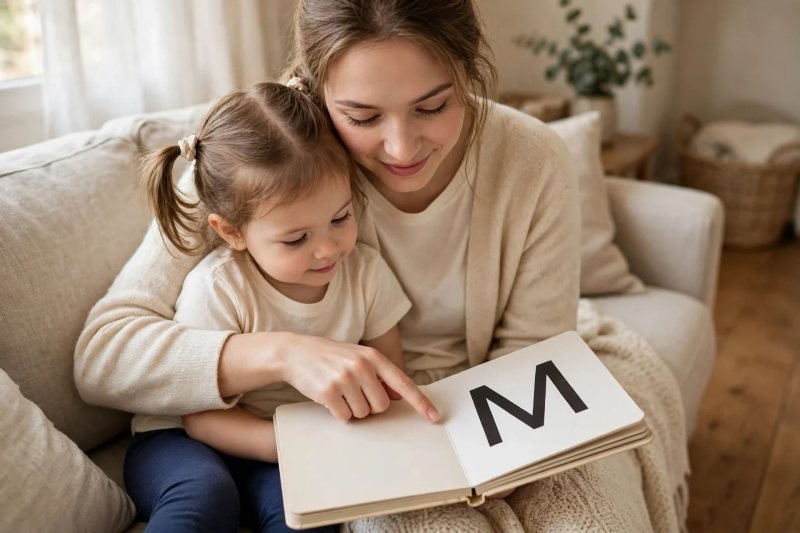
**5. Read alphabet books for pleasure.** Read them like any story — cuddled up, at your child's pace. Run your finger under the big letter as you say its name, but never quiz — a tested book becomes an avoided one.
-
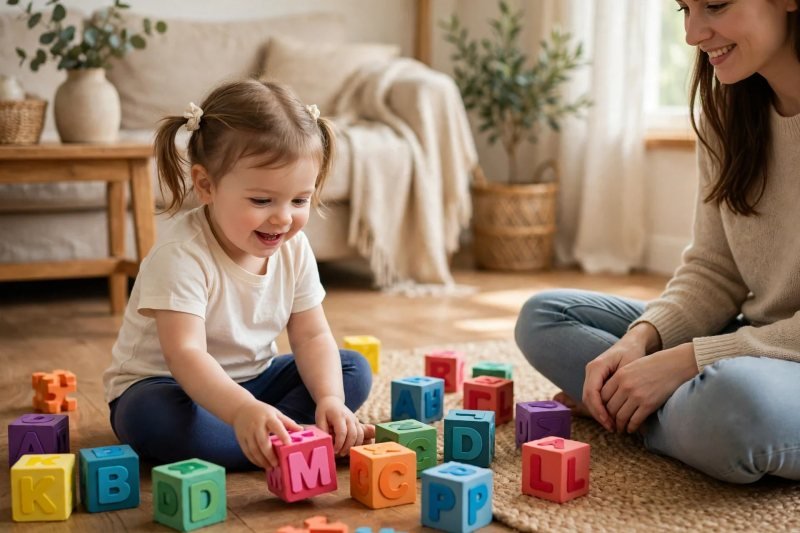
**6. Offer letter toys at the right stage.** Around 3, as interest warms up, set out magnetic letters, a chunky puzzle, or foam letters for the bath and let discovery happen with no agenda — contact time with shapes is the goal.
-
**7. Compare against ages, not other kids.** At 2, one letter — usually the name letter — is a strong start, and zero is normal. At 3, a handful of uppercase letters with wobbly recall is typical. Measure against your own child's list.
-
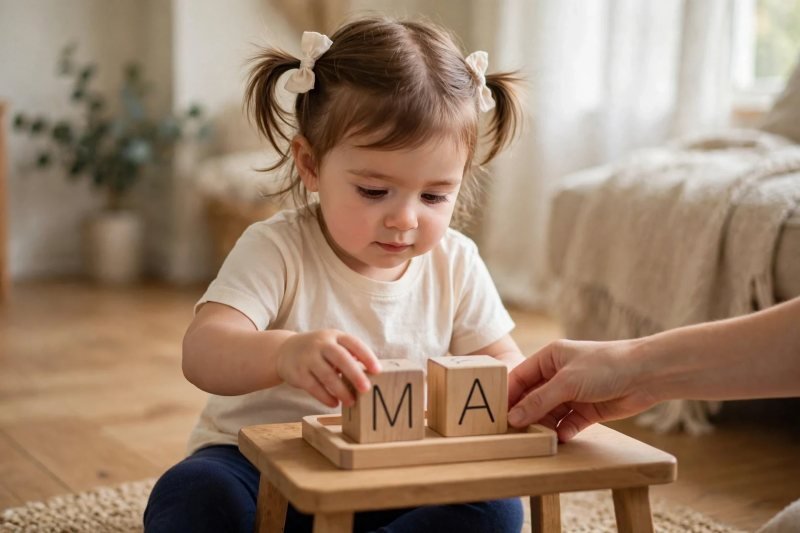
**8. Keep the order straight.** Names before sounds, uppercase before lowercase — that's the natural sequence, and working against it creates frustration. Letter-sound pairing typically arrives around ages 4–5.
-
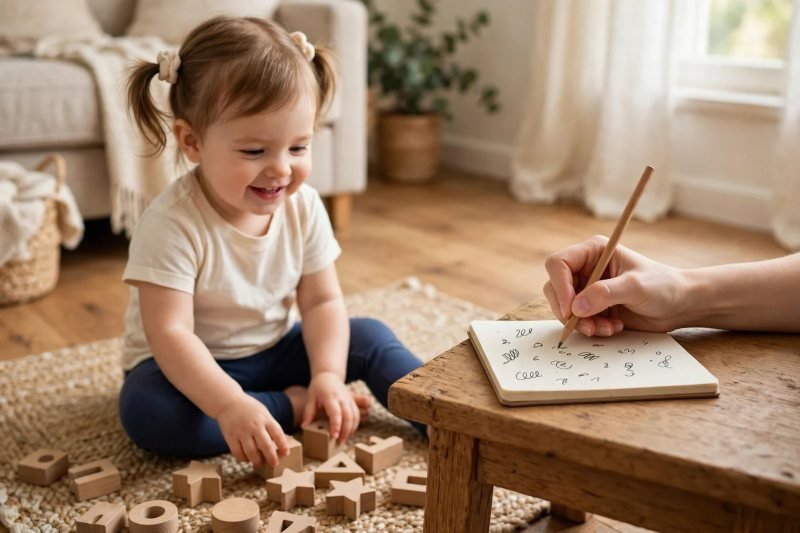
**9. Keep a no-pressure letter list.** When your child spots a letter unprompted, jot the letter and the date in your phone — that's the true progress record. Review it monthly.
-
**10. Know when a question — not worry — is warranted.** Ask at the next well visit if there's no print interest by 4, almost no letters by 5, or any lost skills. A child who could name letters and then stopped is different from one who never started.



Make it easier
Not interested yet? Do steps 1, 2, and 5 only: watch, sing, read.
Make it harder
If your 3-year-old knows most uppercase letters, pair names with sounds ("B says buh — bus!").
Other ways to play it
- Letter of the week: your toddler picks one block to carry around for a week.
- Grocery scouting: your 3-year-old hunts their name-letter on packages while you shop.
- Chalk walk: draw big letters in chalk for walking, hopping, and toy-car driving.
How it changes by age
- Age 2: sing, read, narrate; expect 0–2 letters. The warm-up year — exposure and pleasure, never quizzes. Watch for engagement: pointing at print, humming the song.
- Age 3: a handful of uppercase letters with inconsistent recall. Names before sounds. Wobbly is normal.
- Age 4 preview: many name more uppercase letters and start connecting sounds. Also the year to raise the gentle question at a well visit if there's been no print interest.
What they're learning
Print awareness: letters are symbols that carry meaning — the foundation of reading. Letter names and sequence: the ABC song teaches the order and names. Visual discrimination: telling E/F and M/W apart. A love of print: the most important outcome — letters feel like fun, not tests.
Clearing up
Reciting the ABC song is memorized sequence, not recognition — a child can sing it perfectly while naming zero letters on sight, and that's expected at 2. Naming letters is recognition itself: seeing an M on a sign and saying "M" without prompting. Knowing sounds ("buh") typically emerges around ages 4–5, after names are comfortable. The pieces develop on different schedules.
Questions parents ask
When can toddlers recognize letters?
How many letters should a 2-year-old recognize?
How many letters should a 3-year-old know?
When should I talk to my pediatrician about letter recognition?
A toddler who learns letters slowly but joyfully will outpace a drilled toddler who has learned to dislike the subject. Milestone ranges reflect published children's reading milestone charts (KidsHealth, children's hospitals) and CDC checklists.

save it for later
Pin this for the next rainy afternoon
Keep it on a board so it is there when you need it, rather than when you happened to find it.
Save to Pinterest


