


Phase 3 Tricky Words: The Full List for Year 1 Parents (UK)
The complete phase 3 tricky words list for Year 1 — he, she, we, me, be, was, you, they, all, are, my, her — with each word's tricky bit explained, plus playful games that build reading and spelling.
The phase 3 tricky words are he, she, we, me, be, was, you, they, all, are, my and her — twelve words Year 1 children learn to recognise by sight because they can't be sounded out with the phonics taught so far. Introduce two or three at a time, practise five to fifteen minutes a day through play, and add simple spelling practice: look, cover, write, check.

The short version
- The twelve phase 3 tricky words are he, she, we, me, be, was, you, they, all, are, my and her, taught across reception's spring term and Year 1.
- Each word contains a spelling not yet taught (was: a says "o"; they: ey says "ay"; my: y says "igh"), so children learn them as whole words.
- Teach two or three new words weekly, matching the school's batch order; review old words daily in short playful sessions.
- Year 1 adds spelling: build writing rounds into games — rainbow writing, write-hide-check, dictation sentences.
- Never drill a child who is stuck; say the word warmly, switch games, and revisit tomorrow.
- Beyond Phase 3, Phase 4 adds longer words (said, have, like, were) and expects confident spelling of all of them.
- Age
- Ages 5–6
- Prep
- 10 min
- Play time
- 10 min
- Mess
- None
- Difficulty
- Easy
- Where
- Indoor
Why kids love this
Phase 3 tricky words unlock real books. Words like they, you, and all sit in almost every sentence of a Year 1 reading book, so each new word feels like a key turning in a lock. The games feel like play — swatting words, climbing a staircase of cards, hunting words through a favourite story — and bedtime reading gets noticeably smoother.
What you'll need
- Twelve word cards: index cards with one word per card in clear lowercase (match the school's handwriting style if you can)
- A fly swatter (for word splat), coloured pencils, and sticky notes
- A mini whiteboard and pen, or a tray of rice for finger-writing
- Your child's current reading book
- A magnet for the fridge display
Before you start
1. Ask the teacher which batch your child is learning this week — start with those words, not all twelve. 2. Make cards for this week's two or three words and pull out the older ones for review. 3. Choose a calm slot of five to fifteen minutes — after-school snack time works well.
How to do it
-
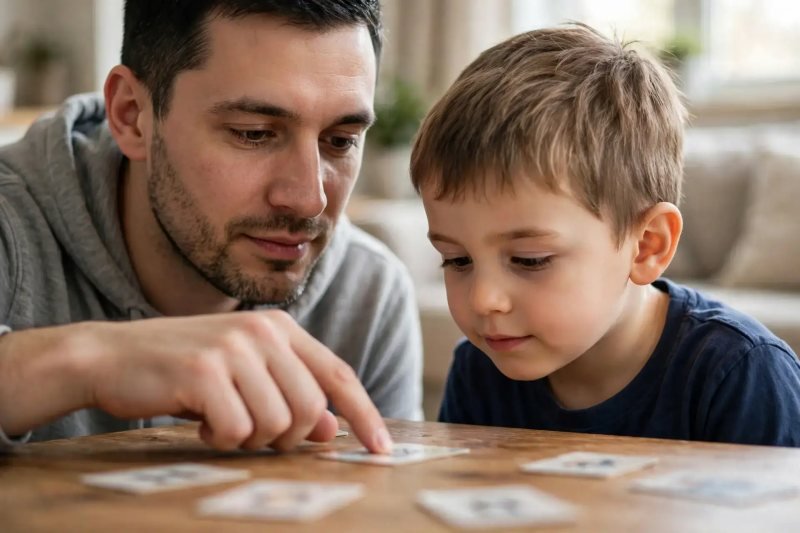
Choose this week's words. Lay out two or three cards and say each word aloud yourself first — clearly, warmly. Your child repeats each one. A meeting, not a test.

-
Meet the word, don't quiz it. Hold up the first card: "This word is he. It's tricky — we can't sound it out yet, we just know it." The first meeting is always free.

-
Spot the tricky bit. Run your finger under the word: "That e is being sneaky — it says 'eee' instead of 'eh'!" Noticing why it's tricky beats drilling.
-
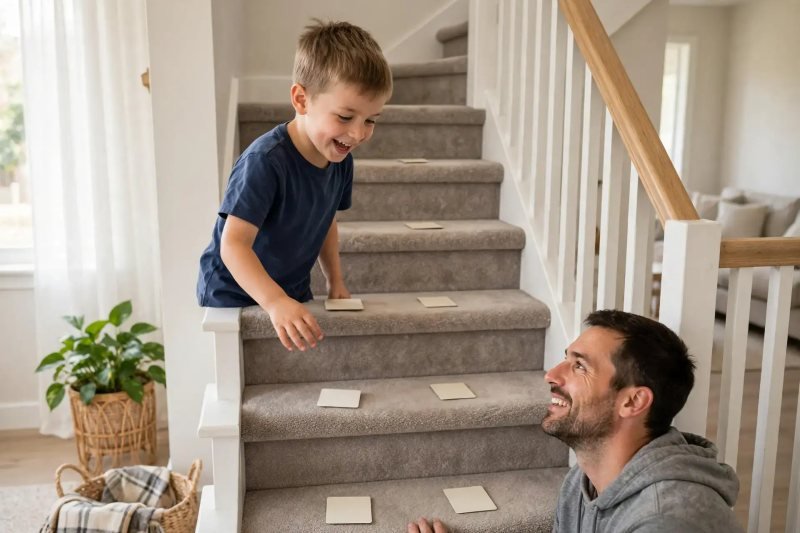
Build the word staircase. Lay the cards on the stairs, one per step. Your child climbs, reading each word aloud — then comes down naming them backwards.
-
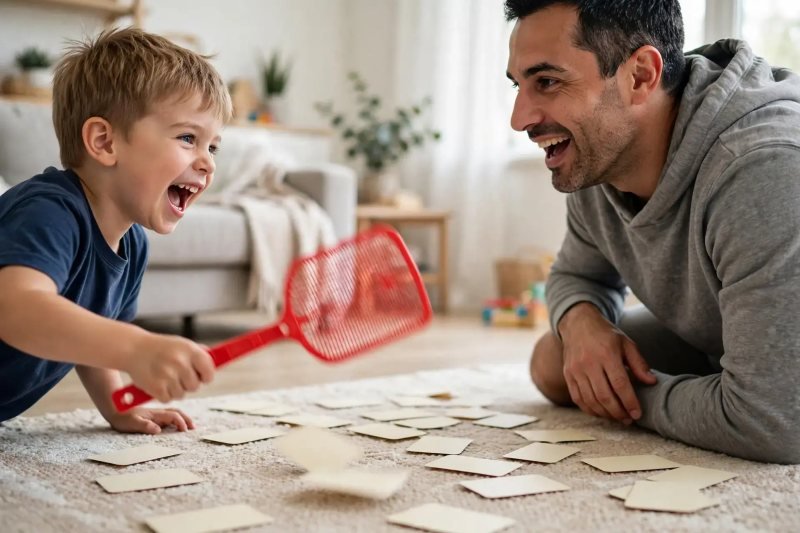
Play word splat. Spread this week's cards on the floor. Call out a word; your child splats it with the fly swatter and shouts it back. Fast, silly, and brilliant for instant recognition.
-
Rainbow-write each word. Your child writes a word, then traces over it in three or four colours, saying the word each time.

-
Play tricky-word bingo. Make a grid with the week's words repeated across it. You call words; your child covers each with a counter. First full row wins.

-
Be word detectives in a book. Open your child's reading book and hunt the week's words together. Spotting they on a real page is genuine reading, and your child feels it.

-
Write, hide, check. Look at the card, hide it, and your child writes the word from memory. Peek, check, wipe away — three correct in a row counts as known.

-
Park them on the fridge. This week's cards go on the fridge with a magnet, where daily life does the reviewing. Finish with a joyful read-through of old and new words — and stop while everyone is still smiling.



Make it easier
Play with a single new word alongside the old, confident ones — success breeds success. You call every word; your child just points, splats, or covers. Reading aloud is your job for now. Pair each word with a silly action or voice: be gets a buzz like a bee, was gets a time-traveller voice.
Make it harder
Deal all twelve words into a timed "instant read" deck; your child beats their own record. Dictation sentences: read a short sentence — "She was with me" — and your child writes the tricky words from it. Ask your child to teach a word to a grandparent or a toy — explaining fixes learning fast.
Other ways to play it
- Memory pairs: two copies of the week's cards, face down; flip two, read both, keep matching pairs.
- Beanbag toss: toss a beanbag onto the called word across the room.
- Pavement chalk spelling: giant chalk words on the patio, read while hopping between them.
- Silly sentence factory: build ridiculous spoken sentences using as many tricky words as possible — "They were all with me!"
How it changes by age
- Ages 5–6 (Year 1): the sweet spot — two or three new words weekly, five to fifteen playful minutes daily, reading plus spelling.
- Late reception (age 4–5): fine to start the first batch once all six Phase 2 words are instant — keep to five minutes and skip the spelling rounds.
- Ages 6–7: run through all twelve as a quick daily warm-up; focus on spelling accuracy.
What they're learning
Instant recognition of all twelve phase 3 tricky words — the fast lane to fluent Year 1 reading Early spelling: look, cover, write, check That tricky spellings are temporary — later phonics explains them Print confidence: "I read that whole word myself" Sentence sense, as these words stitch real sentences together
Clearing up
Cards live in a pouch or on the fridge, ready for tomorrow's few minutes. Wobbly after a break? Normal — two days of playful review brings words back. When all twelve are instant and spellable, ask the teacher about Phase 4 — and celebrate properly.
Questions parents ask
What are the phase 3 tricky words?
Why are phase 3 tricky words tricky?
How many phase 3 tricky words should we learn each week?
Should my Year 1 child be able to spell tricky words too?
What should I do when my child keeps forgetting a tricky word?
What comes after phase 3 tricky words?
The phase 3 tricky words are twelve common words children learn to recognise by sight during Phase 3 of Letters and Sounds, usually across reception's spring term and into Year 1: he · she · we · me · be · was · you · they · all · are · my · her. Schools teach them in small batches as the new digraphs arrive — ask the teacher which batch your child is on and match that order at home. Why they can't be sounded out yet: each one contains a spelling the phonics lessons haven't reached yet — that's the definition of a tricky word. he, she, we, me, be: the e says its letter name ("eee"), a pattern not yet taught. was: the a says "o" (woz) and the s sounds like "z". Double trouble in three letters. you: the ou sounds like "oo" in food; not taught yet. they: the ey says "ay", a spelling they haven't met. all: the a sounds like "or" (not "al" as in pal). are: a rare spelling of the ar sound; it looks as though it should rhyme with care. my: the y says "igh" (rhymes with fly). her: the er digraph arrives later in Phase 3, so the ending is a mystery for now. Tricky is temporary: later phases teach these spellings properly, and words once memorised start making sense. Never ask your child to sound one out as if it will work — spot the tricky bit together, say the whole word smoothly, and move on. How many at a time: two or three new ones per week — never all twelve at once. Follow the school's batch, play with just those words for several days, and keep every older word in the mix for quick reviews. Five to fifteen minutes of play a day beats any weekend cram — and stop while it's still fun. Year 1 raises the bar: children are expected not only to read these words but to spell them. That doesn't mean stressful tests — it means every game gets a writing round, like tracing the word in rainbow colours or writing it from memory with the card hidden. Match your school's phonics scheme order — other schemes sequence these words slightly differently from Letters and Sounds. Daily reading aloud together builds more skill than any card game; tricky-word play is the seasoning, not the meal. If your child hasn't yet mastered the six Phase 2 words (I, no, go, to, the, into), start with our Phase 2 tricky words guide first. These words also appear in Year 1 phonics screening check passages — see our screening check practice guide. For more instant-recognition games, see our general guide to teaching sight words; to understand when memorisation helps and when sounding out should lead, read sight words vs phonics; and for the sounds order behind the phases, see Jolly Phonics sounds in order.

save it for later
Pin this for the next rainy afternoon
Keep it on a board so it is there when you need it, rather than when you happened to find it.
Save to Pinterest

