


Consonant Blends List: 60+ BL, CL, ST, SM Words for 1st Grade
This consonant blends list gives first graders 65 verified bl, cl, st and sm words, organized by blend family so you can teach one blend at a time — plus a 10-step play routine: hear both sounds, stretch them together, sort the words, and read them in real sentences.
This consonant blends list gives first graders 65 verified words in four beginning-blend families: BL (black, blue), CL (clap, clean), ST (stop, star) and SM (smile, small). Every word was checked to begin with its stated blend. Use the 10-step routine: say both sounds slowly, stretch them together, say the word fast, sort words by family, then read the words in real sentences.

The short version
- A consonant blend is two consonants side by side where you hear BOTH sounds — *black* starts with /b/ and /l/, unlike a digraph where two letters make one new sound.
- Four families: BL (16 words), CL (16 words), ST (18 words), SM (15 words) — 65 verified words total.
- Teach one blend family at a time; sorting words by starting blend makes the pattern stick.
- Model every sound yourself first — children copy exactly what they hear.
- Reading blend words inside real sentences bridges list-reading and book-reading.
- Age
- Ages 6–8
- Prep
- 5 min
- Mess
- None
- Difficulty
- Easy
- Where
- Indoor
Why kids love this
Most blend practice looks like drill sheets. Here every word gets said, stretched, sorted and read inside games, so your child practices each blend dozens of times without a worksheet in sight. Kids this age love playing sound detective — hunting the two sounds hiding at the start of each word.
What you'll need
- 12–16 blank index cards and a thick marker (3–4 words per family, written during prep)
- 4 small baskets or bowls, one per blend family
- A soft ball or beanbag
- Paper and crayons, plus a favorite picture book for the final read
Before you start
Write 3–4 familiar words from each family below on the cards in big lowercase letters — *black, blue, clap, clean, stop, star, smile, small* are good starters. Keep them face-down until Step 8; today is about sounds first, spelling second. Set the four baskets in a row with the ball nearby, and practice the blends yourself: **bl**, **cl**, **st**, **sm**. Say the two consonants slowly (/b/ /l/) with no extra vowel between them — your child will copy exactly what you model.
How to do it
-
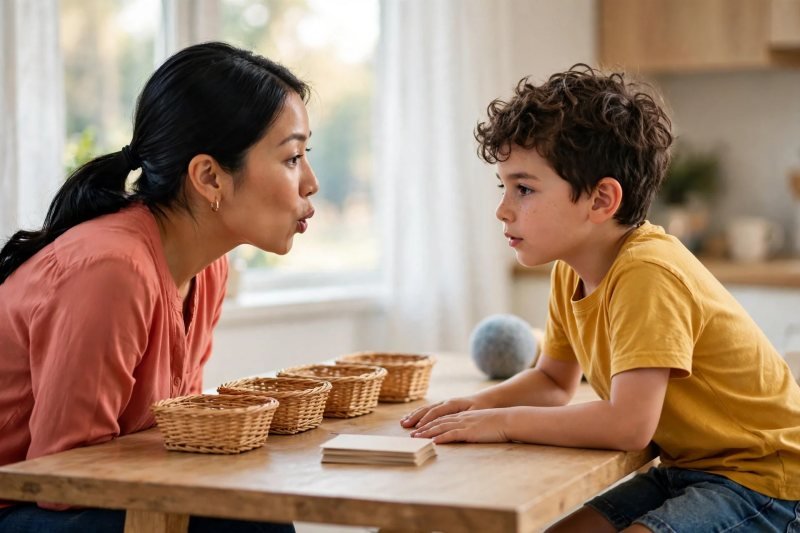
**Hear both sounds first.** Face your child and say each blend's two sounds separately and slowly: /b/ … /l/, /c/ … /l/, /s/ … /t/, /s/ … /m/. Your child echoes each pair back. The key idea: in a blend both letters keep their own voices — unlike a digraph, where two letters merge into one sound.
-
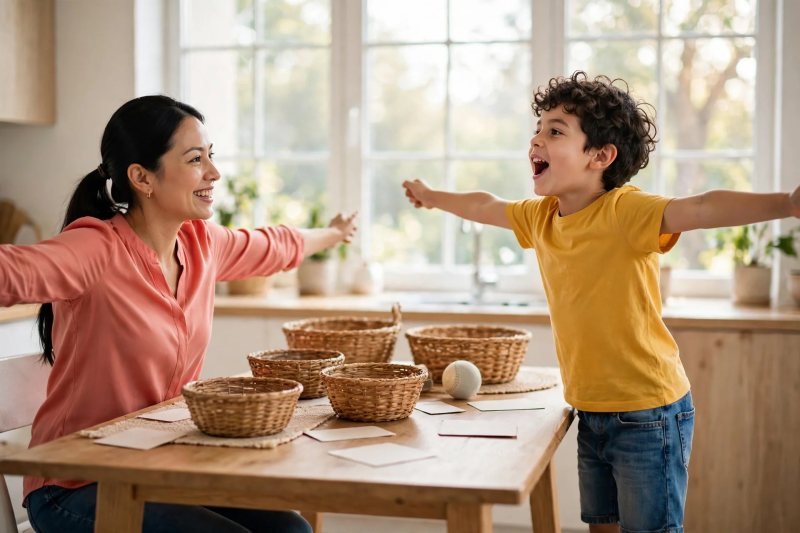
**Stretch each blend like a rubber band.** Slide every pair into one long, stretchy sound — "bbblll-ack" — and your child stretches along: bllll, cllll, sssst, sssm. The long stretch smooths the jump from two separate sounds into the whole word.
-
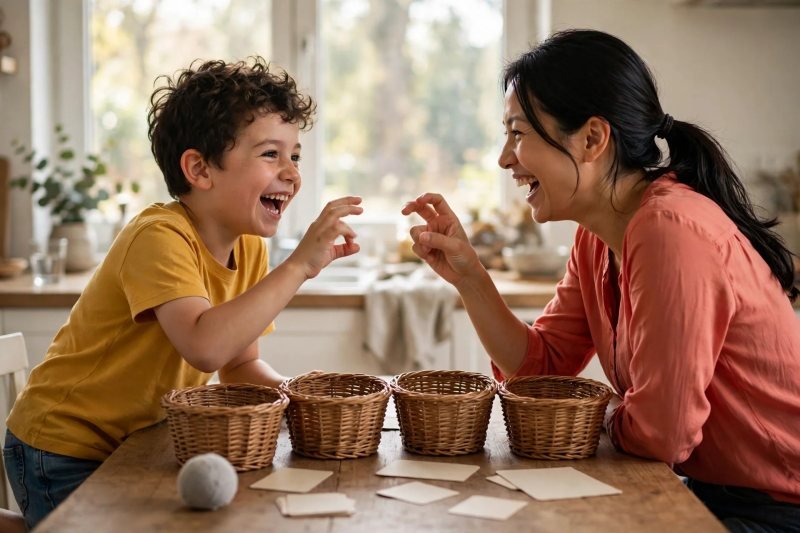
**Snap the blend fast.** You say the stretched version ("sssmmmile"); your child snaps it fast: "smile!" Then trade roles. The contrast between slow-stretchy and fast-smooth is how blending clicks.
-
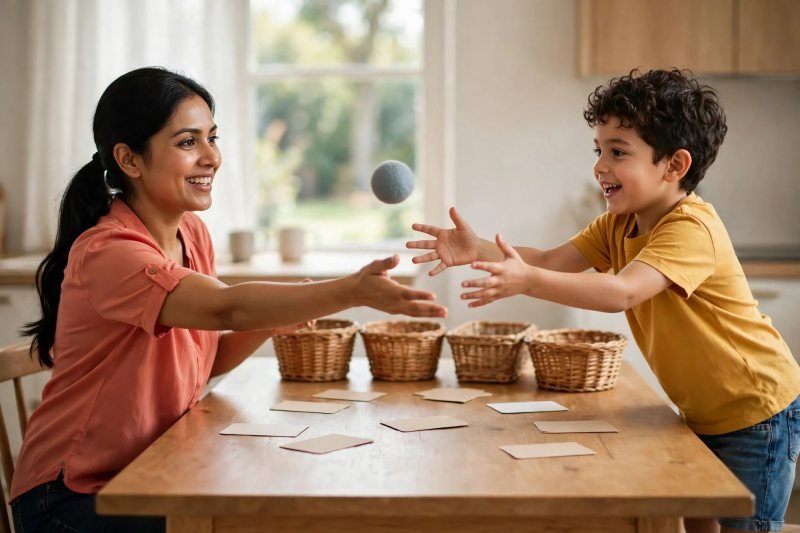
**Play the BL word parade.** Read the BL family together, tossing the ball back and forth, one word per throw: black, blue, blend, bless, blind, blink, block, blood, bloom, blouse, blow, blanket, blame, blush, blast, blank. New words get said twice.
-
**Play the CL word parade.** Clap once per syllable as you read — clap-per, cle-ver — ears tuned to the cl at the front: clap, class, clean, clear, cliff, climb, clock, close, cloth, cloud, clover, clown, club, click, clever, clip. Same two starting sounds, completely different words — that discovery is the heart of blend reading.

-
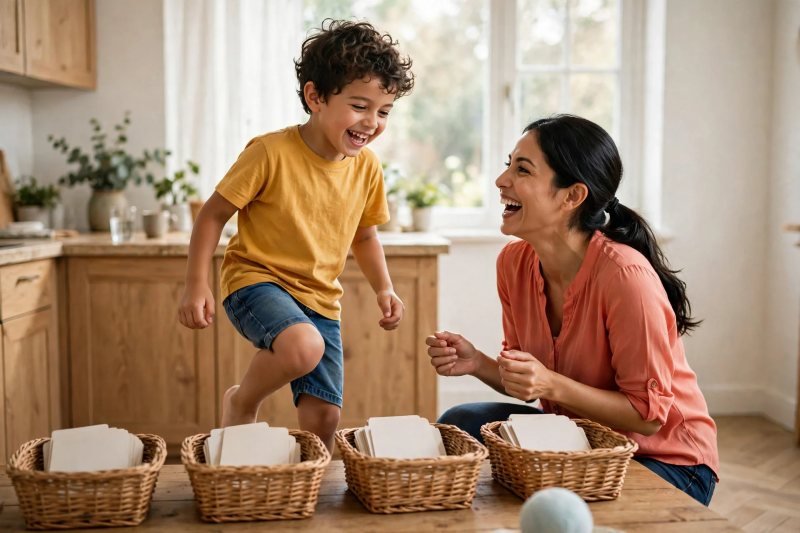
**Play the ST word parade.** Stand up and stomp one foot per word — stop gets a freeze, star gets arms wide: stop, star, stay, step, stick, stone, store, storm, story, stamp, stand, start, steam, steel, sting, stitch, stack, stage. Acting out favorites beats flat repetition.
-
**Play the SM word parade.** Everyone smiles big for every SM word — try saying smash without grinning: smile, small, smart, smell, smoke, smooth, smock, smash, smear, smack, smudge, smooch, smother, smog, smuggle. All 65 words done: four families, zero worksheets.

-
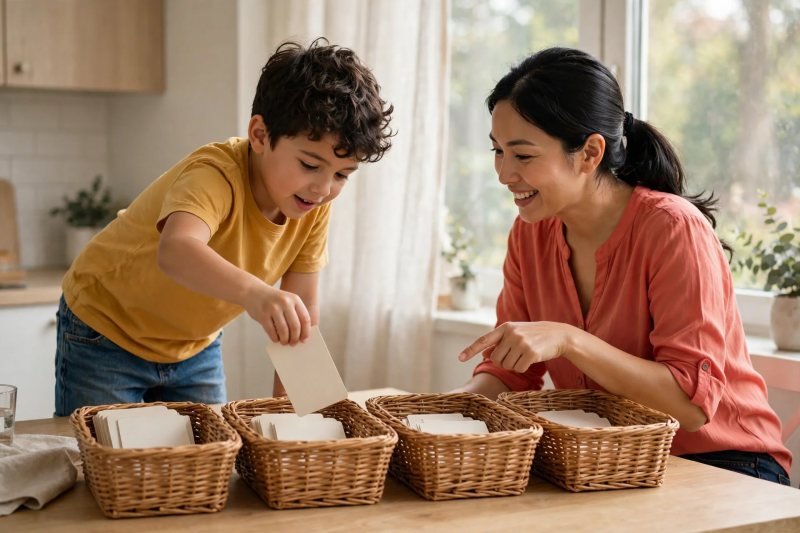
**Sort the word cards by blend.** Flip the cards face-up one at a time, read each together, and drop it in the right basket — BL, CL, ST or SM. If your child hesitates, stretch the word slowly until the blend pops out.
-
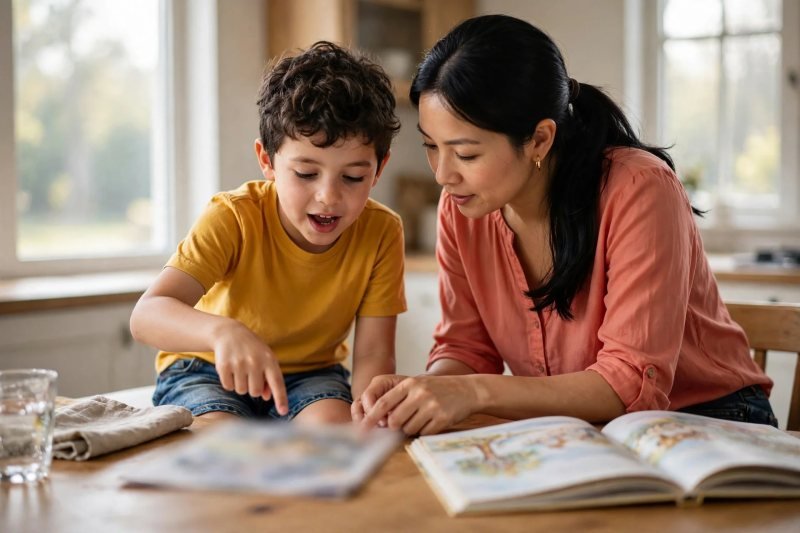
**Read the blend words inside real sentences.** Your child reads just the blend words while you read the rest: The black cat naps on the blue blanket; Let's clap for the funny clown; Please stop and look at the stars; Her smile is as small as a button; Climb the steps and stamp your feet; Rub the smooth stone and smell the flowers; Blink at the bright star; The clever clown smiled and waved. List-reading becomes book-reading right here.
-
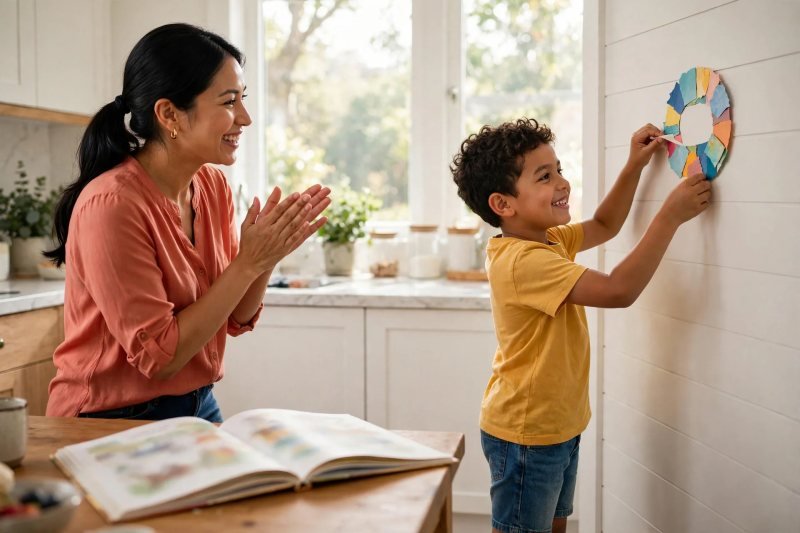
**Take the blend victory lap.** Your child picks one favorite word per family and teaches it back — stretch it, say it fast, use it in a silly sentence — then tapes up a blend badge and hunts for blend words in a picture book. If single consonants are still tricky, start with our blending sounds activities.


Make it easier
Teach one blend family per day across four days instead of all four at once. Use just 8 familiar words per family; skip longer ones like *smother* and *clover* for now. Say the blend yourself ("this one starts with *sssmmm*…") and let your child finish the word.
Make it harder
Add new families and build your own lists: **br** (*brown*), **cr** (*crab*), **sp** (*spoon*), **sn** (*snake*). Move on to ending blends — *st* in fast, *nd* in hand, *ft* in lift — and hunt for them in picture books. Time the Step 8 sort and try to beat yesterday's time. Have your child read the word cards with no modeling — pure decoding.
Other ways to play it
- **Blend hopscotch:** tape four squares on the floor, one per blend. Call a word; your child hops to its square.
- **Kitchen blend hunt:** hide the word cards around the kitchen — "find me a **st** word!"
- **Car-ride spy:** spot blend words through the window — *stop* signs, *blue* cars, *clouds*.
How it changes by age
- **6:** One blend family per session is plenty; repeat favorites across the week.
- **7:** Two families per session plus the sort; most 7-year-olds can handle Step 9 with light support.
- **8:** All four families, the timed sort, and the harder extensions. Ready for more? Try digraphs for kids, where two letters make one brand-new sound.
What they're learning
Beginning consonant blends (**bl, cl, st, sm**) and the insight that both letters keep their own sounds; phonemic blending — pushing separate sounds into whole words; onset awareness, hearing the start of a word; and decoding fluency, reading new words by pattern instead of memorizing them.
Clearing up
Stack the word cards into a labeled envelope — tomorrow's revision deck. Put the baskets back, return the ball, and tape the blend badge where your child will see it in the morning.
Questions parents ask
What is a consonant blend in simple terms for kids?
What is the difference between a blend and a digraph?
What are the most common beginning consonant blends for 1st grade?
How can I teach consonant blends at home without worksheets?
What age should kids learn consonant blends?
One family a day across four days works beautifully — short, daily repetition beats one long session. Revisit the Step 8 sort weekly; when your child sorts all four families without help, they are ready for new blend families. New to phonics? See how to teach your child to read.

save it for later
Pin this for the next rainy afternoon
Keep it on a board so it is there when you need it, rather than when you happened to find it.
Save to Pinterest

