


6th Birthday Party Ideas: Themes and a Complete Party Plan
The best 6th birthday party ideas start with one great theme — rainbow art, dinosaur dig, or superhero training — then follow a simple arc: one main activity, one big game, cake, and a calm goodbye. This step-by-step plan walks you from picking the theme to the last favor bag.
Plan a 6th birthday party around one theme your child picks — rainbow art, dinosaur dig, or superhero training are proven winners — then follow this arc: welcome ritual, one main activity for 30–40 minutes, one big group game, food and cake, and a calm favor-bag goodbye, all inside two to three hours.

The short version
- Let the birthday child choose the theme from three options — ownership makes the whole day land.
- Send invitations 2–3 weeks out with start and end times and an allergy question.
- Zone the space first: arrival corner, activity table, open game floor, cake spot, calm corner.
- One main activity + one big game is the right amount of structure at six; more becomes crowd control.
- End deliberately: calm coloring, art in hands, favor bags at the door, thank-yous by the birthday child.
- Age
- Ages 5–7
- Play time
- 120 min
- Mess
- Some
- Difficulty
- Easy
- Where
- Both
Why kids love this
Six-year-olds are peak party experts: old enough for real games with rules, young enough to believe the theme completely. A chosen theme makes them the author of the day — they picked it, their friends enter it — and the plan's rhythm (create, play, cake, calm) matches exactly how their energy actually rises and falls.
What you'll need
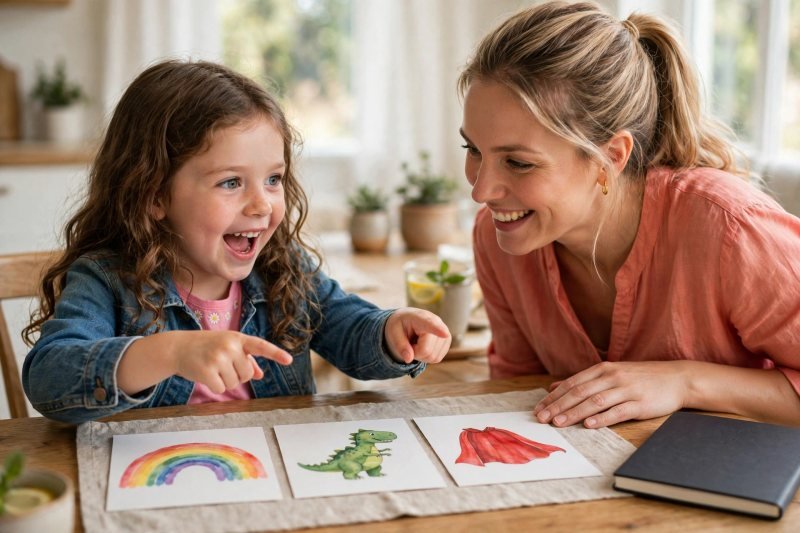
- Three theme option cards (simple pictures: a rainbow, a dinosaur, a superhero cape — no words needed)
- Invitations (paper or digital) with time, address, and an allergy-question line
- Theme decorations: plain colored bunting, balloons, a table cover in theme colors
- One main activity kit (this plan demonstrates a rainbow art party: paper, paints, brushes, aprons)
- One big group game (musical statues needs only music and floor space)
- A cake with six candles, matches, and a knife kept adult-side
- Party food: two or three simple finger foods plus drinks
- Favor bags, one per guest, filled and ready by the door
- A camera or phone, charged — you will not have a free hand later
Before you start
1. Timeline: choose the theme 3 weeks out, send invitations 2–3 weeks out, buy supplies 1 week out, decorate the morning of. 2. Two adults, two jobs: the host runs the schedule; the second adult handles drinks, bathroom runs, and the door. 3. Ask about allergies on the invitation and again at drop-off; set aside safe food before the party starts. 4. Charge the camera, clear the cake's path from kitchen to table, and put pets in their calm room before guests arrive.
How to do it
-
Pick the theme together — three options, one chooser. Lay out the three picture cards and let your six-year-old choose: rainbow art party (create and take home), dinosaur dig party (excavate, roar, hunt), or superhero training party (obstacle course and capes). Say: "Your party, your world — which one?" Three options is the magic number: a real choice with no overwhelm. Every following step dresses itself in the theme — decorations, the main activity, even the favor bags — which is why theme-first planning makes the rest of this list feel easy. This guide demonstrates the rainbow art party; the arc works identically for the other two. Theme chosen — the guest list comes next.
-
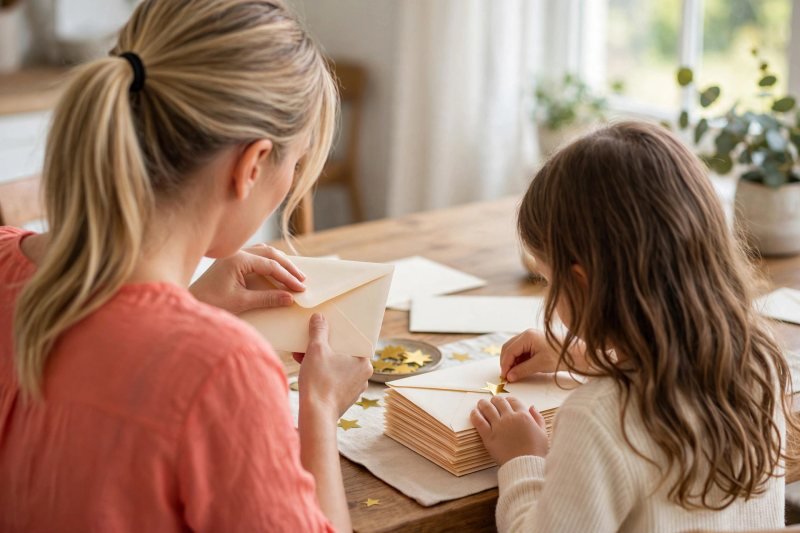
Set the guest list and send invitations early. Six-year-olds have real friendships and real feelings about them: invite the actual crew (a common rule of thumb is age plus one or two, or the whole small class if that's your school's culture), and send invitations two to three weeks ahead — paper in backpacks or a message to parents both work. Say to your child: "These are your people — let's make sure every one of them knows the day." Include start AND end times, your address, a phone number, and one life-saving line: "Please tell us about allergies." Count replies in a notebook as they land; the headcount drives food, chairs, and favor bags. Invites out — now plan the room the party will live in.
-
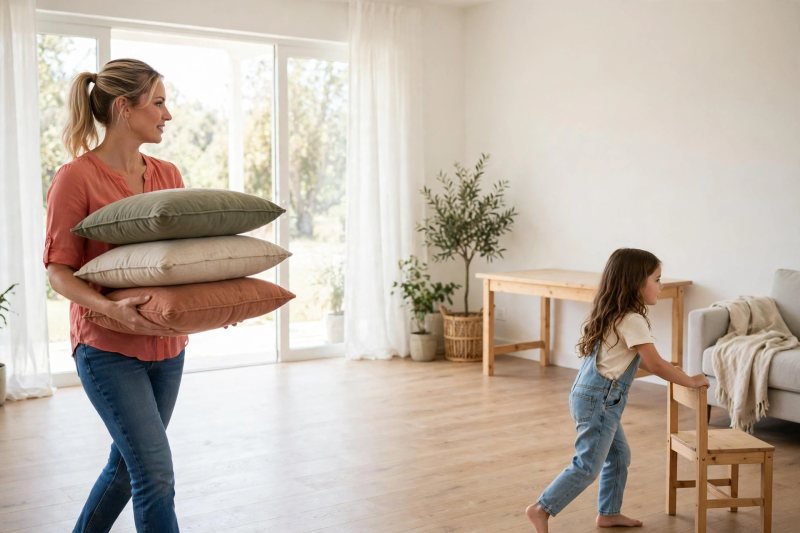
Plan the party space before you buy a single balloon. Walk the room with the schedule in your head and zone it: an arrival corner (coats, gifts piling safely), the activity table, an open floor for the game, the cake table, and a calm corner with cushions for anyone who needs a breather. Say: "Every part of the party gets its own place." Zoning is the invisible step that prevents the classic party pile-up — twelve kids, one doorway, one spilled drink. Clear breakables and trip hazards, plug in the music speaker, and decide where wet art will dry. Only now, with the map fixed, do decorations earn their shopping list.
-
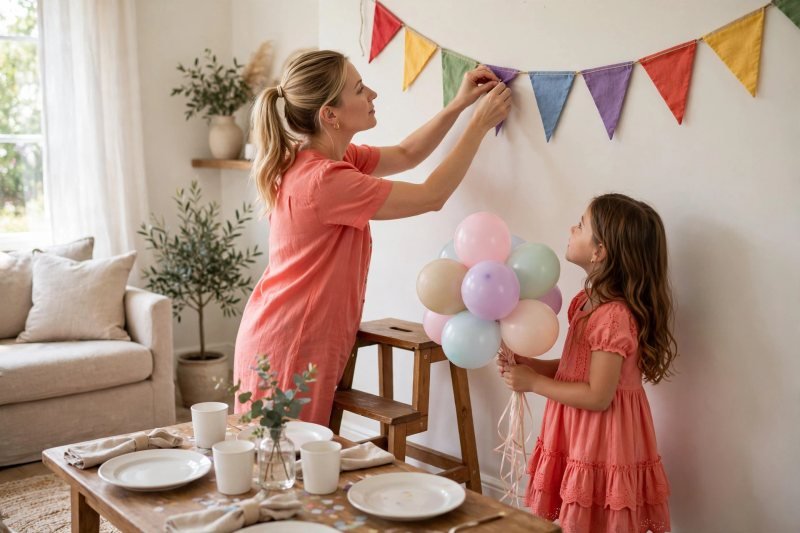
Decorate together the morning of the party. Bunting across the main wall, balloon clusters in theme colors at the corners, the table cover down and places set — and your six-year-old as official deputy, holding tape ends and choosing the rainbow order. Say: "We build your world before your people arrive." Decorating together converts party-morning nerves into anticipation, and a child who built the room greets guests like a host instead of hiding behind you. Keep decorations plain-colored rather than printed with slogans — they photograph better, cost less, and work at pickup height where the kids actually are. Party room ready — the theme's main event gets its station.
-
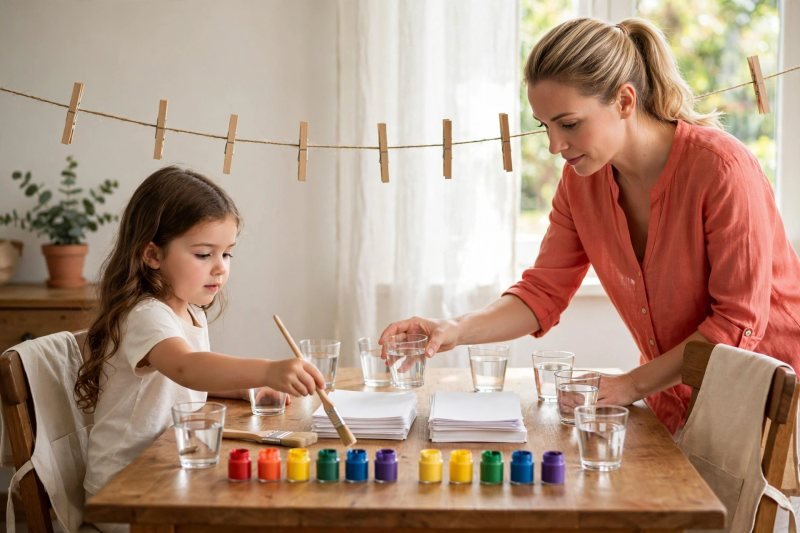
Set up the main activity station. For a rainbow art party, that's the craft table: an apron per chair, paper stacks in the middle, paints and water cups spaced so every child reaches without leaning over another's work, and a drying line strung along one wall with clips. Say: "Everyone gets a seat, everyone gets colors." The main activity is the party's anchor — thirty to forty minutes where energy turns into making — and for the other themes it swaps cleanly: a sand tray with buried toy dinosaurs and brushes for the dig, or a soft obstacle course with a cape per guest for superhero training. Test your own station once: sit, reach, paint. If an adult can't, a six-year-old can't. Ready — the door is about to start ringing.
-
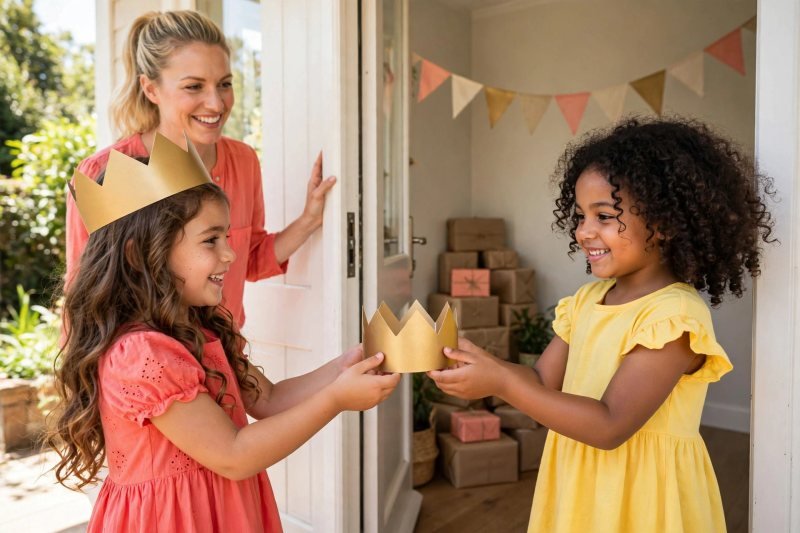
Welcome every guest like the theme starts at the door. Greet each arrival by name, hand them their party crown or apron, and point them at one starter job — a coloring sheet at the activity table absorbs the early minutes while the group assembles. Say: "You're here! Grab your crown — the rainbows are waiting." The welcome ritual does three jobs: it makes each child feel expected, it gives shy arrivals something to hold and do, and it parks early energy at the table instead of in the hallway. Keep the gift pile in its corner unopened — presents get their moment after the party or not at all, never as a spectator sport. When the crew is complete, gather them: the main activity begins.
-
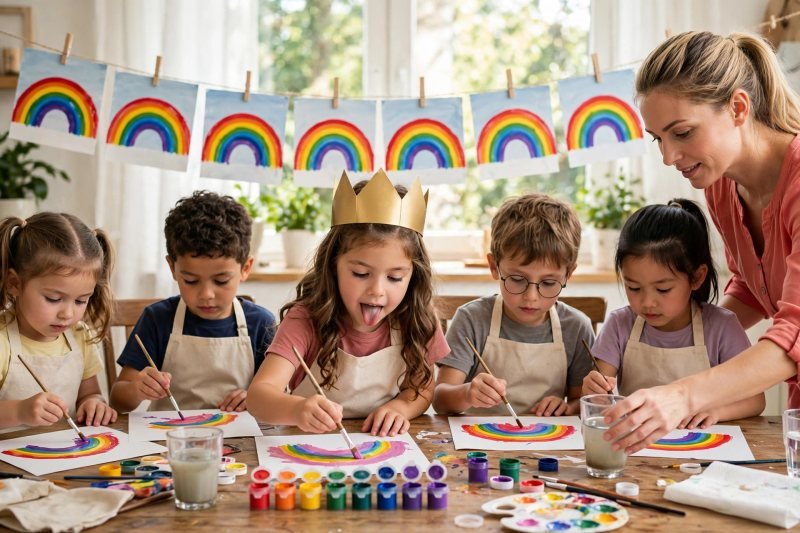
Run the main activity — and let it be gloriously simple. For the art party: everyone paints their own rainbow masterpiece, then a second sheet for a group mural you'll clip to the drying line together. Say: "Artists, your gallery opens in thirty minutes." Your job is materials traffic — water changes, fresh paper, praise with specifics ("that purple storm cloud!") — not art direction. Thirty to forty minutes is the sweet spot at six; when the first finisher starts wandering, that's your signal to wrap with the mural, which re-collects everyone into one shared win. Clip everything to dry. Masterpieces drying, the floor is calling: it's time for the one big game.
-
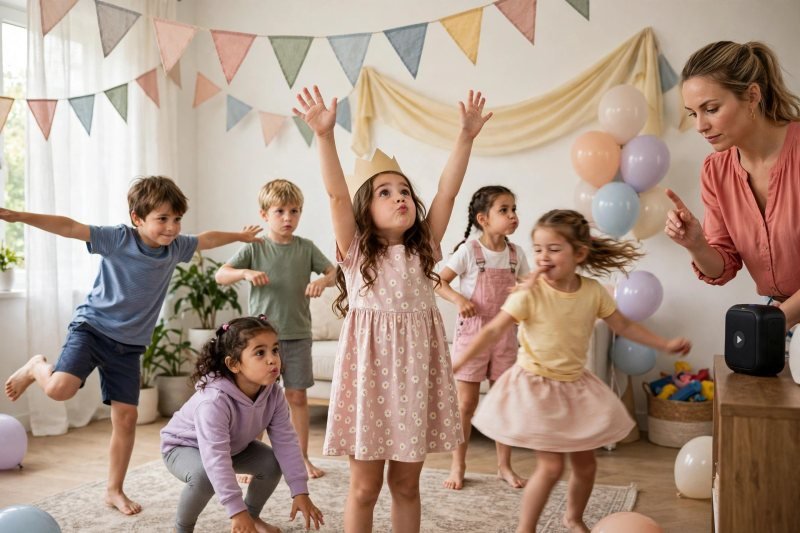
Play one big group game with real rules. Musical statues is the six-year-old gold standard: dance wildly while the music plays, freeze like a statue when it stops, wobble and you're the next DJ's helper (nobody sits out and sulks — helpers run the music, which kids this age consider a promotion). Say: "Dance big, freeze hard — statues don't giggle." One big game, played in rounds for about twenty minutes, beats five fiddly ones: rules are known, energy burns gloriously, and the game's natural end — everyone giggly and warm — is exactly the state you want walking toward cake. Clear the floor as the last statue falls: the cake procession is sacred.
-
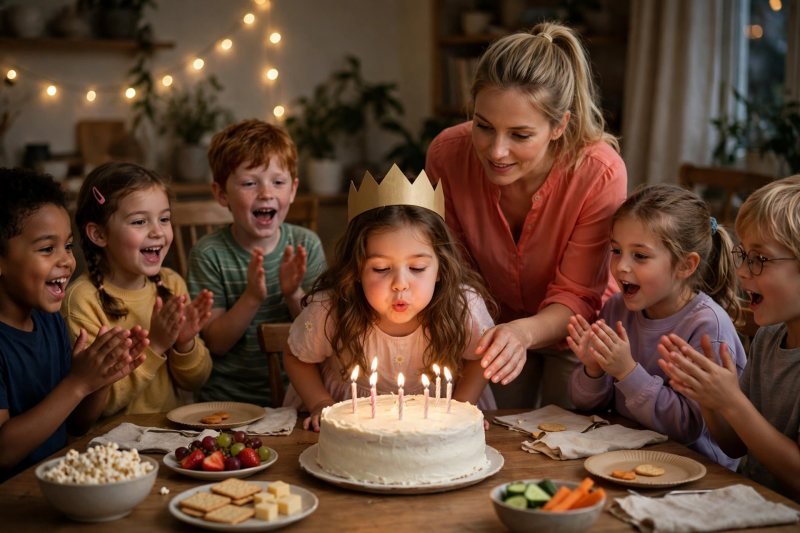
Serve food, then do the cake moment properly. Seat everyone for party food first (hungry kids and candle ceremonies mix badly), then lights low, cake in procession with six candles lit, the song at full volume, and your birthday child dead center of it all. Say: "Make the biggest wish — you've got six candles of power." Let the wish breathe before the applause; six is old enough that this moment lands in permanent memory, theirs and yours. Slice with the adult knife, serve small (seconds are always available), and let eating be unhurried — this is the party's happiest lull. After cake, energy dips naturally; ride it down deliberately with the goodbye ritual.
-
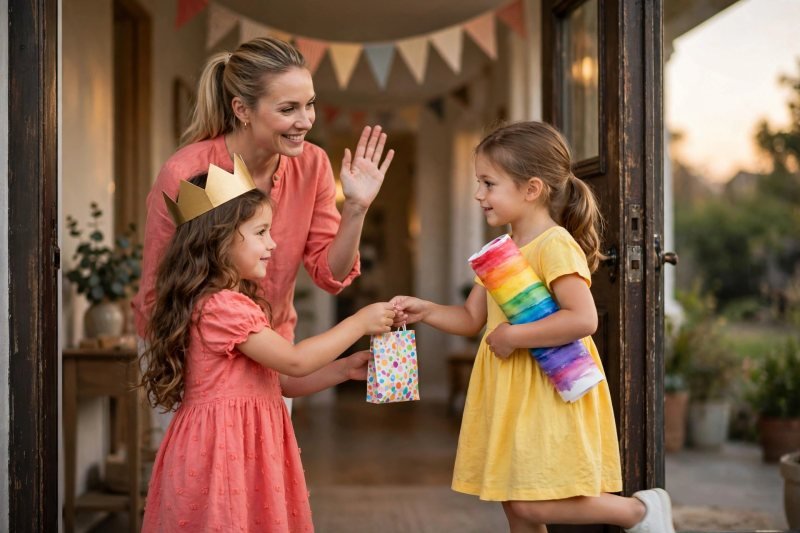
Wind down with calm coloring and favor-bag goodbyes. As parents begin arriving, the drying mural comes down and masterpieces go into hands, a calm coloring sheet holds the remaining guests, and each departing child gets their favor bag at the door from the birthday child herself. Say: "You give the last gift — thank your people for coming." A staffed, unhurried goodbye prevents the two classic party endings — the doorstep meltdown and the child who hides because leaving feels abrupt. When the last guest waves from the sidewalk, the party is officially, satisfyingly done: art on the fridge, cake in the box, one very six-year-old asleep early tonight.


Make it easier
Buy the cake, make the fun: a plain grocery cake plus theme-colored candles looks intentional and saves a day. Two hours is plenty: schedule 2:00–4:00 and state the end time proudly — structure is a feature, not a limit. Skip favors entirely and let the art be the takeaway: a masterpiece in hand beats a bag of plastic. For a smaller-scale version of this arc, see our 3rd birthday party ideas guide.
Make it harder
Add a theme quest threading the whole party: find the six hidden golden dinosaurs / rainbow gems between activities, with the cake as the treasure's end. Let the birthday child MC one part — announcing the game rules to friends is a confidence milestone at six. Scale the 2nd birthday party ideas for toddlers format up: notice how the same arc (welcome, activity, cake, calm goodbye) carries a party at every age.
Other ways to play it
- Dinosaur dig party: same arc — sand-tray excavation as the main activity, a dino-stomp freeze game, and fossil cookies beside the cake.
- Superhero training party: obstacle-course main activity with a cape ceremony, "save the city" team game, and favor bags as hero kits.
- Garden version: move zones outside, swap the art table for sidewalk-chalk rainbows, and make the big game a water-balloon statue freeze — towels by the door.
How it changes by age
- Ages 4–5: shorten to two hours, cut the big game to freeze-dance without rules layers, and add one adult per six kids — the arc holds, the stamina differs. For the full four-year-old version of this arc, see our 4th birthday party ideas guide. The art station skills here overlap happily with our fine motor activities for preschoolers favorites.
- Age 6: this guide's design age — real themes, real rules, first drop-off parties for many kids. Confirm at the door which children are being left and collect phone numbers.
- Ages 7–8: add choosing power (they can plan the menu and the playlist with you) and one competitive game with winners; keep the calm ending — older kids crash just as hard. For the same arc one year earlier, see our 5th birthday party ideas guide.
What they're learning
Hosting and gratitude: welcoming by name, thanking at the door — social leadership in its first real form. Planning and sequencing: the birthday child's theme choice shapes real decisions across weeks — cause and effect at calendar scale. Rule-based play: musical statues with fair, kind elimination-as-promotion teaches winning and losing inside friendship. Creative confidence: a gallery line of their own work, admired by their favorite people, is not a small thing at six.
Clearing up
Favor the ten-minute blitz while your helper adult is still there: food sealed and fridged, art photographed (then the mural comes down), balloons popped deliberately (not left to midnight surprises), gifts stacked unopened with a notebook for thank-you notes. The birthday child has exactly one job — carrying their favorite card or gift to their room — then it's bath, pajamas, and one retelling of the day before sleep. Tomorrow, together, you write the thank-yous; tonight, the house exhales.
Questions parents ask
How long should a 6th birthday party last?
How many guests should you invite to a 6th birthday party?
What are the best themes for a 6th birthday party?
When should you send invitations for a kids' birthday party?
What food do you serve at a 6-year-old's birthday party?

save it for later
Pin this for the next rainy afternoon
Keep it on a board so it is there when you need it, rather than when you happened to find it.
Save to Pinterest

