


3rd Birthday Party Ideas: Themes, Games and Easy Plans
These 3rd birthday party ideas keep it simple: pick one easy theme, plan games in a calm order, serve allergy-aware finger foods, and run a two-hour party that ends before anyone melts down — including you.
For a great 3rd birthday party, pick one simple theme your child chooses — dinosaurs, farm animals, rainbow art — keep the party to about two hours with a small guest list, and plan four or five easy games in a loud-to-quiet order. Serve allergy-aware finger foods, use foil balloons only, and put the cake in the middle of the party.

The short version
- One child-chosen theme organizes everything — colors, cake, games, favors — and makes decisions easy.
- Keep it short and small: about two hours, a handful of guests, timed away from naps.
- Plan games loud-to-quiet: a hunt, freeze dance, a dig or treasure game, then a calm story corner.
- Ask about food allergies on the invitation, serve food sitting down, and cut round foods lengthwise.
- Never latex balloons at this age — foil balloons only, and bin popped fragments immediately.
- Age
- Ages 3–4
Why kids love this
Three-year-olds love a party that feels like their favorite thing turned into a whole room — dinosaurs on the table, a crown on their head, their best friends digging for eggs and dancing until the music stops. The best 3rd birthday party ideas are not the fanciest ones; they are the ones where a small child always knows what happens next, the games are easy to win at, and the birthday child feels celebrated from the first balloon to the last bite of cake.
What you'll need
- Plain colorful foil balloons and plain paper bunting (no latex balloons — see Safety notes)
- Paper plates, cups, and napkins in your theme's colors
- A simple cake or cupcakes, plus easy finger foods (see step 5)
- Game basics from around the house: bubbles, a speaker for music, soft balls, a parachute or big blanket, small prizes or stickers
- A dress-up or prop box matching your theme (toy tools, animal ears, capes, magnifying glasses)
- Party favor bags with one or two simple, age-safe items each
- Your phone or camera, charged — and a second adult on duty if you can get one
Before you start
1. Start two to three weeks out with steps 1–3 (theme, guest list, invitations); everything else can happen in the final week. 2. Keep the guest list small — a good rule of thumb many parents use is a handful of close friends and cousins, roughly matching your child's age in playmates plus family. 3. Read the Safety notes before buying anything — the foil-balloon rule and the food-allergy question shape the shopping list.
How to do it
-
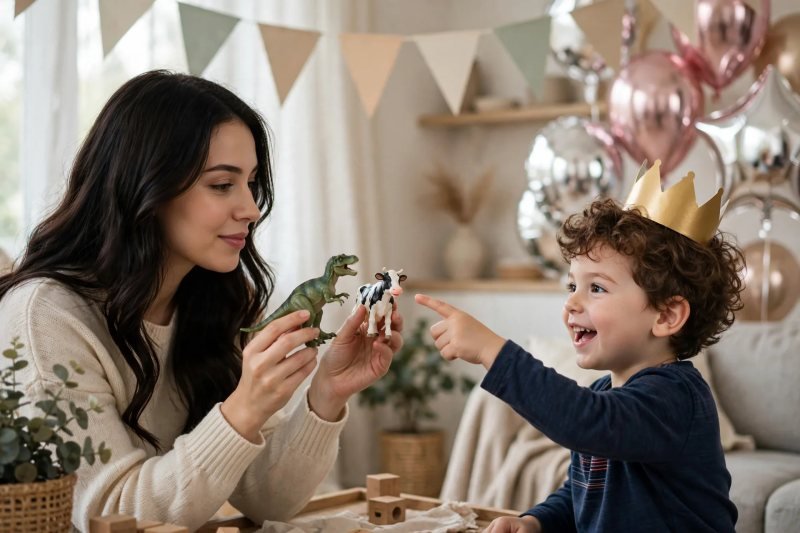
Pick one simple theme together. Sit with your nearly-three-year-old and offer two or three themes you can actually pull off, then let them choose — dinosaurs, farm animals, rainbow art, under the sea, construction trucks, a teddy bear picnic, superhero training, or garden bugs and butterflies. Say, "Your party can be dinosaur world or farm day — which one makes your heart sing?" One theme, chosen by the birthday child, quietly organizes everything after it: the colors, the cake, the games, and the favors all become one decision instead of fifty, and a three-year-old who chose the theme arrives at their own party already proud.
-
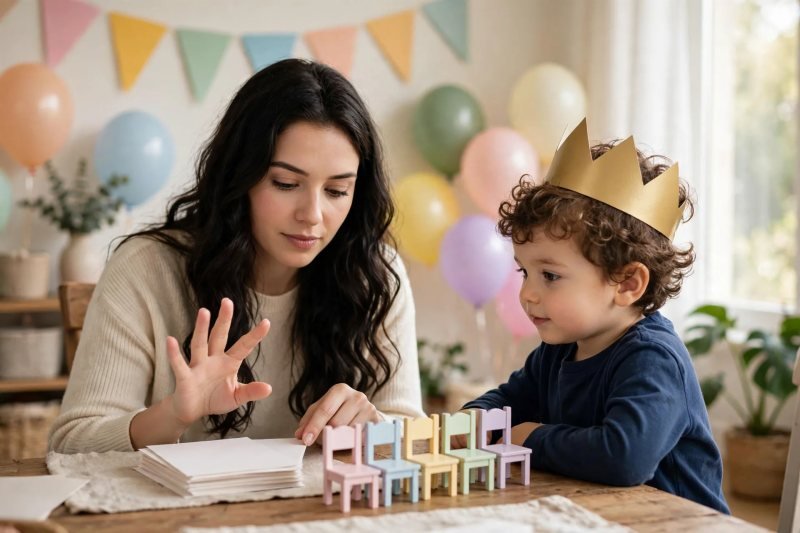
Set the guest list, the day, and the two-hour window. Choose a weekend morning or early afternoon, keep the party to about two hours, and time it away from nap time — a party that ends before children get tired is a party everyone remembers kindly. Write the guest list small and sturdy: closest friends, cousins, and the adults who come with them. Planning the people side well is half the party — our guide to playdates that go well covers the same small-group thinking for any get-together. Say to yourself, honestly, "Short, small, and cheerful beats long, huge, and wild." Put the start and end times right on the plan, plan the cake for the middle hour, and tell a helper adult the running order so two people always know what happens next.
-
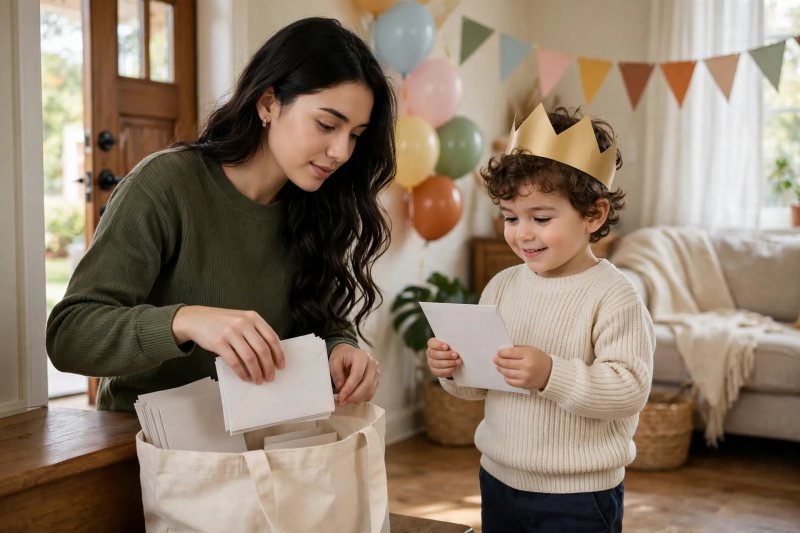
Send simple invitations — and ask the allergy question. Send paper invites or a simple message two weeks ahead with the date, the two-hour window, your address, the theme (so parents can join the dress-up fun), and one essential line: "Please tell us about any food allergies." Say it warmly and plainly — this question is how a fun party stays a safe one. Note every answer where you plan the food, because the menu in step 5 gets built around those answers. If your child loved last year's celebration, the low-key approach in these 2nd birthday party ideas for toddlers scales up beautifully — same bones, one year bolder.
-
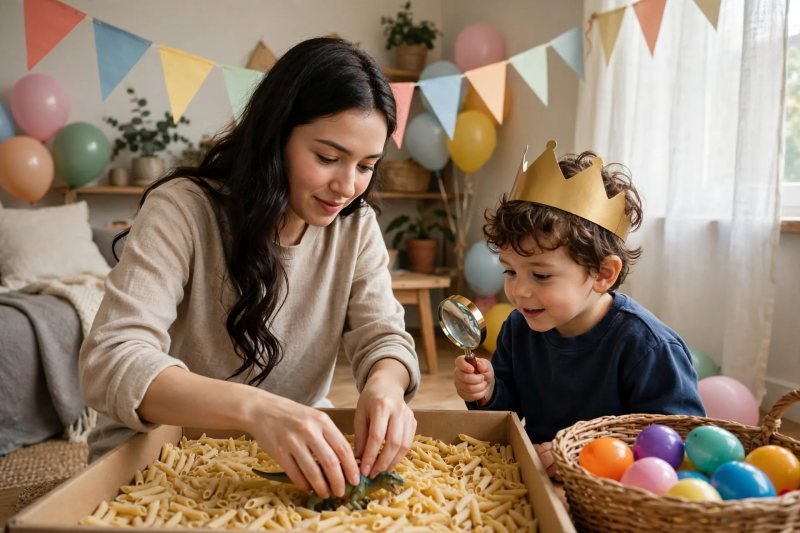
Plan the games inside the theme, in a calm order. Choose four or five easy games and arrange them loud-to-quiet across the party. Woven into a dinosaur theme, for example: a dinosaur egg hunt in the garden or around the room, with hiding spots pitched to three-year-olds; a stomp-and-roar freeze dance; a dig for toy dinosaurs in a bin of dried pasta or kinetic sand; pin-the-tail-style games played with a big soft target; and a quiet dinosaur story to land the plane. For farm day, swap in a duck-duck-goose circle, a veggie-garden treasure hunt, and animal-sound guessing. Say the order out loud once — "Hunt, dance, dig, snack, story" — because three-year-olds do not need many games, they need games that never leave them waiting or confused, and short memory games for preschoolers make a perfect calm station between the loud ones.
-
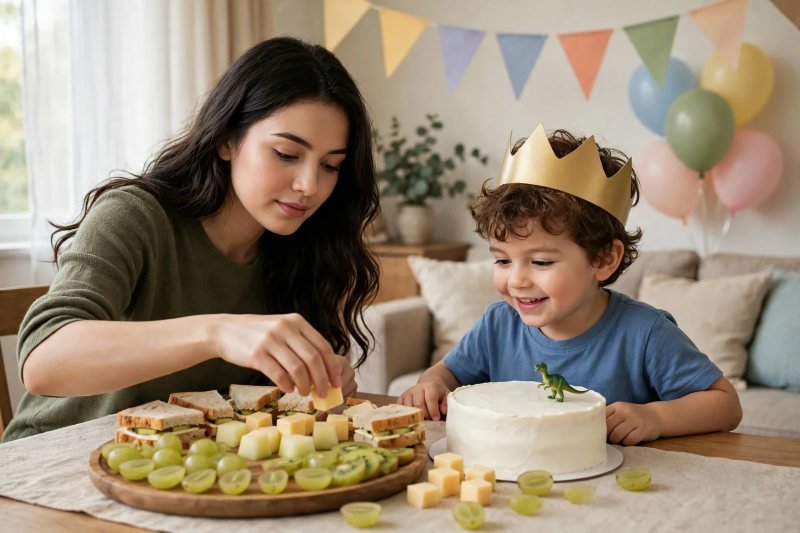
Plan easy finger food and the cake. Build the menu from food small hands manage alone and every guest can eat: soft fruit pieces, mini sandwiches, cheese cubes, veggie sticks with dip, plain popcorn only for the oldest, most confident chewers — and skip it entirely if you are unsure — plus water and diluted juice. Read your allergy notes from step 3 before shopping, keep food packaging until the party ends so ingredients can be checked, and keep anything a guest is allergic to off the table completely rather than "in a separate corner." Order or bake a simple cake in the theme — a number-three shape or a plain cake with toy toppers — and say the plan once: "Simple food, served once, eaten sitting down." Sitting down to eat is a safety rule disguised as manners.
-
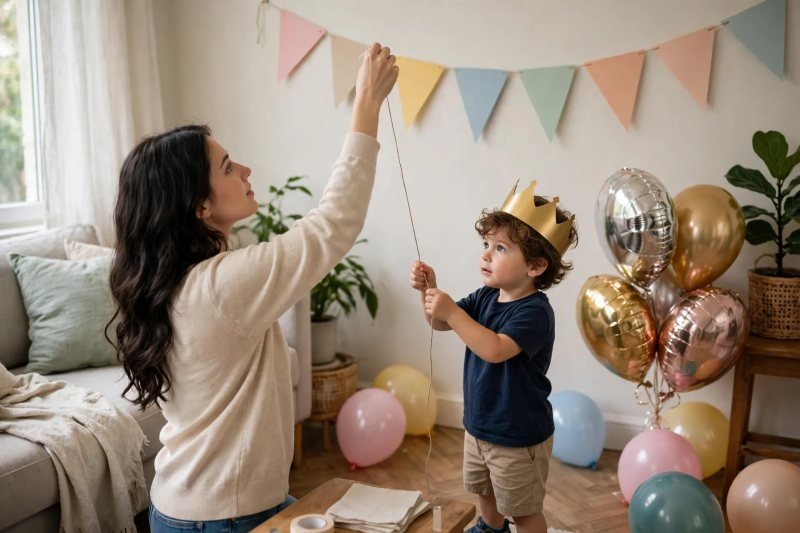
Decorate simply on the morning of the party. Ninety minutes before guests arrive, put up only what a three-year-old can take in: foil balloons in theme colors at child height, a sweep of plain paper bunting, the table set in theme colors, and one themed prop station — the dress-up box, a "dig site," or a teddy picnic blanket. Choose foil balloons only: latex balloons are a serious choking hazard for this age, and any balloon that pops gets binned immediately, every fragment. Say, "Balloons up, bunting up, table ready — the room looks like dinosaur world!" Three-year-olds read a room in about five bold signals; the rest is for the photographs, so stop while it is still fun.
-
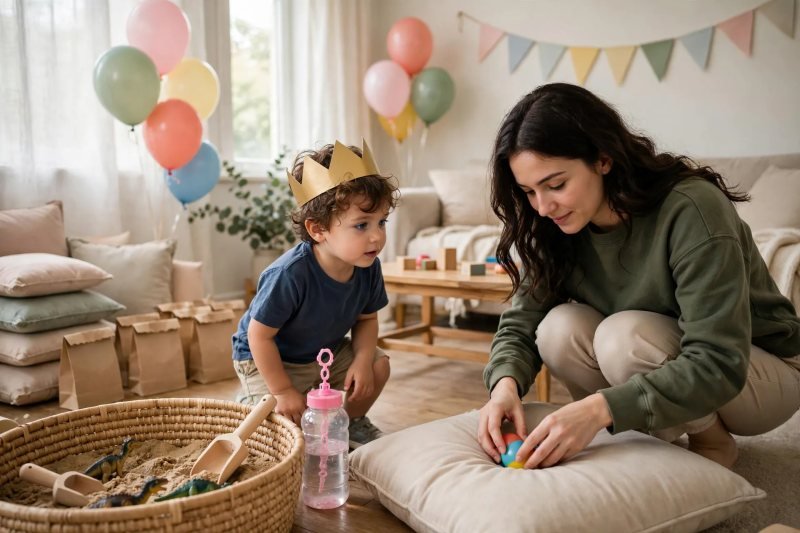
Set up the game stations before the first guest arrives. Walk the party in order and stage each stop: egg-hunt eggs hidden (easy spots, at toddler eye level, a few spares for the child who finds none), the freeze-dance speaker tested, the dig bin with dinosaurs buried, bubbles by the door for arrivals, and the quiet story corner with cushions. Put favors, the cake, candles, and a lighter somewhere only adults reach, and lay a bin bag at each messy station. Say, "Everything waits ready, so I get to actually enjoy this." A staged party runs itself; an unstaged one eats the host. Finish ten minutes early, make a coffee, and breathe.
-
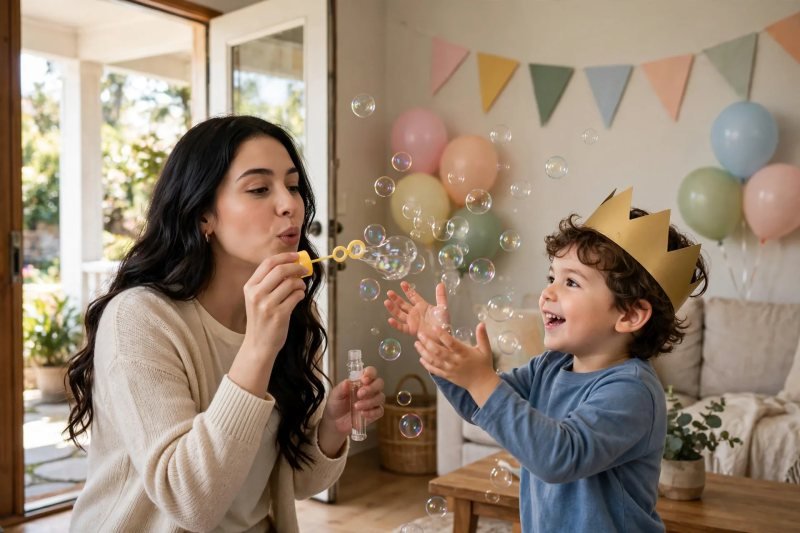
Welcome everyone with free play and bubbles. Open the door with music on, the prop box open, and bubbles floating — arriving three-year-olds need five unstructured minutes to land, hug, and find their courage before any organized game. Greet each child at their own height, name the first thing they can do — "You can dig for a dinosaur right over there, or blow bubbles with Sam" — and let parents settle with drinks within sight. Say to your birthday child, "Your friends are here! Party started!" The welcome sets the temperature: calm adults, clear first activities, nobody standing in a doorway wondering what to do.
-
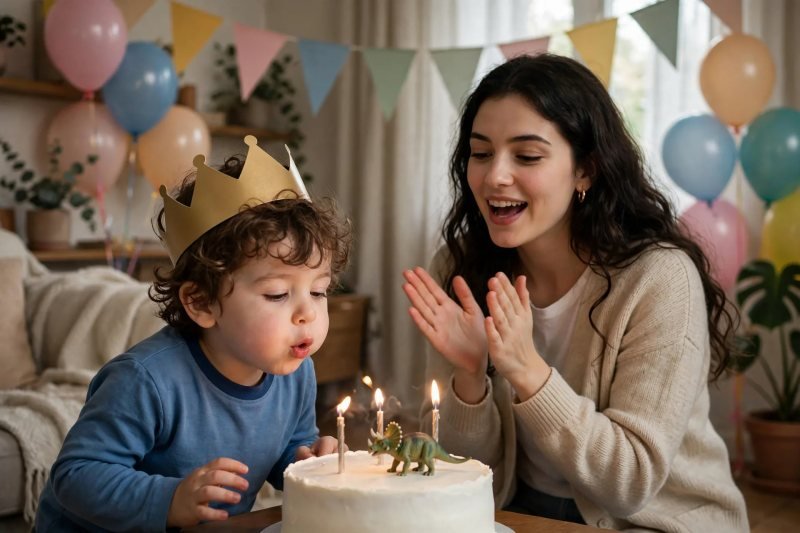
Run the games, then gather everyone for cake. Move through your planned order with cheerful announcements — "Explorers, the egg hunt starts now!" — keeping each game short and ending each one while it is still fun. Watch energy, not the clock: if the room tips toward wild, bring the quiet station forward. Halfway through, gather everyone sitting down for the cake moment: lights low, song sung, candles blown (the birthday child plus every helper who "needs" a turn with an unlit practice candle), cake cut small, and photos taken. Say, "Make a wish!" like you mean it. Cake in the middle means the party's sweetest moment never collides with tired goodbyes.
-
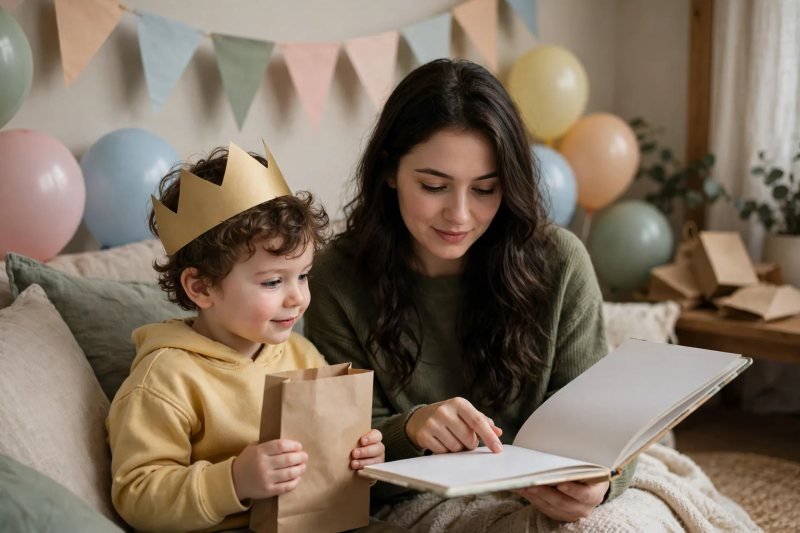
Wind down with the quiet game, favors, and happy goodbyes. Land the party gently: the story corner or a calm memory game, lights and music softening, then favor bags handed out as each family leaves — one bag per child, given by the birthday child if they are up for the honor. Say, "Thank you for coming to dinosaur world!" at the door, every time, and let your child hear gratitude modeled twenty times. When the last guest leaves, stop: sit down with your child, eat a saved piece of cake together, and look at three photos before any tidying starts. The party ends the way it began — with your three-year-old feeling like the whole wonderful day was theirs.


Make it easier
Buy the cake and keep every game homemade; no one at a third birthday audits the cake's origin. Run three games instead of five — arrival free play and cake are half the party already. Ask one grandparent or friend to own the drinks-and-photos job so you can own the children and the flow.
Make it harder
Add a simple themed craft station from our birthday crafts — decorating a paper crown, a dinosaur mask, or a farm-animal ear headband — for children who arrive early or need a quieter corner. Let the birthday child hand out favors and say the thank-yous, with you as backup. Bake and decorate the cake together the day before; a three-year-old can place every toy topper and sprinkle with great seriousness.
Other ways to play it
- Rainy-day party: bring the egg hunt indoors (eggs under cushions and behind curtains), swap garden games for the dig bin and freeze dance, and add the craft station.
- Garden or park party: add a bubble station, a ball run, and a picnic-blanket story corner; bring the foil balloons weighted and count them out and back in.
- Tiny party (two or three guests): lean into pretend play — a teddy bear picnic with real snacks served to the bears, a "bakery" or "vet clinic" role-play corner, and one special game done slowly and thoroughly.
How it changes by age
- Age 3: this party is built for a brand-new three: two hours, small group, games under ten minutes each, food eaten sitting down, and a parent within arm's reach of every activity. Expect one guest (possibly yours) to cry once; a quiet corner and a familiar adult fix almost everything at this age.
- Age 4: older guests and siblings can handle a treasure hunt with picture clues, a slightly longer party, and team games like a soft-ball relay. Give fours jobs — egg-hider's assistant, music starter, favor deputy — and their energy becomes the party's engine instead of its chaos.
What they're learning
Celebration and gratitude: being thanked, thanking others, and marking a milestone are social skills practiced in a glow of goodwill. Turn-taking and rules: freeze dance, hunts, and circle games teach waiting, listening, and stopping on a signal. Memory and sequencing: remembering the party order and retelling it afterward is narrative building — the root of reading. Fine and gross motor skills: digging, pouring, dancing, and balancing cake plates all count. Confidence: choosing the theme, blowing the candles, and handing out favors are three-year-old leadership, witnessed by everyone they love.
Clearing up
Walk the room with a bin bag before anything else: every balloon fragment, candle, food scrap, and small game piece off the floor first, because toddlers graze. Then leftovers — allergy-safe food you would serve again can be saved; anything that sat out through the party gets binned. Decorations come down last, with your child "helping" by carrying bunting. Wash the dig-bin toys, wipe the table, and write three thank-you messages while the day is fresh — to the helper adult, and to any parent who flagged an allergy clearly. You did it; the photos are the proof.
Questions parents ask
What is a good theme for a 3rd birthday party?
How long should a 3rd birthday party last?
What games can 3-year-olds play at a birthday party?
What food should I serve at a 3-year-old's birthday party?
How many guests should I invite to a 3rd birthday party?
Are balloons safe at a toddler's birthday party?

save it for later
Pin this for the next rainy afternoon
Keep it on a board so it is there when you need it, rather than when you happened to find it.
Save to Pinterest