


15 Back to School Outfits for Girls
Quick answer
The best back to school outfits for girls are the ones she can put on herself, move in all day, and get dirty without anyone minding. That means elastic waists over buttons, knit fabrics over stiff ones, and shoes she can fasten alone. Build around four or five mix-and-match pieces rather than fifteen separate outfits.
Key takeaways
- Independence matters more than anything: if she cannot manage the waistband or the shoes alone, the outfit will cause a problem at school.
- Layers solve the September problem of cold mornings and warm afternoons.
- Mid-tone colors and small prints hide the marks that a school day creates.
- Five well-chosen pieces produce more outfits than fifteen unrelated ones.
1.Rust Corduroy Pinafore With Cream Turtleneck
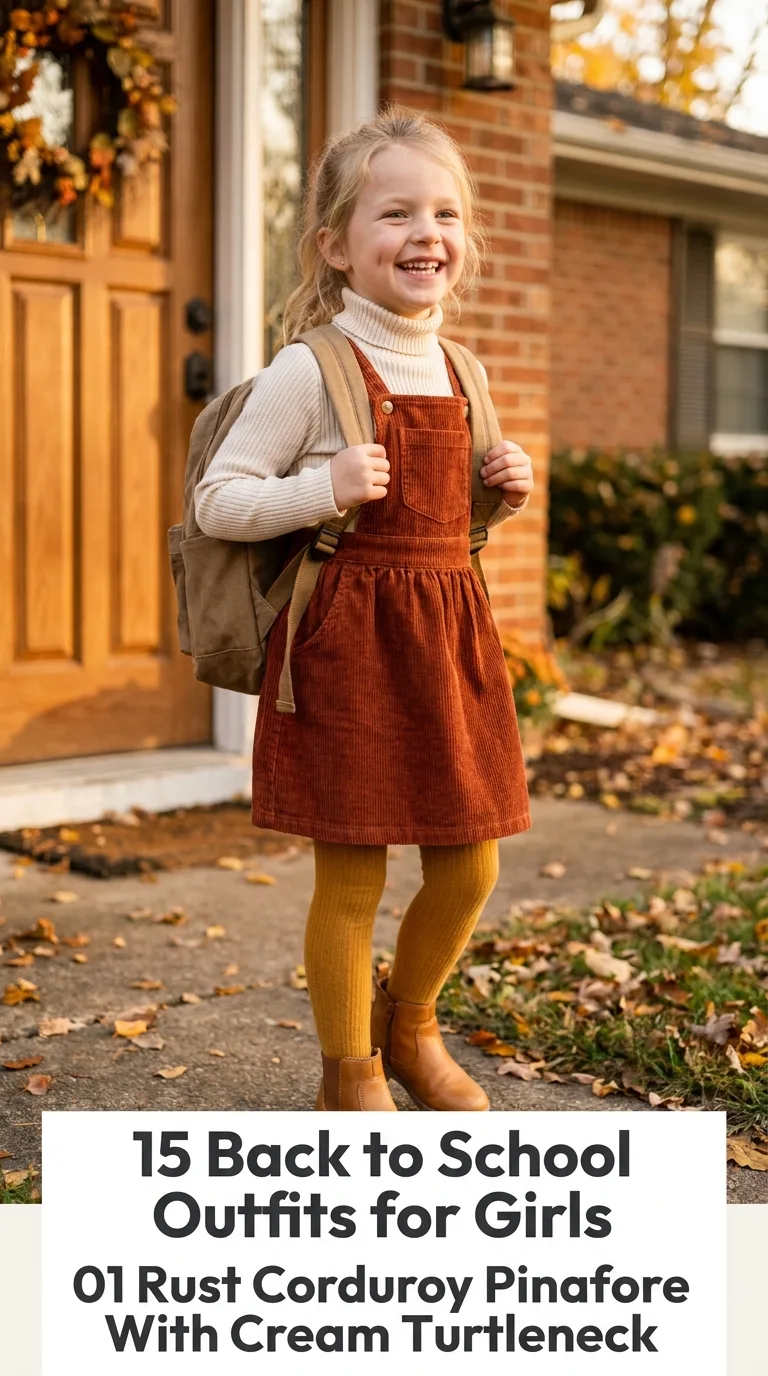
The flat-lay shows a rust corduroy pinafore laid over a soft cream ribbed turtleneck, with mustard tights folded beside it and tan ankle boots at the base. A small gold hair clip sits in the corner. This is the outfit that solves early autumn better than almost anything else, because the pinafore does the styling work while the turtleneck underneath does the temperature work — when the classroom warms up after lunch, nothing needs to come off, and when the playground is cold at nine in the morning, she is already covered. Corduroy is the fabric worth paying attention to here. It is considerably more durable than cotton twill, it hides marks in a way that smooth fabrics do not, and it softens with every wash rather than wearing thin. Look for a pinafore with a full skirt rather than a fitted one, because the extra fabric is what lets her climb, sit cross-legged on a carpet, and run without the garment restricting her. Check that the shoulder straps are adjustable — a pinafore bought slightly large will fit for two full school years if the straps can be let out. The whole outfit goes on over the head with no fastenings for her to manage, which is the real reason it works on a school morning.
2.Denim Overalls With Striped Long Sleeve
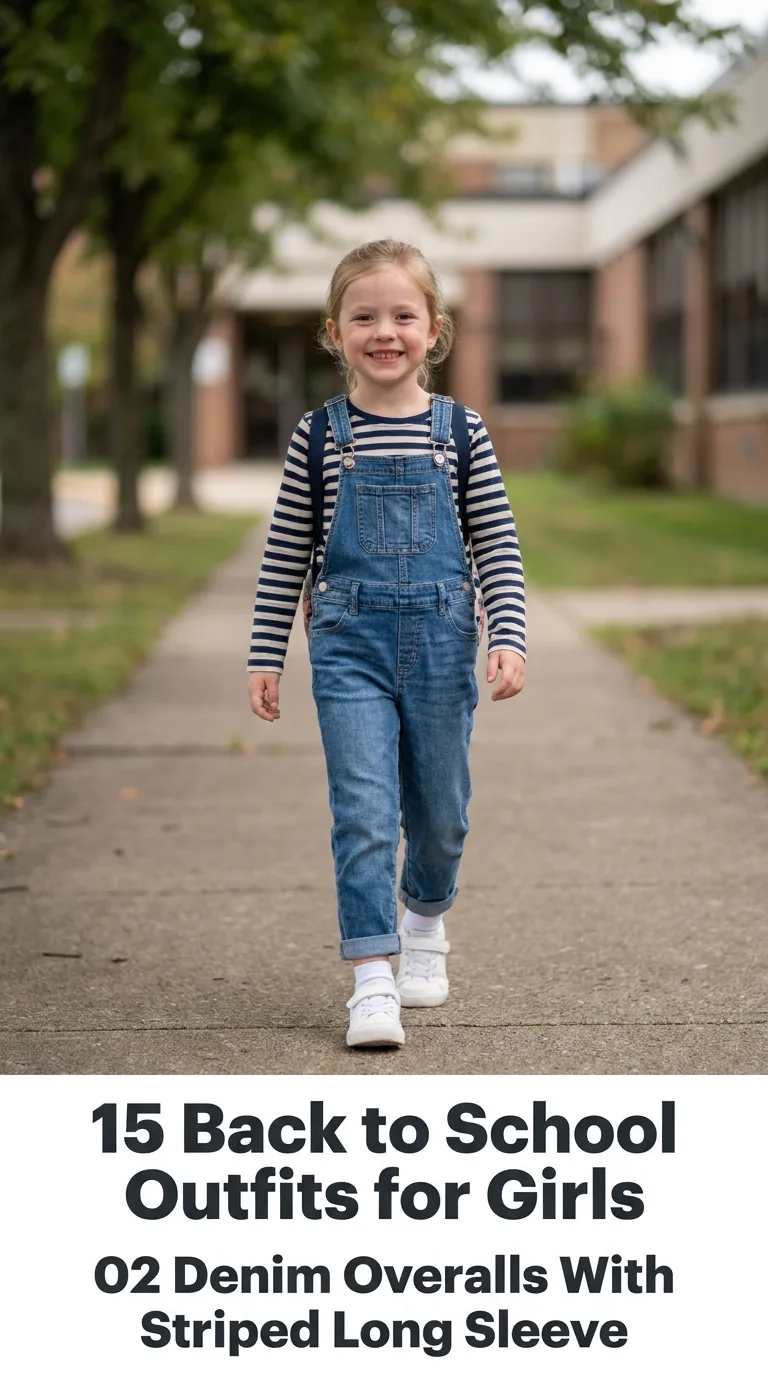
The flat-lay shows classic mid-wash denim overalls beside a navy and cream striped long-sleeve tee, with white sneakers and a pair of folded white socks arranged below. Overalls are the single most practical school garment for a girl aged two to eight, and the reason is coverage — the bib protects the front of the shirt through art, lunch, and snack, which is where almost every school stain originates. The denim itself is heavy enough to survive knees on concrete and repeated washing at high temperature. The one genuine drawback is bathroom independence, and it is worth being honest about it: side-buckle overalls are difficult for a four-year-old to manage alone, and a child who cannot undo them will hold on rather than ask. Look for overalls with elasticated shoulder straps that stretch enough to pull down without unbuckling, or with a simple snap rather than a slide buckle. Test it at home before the first day rather than discovering the problem at school. A striped tee underneath is the right partner because the pattern breaks up the visual weight of solid denim and because stripes hide marks better than any plain color does.
3.Olive Joggers With Cream Sweatshirt
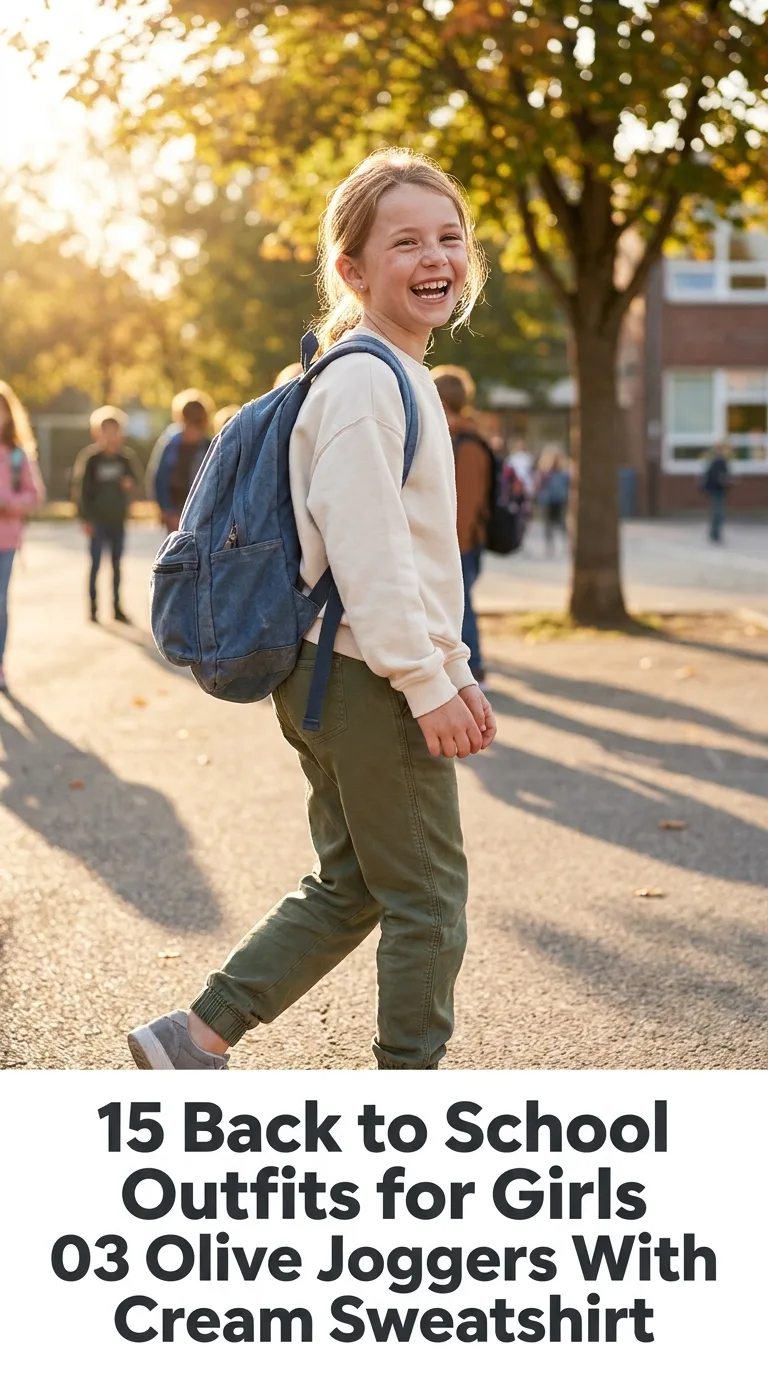
The flat-lay shows olive cotton joggers with a ribbed cuff beside a cream crewneck sweatshirt, with grey sneakers and a scrunchie at the corner. This is the outfit for the days when comfort matters more than anything else — the first week back, a PE day, a field trip, or any morning that has already gone badly. Joggers have quietly replaced jeans as the default school trouser for younger children, and the reason is the waistband. Full elastic means she manages the bathroom entirely alone, which removes the single most common source of school-day accidents for children under six. Olive is the color choice worth copying rather than the more obvious grey or navy. It reads as a neutral, coordinates with almost every top she owns, and hides grass and mud noticeably better than either. Choose joggers with a tapered ankle rather than a wide leg, since a narrower cuff does not drag on wet playgrounds and does not catch when she climbs. A cream sweatshirt is the risk in this outfit — if stains worry you, take the same shape in oatmeal instead.
4.Navy Pleated Skirt With Cotton Polo
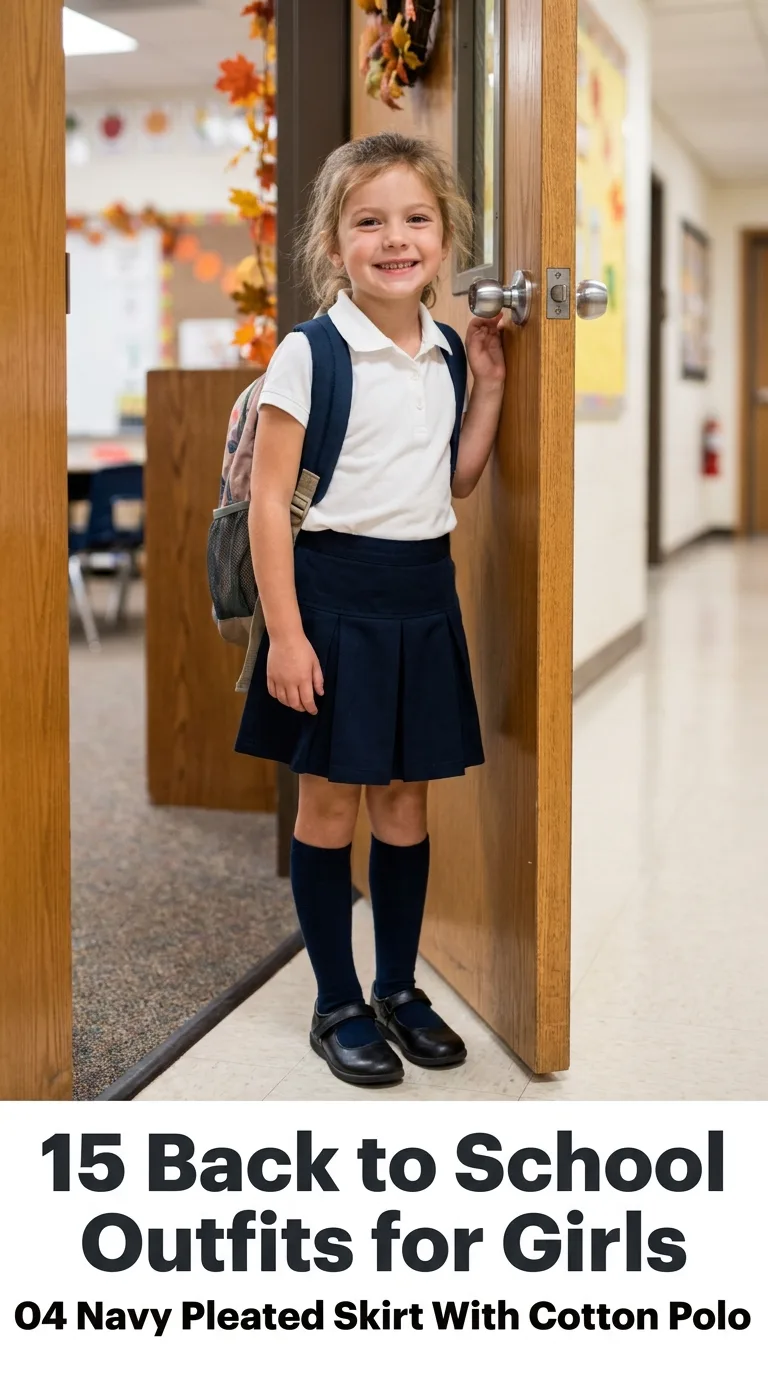
The flat-lay shows a navy pleated skirt with built-in shorts underneath, laid beside a white cotton polo, with navy knee socks and black Mary Janes below. This is the smart end of school dressing, appropriate for schools with a soft uniform policy or for a first day where photographs matter. The built-in shorts are the detail that makes it work: without them, a pleated skirt limits how a child sits, climbs, and plays, and she will spend the day adjusting rather than moving. With them, the skirt behaves like shorts and she forgets it is there. Pleats also have a practical advantage that flat skirts lack — the folds disguise creases and marks, so the garment still looks tidy at three in the afternoon. Choose a skirt with an adjustable internal waistband button, which most quality school skirts include, since it extends the usable life by a full size. A cotton polo rather than a cotton-polyester blend will be more comfortable in a warm classroom, though it will crease more.
5.Floral Dress Layered Over Long Sleeve
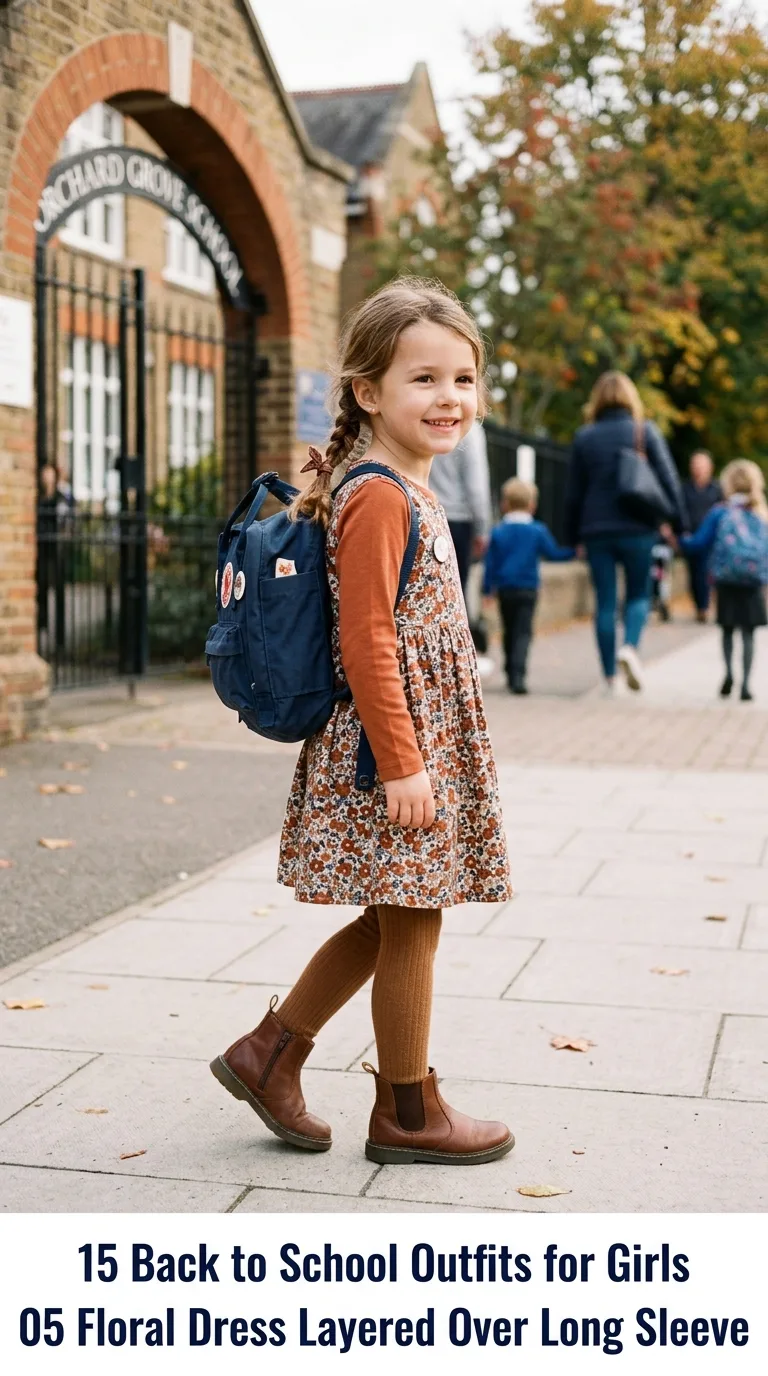
The flat-lay shows a small-print floral dress in muted autumn tones laid over a plain rust long-sleeve tee, with brown tights and ankle boots arranged below. Layering a summer dress over a long sleeve is the cheapest way to extend a wardrobe into a new season, and it is a technique worth using deliberately rather than only as a last resort. A dress she wore in June with bare arms becomes a completely different outfit in September with a fitted long sleeve underneath and tights below. It also means the dress gets two seasons of wear rather than one, which matters when children outgrow clothes in months rather than years. Choose a small print rather than a large one for school specifically, because small prints disguise marks and large ones frame them. Muted autumn tones — rust, mustard, sage, dusty blue — sit better against September light than the bright florals of summer, and they coordinate with more of the rest of her wardrobe.
6.Mustard Cardigan Over Grey Dress
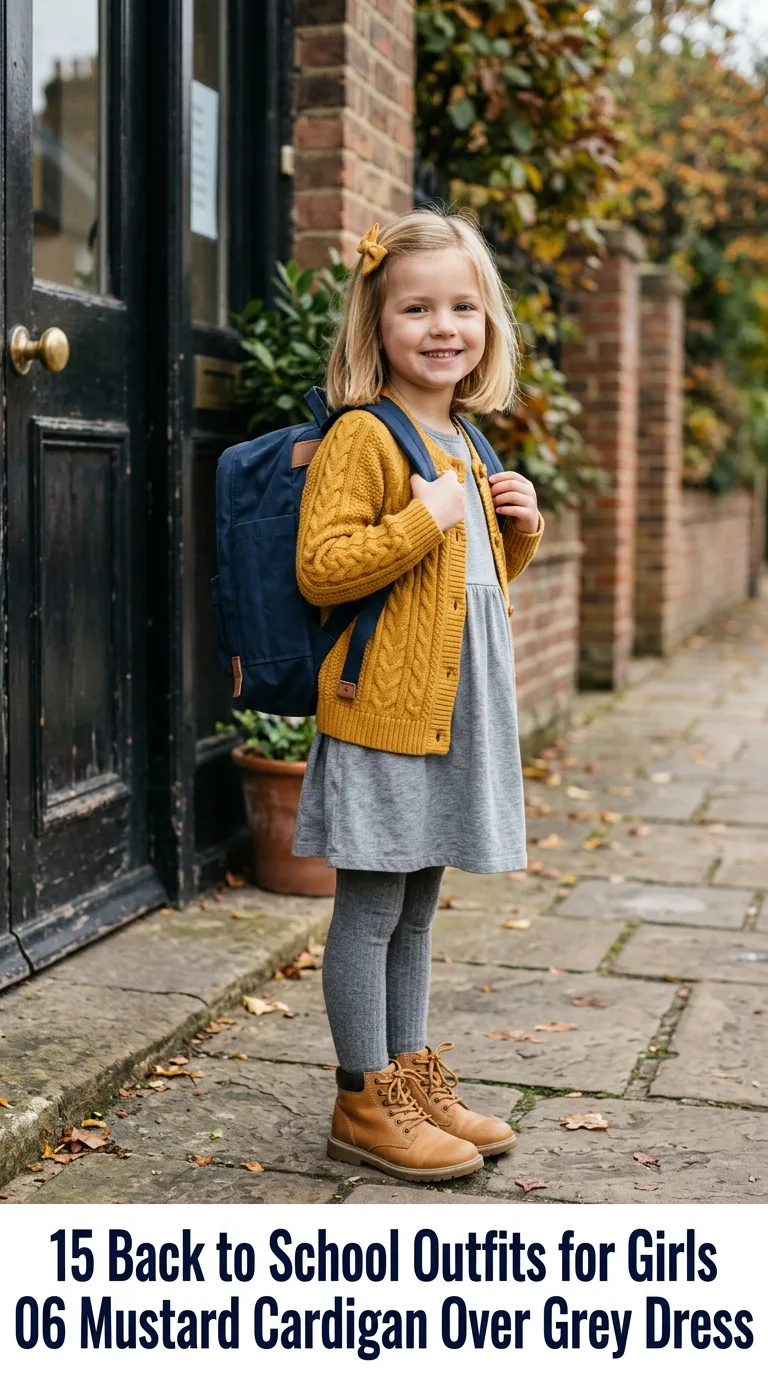
The flat-lay shows a mustard knitted cardigan beside a soft grey jersey dress, with grey tights and tan boots below and a small mustard hair bow at the corner. The cardigan is the most useful garment a child owns during September and October, because it is the only layer that comes off and goes back on without help. A jumper has to go over the head, which means a teacher gets involved and it usually ends up on the floor of the cloakroom. A cardigan with buttons she can manage, or better, a simple open-front cardigan with no fastenings at all, stays with her all day. Mustard is worth choosing over the more obvious grey or navy because it lifts an otherwise plain outfit and coordinates with the rust, olive, and cream that dominate autumn children's clothing. A jersey dress underneath is the practical choice — it stretches, it does not crease, it washes at high temperature, and it dries overnight, which matters more than almost any other quality on a school night.
7.Burgundy Leggings With Tunic Top
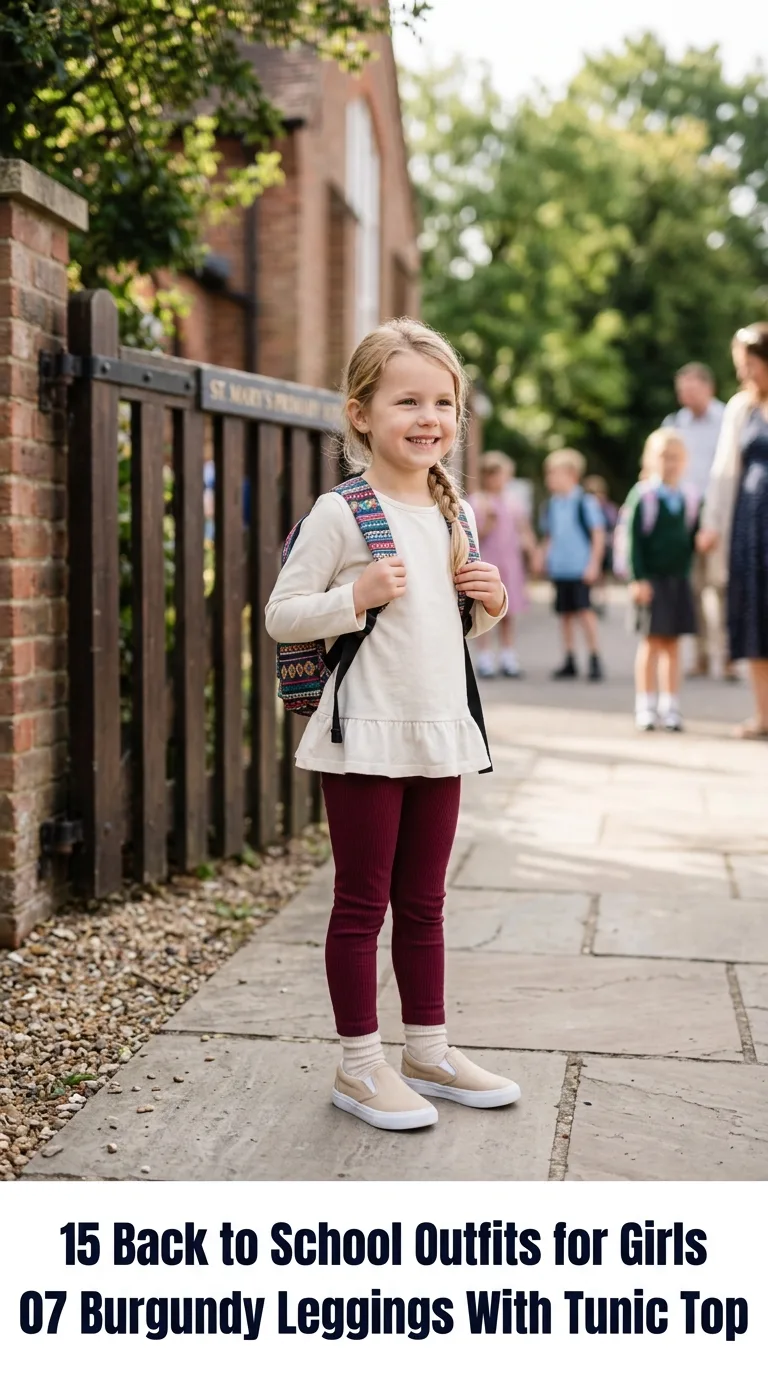
The flat-lay shows burgundy cotton leggings beside a longer cream tunic top with a small ruffle hem, with cream socks and slip-on sneakers below. Leggings are the most useful base piece in a girl's school wardrobe and the most commonly bought badly. Thin, cheap leggings pill within three washes, go transparent when stretched, and lose their shape by the end of the first week. A heavier cotton legging with a proper elasticated waistband costs more and lasts an entire year, which makes it considerably cheaper per wear. Burgundy is a strong choice for autumn because it reads as deliberate where black reads as default, and it hides marks as well as black does. Pair with a longer tunic rather than a cropped top — the extra length covers her comfortably when she sits on the floor, which is where a significant part of an early school day happens. Slip-on sneakers complete the no-fastenings principle.
8.Sage Sweater With Corduroy Pants
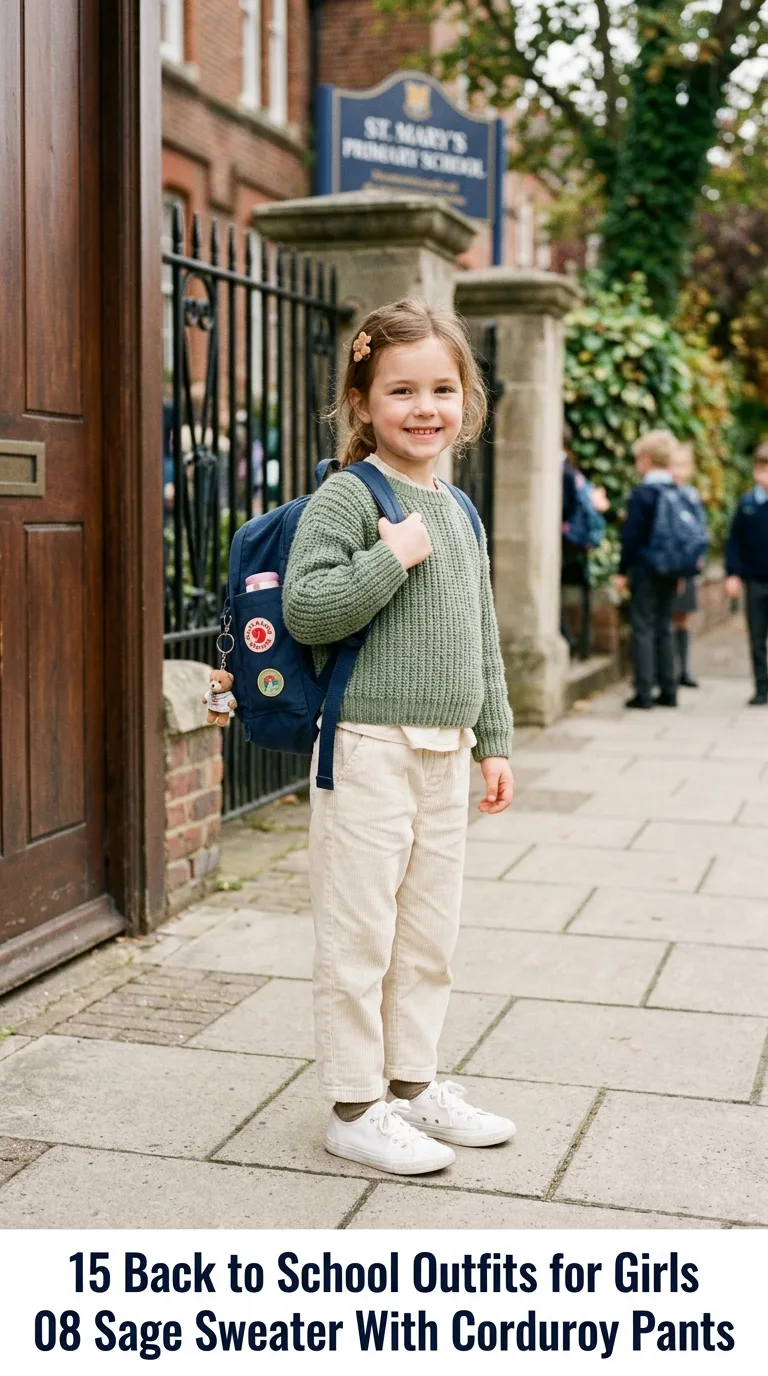
The flat-lay shows a sage green knitted sweater beside cream corduroy pants with an elasticated waist, with white sneakers below and a small wooden hair clip. This is the outfit for a cold morning that needs to still work at lunchtime, and the fabric choice is doing all of it. A knitted sweater breathes in a way that a fleece does not, so an overheated classroom does not become uncomfortable. Corduroy pants in a light color are the unexpected part — most parents avoid pale trousers for school, but cream corduroy actually shows marks less than pale cotton because the ribbed texture breaks up the surface. Look for an elasticated waist with an internal adjuster rather than a button and zip. Sage is one of the most versatile colors in children's clothing and it coordinates with rust, cream, mustard, and denim, which means the sweater works with most of the rest of this list.
9.Plaid Shirt Dress With Leggings
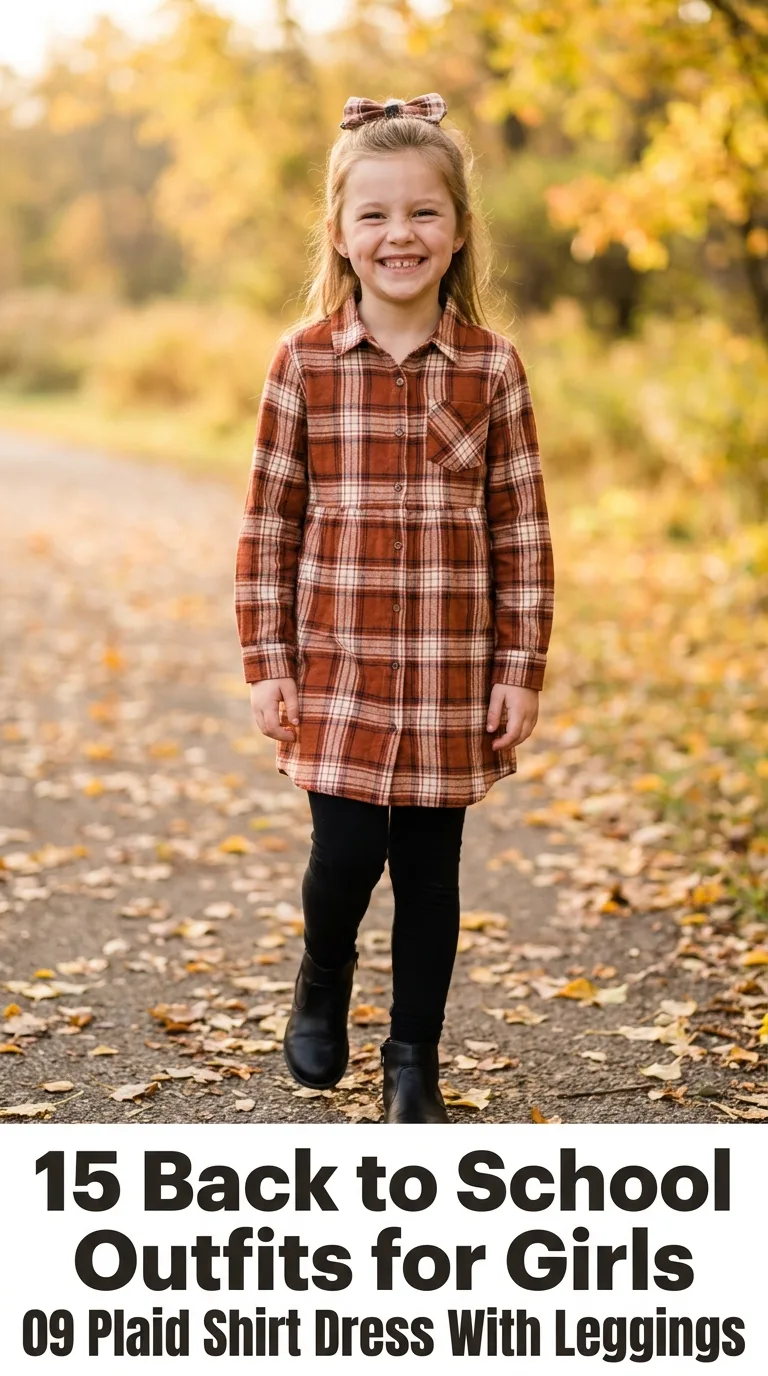
The flat-lay shows a rust and cream plaid shirt dress laid over black leggings, with black ankle boots and a matching plaid hair bow arranged below. A shirt dress worn over leggings solves several problems at once — it covers, it layers, it looks put together, and it goes on without anything to fasten if the buttons are decorative rather than functional. Plaid specifically is worth choosing for school because the pattern is exceptional at hiding marks. A drop of paint or a smear of lunch disappears into the check where it would be obvious on a plain fabric. Check the length carefully: a shirt dress should sit at or below mid-thigh over leggings, since anything shorter rides up when she moves and she will spend the day pulling it down. Buy the plaid in autumn tones rather than the traditional red and green, which reads as Christmas from November onward.
10.Cream Ribbed Set With Denim Jacket
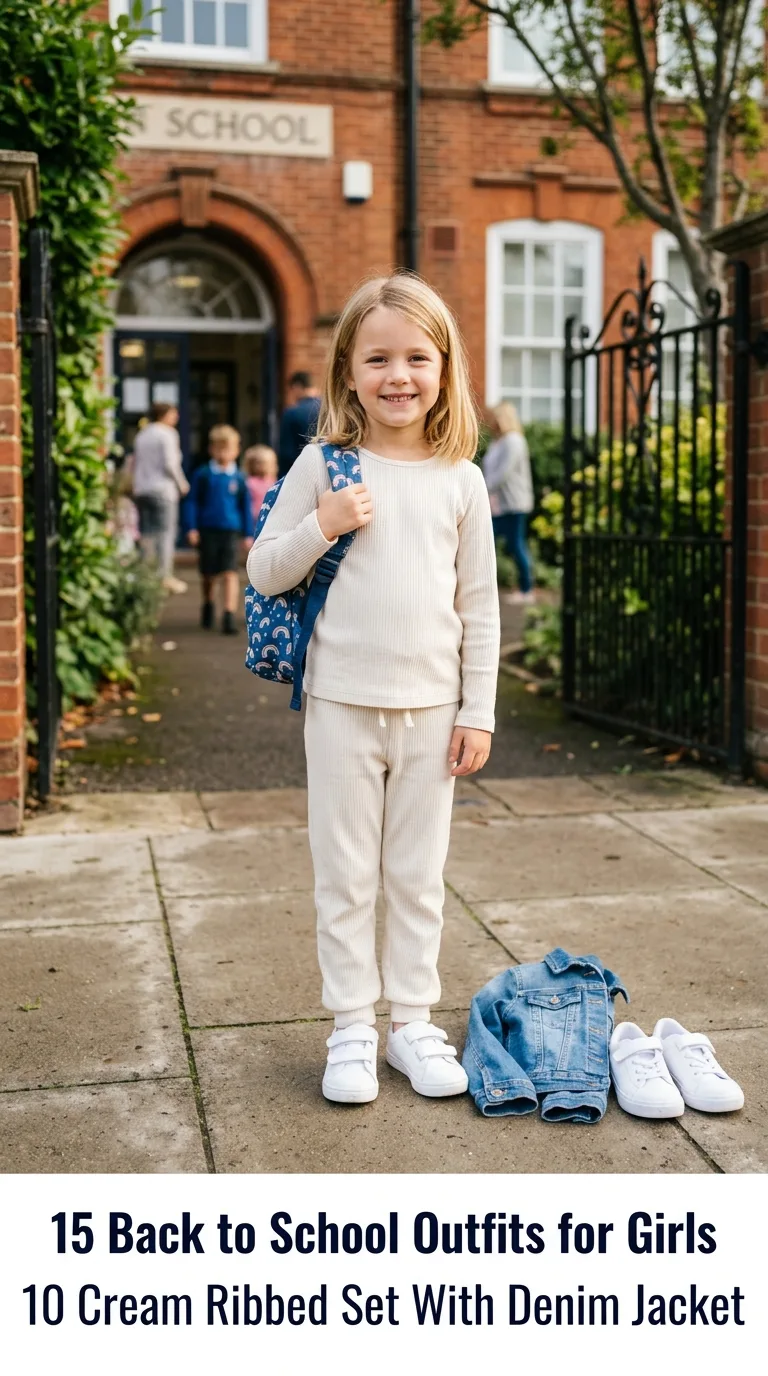
The flat-lay shows a matching cream ribbed top and pull-on trouser set, with a mid-wash denim jacket laid beside it and white sneakers below. Matching sets have become the most efficient thing in a young child's wardrobe because they remove the decision entirely — she takes both pieces off the same hanger and the outfit is done. Ribbed jersey is a genuinely good school fabric: it stretches in both directions, it holds its shape, it does not crease in a backpack, and it washes well. The denim jacket is what makes this a September outfit rather than a summer one. A denim jacket is warmer than it looks, it survives being dragged along a playground, and unlike a coat it works indoors as well as out. Buy it a size up — a denim jacket is one of the few garments that looks better slightly oversized and it will fit for two years.
11.Striped Tee With Denim Skirt
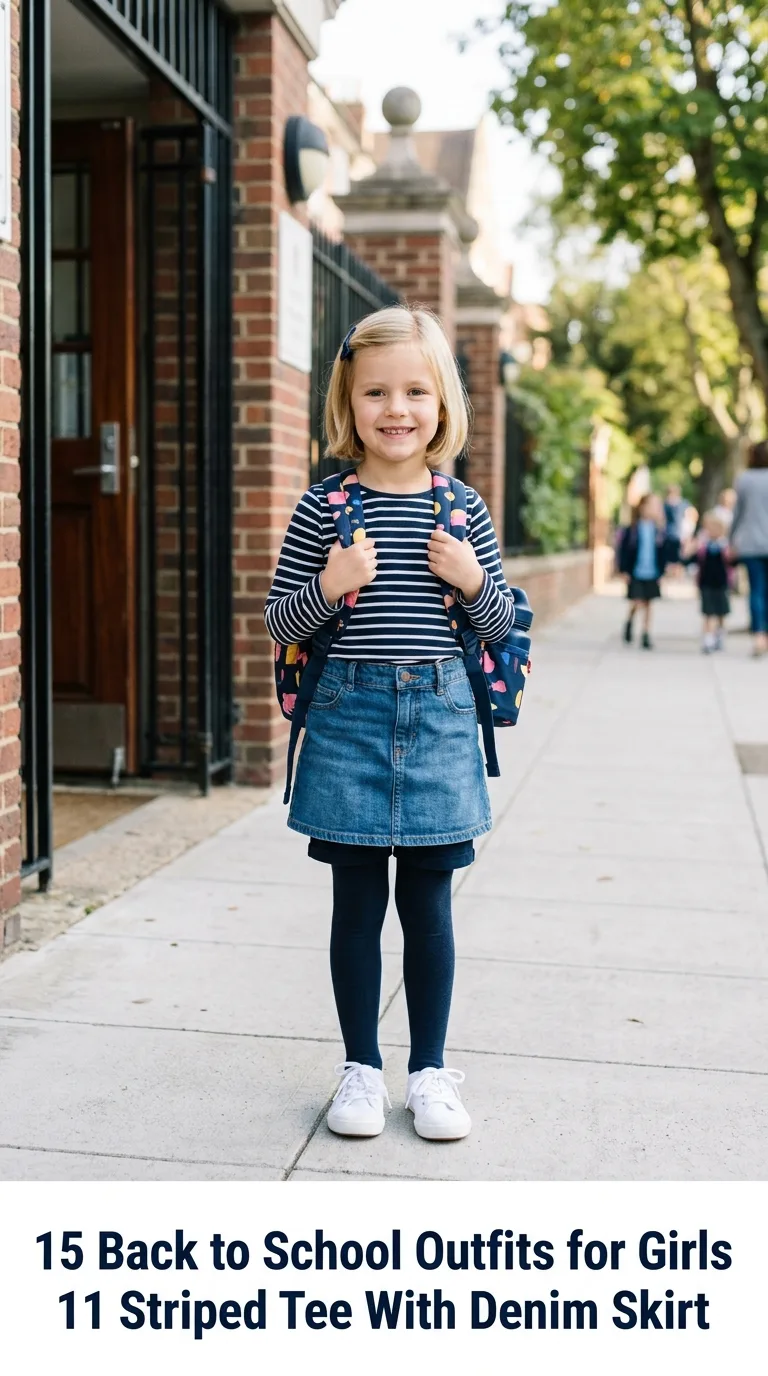
The flat-lay shows a navy and white striped long-sleeve tee beside a mid-wash denim skirt with built-in shorts, with navy tights and white sneakers below. This is the most conventional outfit on the list and it earns its place through sheer reliability — there is nothing here that can go wrong, nothing she cannot manage alone, and nothing that will not survive a wash at sixty degrees. The denim skirt should have the same built-in shorts as the pleated version above, for the same reason: it converts a garment that limits movement into one that does not. Stripes are worth understanding as a practical choice rather than a stylistic one. The alternating pattern breaks up the visual field, which means marks, creases, and small stains genuinely are less visible than on a plain tee. Navy and white is the most versatile combination, though rust and cream works equally well for autumn.
12.Quilted Vest Over Long Sleeve
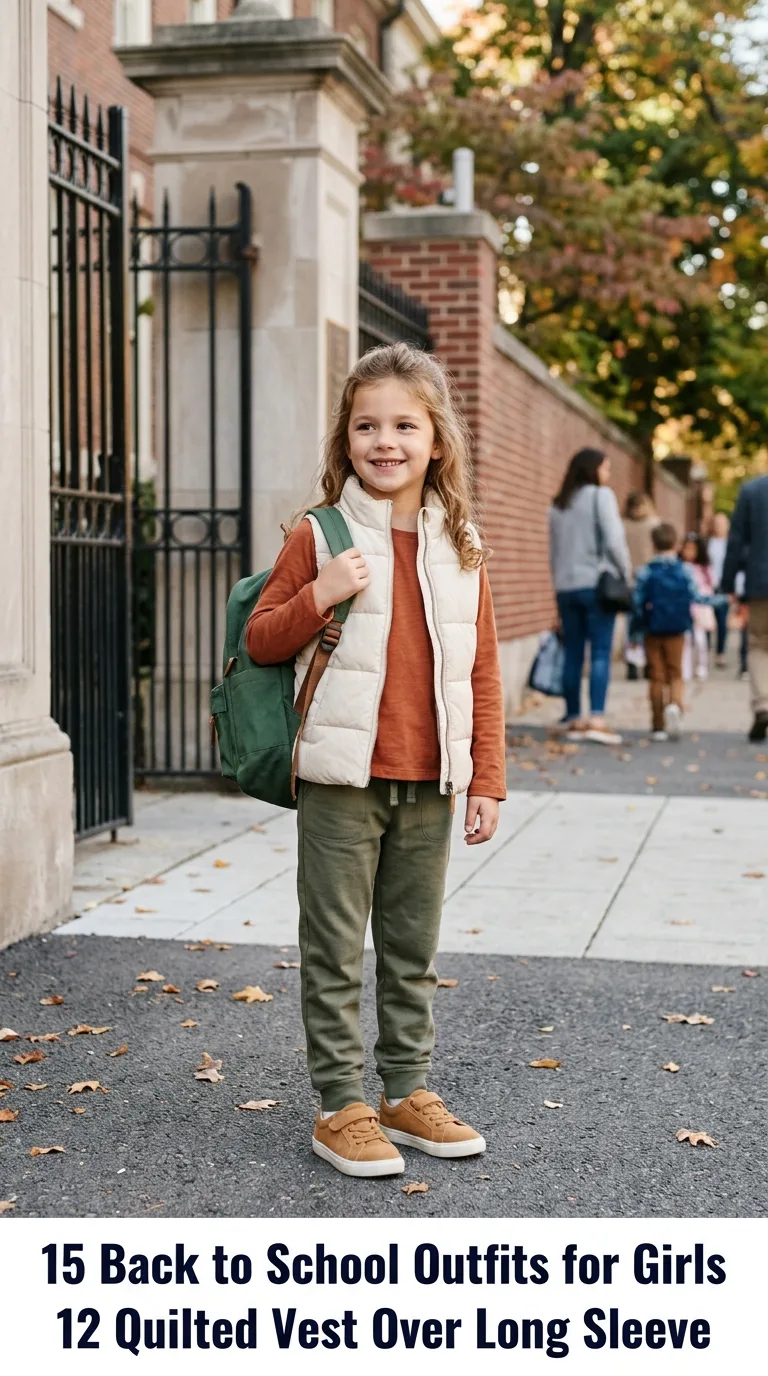
The flat-lay shows a cream quilted vest beside a rust long-sleeve tee and olive joggers, with tan sneakers below. A vest is the layer most parents overlook and the one that solves the September temperature problem most elegantly. It warms the core, which is what actually determines whether a child feels cold, while leaving the arms completely free for climbing, writing, and painting. It also does not need to come off indoors the way a coat does, so it does not end up lost. Quilted rather than fleece is the better choice for school, since quilting is windproof and fleece is not, and the playground in October is almost always windy. Look for a vest with a full zip she can manage rather than poppers, and check the zip has a large enough pull tab for small fingers. Cream shows marks, so oatmeal or sage is the more practical color if the vest will be worn daily.
13.Mustard Corduroy Dress With Cardigan
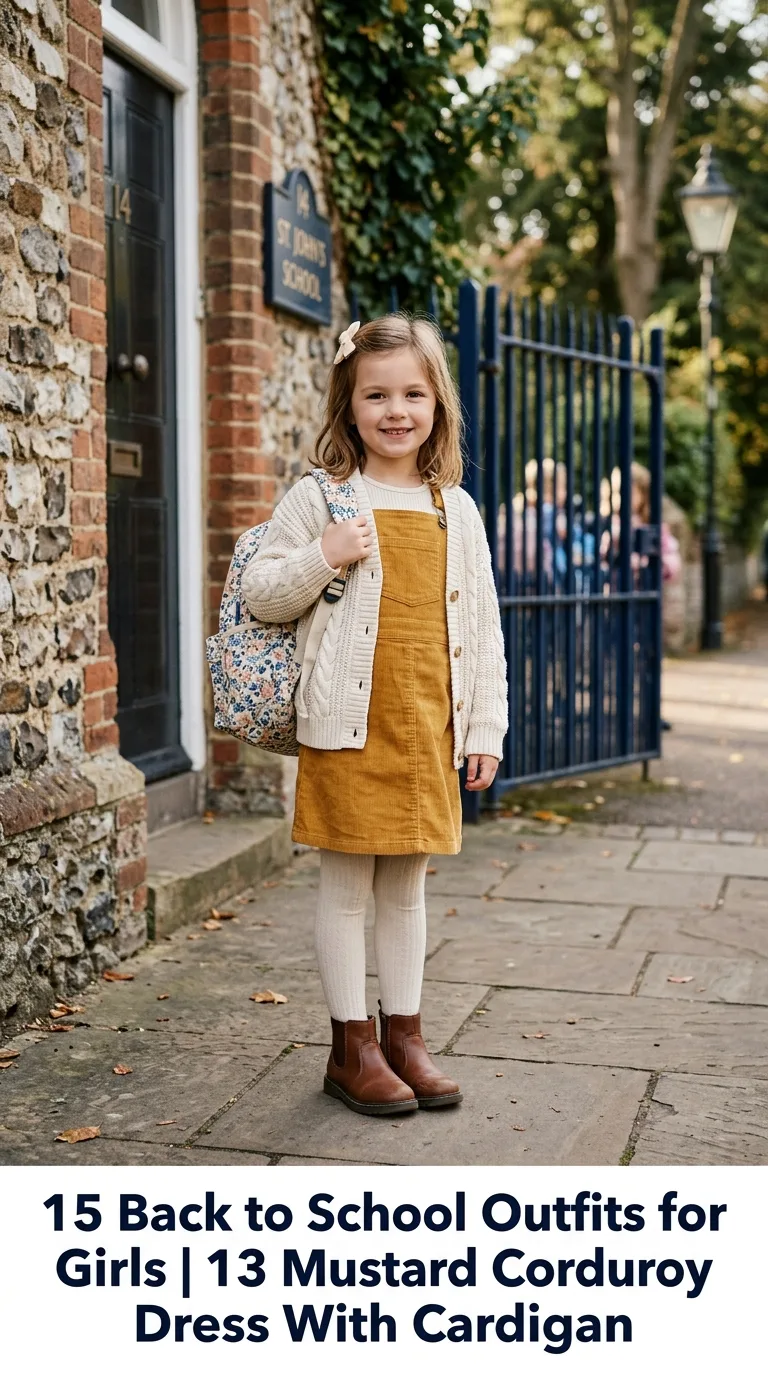
The flat-lay shows a mustard corduroy pinafore dress beside a cream knitted cardigan, with cream tights and brown boots below and a small cream bow at the corner. This is the same construction as the first outfit in a different palette, and repeating a shape that works is the most useful wardrobe principle there is. If a pinafore suits her and she can manage it independently, owning two in different colors gives you a full week of easy mornings with almost no thought. Mustard is a particularly good school color because it is bright enough to feel cheerful without being a color that shows every mark, and it sits beautifully against the cream, rust, and brown of autumn. Corduroy in a heavier wale — the thicker ribbing — is more durable than fine-wale corduroy and looks more substantial. The cream cardigan is the piece to buy in a machine-washable acrylic blend rather than pure wool, for reasons that will be obvious by the second week.
14.Grey Sweatshirt Dress With Sneakers
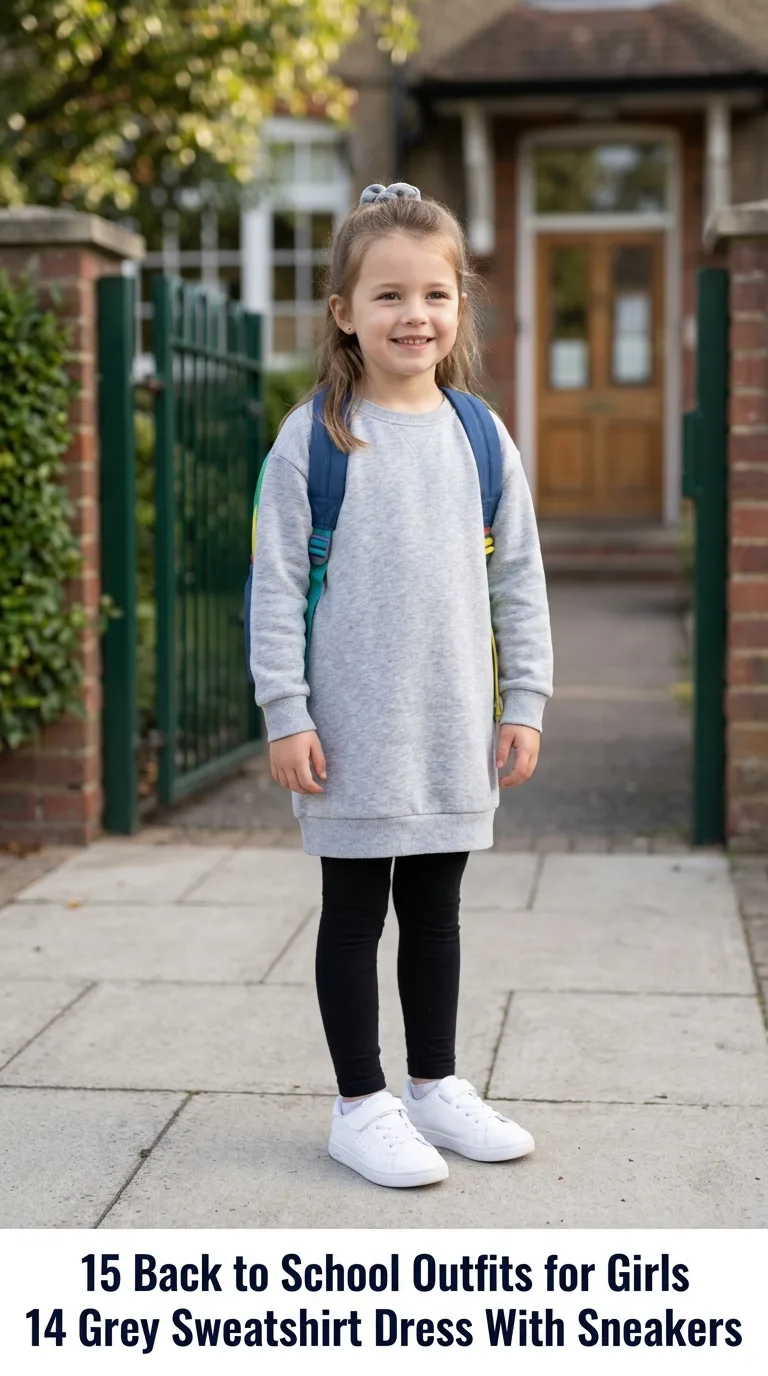
The flat-lay shows a soft grey sweatshirt dress with a ribbed hem, laid beside black leggings and white sneakers, with a grey scrunchie at the corner. A sweatshirt dress is the single easiest school outfit that exists — one garment, no fastenings, no coordination required, and it works with either tights or leggings depending on the temperature. It is the outfit to have ready for the mornings when nothing else is going to happen calmly. The fabric is doing the work here: loopback cotton jersey is warm without being bulky, it does not crease, and it survives industrial quantities of washing. Grey specifically is a better choice than it sounds, because a mid-grey marl hides marks better than almost any solid color while still looking clean and deliberate. Choose one with a slightly dropped shoulder and a relaxed body rather than a fitted shape, since the room to move is what makes it comfortable for a full day.
15.Rain-Ready Layers With Waterproof Coat
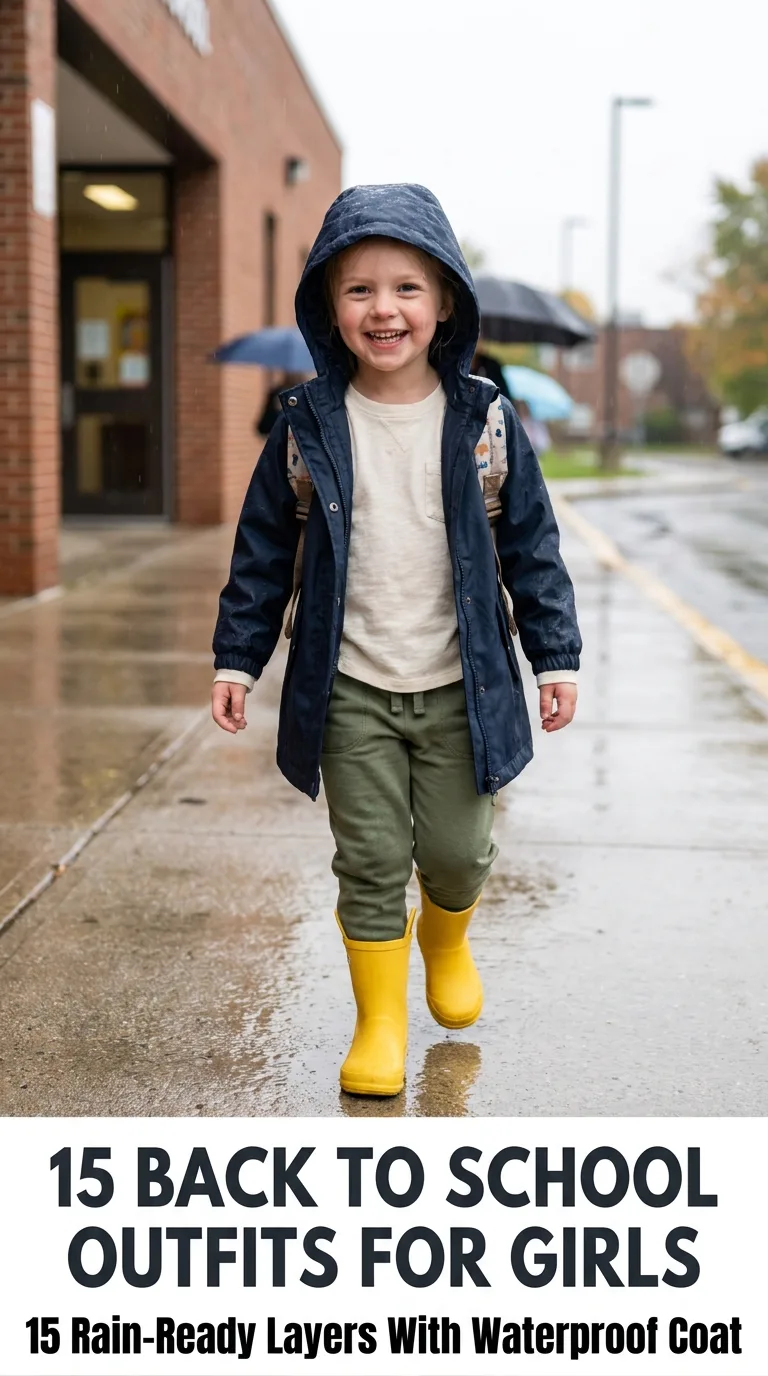
The flat-lay shows a navy waterproof coat with a hood, laid beside olive joggers, a cream long-sleeve tee, and yellow rain boots, with a pair of thick socks folded at the corner. This is the outfit that saves the entire autumn term, and it is worth building deliberately rather than assembling in a panic on the first wet morning. The coat should be genuinely waterproof rather than shower-resistant, with taped seams and a hood that stays up — most school coats fail on the hood specifically, and a hood that blows back means a wet head at nine in the morning. Rain boots need thick socks to work, because the boot itself provides no insulation and a cold foot ruins a break time. Keep a spare pair of socks and leggings in her bag from October onward. The joggers and tee underneath are deliberately unremarkable, because the point of this outfit is that the outer layers do the work and what is underneath simply needs to be comfortable and dry.
Frequently asked questions
What should a girl wear on the first day of school?
Something she has already worn and is comfortable in. A first day is not the time for new shoes or an unfamiliar waistband — pick a known outfit in a slightly smarter color if photographs matter.
How many school outfits does a child need?
Five bottoms and seven tops covers a week with laundry margin. Choosing pieces that all coordinate matters more than the total number.
What fabrics are best for school clothes?
Cotton jersey, corduroy, and denim. All three wash at high temperature, survive repeated wear, and hide marks better than smooth synthetic fabrics.
Should school clothes be bought a size up?
For outerwear and pinafores, yes — both work oversized and last two years. For trousers and tops, buy to fit, since oversized versions get in the way during play.
What colors hide school stains best?
Mid-tones and small prints. Rust, olive, mustard, mid-grey marl, and any plaid or stripe disguise marks far better than pale solids or true black.
The takeaway
A back to school outfit has one job that outranks how it looks: she has to be able to manage it without an adult. Elastic waists, no-fastening layers, and shoes she can fasten alone remove the small daily frictions that actually matter at school. Get those right, then build around five or six coordinating pieces in rust, olive, mustard, and cream, and almost everything will go with almost everything else.
Bright Play Days is reader-supported. This article is general styling guidance and reflects our own opinions.